The client is a U.S.-based oil and gas operator managing offshore platforms, specializing in oil extraction in challenging marine environments, where equipment reliability directly affects safety, operational efficiency, and environmental risk.
Leakage Detector combines operational data, maintenance history, and marine-condition context within a predictive maintenance system. Machine learning models use these inputs to assess equipment condition and identify patterns associated with developing technical risks, including leakage or damage.
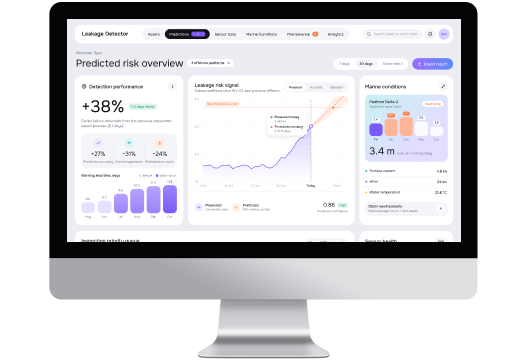
Across selected offshore assets, the project improved failure-detection lead time by 38% and prediction accuracy by 27%, while drone-based inspections decreased by 31% and maintenance costs by 24% during the evaluated period.
The client operates offshore oil platforms in the USA and manages equipment exposed to demanding and continuously changing marine conditions.
Its operational priorities include improving equipment reliability, reducing maintenance effort, supporting safer offshore operations, and limiting environmental risks.
Inspection and maintenance planning therefore had to account for equipment condition across assets operating under changing marine conditions.
The client needed to identify early signs of equipment failure, leakage, or damage before they developed into critical offshore incidents.
The client required a predictive maintenance system that could turn existing operational and environmental data into earlier equipment-risk signals and clearer inspection priorities.
Computools built a predictive maintenance system around the client’s existing operational, maintenance, and environmental data. Within the energy software development project, the team connected sensor inputs, maintenance history, environmental conditions, and simulation data into a single predictive workflow.
The prediction system used offshore component-behavior modeling to evaluate how selected equipment responded to changing marine conditions. Marine-condition simulations added context to historical maintenance and failure data.
Machine learning models were trained on historical maintenance records, known failure scenarios, operational data, and simulation results. The models assessed equipment condition and identified patterns associated with increasing failure, leakage, or damage risk.
The team refined the measurement inputs used by the predictive models to support more consistent asset-condition assessment. Prediction outputs flagged growing risks and helped engineering teams prioritize which assets required inspection or service attention first.
Leakage Detector improved failure-detection lead time and inspection prioritization across selected offshore assets.
Earlier risk signals gave engineering teams more time to investigate changing equipment conditions and schedule maintenance before issues became critical.
Improved prediction accuracy also helped teams focus drone inspections on assets showing stronger warning indicators, reducing routine inspection activity where conditions remained stable.
The project required building predictive maintenance capabilities on top of the operator’s existing operational and maintenance data, together with marine-condition context. Computools applied its oil and gas software development services to integrate data, model offshore component behavior, simulate marine conditions, apply machine learning, and refine the measurement inputs used by the predictive models.
Validation compared failure-detection lead time with the previous inspection-based process and prediction accuracy with the baseline model. The project evaluated drone inspection frequency and maintenance costs across selected offshore assets during the project period.

The interface focused on turning prediction outputs and supporting asset data into clear inspection and service priorities.
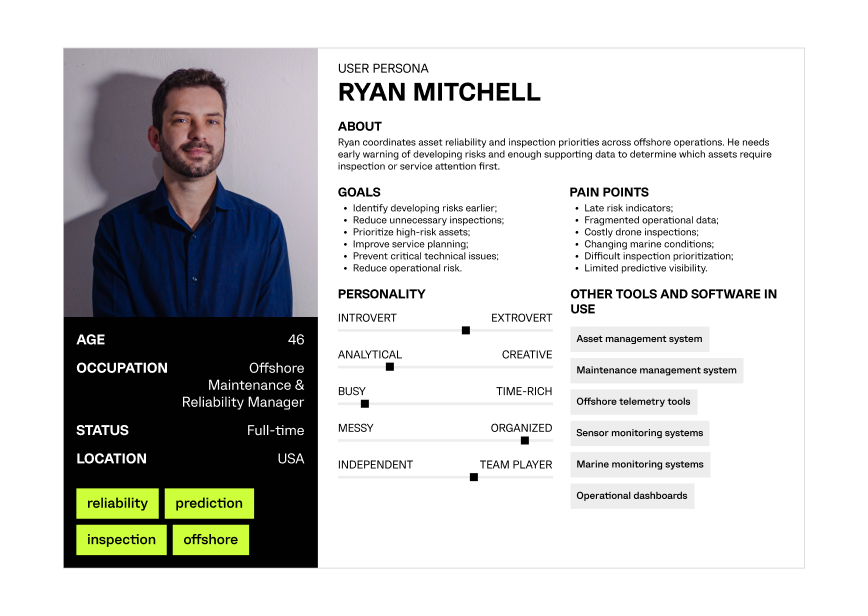
Defining the needs of an offshore reliability professional responsible for asset condition, inspection priorities, and service planning.
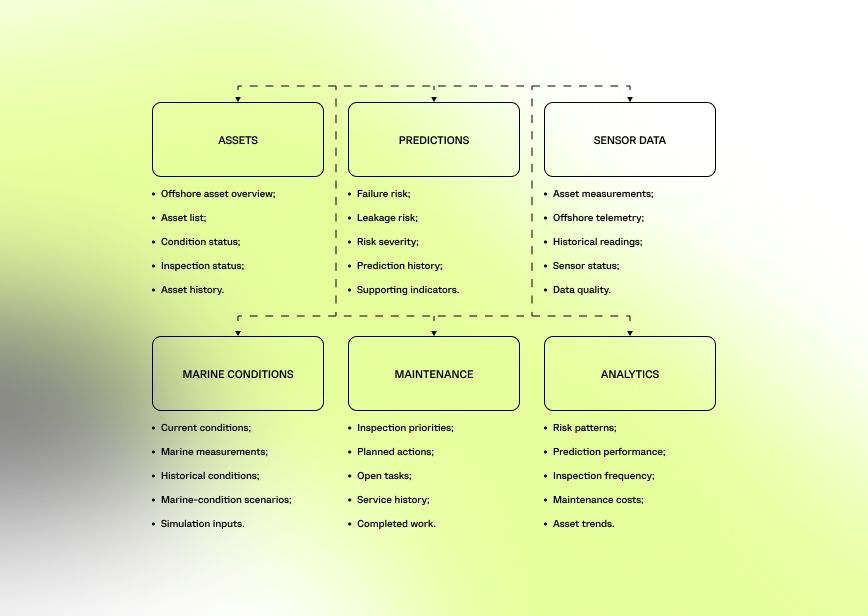
Organizing offshore assets, predicted risks, sensor data, marine context, inspections, and service activities around reliability workflows.
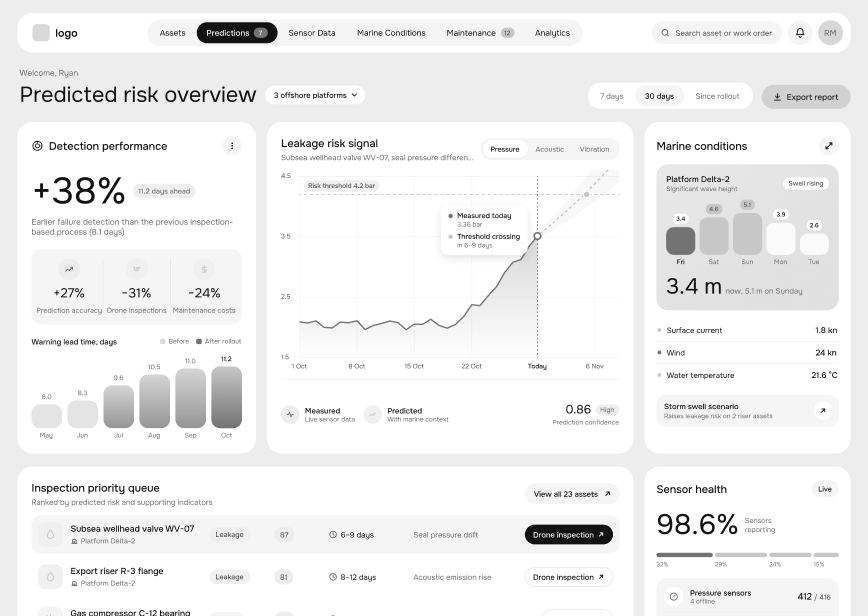
Testing predicted-risk views, sensor context, marine-condition data, and inspection workflows before interface development.
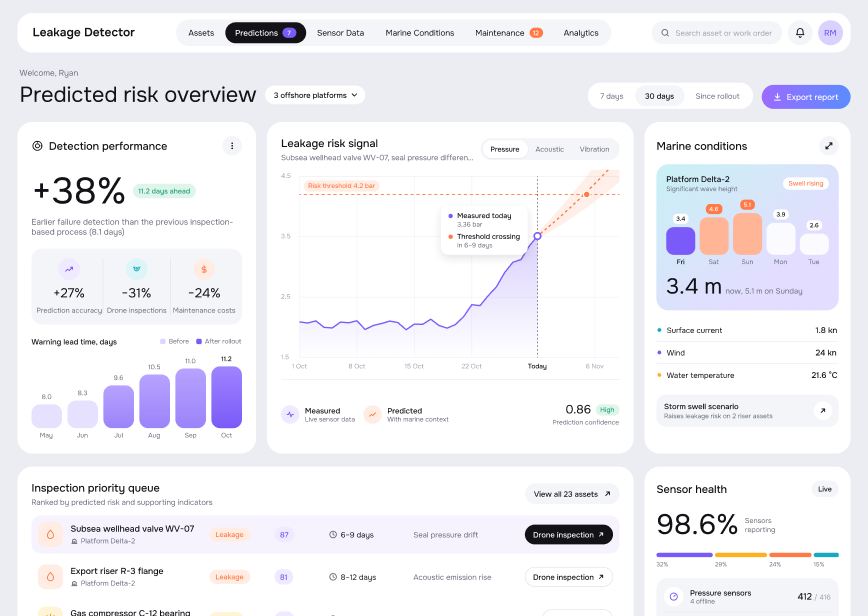
Creating operational views that help reliability teams understand predicted risks and prioritize inspection or service actions.
Python
Supported historical data preparation, simulation processing, and predictive modeling workflows used to analyze offshore equipment behavior.

TensorFlow
Supported training and execution of machine learning models that evaluated asset-condition patterns and estimated increasing risk.

Apache Kafka
Processed continuous streams of sensor readings, offshore equipment telemetry, and environmental measurements entering the predictive pipeline.

AWS IoT Core
Supported secure ingestion of equipment measurements into downstream processing services.

TimescaleDB
Stored time-series operational and marine-condition data used to analyze asset behavior across historical periods.

PostgreSQL
Stored structured asset, maintenance, failure, and model-related information associated with monitored equipment.

AWS S3
Provided storage for historical datasets, simulation outputs, training information, and machine learning artifacts.

FastAPI
Exposed equipment-condition predictions, risk indicators, and supporting information to operational applications.
Docker
Provided consistent runtime environments for predictive models, data-processing services, and supporting backend components.
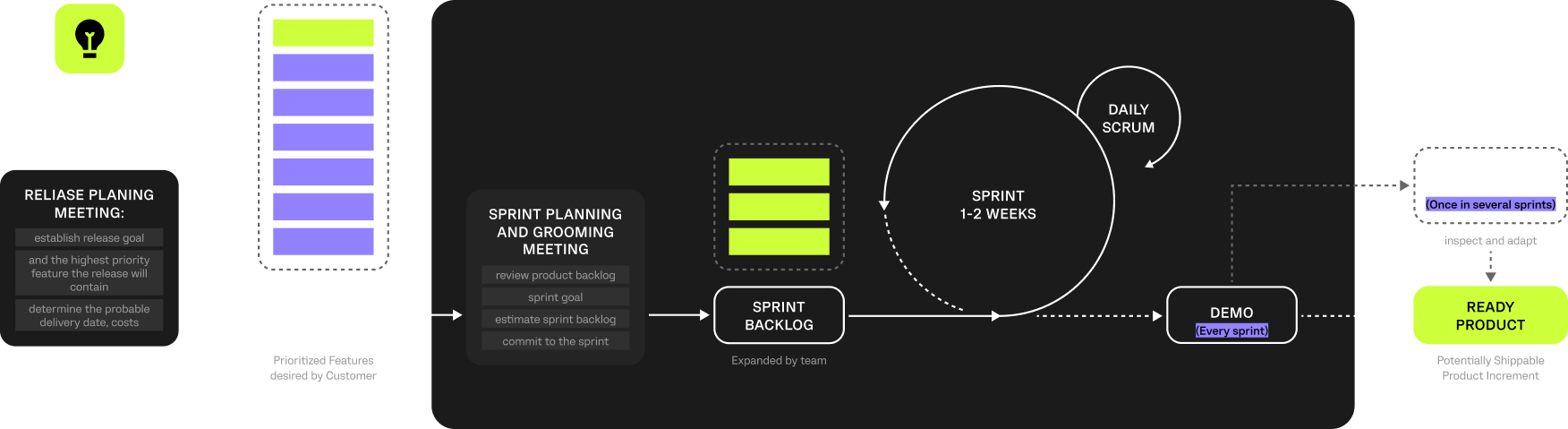
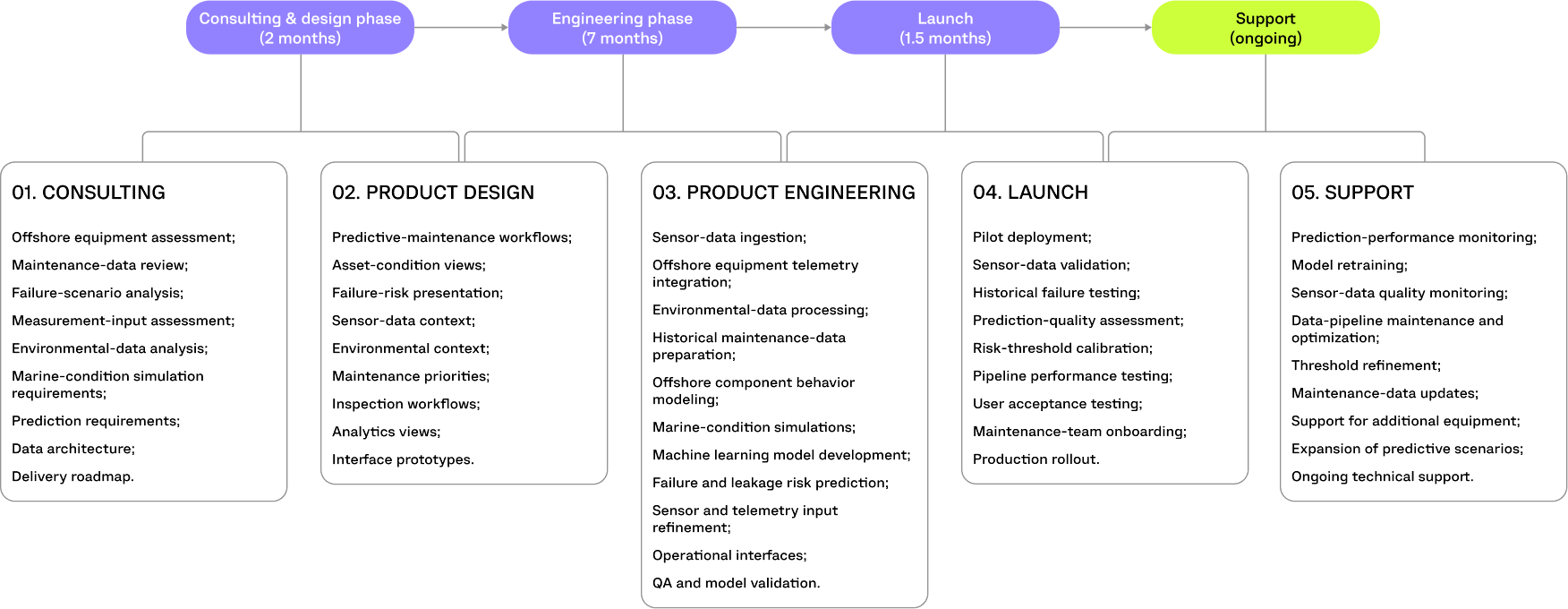
Computools used a Scrum-based delivery model with two-week iterations and regular validation by offshore operations, reliability, maintenance, data, and technical stakeholders.
Each iteration covered a defined part of the prediction workflow, including sensor-data integration, data preparation, equipment-behavior simulations, model development, prediction outputs, or inspection use cases.
Models were validated against historical service information and representative risk scenarios. The team reviewed sensor quality, marine-condition inputs, simulation outputs, pipeline behavior, and prediction results throughout development before using the outputs to support inspection and maintenance decisions.
We had the data, but it was difficult to tell which changes needed attention. Leakage Detector helped us spot signs of developing problems earlier and decide which equipment to inspect first. Our engineers could then review the findings and plan the next steps.
- Maintenance & Reliability Manager, U.S. offshore oil and gas operator




Computools | 341 Raven Cir, Camden Wyoming, Delaware 19934, US