The client is a U.S. subsea safety technology provider serving organizations operating in complex marine environments.
Offshore teams needed faster access to information from hundreds of sensors installed across subsea extraction facilities. Delayed visibility into anomalies increased accident risk, while environmental requirements increased the need for reliable anomaly assessment.
Computools delivered an energy software development solution that consolidated sensor data and simulation capabilities within a real-time monitoring system. Across monitored offshore facilities, maintenance expenses decreased by 35%, accidents decreased by 15%, and related non-compliance fines also fell by 15%.
The client develops safety solutions for subsea environments and has worked in leak detection for more than two decades. Its products support organizations operating or studying complex marine environments.
The company works internationally, with partners and customers in 25 countries, and also supplies technology to climate research institutions. Its solutions rely on offshore sensor data to support leak detection, environmental monitoring, and operational decision-making.
Offshore teams needed faster access to real-time information from hundreds of sensors across subsea extraction facilities.
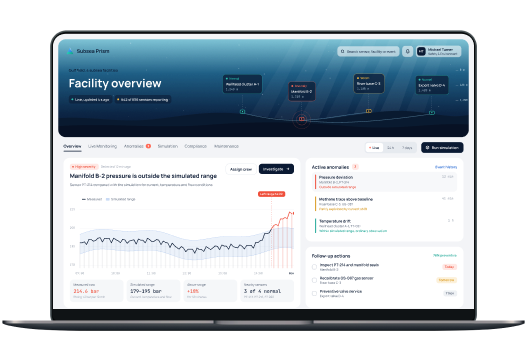
Computools developed Subsea Prism to monitor subsea extraction facilities in real time and connected it to data from hundreds of offshore sensors. The system consolidated incoming sensor information into one dashboard, giving teams a single, current view of the monitored facilities.
Computools also developed a simulation capability using information collected with the client’s Environment department. Simulation outputs helped teams determine whether unusual readings indicated a potential anomaly or reflected ordinary observations.
The solution supported iOS access to monitoring features, allowing authorized users to review current conditions from mobile devices. Together, real-time monitoring and simulation gave teams a clearer basis for prioritizing preventive work across monitored facilities before issues required a reactive response.
The platform improved offshore visibility and supported faster assessment of conditions requiring attention.
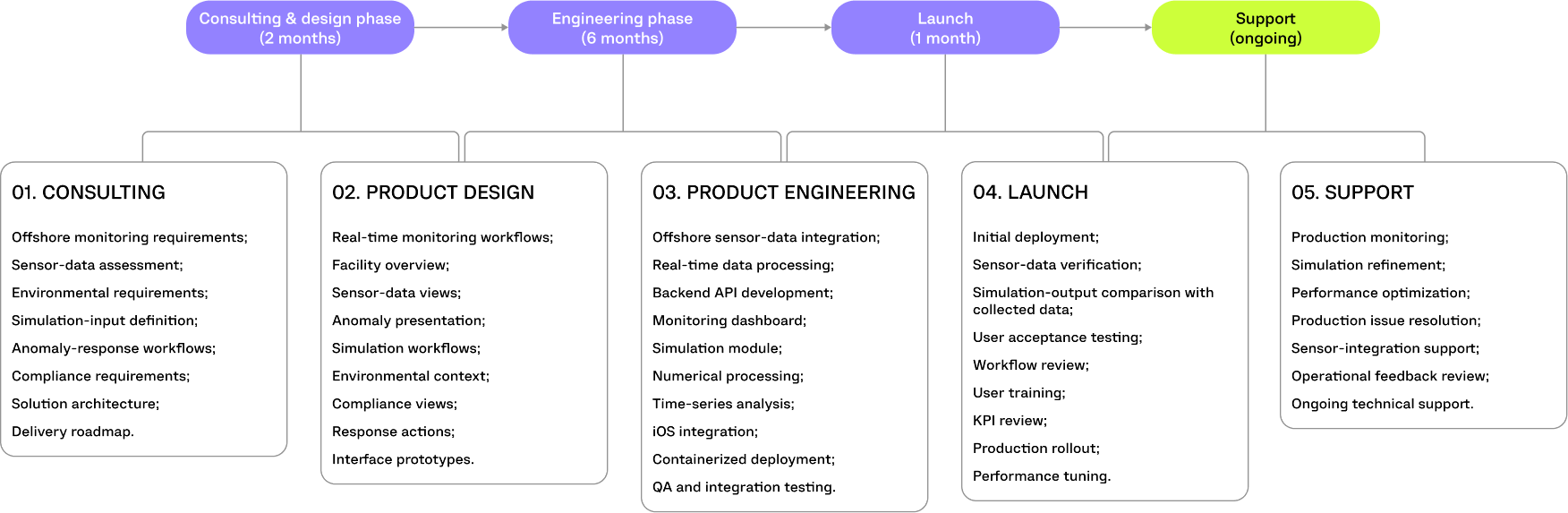
The project required combining continuous offshore sensor data, simulation functionality, and environmental compliance requirements within one production platform. Computools applied its oil and gas software development services across sensor data integration, real-time monitoring, simulation development, and collaboration with the client’s Environment department.
Before wider rollout, the team compared simulation outputs with collected sensor readings and refined the simulation logic based on those results. This validation step helped turn raw offshore data into a production-ready monitoring system for anomaly assessment and preventive action.

The interface was designed around rapid interpretation of sensor conditions, anomalies, environmental context, and response priorities.
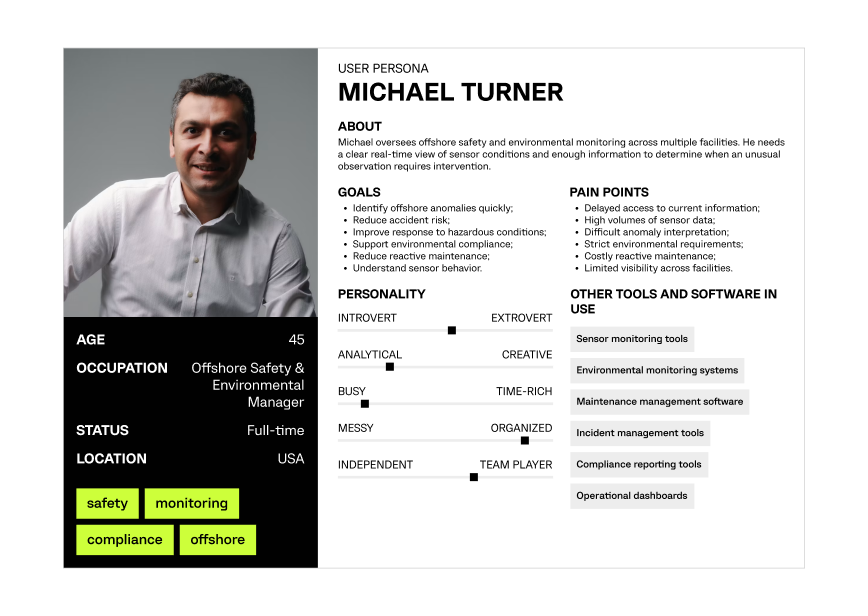
Defining the needs of a safety and environmental professional using the platform to monitor offshore facilities.
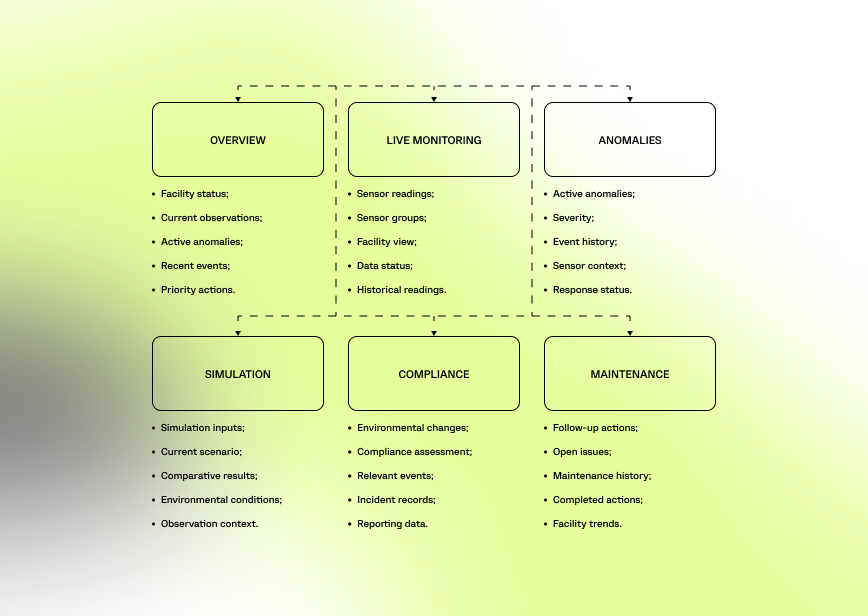
Organizing real-time sensor conditions, anomalies, simulation results, compliance information, and response workflows across offshore facilities.
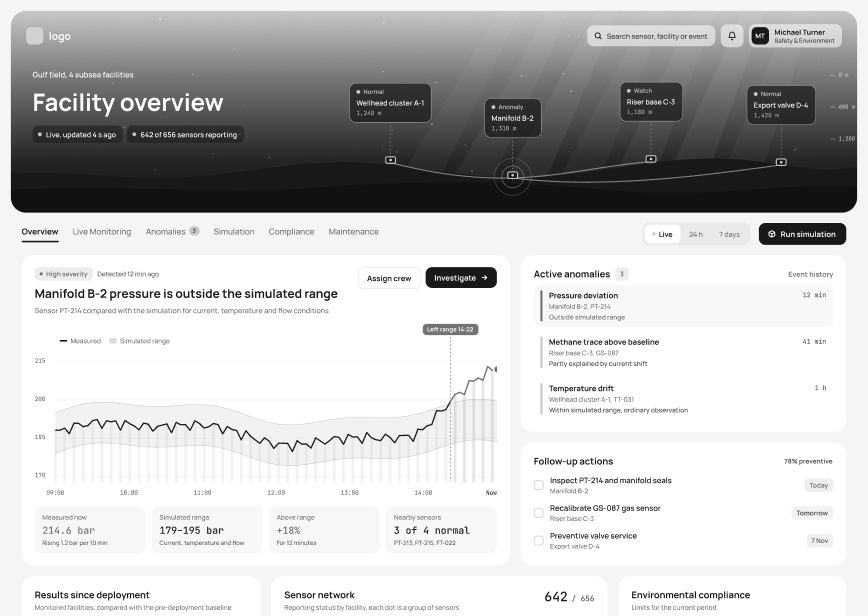
Testing real-time sensor views, anomaly workflows, simulation results, and response priorities before interface development.
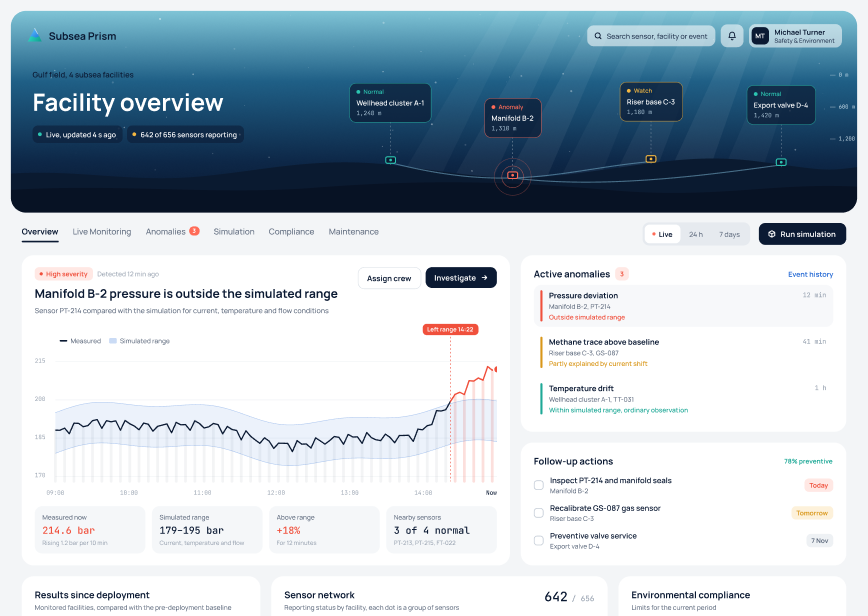
Creating a monitoring interface that helps offshore teams interpret unusual conditions and determine when further investigation or action may be needed.

Python
Supported simulation logic, sensor-data processing, and analytical workflows used across the monitoring platform.

NumPy and STUMPY
Supported numerical calculations for simulation workflows and time-series pattern analysis of sensor data.

FastAPI
Provided backend API services connecting processed sensor information, simulation results, and application interfaces.

iOS SDK
Supported mobile access to monitoring functionality for authorized iOS users.
Docker
Provided consistent deployment environments for backend services and supporting platform components.
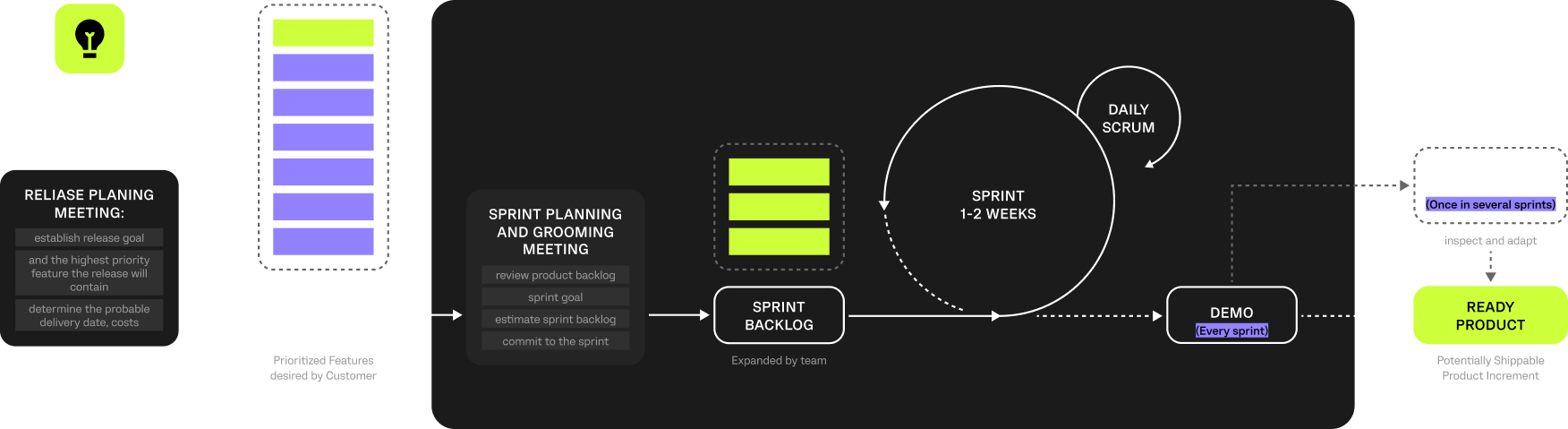
Computools structured delivery in two-week Scrum iterations with regular input from technical, operational, and environmental stakeholders. Early iterations focused on data integration and simulation inputs, while later cycles covered monitoring UX, anomaly-handling workflows, iOS access, and production readiness. Stakeholder reviews informed priorities throughout delivery.
The platform gave teams a much clearer view of offshore conditions and helped us move from reactive monitoring toward earlier intervention. The improvements we saw in maintenance costs and safety outcomes confirmed the value of that approach.
- Project Sponsor, U.S. subsea safety provider




Computools | 341 Raven Cir, Camden Wyoming, Delaware 19934, US