Navis Horizon

A real-time cargo visibility solution with an AI assistant for logistics operations

case image

AT A GLANCE

Our client required a unified platform to gain real-time cargo visibility, reduce dispatcher workload, and enhance customer communication. We built a system that consolidates AIS/GPS data, automates shipment status updates, and adds AI-driven support for both dispatchers and customers—the result: fewer support requests, more stable SLAs, and higher customer satisfaction.

THE CLIENT

Our client is a mid-sized port logistics operator in Hamburg, providing end-to-end cargo handling and transportation across major European and global trade routes. Serving corporate clients that rely on accurate, real-time shipment updates, the company previously depended on manual reporting and fragmented data systems, leading to delays and inefficiencies.

BUSINESS CHALLENGE

The operator faced increasing pressure to offer accurate, real-time shipment visibility. Customers frequently contacted support for updates, while dispatchers were overloaded with manual data gathering from carrier portals, port messages, and spreadsheets.

This resulted in slow issue resolution, inconsistent communication, and periodic SLA breaches. The client required a unified platform to centralize cargo data, automate routine tasks, and deliver proactive updates.

SOLUTION SUMMARY

The project was delivered in iterative phases to implement real-time tracking, automated alerts, and AI-driven assistance.

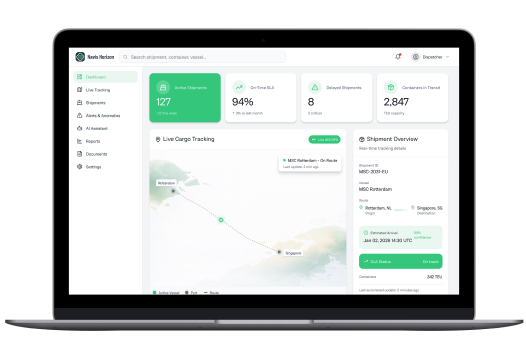
We developed a unified cargo tracking platform that consolidates AIS, GPS, and carrier-event data into a single operational interface. The system automatically detects status changes, predicts potential delays, and notifies both dispatchers and customers.

An integrated AI assistant serves two main user groups:

  • Dispatchers: receive anomaly alerts, predictive delay insights, AI-generated summaries, and quick access to shipment details;
  • Customers: interact via a natural-language chat interface to track cargo, check delays, review documentation, and verify timelines.

Close collaboration with the client’s operations team ensured seamless workflow integration and minimal disruption.

IMPACT

Navis Horizon drove significant operational and customer-service improvements:

  • 40% reduction in dispatcher workload;
  • 23% increase in customer satisfaction;
  • 18% faster resolution of shipment incidents;
  • 100% transparency in cargo status updates;
  • Reduced SLA penalties and improved overall reliability.

WHY COMPUTOOLS

The client selected Computools due to the company’s proven expertise in logistics technology, real-time data processing, and AI-enabled platforms. Computools demonstrated an ability to integrate multiple complex data sources, design highly usable dashboards, and build scalable systems tailored to operational environments.

The Scrum approach ensured transparency, flexibility, and rapid adaptation to evolving client requirements.

Talk to our experts about building your real-time logistics platform.

STORY IN DEPTH

Background

Before the platform was implemented, dispatchers spent much of their workday gathering updates from various sources. Customers lacked visibility and often asked for manual status checks. This created operational bottlenecks and limited the company’s ability to deliver consistent, predictable service.

Approach to solution

Computools analyzed the client’s operational workflows, communication patterns, and data dependencies. Off-the-shelf tools fell short of providing unified tracking, predictive insights, and AI-driven customer interaction.

A custom platform was designed to centralize all data streams, automate status updates, and support both dispatchers and customers through an AI assistant, ensuring seamless integration with existing operations.

Computools role

We provided full-cycle discovery and consulting, analyzing the client’s operational workflows and defining the architecture for real-time AIS/GPS data aggregation. We integrated multiple carrier APIs and port-event systems into a single, reliable data stream. We also developed an AI assistant designed specifically for dispatchers and customers to streamline communication and reduce manual workload. Furthermore, we also created the UX/UI for dashboards and shipment timelines, and completed all stages of engineering, QA, deployment, and system optimization to ensure a stable, scalable platform.

Key decisions and outcomes:

  • Consolidated tracking signals into a single operational platform, providing a complete, real-time view of cargo movements;
  • Automated alerts: Manual emails and phone calls were replaced with automatic notifications, reducing dispatcher workload and improving response times;
  • AI-powered assistance: An intelligent assistant handles repetitive tasks, summarizes shipment data, and delivers actionable insights to both dispatchers and customers;
  • Predictive delay detection: Advanced analytics anticipate potential disruptions, improving SLA performance and enabling proactive customer communication;
  • Scalable architecture: The platform is designed for easy expansion, supporting additional routes, carriers, and new operational features without major rework;
  • Customer experience improvements: Proactive updates and AI chat support increase transparency, trust, and overall satisfaction.

Design

Navis Horizon was designed to deliver an intuitive and efficient user experience for both dispatchers and customers.

USER PERSONA → SITE MAP → WIREFRAMES → USER INTERFACE

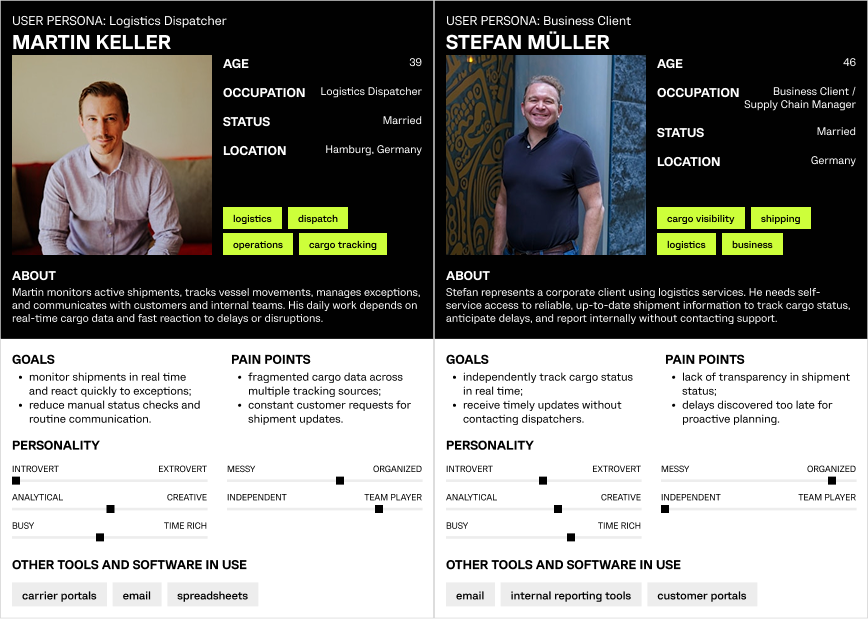
USER PERSONA

Designed the platform around real operational roles, focusing on logistics dispatchers responsible for monitoring shipments and managing exceptions, and business clients who required self-service access to real-time cargo visibility and documentation.

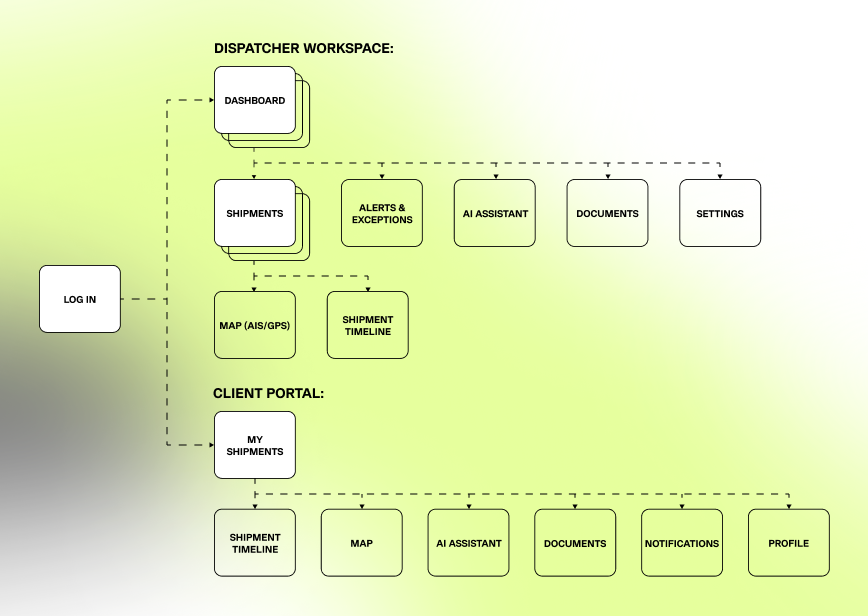
SITE MAP

Structured with role-based access, separating dispatcher workflows from client portals and defining clear navigation paths to shipments, alerts, documents, and AI tools.

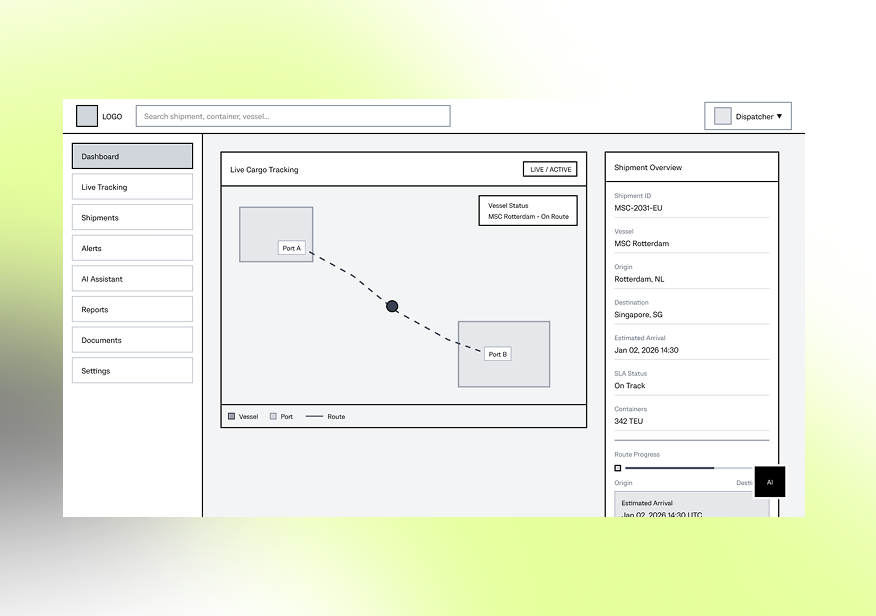
WIREFRAMES

Visualized shipment cards, a global map with markers, timeline events, and an AI chat interface to ensure smooth navigation and minimal cognitive load.

USER INTERFACE

Focused on clarity and operational speed: real-time map, color-coded statuses, streamlined data panels, and conversational AI sidebar. Consistent across dispatcher and customer views while adapting complexity to user roles.

DIGITAL PLATFORM & TECHNOLOGY

PROJECT MANAGEMENT METHODOLOGY

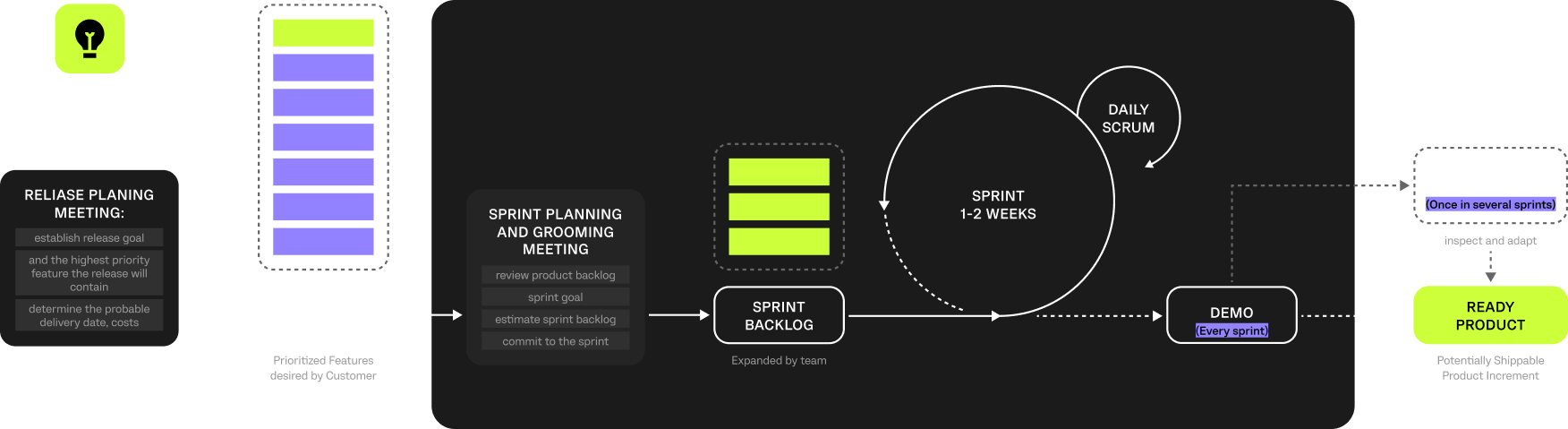
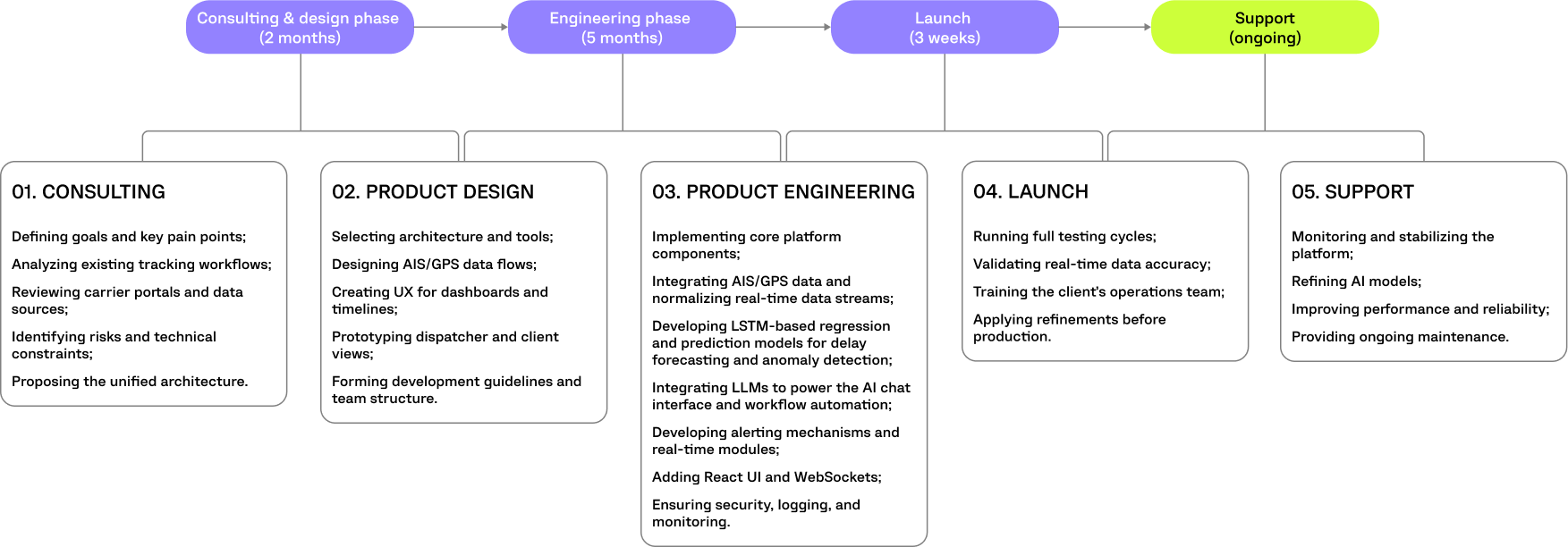
Scrum methodology enabled fast, structured progress and full visibility throughout development. Regular testing cycles and incremental feature releases ensured the platform remained stable as it evolved. The iterative approach allowed the client to review functionality early, provide feedback, and refine requirements as operational needs became clearer.

PROJECT MANAGEMENT METHODOLOGY

PROJECT TIMELINE

image

WHAT OUR CLIENT SAID

We now have full visibility without relying on multiple sources. Customers receive updates instantly, and our dispatchers finally have the tools to work proactively instead of reactively. The AI assistant became one of the most impactful improvements for our team.

CONTACT US TO GET
A COST-EFFECTIVE PROJECT ESTIMATE

Thank you for your message!

Your request will be carefully researched by our experts. We will get in touch with you within one business day.

WHAT HAPPENS NEXT?

01.
We deeply analyse your request.
02.
We create project roadmap, accelerating your time-to-value.
03.
We co-scope features, minimizing project risk upfront.
04.
We submit a comprehensive project proposal with estimates, timelines, CVs, etc
Trusted by: