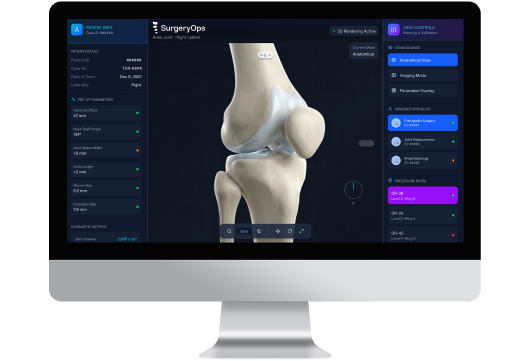
Our client, a hospital in the United States, needed an efficient surgical planning software solution to coordinate surgical schedules, assign doctors based on patient parameters, and manage procedure room availability. Computools developed a HIPAA-compliant planning platform that replaced manual spreadsheets with automated workflows, improved operational visibility, and ensured secure handling of patient data across departments.
The client is a multi-specialty hospital in the United States with a modern surgical center and a team of experienced medical professionals across multiple clinical domains. The hospital serves hundreds of patients each week and operates several procedure rooms equipped for both scheduled and urgent intervention.
On a daily basis, the hospital conducts 30–50 procedures, requiring close coordination between physicians, administrative staff, procedure rooms, and supporting systems. Alongside clinical work, the organization manages complex scheduling, resource availability, and access to patient-related diagnostic data as part of its routine operations.
Given the scale of operations and regulatory requirements, the hospital required a technology partner with proven healthcare software development expertise to modernize planning workflows while maintaining high standards of security, compliance, and operational reliability.
As operational volume increased, coordinating numerous parallel tasks with limited shared resources became far more complex. Doctors, procedure rooms, and specialized equipment needed to be allocated dynamically, often under time pressure and with frequent schedule changes.
Manual coordination and fragmented systems made it difficult to maintain consistent visibility across schedules and resource availability. This increased the risk of scheduling conflicts, inefficient use of procedure rooms, and delays caused by last-minute adjustments.
The hospital also relied on multiple internal systems for diagnostics and operations, which operated independently and were not designed for centralized planning. The lack of integrated planning workflows limited the hospital’s ability to optimize schedules, balance workloads, and respond efficiently to daily operational demands.
Computools delivered a centralized preoperative planning software platform that automated doctor assignment and scheduling based on patient parameters and internal availability constraints. The solution provided automatic, secure patient assignment to doctors, data encryption, schedule adjustments for doctors, and secure booking of procedure rooms.
By reducing the amount of administrative coordination required in daily planning workflows, the platform reduced the operational burden on doctors and hospital staff. This allowed medical teams to spend less time on coordination tasks and more time focusing on patient care and professional responsibilities.
As a result, patients could be confidently scheduled with the most appropriate and available specialists, while doctors gained more capacity to focus on high-quality medical and surgical care rather than on administrative coordination. This shift improved overall workflow balance, staff satisfaction, and consistency of care delivery without adding complexity to existing hospital processes.
Computools was chosen for its extensive experience in delivering healthcare platforms in regulated environments and its structured, problem-focused approach. The team showed a clear understanding of hospital operational workflows, planning constraints, and data protection requirements, and collaborated closely with the client to ensure the solution aligned with actual operational needs.

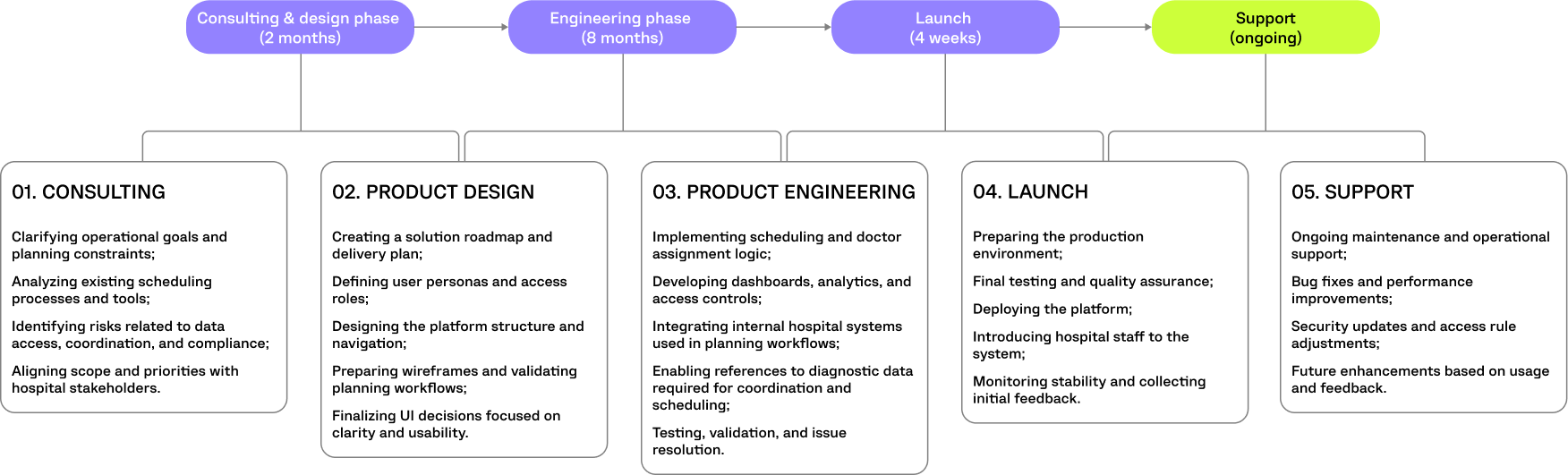
The design process focused on simplifying daily planning tasks, improving visibility across schedules, and reducing cognitive load for hospital staff working under time pressure.
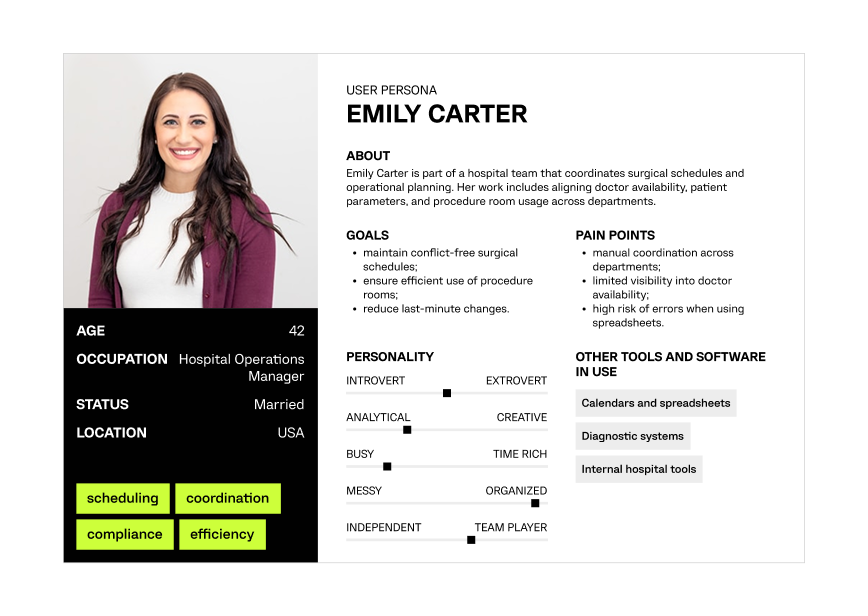
Creating a detailed profile of the main user to support accurate design choices and efficient development.
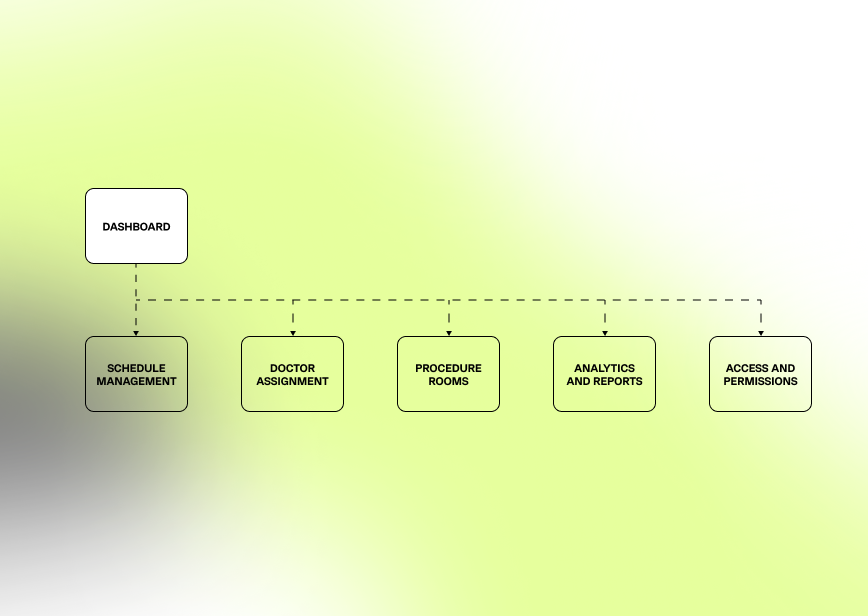
Organizing the platform structure to ensure intuitive navigation and clear access to core planning functions.
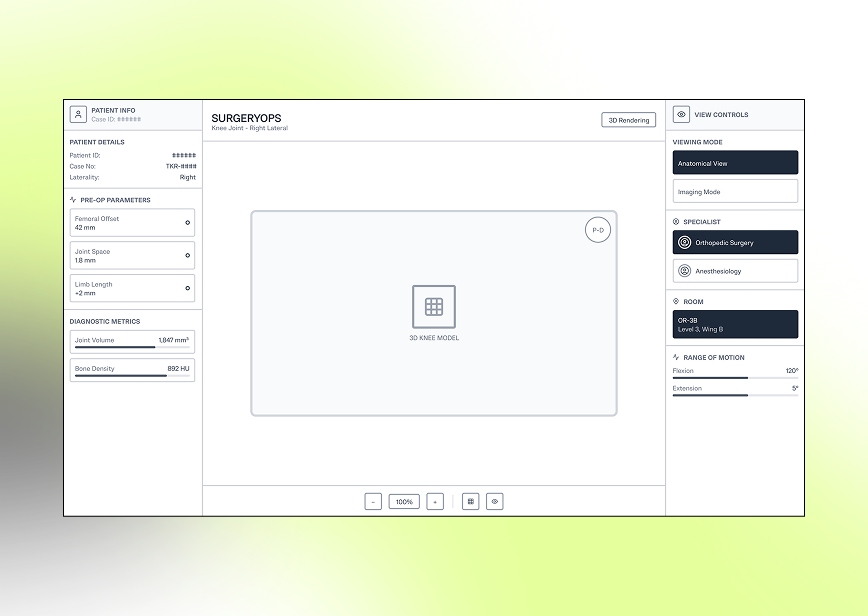
Defining page structure and key interactions to validate layout and functionality before development.
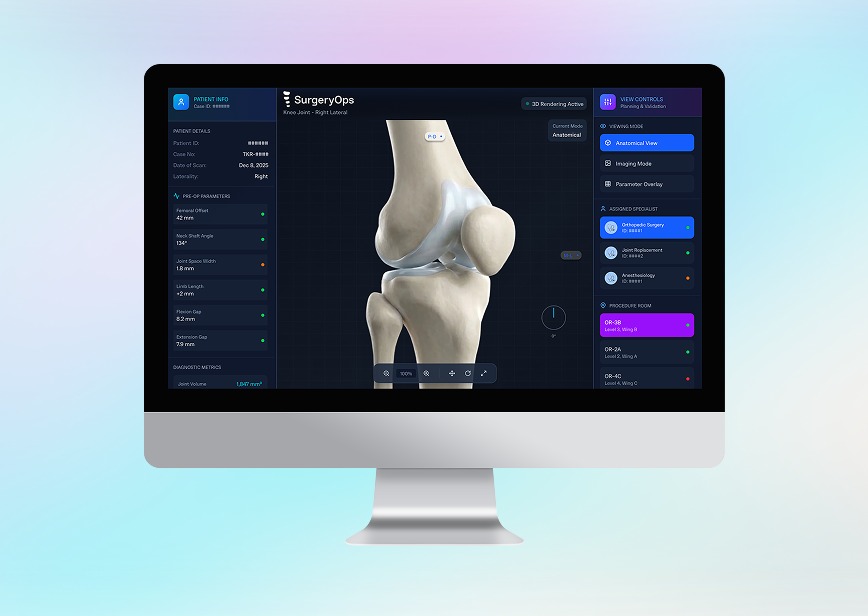
Designing a clear and consistent interface focused on usability, speed, and operational clarity.

ASP.NET Core (.NET)
Provides the platform's backend foundation, handling scheduling logic, doctor assignment, access control, and analytics. The framework supports stable performance and security requirements typical of enterprise healthcare systems.
C#
Implements core planning rules, including conflict detection and workload calculations. The language supports predictable execution and reliable handling of complex operational scenarios.

React
Forms the basis of the web interface, covering dashboards, schedule management, and administrative workflows. The component-based approach supports clear navigation and scalable UI development.

Microsoft SQL Server
Stores scheduling data, patient parameters, audit logs, and access rules. The database ensures transactional reliability and data integrity required for regulated healthcare environments.

REST APIs, DICOM
REST-based APIs are used to integrate the platform with internal hospital systems and coordination services. Support for DICOM imaging integration enables structured, controlled access to diagnostic imaging data referenced during planning workflows via existing clinical systems.

Security
Role-based access control (RBAC) was implemented to restrict access to patient data and planning functions based on user roles. Audit logging was enabled for sensitive actions to ensure traceability and support compliance and internal reviews.
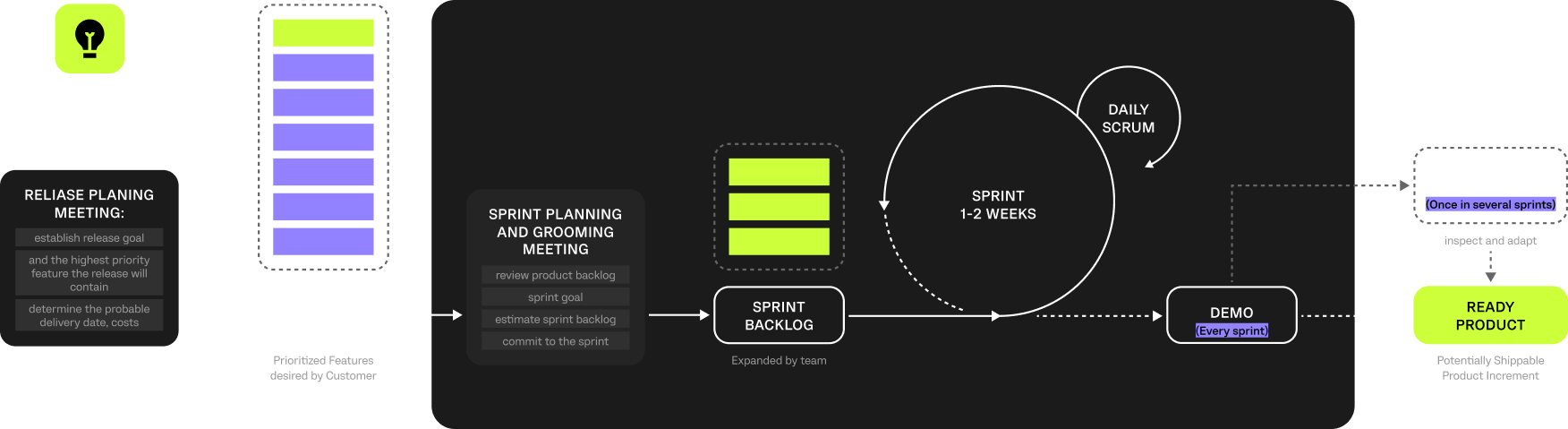
An Agile approach with Scrum was used to manage the project and support iterative development. This allowed the team to respond quickly to changing operational requirements, evolving planning workflows, and constraints typical for a hospital environment. Regular sprint cycles, reviews, and client feedback ensured continuous refinement of the solution and alignment with real planning needs and compliance expectations.
Planning used to feel stressful and fragmented, with too much time spent double-checking schedules and resolving conflicts manually. Working with Computools changed that.
The platform brought clarity and structure into our daily routines, reduced constant back-and-forth, and made planning feel manageable again. It’s reassuring to know that schedules, resources, and patient data are handled reliably and securely, which makes a real difference for the whole team.




Computools | 341 Raven Cir, Camden Wyoming, Delaware 19934, US