ClaimMatrix Auto is an automotive warranty management software platform developed for a European Tier 1 supplier with $1.8 billion in annual revenue. The company processes several thousand OEM warranty claims each year across powertrain and chassis component categories.
Warranty claims, production batches, quality inspections, and supplier lot records were stored in four disconnected systems. Engineers needed two to three days to assemble the evidence required to evaluate a single chargeback, leaving too little time to challenge eligible claims within OEM-defined response windows.
Computools delivered the warranty management solution within 120 days. It reduced average claim response time from 2.8 days to under four hours, lowered unjustified warranty exposure by 47%, and protected $4.2 million in annual margin.
The client is a European Tier 1 automotive supplier serving three major OEMs across powertrain and chassis component categories. Its manufacturing operations span Germany, Poland, and Romania.
The company maintained IATF 16949 certification, documented its production processes, and kept field return rates within industry norms. Its existing warranty claims management system, however, operated separately from ERP, MES, and supplier records.
The supplier lacked a warranty analytics platform capable of quickly linking individual claims to production batches, inspection results, and component lots to support evidence-based dispute resolution.
Rising warranty costs were driven more by slow evidence assembly than by deteriorating production quality. OEM chargebacks had to be investigated and disputed within strict response periods. The required evidence existed, but it was distributed across systems with different data structures, identifiers, and update cycles.
Warranty claims entered through OEM portals were tracked in a standalone system. Production batch records remained in the ERP, quality test results were stored in the MES, and supplier component lots were maintained in procurement files and spreadsheets.
Correlating one claim manually required two to three days of engineering work. During high-volume periods, the warranty and quality teams could not investigate every chargeback before the response deadline. Claims were often accepted because the team could not assemble supporting evidence within the response window without disproportionate engineering effort.
The supplier needed automotive software development services to connect operational data and automate evidence preparation without replacing production-critical systems. It also required AI development services to identify disputes with the highest potential financial impact.
Through focused data engineering services, Computools delivered ClaimMatrix Auto as a warranty evidence intelligence layer built on top of the client’s existing infrastructure.
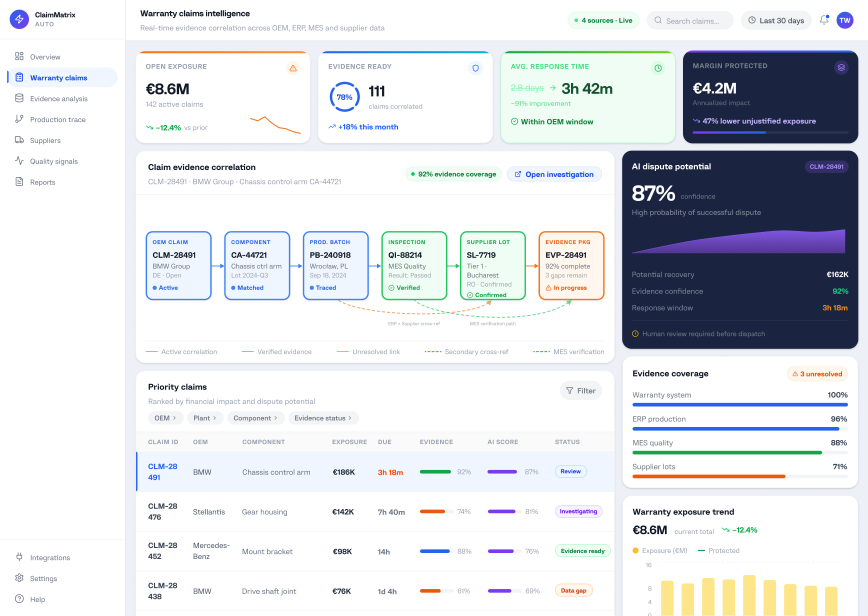
A manufacturing data integration layer connected the warranty system, ERP, MES, and supplier lot records through APIs, ETL pipelines, and real-time event streams, normalizing claim identifiers, part numbers, production batches, inspection records, timestamps, and component lots within a unified data model.
When a new OEM claim arrived, the system identified the corresponding production batch, retrieved quality results from the relevant manufacturing window, cross-referenced supplier component lots, and assembled a structured evidence package with test results, timestamps, and traceability records.
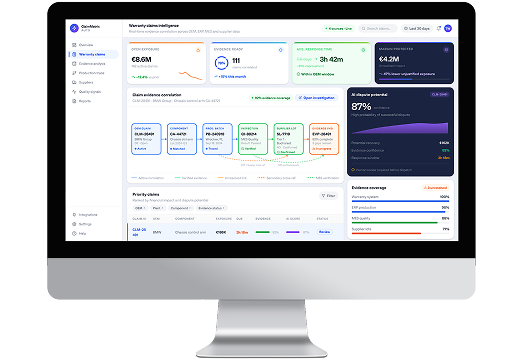
The automotive traceability software gave engineers a single interface for reviewing the complete claim context. An AI classification model estimated the probability of a successful dispute and prioritized claims with the highest expected financial value, while leaving final decisions under human control.
ClaimMatrix Auto supported OEM warranty dispute management without requiring ERP migration, MES replacement, or changes to active production workflows.
The 120-day implementation produced the following measurable results:
AI warranty claims analysis helped the quality team focus engineering capacity on claims with the strongest dispute potential. Linking claim outcomes with production and inspection records, the platform also increased the operational value of the client’s existing quality management software for automotive operations.
Instead of routinely accepting insufficiently investigated chargebacks, warranty teams could submit traceable, data-backed evidence within OEM response periods. Finance teams gained visibility into warranty exposure trends two quarters earlier than before and could identify potential margin protection opportunities sooner.
Computools was selected for its ability to integrate automotive data, apply machine learning, and support product engineering without disrupting production-critical systems. The client also needed a partner capable of linking technical delivery to a measurable financial target: reducing unjustified warranty exposure and protecting margin within a 120-day implementation window.
Work began with mapping the evidence required for each claim, where it was stored, and where delays occurred. The assessment defined a focused integration scope that preserved the client’s ERP, MES, and warranty platform.
Delivery followed a 120-day plan with checkpoints on data availability, correlation accuracy, evidence package completeness, model performance, and claim response time. These checkpoints kept implementation risk under control and tied technical progress to warranty margin protection.
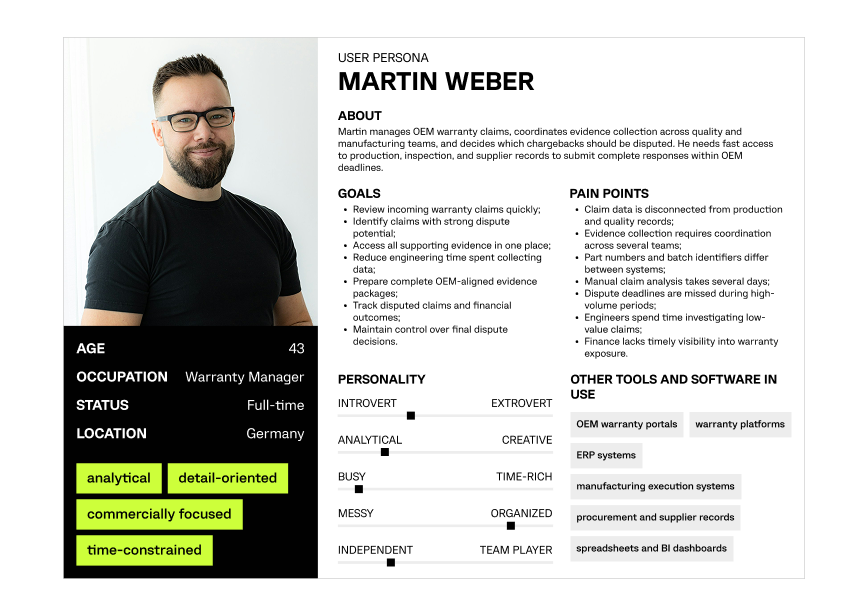
The design focused on rapid claim review, clear traceability of evidence, and efficient preparation of OEM-aligned dispute packages.
Defining warranty investigation and dispute workflows to reduce manual analysis and accelerate evidence preparation.
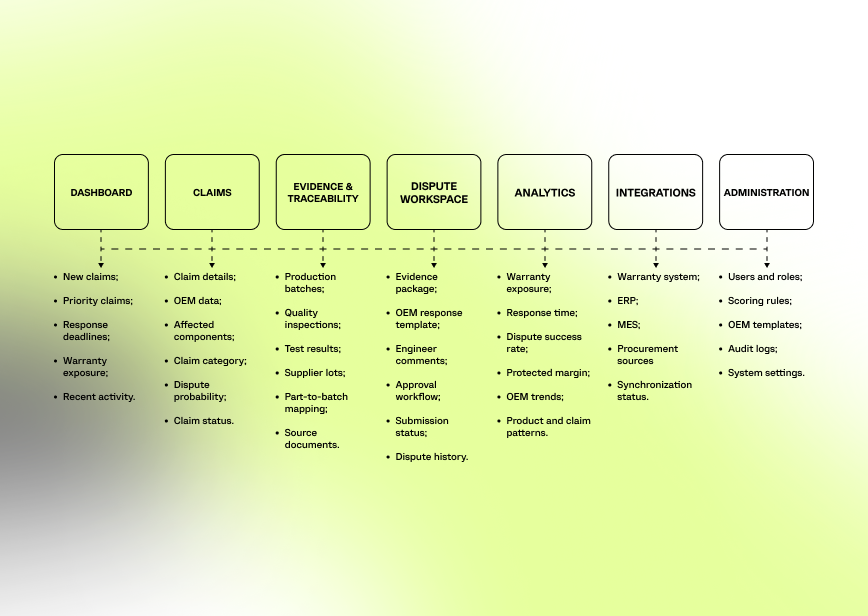
Designing the platform around the full warranty dispute workflow, from claim intake and evidence correlation to dispute preparation and warranty analytics.
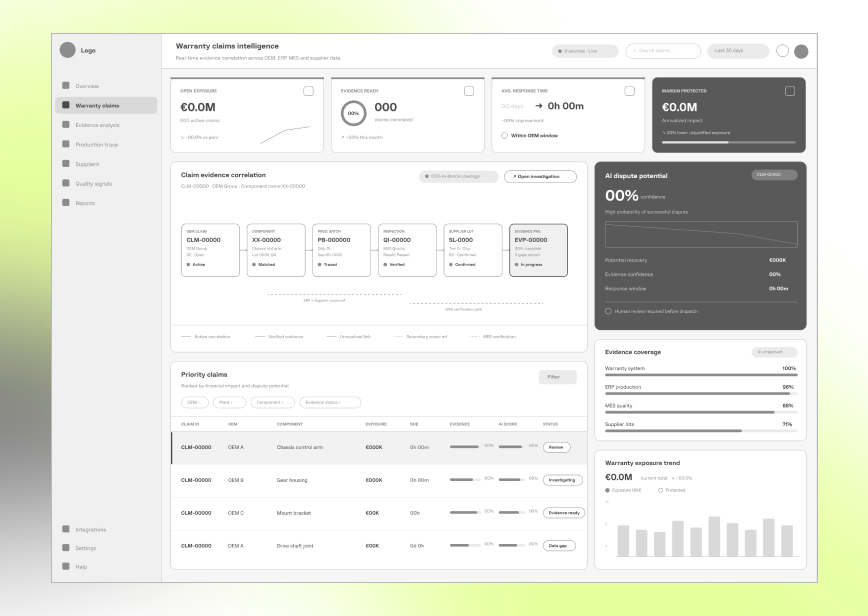
Designing low-fidelity layouts for claim prioritization, evidence review, production traceability, dispute-package preparation, and approval.
The interface gives warranty engineers immediate access to claim details, production batches, inspection results, supplier lots, dispute probability, and supporting documents on a single review screen.
Python and FastAPI
Python and FastAPI power the integration, normalization, and claim-processing services. They connect warranty, ERP, MES, and procurement data through reusable API pipelines.
Apache Kafka
React was used to build a responsive management interface for revenue teams. This frontend layer supported fast dashboard interactions, role-based navigation, and clear workflows for pricing, forecasting, and channel monitoring across multiple properties.
PostgreSQL
PostgreSQL stores normalized claim records, evidence relationships, review statuses, dispute outcomes, and audit data, ensuring that every evidence package is traceable to its source records.
React
React provides the internal analyst interface for claim prioritization, evidence review, package generation, and dispute-status tracking.
AWS
Amazon EC2, Amazon S3, and AWS Lambda support application hosting, evidence-document storage, event processing, and scalable workloads during periods of increased claim volume.
Docker
Docker ensures consistent environments, streamlined deployment workflows, and supported reliable release management across development, staging, and production.
Scikit-learn and XGBoost
Scikit-learn and XGBoost support dispute-probability scoring and claim-pattern analysis. Model outputs prioritize engineering review without replacing human decisions.
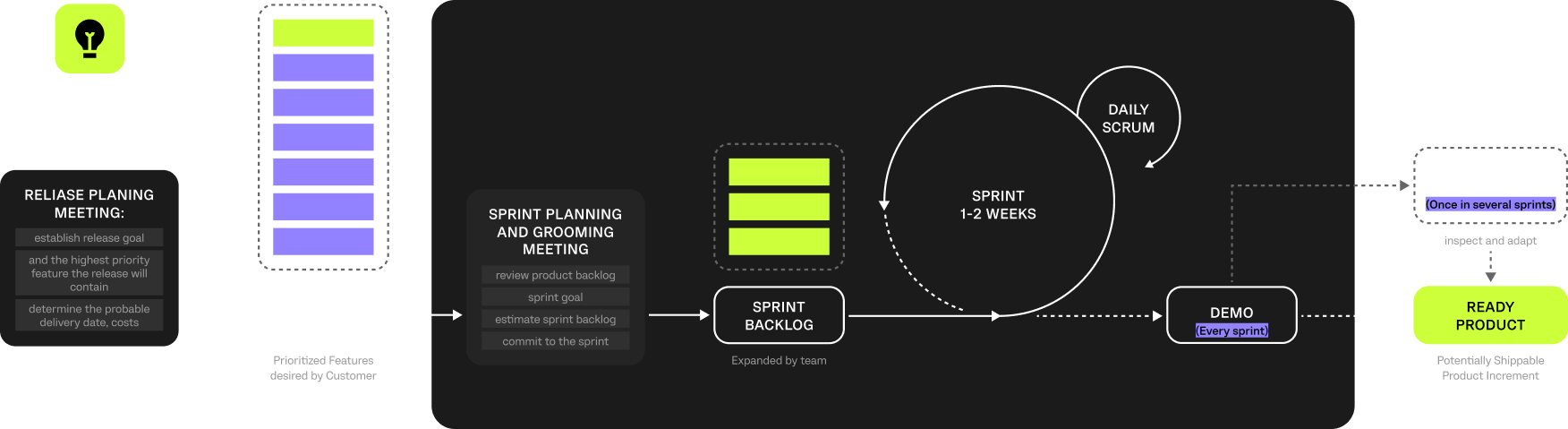
Agile delivery with Scrum kept the 120-day implementation focused on measurable workflow outcomes. Short sprints covered source-system connectivity, data normalization, claim correlation, evidence-package completeness, dispute scoring, and analyst review.
Each integration and correlation rule was validated before the next workflow entered development. Regular stakeholder reviews kept business rules aligned with OEM requirements and reduced rollout risk without interrupting manufacturing operations.
We knew we were paying claims we should not have been paying. The evidence was there, but it was spread across different systems, and by the time we pulled it together, the deadline had passed. ClaimMatrix Auto changed that. Now we can build a complete case in hours and respond on time. We are paying fewer unjustified claims, and the impact on our warranty margin is clear.