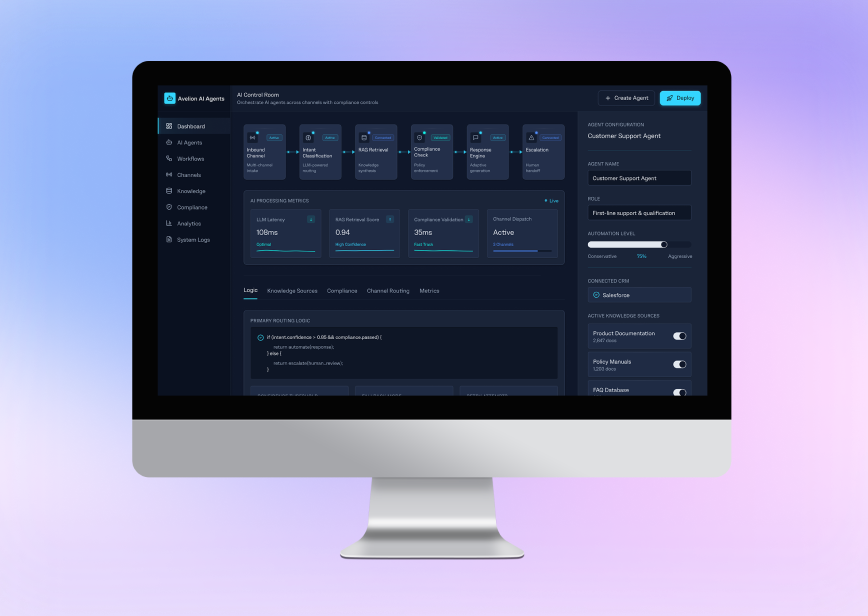
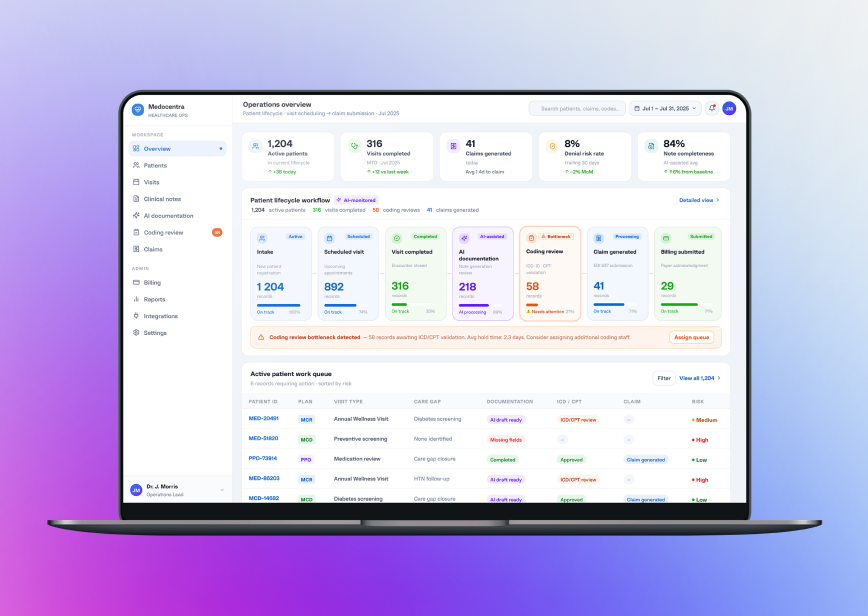
Current-state baseline:
We map priority business and operational processes, including workflows, handoffs, tools, business knowledge, ownership, bottlenecks, existing AI usage, manual effort, operating costs, and current performance.
Target human-AI operating model:
We define what AI assistants and agents can execute, where human judgment remains required, how exceptions are handled, and who remains accountable for business outcomes.
Target execution flow:
We redesign how work moves from input to outcome across business processes to reduce delays, unnecessary handoffs, manual effort, and context loss.
Process change model:
We define how business workflows, operating rules, responsibilities, knowledge, and AI capabilities can be updated as operational requirements and business priorities change.
Business knowledge architecture:
We identify the business processes, operational rules, company policies, decisions, and organizational knowledge that people and AI need to execute work reliably and accelerate knowledge transfer.
Initial AI Value Factory architecture:
We define the required reusable AI capabilities, business workflows, models, integrations, validation, security, control, and feedback components.
KPI baseline and targets:
We establish measurable targets for process execution time, cost per completed process, throughput, operating capacity, process quality, knowledge transfer time, human involvement, and AI cost and runtime.
Cost breakdown:
We estimate implementation effort, tooling and infrastructure, model/API usage, maintenance, and ongoing operating costs.
Implementation roadmap:
We prioritize the first end-to-end business workflow, required process changes, Factory capabilities, integrations, validation requirements, and phased rollout across teams and operational functions.