LabFlow Reforge

How a US-based pharmaceutical company rebuilt its legacy ELN into an AI-ready research platform for modern R&D workflows

case image

AT A GLANCE

LabFlow Reforge is an electronic lab notebook software platform developed for a US-based mid-size pharmaceutical company with multiple research teams using a legacy ELN across daily R&D operations.

The existing system had become difficult to adapt. Scientists still relied on it for core documentation, but rigid workflows, limited integrations, and outdated architecture pushed experiment notes, calculations, and supporting data into Excel files, local documents, and other parallel tools.

Computools delivered LabFlow Reforge as a modern ELN platform that reused critical legacy components while redesigning the core architecture for flexibility, integration, and future AI-driven use cases. The solution increased researcher adoption and daily usage by 2.5x, reduced manual data handling outside the ELN by 60%, and enabled integration with more than five core lab systems.

THE CLIENT

The client is a US-based mid-size pharmaceutical company running multiple R&D teams across laboratory research, experiment documentation, data capture, and internal scientific workflows.

The company had already invested in electronic lab notebook development, but its legacy platform no longer matched the pace of laboratory digitalization. New research processes required more flexible experiment structures, cleaner data capture, and stronger connectivity with surrounding lab systems.

The organization needed laboratory informatics solutions that could modernize the ELN environment, preserve valuable legacy components, and maintain the stability of ongoing research.

BUSINESS CHALLENGE

The existing ELN was built on outdated architecture and could not support evolving research processes or modern data workflows. The user experience was rigid and unintuitive. Scientists documented experiments in the system only when necessary, while practical work often continued in Excel files, local notes, and other tools outside the controlled ELN environment.

Integration capacity was limited. The system could not reliably connect to LIMS, analytical instruments, data pipelines, or external sources, leaving research data fragmented and increasing manual transfers between tools.

The architecture also blocked future AI-driven use cases. Experiment assistance, automated data structuring, and advanced analytics required cleaner data models and more flexible workflow logic than the legacy platform could provide.

The client needed custom ELN software to support laboratory digital transformation while preserving parts of the existing platform that R&D teams still needed. It also required pharmaceutical software development services capable of preserving validated legacy assets while rebuilding the architecture around integration, usability, and AI readiness.

SOLUTION SUMMARY

Computools delivered LabFlow Reforge as a modern ELN platform that preserved critical legacy components and replaced the rigid core architecture with a modular, scalable system.


The platform was designed to evolve into an AI-powered electronic lab notebook, with structured experiment tracking, configurable workflows, standardized data capture, and a researcher-friendly interface aligned with daily laboratory work.

APIs and data pipelines connected the ELN with laboratory systems, analytical instruments, and external sources. Through LIMS integration services, research teams could exchange lab data directly within the platform, reducing manual transfers between disconnected tools.

A structured data layer prepared experiment records, metadata, observations, and results for AI in pharmaceutical R&D, including future experiment assistance, automated data structuring, and insight generation. Scientists retained control over experiment documentation, review, and final research records.

IMPACT

LabFlow Reforge delivered measurable improvements across research adoption, workflow consistency, and data readiness:

  • researcher adoption and daily system usage increased by 2.5x;
  • manual data handling outside the ELN decreased by 60%;
  • integration with more than five core lab systems was enabled;
  • structured experiment tracking improved consistency across research teams;
  • the platform prepared structured research data for future AI-enabled workflows.

The new research data management platform reduced dependence on Excel, local notes, and disconnected tools by making structured experiment documentation easier to use inside the main system.

Improved laboratory workflow automation reduced repeated data entry, made experiment records easier to reuse across teams, and gave the organization cleaner, structured data for future AI-enabled research workflows.

WHY COMPUTOOLS

Computools was selected because the client needed a partner capable of modernizing legacy pharmaceutical research software without disrupting active R&D operations.

The team analyzed the legacy architecture, identified reusable components, redesigned the platform for flexible research workflows, and built a structured data foundation for integrations and future AI use cases.

Delivery focused on researcher adoption from the start. Experiment structures, data-entry patterns, integration needs, and review workflows shaped the platform design, helping the client replace rigid legacy processes with a system scientists could use in daily work.

Launch your software solution within 1-3 months instead of years. Unlock tomorrow. Build a future-ready business through innovation.

STORY IN DEPTH

Background

The client’s legacy ELN remained central to research documentation, but it had become difficult to extend. New R&D workflows required structured data capture, smoother experiment tracking, and stronger integration with laboratory systems.

Scientists had adapted by working around the system. Experiment details, supporting calculations, instrument outputs, and interim notes often moved into Excel files or local documents before being entered into the ELN later. This created duplicate work and reduced consistency across research teams.

The company also wanted to prepare for AI-assisted R&D workflows. The legacy architecture could not support that direction because experiment data was not structured or connected well enough for automation, analytics, or AI-based assistance.

Approach to solution

Computools began by assessing the legacy ELN architecture, current research workflows, reusable system components, and integration requirements.

The modernization strategy preserved critical functionality and rebuilt the core platform around modular workflows, structured data capture, and scalable integration patterns.

The new interface reflected how scientists record, update, and review experiments in daily laboratory work. Configurable experiment structures, cleaner navigation, and guided data entry reduced the need for parallel documentation outside the ELN.

A structured data layer prepared experiment records, metadata, observations, and results for future experiment assistance, automated data structuring, and decision support.

Computools role

Computools acted as the end-to-end delivery partner and was responsible for:

  • analyzing the legacy ELN architecture and reusable components;
  • mapping research workflows and experiment documentation patterns;
  • defining the modular ELN architecture;
  • redesigning the researcher user experience;
  • developing structured experiment tracking and data-capture workflows;
  • designing integration capabilities for LIMS, analytical instruments, and external sources;
  • building the AI-ready research data layer;
  • supporting testing, rollout, and post-launch optimization.

The team worked with R&D, laboratory operations, IT, and digital transformation stakeholders to align the platform with research workflows, system constraints, and future automation goals.

Key decisions and outcomes

The main architectural decision was to rebuild the ELN core while preserving the legacy components that still supported validated research operations. The new architecture gave the client more flexibility for integrations, workflow changes, and future AI-driven use cases.

User experience was treated as an adoption driver. Scientists needed faster experiment setup, clearer documentation flows, and fewer reasons to move work into spreadsheets or local notes.

LabFlow Reforge increased researcher adoption and daily system usage by 2.5x while reducing manual data handling outside the ELN by 60%. The platform also enabled integration with more than five core lab systems and created the technical base for future AI-enabled research workflows.

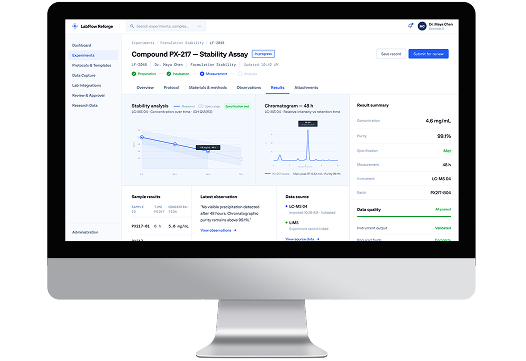
Design

The design focused on practical experiment documentation, faster data capture, and a researcher-friendly interface that reduced reliance on tools outside the ELN.

USER PERSONA → SITE MAP → WIREFRAMES → USER INTERFACE

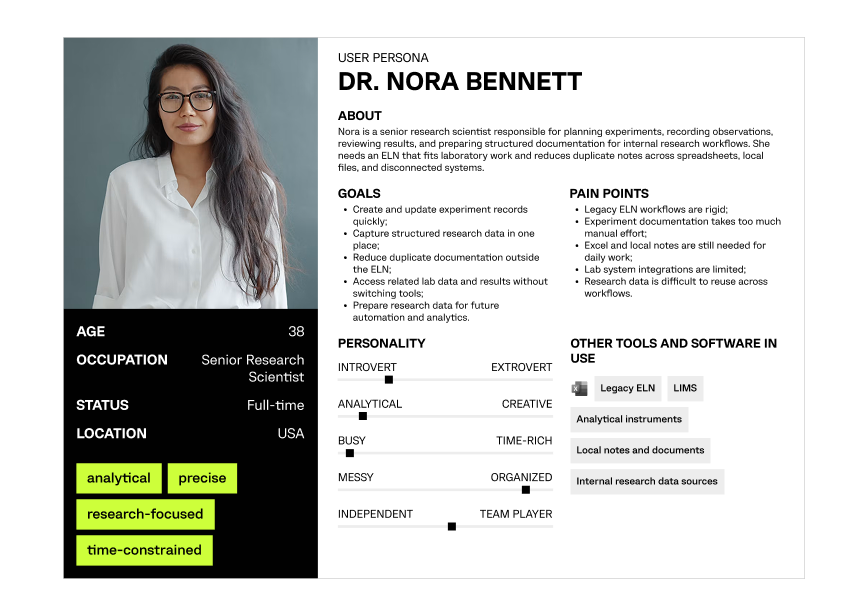
USER PERSONA

Defining laboratory research workflows, experiment documentation needs, and daily usability requirements.

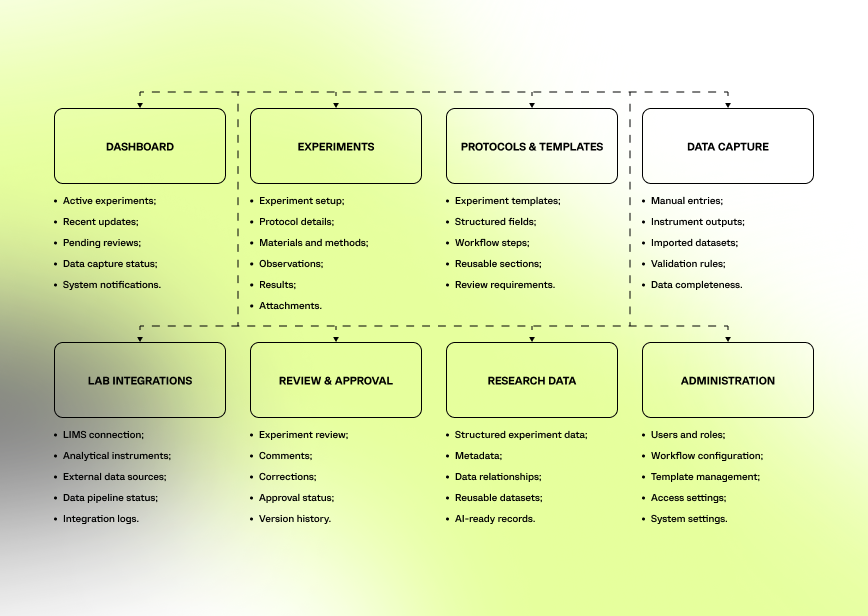
SITE MAP

Structuring the platform around experiment setup, structured documentation, lab data capture, review workflows, and research data reuse.

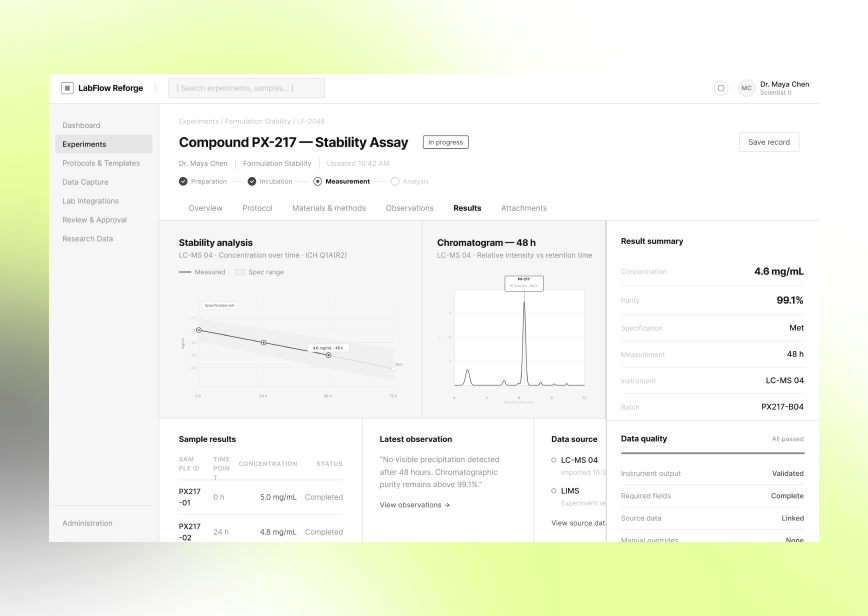
WIREFRAMES

Designing low-fidelity layouts for experiment setup, structured data capture, integrated lab data, review workflows, and AI-ready data preparation.

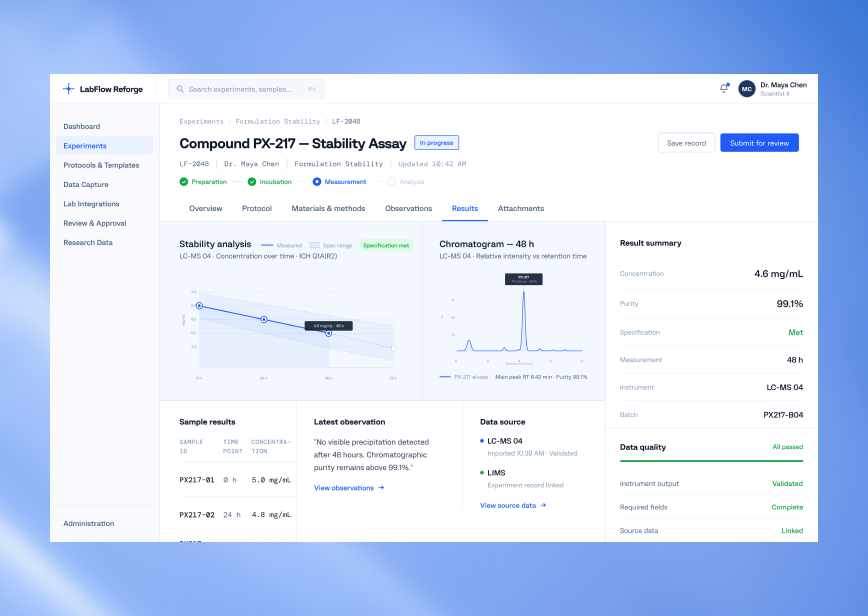
USER INTERFACE

The interface gives researchers immediate access to experiment records, structured fields, supporting data, integration status, and review actions on a single workspace.

DIGITAL PLATFORM & TECHNOLOGY

PROJECT MANAGEMENT METHODOLOGY

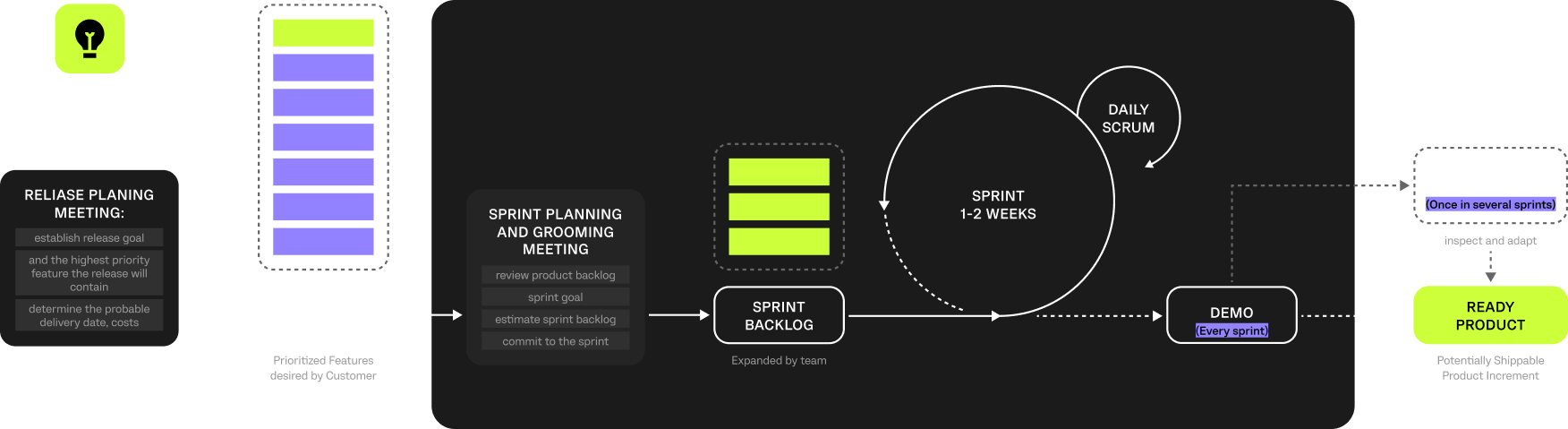
An Agile approach with Scrum supported the iterative modernization of the legacy ELN. Work was organized into short sprints covering legacy assessment, workflow mapping, architecture redesign, interface development, integration readiness, and researcher validation.

Regular reviews with R&D, laboratory operations, IT, and digital transformation stakeholders helped verify usability, workflow fit, data-structure quality, and integration requirements before each major release.

PROJECT MANAGEMENT METHODOLOGY

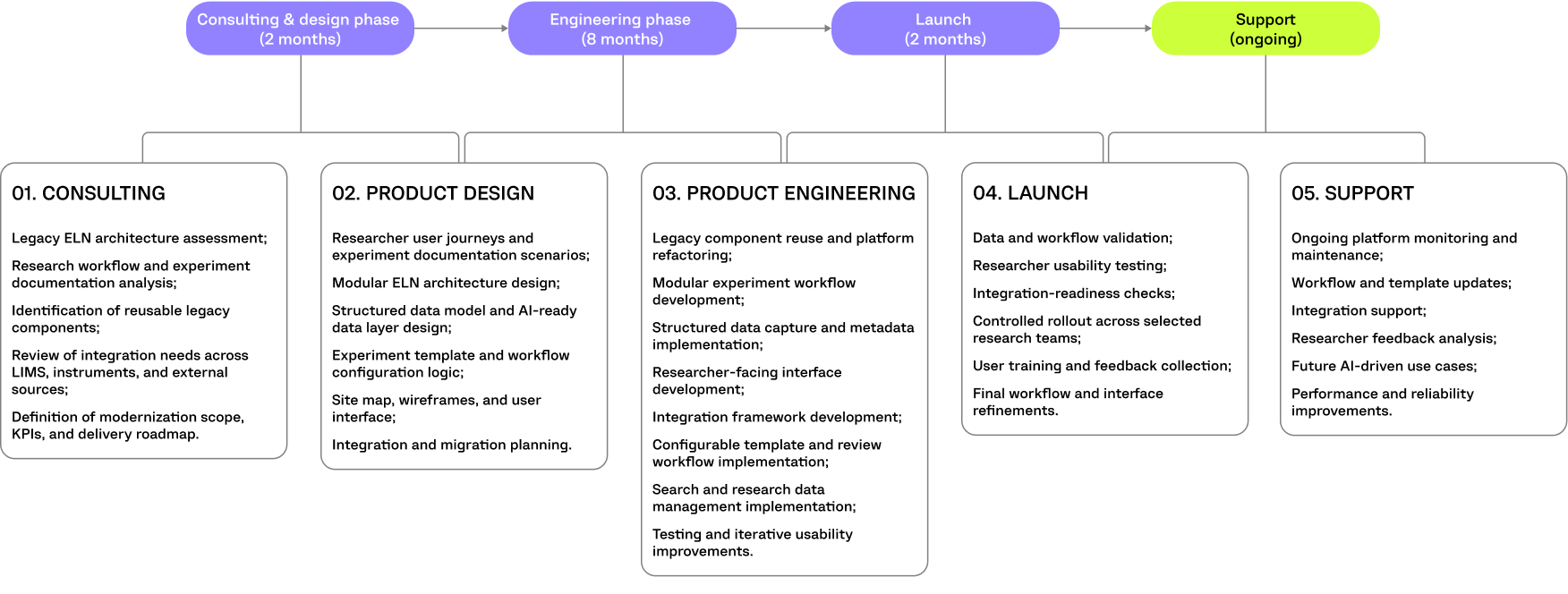
PROJECT TIMELINE

image

WHAT OUR CLIENT SAID

Our old ELN still held important research work, but scientists kept going back to Excel and local notes because daily documentation was too rigid. LabFlow Reforge changed that. The new platform fits how experiments are actually planned, recorded, and reviewed. Adoption has increased noticeably, and much less research data now sits outside the ELN.

CONTACT US TO GET A COST-EFFECTIVE
PROJECT ESTIMATE

Thank you for your message!

Your request will be carefully researched by our experts. We will get in touch with you within one business day.

WHAT HAPPENS NEXT?

01.
We deeply analyse your request.
02.
We create project roadmap, accelerating your time-to-value.
03.
We co-scope features, minimizing project risk upfront.
04.
We submit a comprehensive project proposal with estimates, timelines, CVs, etc.
Trusted by: