Medocentra is a centralized clinical documentation platform developed for a US healthcare operations company supporting Medicare and Medicaid programs and private health plans. The solution connects patient data, visit scheduling, clinical assessments, coding, claims generation, and operational workflows within a single AI-enabled core operational platform.
The system supports 500,000–1 million patient records, processes more than 10 million clinical and operational events annually, and serves more than 1,000 concurrent users through a shared end-to-end workflow.
The client is a US healthcare operations company that manages large-scale preventive care and administrative programs serving Medicare and Medicaid populations, as well as private health plan members.
Its teams coordinate patient outreach, preventive visits, care gap closure, clinical documentation, medical coding, claims preparation, and interactions between clinical staff, contact centers, coders, and back-office teams. As program volumes increased, the company needed a centralized healthcare operations platform to maintain visibility across these processes and support continued healthcare digital transformation without proportional growth in administrative headcount.

Patient records, visit data, clinical notes, coding information, and billing workflows were distributed across EHR systems, scheduling tools, internal databases, and payer platforms. These systems did not operate as a connected patient lifecycle, leaving teams dependent on manual data entry, repeated validation, and fragmented status tracking.
The lack of end-to-end healthcare workflow automation created several operational problems:
The company required custom healthcare software development to establish a single system of record covering intake, scheduling, visits, documentation, coding, claims, and billing.
Computools delivered Medocentra as a centralized platform that integrated patient intake, visit scheduling, clinical assessments, coding, claims, and billing into a single operational workflow. Bidirectional EHR integration unified patient records, diagnoses, medication history, care gaps, and clinical events across internal and external healthcare systems.
The solution introduced AI-assisted clinical documentation for note structuring, form pre-population, and real-time completion support. Clinical coding automation helped identify documentation gaps, validate code consistency, and prioritize cases requiring manual review, while healthcare claims management automation enabled automatic claim generation after coding approval.
By replacing disconnected systems and manual handoffs with a shared patient lifecycle, Medocentra improved patient care coordination among clinical staff, schedulers, coders, contact center agents, and back-office teams. The platform gave authorized users real-time visibility into each patient’s status, reduced processing delays, strengthened data traceability, and created a scalable foundation for growing healthcare programs without proportional administrative expansion.
The Medocentra platform delivered measurable impact across the client’s clinical and administrative operations:
These results enabled the client to process clinical data faster, improve billing quality, and scale Medicare, Medicaid, and private health plan programs through a shared operational workflow.
Computools was selected as a technology partner for its experience in healthcare product development and its ability to integrate complex clinical, operational, and billing workflows into a single scalable platform.
The team combined expertise in EHR integration, AI-assisted documentation, clinical coding, scheduling automation, and claims processing to create a unified system around the full patient lifecycle. A phased delivery model, clear validation checkpoints, and a focus on measurable operational outcomes helped reduce implementation risk and ensure that each technical decision supported faster processing, stronger data quality, and scalable healthcare operations.
The design focused on role-based workflows, fast patient status review, and clear task prioritization for clinical and operational teams.
Defining key clinical and operational users and their goals to ensure the platform supports patient care workflows, documentation, coding, and claims processing.
Structuring platform sections to provide clear access to patient workflows, clinical documentation, coding, claims, reporting, and operational controls.
Designing low-fidelity layouts to define patient workflows, role-based actions, clinical documentation, coding, and claims processing before visual refinement.
The interface provides each role with relevant patient context, pending actions, deadlines, and exceptions.
.NET
.NET provides the backend foundation for Medocentra’s clinical documentation, scheduling, coding, integration, and claims modules. It supports modular enterprise architecture, high-volume data processing, and secure role-based workflows.
POSTGRESQL
PostgreSQL stores patient records, visits, assessments, coding decisions, claims, and audit events while preserving relationships across the complete patient lifecycle.
Microsoft Azure
Microsoft Azure provides scalable cloud infrastructure for application hosting, data processing, monitoring, integrations, and AI services. It supports platform growth as patient volumes, users, and connected health systems increase.
Security & Compliance
Medocentra protects PHI through encryption at rest and in transit, role-based access control, immutable audit trails, and minimum-necessary access enforced at the data model level. BAA-covered cloud services, regular penetration testing, and vulnerability assessments support HIPAA-aligned data handling and maintain a consistent security posture as patient volumes, users, and connected healthcare systems grow.
Azure AI Services
Azure AI Services enable AI-assisted clinical documentation, including note structuring, assessment pre-population, real-time completion support, and identification of missing clinical information.
X12 EDI
X12 EDI supports standardized claims data exchange with payer and billing systems. It enables automated claim submission, downstream status tracking, and faster processing after coding approval.
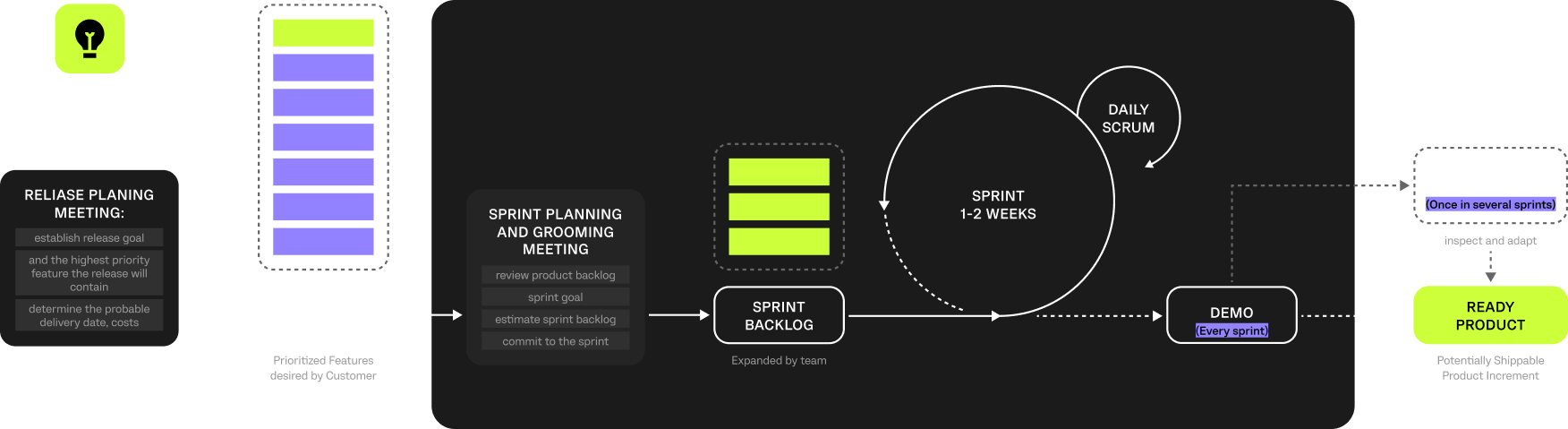
The project was managed using Agile principles and the Scrum framework, with delivery organized into short sprints, a prioritized backlog, regular reviews, and clear validation checkpoints.
This approach enabled the team to test workflows, integrations, AI functions, and role-based interfaces incrementally, gather stakeholder feedback early, and reduce execution risk before broader rollout.
Before Medocentra, patient data and operational updates were scattered across multiple systems, making it difficult to identify where delays occurred and what required immediate attention. The platform gave our clinical, scheduling, coding, and operations teams one shared workflow and a consistent view of every patient’s progress.
We reduced manual follow-ups, improved documentation and coding accuracy, and shortened the time from a completed visit to a ready-to-submit claim. Medocentra also gave us the visibility and audit trail needed to manage growing Medicare, Medicaid, and health plan programs with greater control, without expanding our administrative team at the same rate.