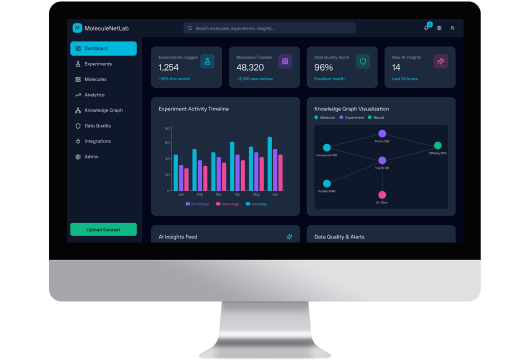
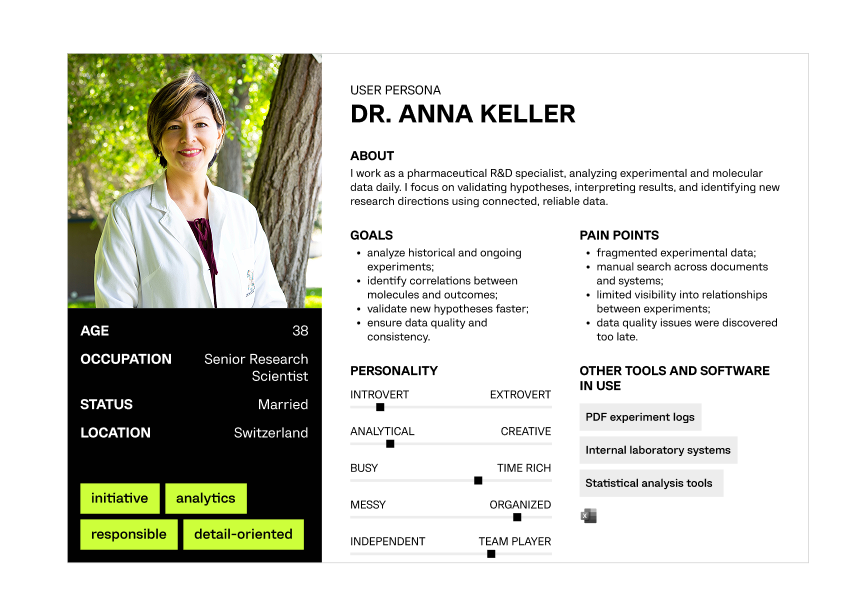
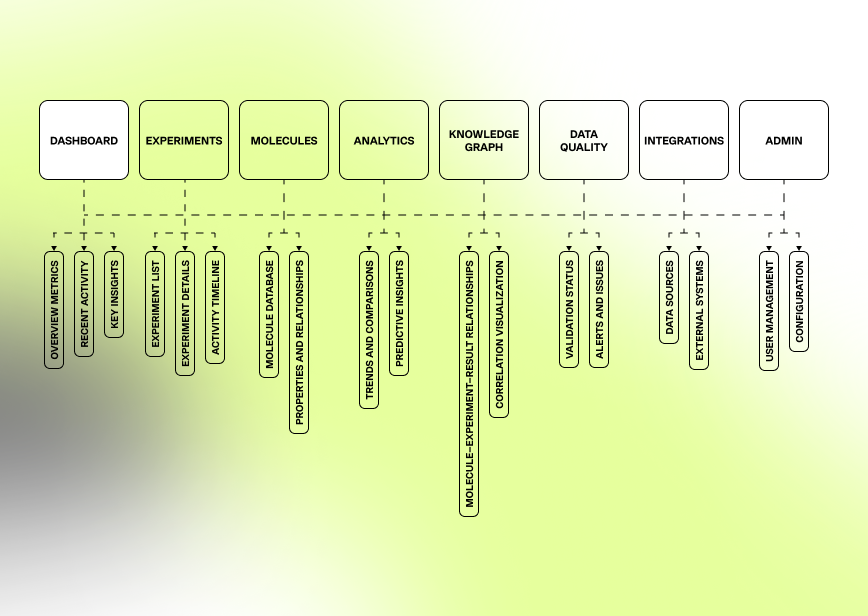
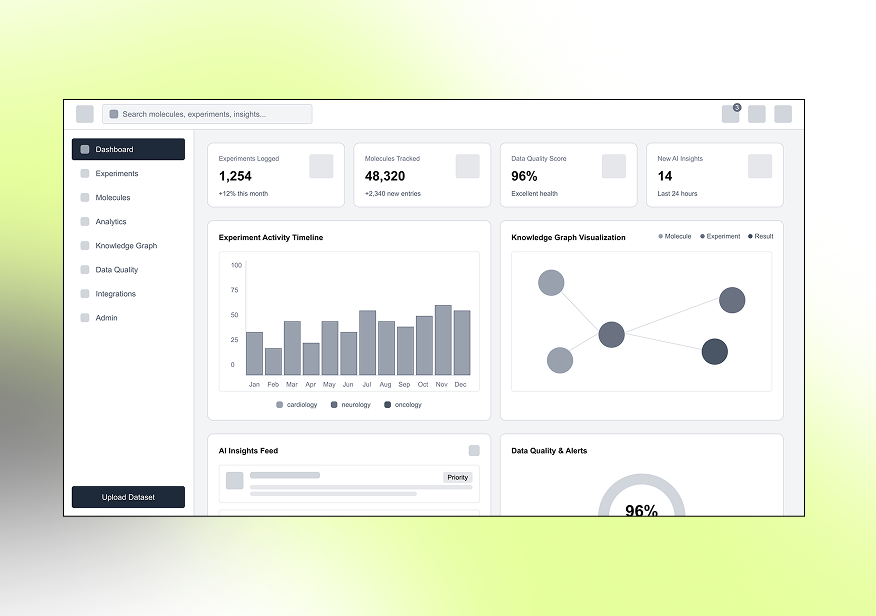
The client faced growing limitations in accessing, analyzing, and reusing historical laboratory and experimental data across R&D initiatives. More than a decade of research data was stored in fragmented formats, including PDFs, spreadsheets, and text notes, with no unified structure or shared terminology.
As a result, scientists spent significant time manually searching for and validating past experiments, while duplicate testing increased costs and slowed discovery cycles. The lack of semantic connections between experiments, reaction conditions, and outcomes also limited the company’s ability to extract deeper insights or apply predictive analytics to research planning.
Without a scalable way to standardize, connect, and analyze historical data, the client risked underutilizing valuable research assets and missing opportunities to accelerate innovation.