RampFlow Orchestrator helped a France-based cargo handling operator reduce average aircraft ground turnaround time by 18%, reach 99.4% handling Service Level Agreement (SLA) compliance, and lower Ground Support Equipment (GSE) operating costs by 15%.
The client operated cargo terminal and ramp handling services at a major international airport in France. Its teams supported scheduled freighters, charter cargo flights, and cargo-intensive wide-body aircraft for multiple airline customers.
The operation coordinated more than 60 GSE units, ramp crews, aircraft stands, cargo warehouse activities, and airside movement across a geographically dispersed environment. As flight schedules became more volatile, manual dispatching created crew waiting time, equipment conflicts, and unnecessary empty travel.
The client needed a real-time airport ramp operations platform that could integrate live flight events, cargo readiness, crew availability, GSE locations, and handling priorities into one live dispatch layer for ramp decisions. Computools delivered RampFlow Orchestrator to recalculate assignments as operating conditions changed and help dispatchers move the right crew and equipment to the right aircraft at the right time.
The client is a France-based ground handling and cargo terminal operator providing aircraft ramp handling, cargo loading and unloading, Unit Load Device (ULD) transportation, GSE coordination, and related airside services for international airline customers.
Its operations handled narrow-body freighters, wide-body freighters, charter flights, and passenger aircraft with high cargo volume. The GSE fleet included high loaders, cargo tractors, ULD and pallet dollies, belt loaders, ground power units, towable support equipment, service vehicles, and operational support vehicles.
The company already used several operational systems. The Airport Operational Database (AODB) provided flight and stand information. Cargo systems tracked shipment and ULD readiness. Maintenance tools stored GSE availability and service status. Dispatchers coordinated ramp teams through radios, mobile phones, and workstations.
This ground handling software environment contained critical operational data, but the data was split across separate systems. GSE fleet management depended on manual coordination between flight changes, equipment status, cargo readiness, crew availability, and physical movement across the airport.
The main challenge was timing. Aircraft handling followed tight service windows, and even small delays at the start of a turnaround could affect unloading, cargo transfer, loading, documentation, and departure preparation.
The client needed a ramp management system for live dispatch decisions under changing flight, stand, cargo, crew, and equipment conditions. The project also required stronger airport operations management across aircraft stands, crews, GSE, cargo readiness, travel time, and service windows. Computools provided air cargo software development expertise across ground handling, ramp operations, airport integrations, mobile workflows, resource optimization, and phased rollout.
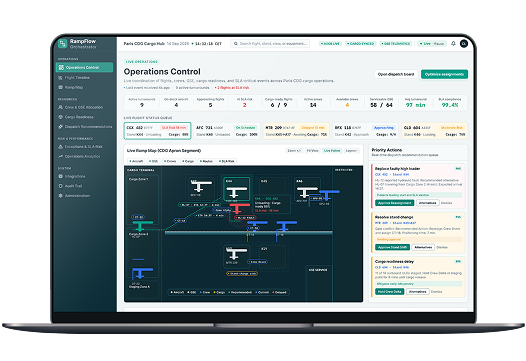
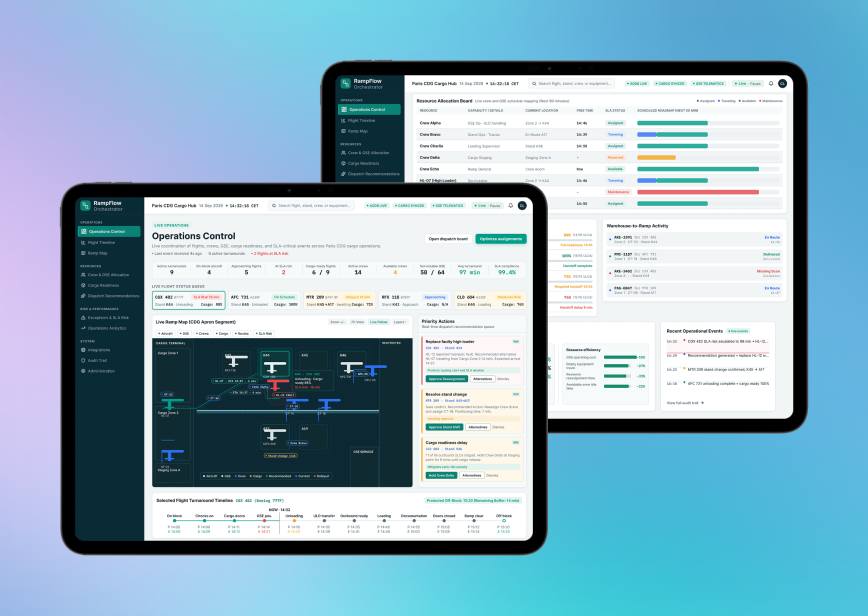
Computools built RampFlow Orchestrator as a live dispatch layer for cargo ramp operations. It kept flight updates, cargo readiness, stand assignments, crew status, Ground Support Equipment locations, and airside travel times in the same dispatcher workspace.
The ramp dispatch optimization layer received live updates from the Airport Operational Database, including arrival changes, departure changes, on-block events, off-block events, aircraft status, and stand assignments. Cargo integrations added Unit Load Device readiness, outbound staging, inbound handling needs, and warehouse-to-ramp handoff status.
The ground support equipment management layer tracked equipment location, availability, maintenance status, current assignments, future commitments, and fuel or battery indicators where fleet data supported those signals. Dispatchers could see which unit was available, compatible, and close enough to reach the stand on time.
RampFlow functioned as airport resource allocation software by scoring crew and equipment assignments against aircraft type, assigned stand, target departure time, handling service-level agreement, cargo volume, required equipment, crew qualifications, task duration, airside travel time, and operational priority. Python-based optimization services predicted conflicts, estimated travel time, and ranked dispatch options as conditions changed.
The system also supported airport AODB integration through APIs and event messaging. When a flight changed, RampFlow recalculated affected assignments and showed dispatchers the conflict, recommended replacement crew or equipment, the current resource location, the estimated travel time, the expected stand arrival, the service-window impact, and alternative options. Dispatchers could approve, modify, or reject recommendations, while RampFlow recorded assignment history, exceptions, overrides, and audit trails.

An 18% reduction in aircraft ground turnaround time came from better synchronization of crews, Ground Support Equipment, cargo readiness, live flight events, and aircraft stand requirements:
Average turnaround across the optimized flight group decreased from approximately 118 minutes to 97 minutes. Dispatchers could react earlier to flight delays, early arrivals, stand changes, equipment faults, and warehouse readiness issues.
The 99.4% service-level agreement compliance resulted from earlier conflict detection. RampFlow showed which flights were approaching handling-risk thresholds, which resources were missing, and which reassignment could protect the service window.
The 15% reduction in equipment operating costs came from fewer empty movements. Compatible equipment was assigned from better locations, reducing unnecessary mileage, fuel use, operating hours, and maintenance exposure across the existing fleet.
The strongest airport turnaround optimization effect came from giving dispatchers a live view of demand and available resources. Crews were sent closer to actual aircraft readiness, equipment spent more time supporting active handling, and operational changes were resolved before they created larger ramp delays.
The client already had systems holding flight schedules, cargo status, equipment records, and operational data. RampFlow Orchestrator had to solve a different problem: improve turnaround performance with the existing GSE fleet and ramp crews before the operator considered buying more equipment.
Computools brought air cargo business analysis, ground-handling workflow design, GSE telematics, AODB integration, optimization engineering, AI development, and web development capability together in one cross-functional team.
The roadmap was tied to the operator’s financial and operational metrics: turnaround time, SLA penalty exposure, GSE fuel and maintenance spend, empty equipment travel, crew idle time, and overtime risk.
The design focused on real-time dispatcher visibility, crew and GSE coordination, ramp-map context, exception prioritization, mobile task execution, and SLA control.
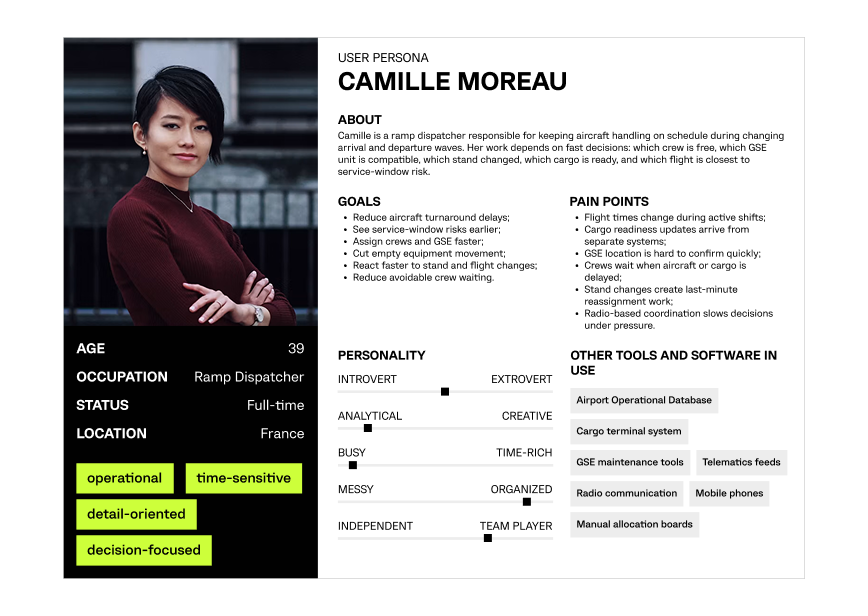
The design process focused on the roles involved in daily ramp coordination: dispatchers, shift supervisors, ramp agents, GSE operators, cargo warehouse coordinators, fleet managers, duty managers, and airline handling coordinators.
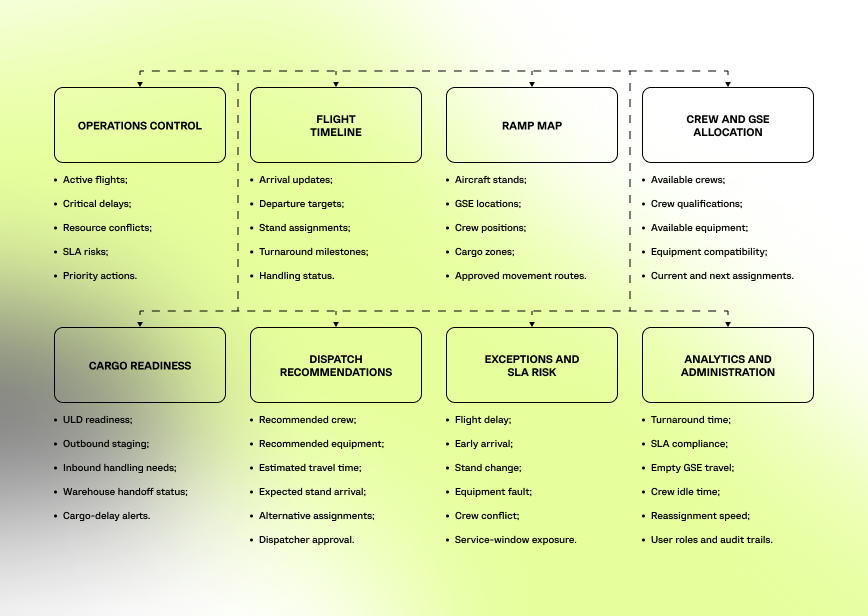
The site map was organized around the decisions dispatchers had to make during live ramp operations.
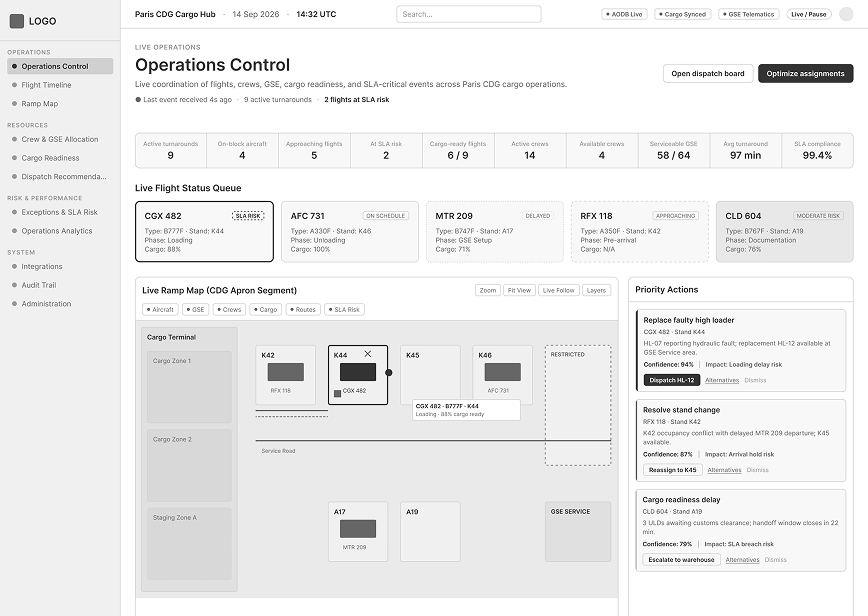
Wireframes focused on dispatcher workflows for flight changes, GSE conflicts, cargo-readiness delays, reassignment approvals, and SLA-risk monitoring during active ramp operations.
The final interface gave dispatchers one working view for live flight status, crew and GSE availability, cargo readiness, route estimates, service-window risk, and recommended reassignment actions.
TypeScript
TypeScript supported frontend and backend development across dispatcher interfaces, mobile workflows, orchestration services, resource models, task states, and integrations.
Next.js and React
Next.js and React powered the operations control center and management interfaces. Real-time views covered flight timelines, resource boards, service-window risks, exception queues, and ramp-map updates.
React Native
React Native powered mobile workflows for ramp supervisors and equipment operators. Users received assignments, acknowledged tasks, updated status, and reported exceptions from the ramp.
Node.js and NestJS
Node.js and NestJS handled flight-event processing, assignment workflows, alerts, user permissions, task state, operational rules, API endpoints, and coordination of integrations with the Airport Operational Database and cargo systems.
Go
Go services supported high-throughput event handling for live flight updates, Airport Collaborative Decision Making (A-CDM) events, GSE status changes, dispatch recalculations, and time-sensitive operational messages.
PostgreSQL
PostgreSQL stored normalized flight, stand, crew, equipment, assignment, service level agreement, task, route, and performance history.
Python and FastAPI
Python and FastAPI powered resource assignment, conflict prediction, travel-time estimation, priority scoring, and optimization services.
AWS, Docker, and Terraform
AWS, Docker, and Terraform supported separate test and production environments, repeatable deployments, infrastructure automation, monitoring, and event-processing capacity for live operational updates.
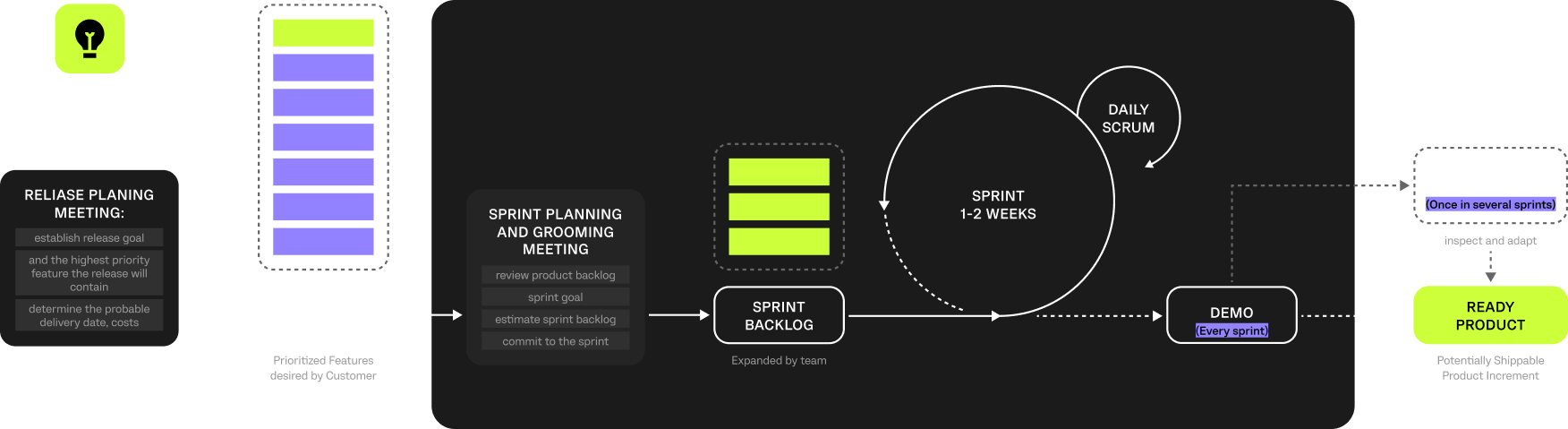
Computools organized delivery through Scrum, with two-week iterations focused on operational validation. Each sprint had to prove that RampFlow could process real AODB events, cargo-readiness updates, GSE states, and dispatcher decisions while active ramp work continued.
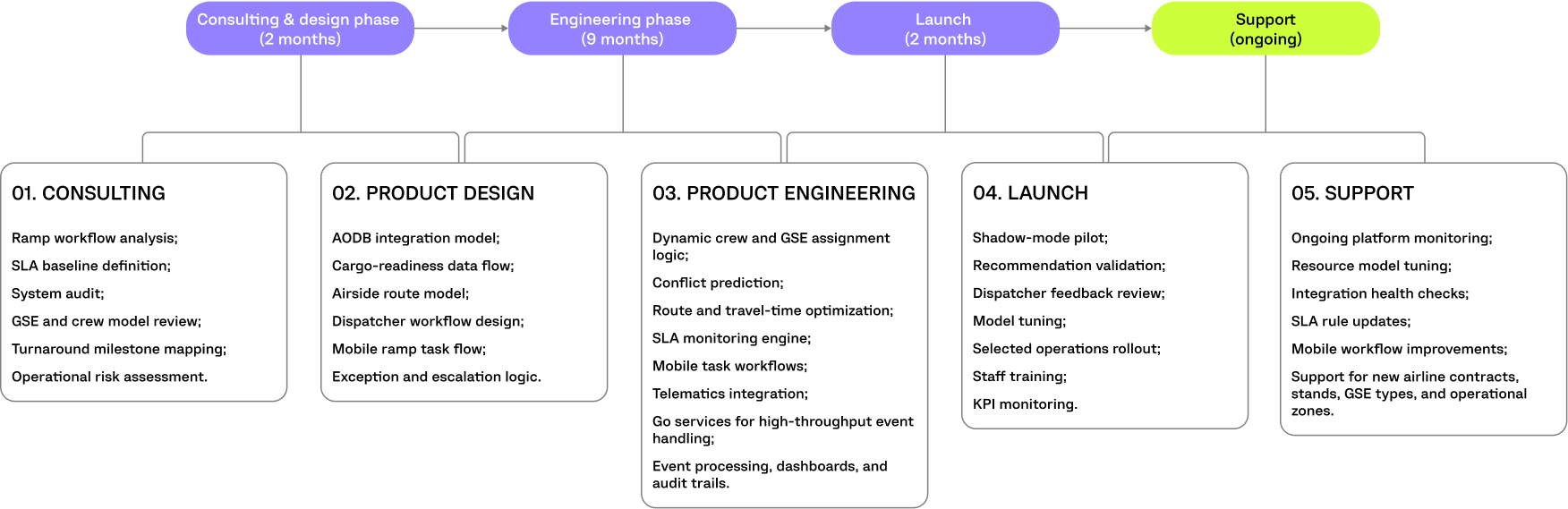
The project began with historical AODB, handling, and equipment records to establish baselines for turnaround time, SLA compliance, empty GSE travel, crew waiting time, reassignment frequency, and equipment utilization.
RampFlow then ran in shadow mode beside the existing manual dispatch process. Dispatchers compared recommendations with real decisions, flagged missing operational context, and helped validate the assignment logic before controlled rollout by stand and equipment category.
RampFlow gave our dispatchers a clearer picture during peak cargo waves. When a flight time, stand assignment, or cargo-readiness status changed, the team could see which crew or equipment would be affected and what reassignment made sense. The biggest difference was practical: fewer calls to confirm the same information, faster decisions under pressure, and less empty equipment movement across the ramp.