Background
Over more than 15 years, the company accumulated terabytes of upstream and downstream production data generated across multiple bioreactor scales. While individual experiments were documented, the data remained fragmented across systems and formats, limiting cross-batch comparison and long-term process learning.
As production volumes increased, variability became more visible. Scaling from smaller to larger bioreactors introduced differences in oxygen distribution, mixing efficiency, and localized stress conditions. Differences in reactor scale and geometry led to uneven oxygen transfer and microenvironment variability, directly influencing cell growth and productivity. Even minor fluctuations in pH or dissolved oxygen can trigger metabolic shifts, reduce cell viability, and complicate downstream purification.
The absence of structured bioreactor process monitoring across historical batches made it difficult to detect patterns or anticipate instability trends.
At the same time, the company planned to expand its biologics portfolio and leverage historical R&D knowledge to better design cultivation strategies, optimize process parameters, and ensure stable product quality when bringing new biologics into production.
Approach to solution
The initiative was approached as a production intelligence transformation rather than a simple data consolidation project.
The first step was to fully synchronize time-series reactor data with laboratory measurements, enabling structured upstream bioprocess optimization across feed strategies, oxygen control, temperature shifts, and metabolic markers.
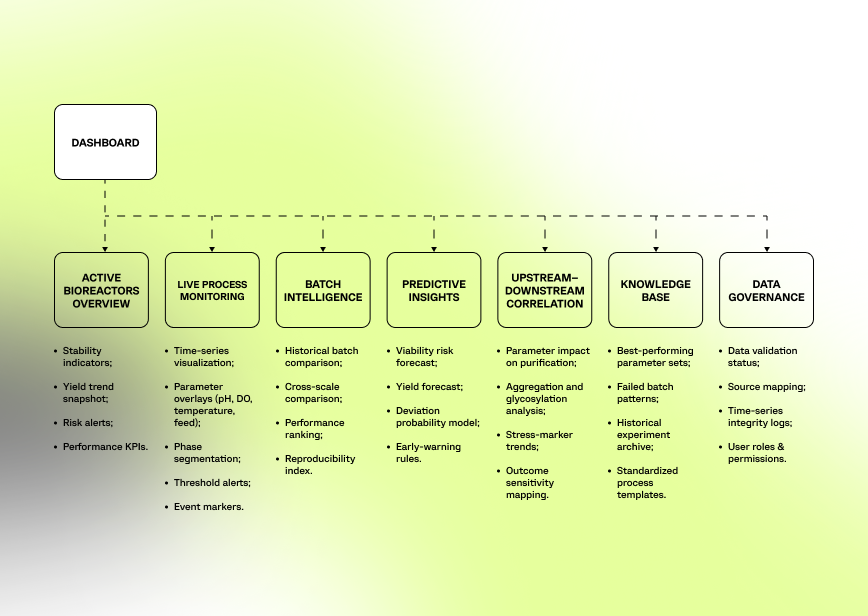
The architecture was designed as a scalable biopharmaceutical manufacturing AI platform capable of processing high-volume production datasets and modeling nonlinear dependencies between cultivation conditions and downstream outcomes.
Computools role
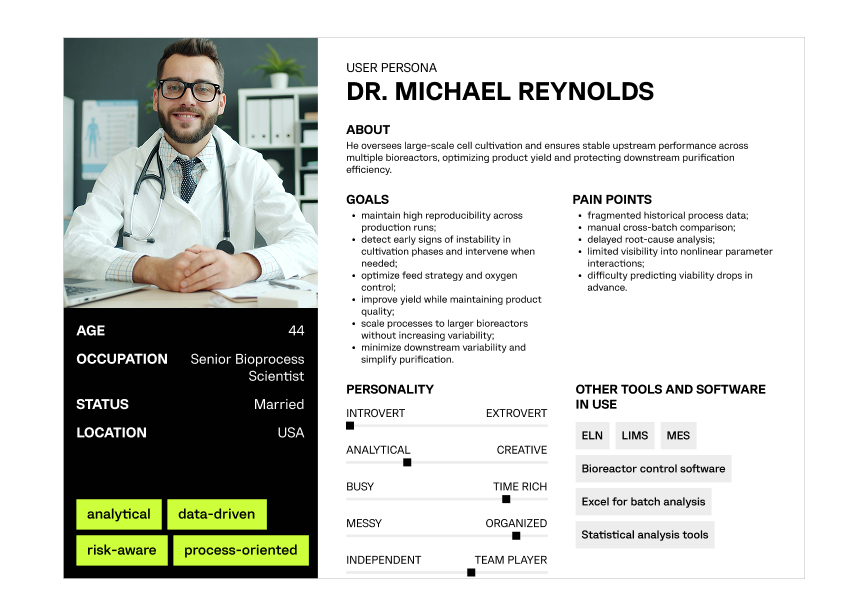
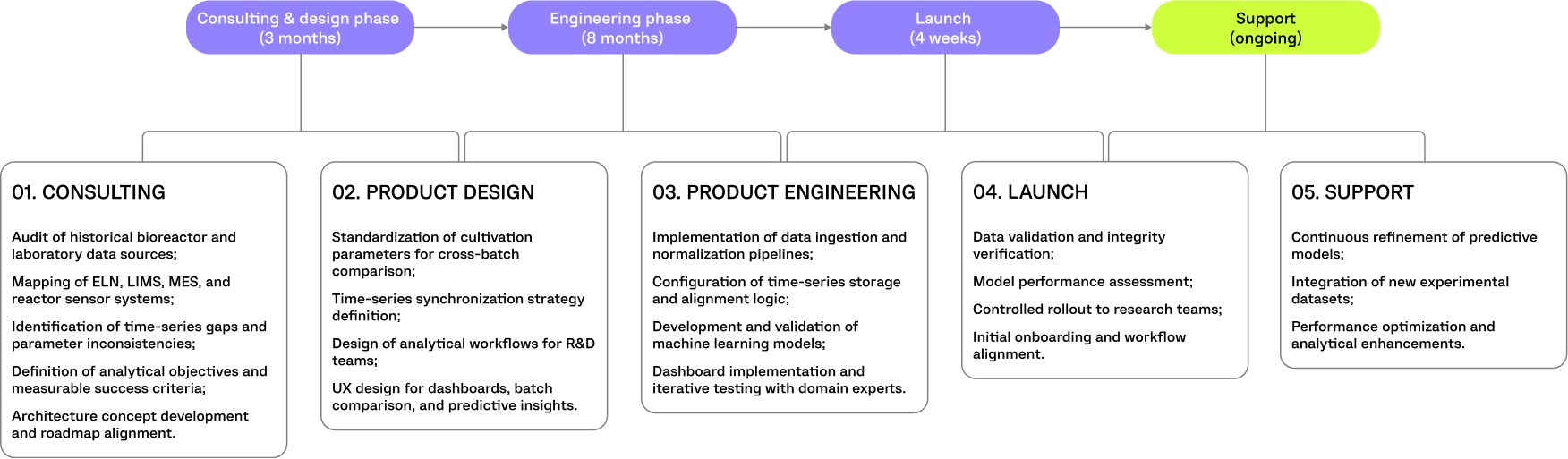
Computools served as the end-to-end technology partner, translating complex production data into a structured analytical framework.
The team led:
- Architectural design for centralized bioprocess data
- Time-series synchronization across reactor and laboratory systems
- Standardization of cultivation parameters across scales
- Development and validation of predictive machine learning models
- Implementation of a secure hybrid cloud and on-premises architecture aligned with enterprise data governance policies.
- Close collaboration with R&D and manufacturing stakeholders
By connecting engineering decisions with real production workflows, Computools ensured that analytical outputs were directly applicable to operational process control.
Key decisions and outcomes
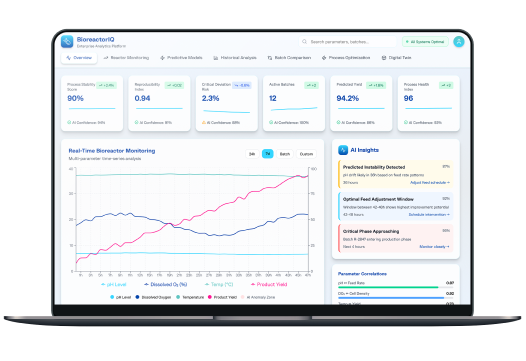
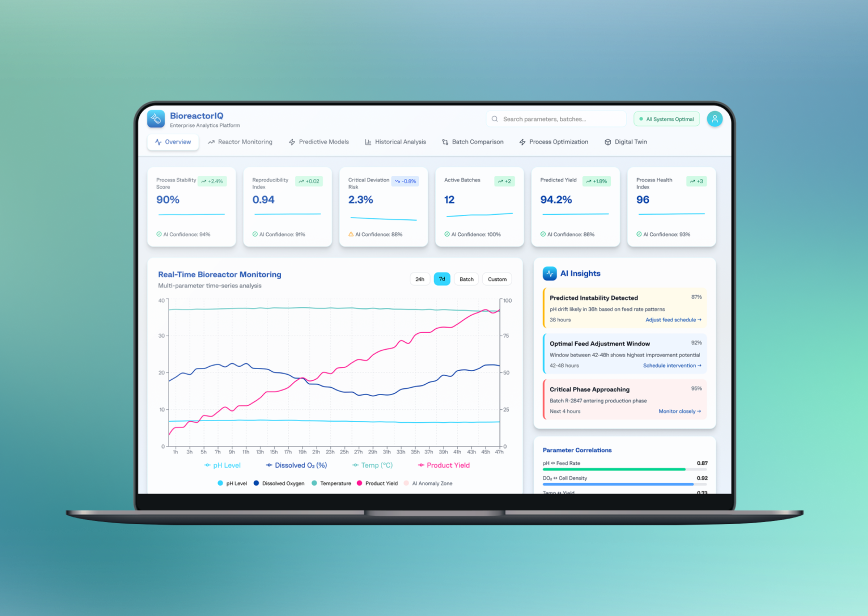
A critical shift was the move from retrospective analysis to proactive modeling. Machine learning components were introduced to enable early cell viability prediction, identifying metabolic stress signals 24–48 hours before measurable declines.
The models incorporated early detection of lactate and ammonia accumulation as predictive stress indicators, improving the detection of viability risks before productivity losses became visible.
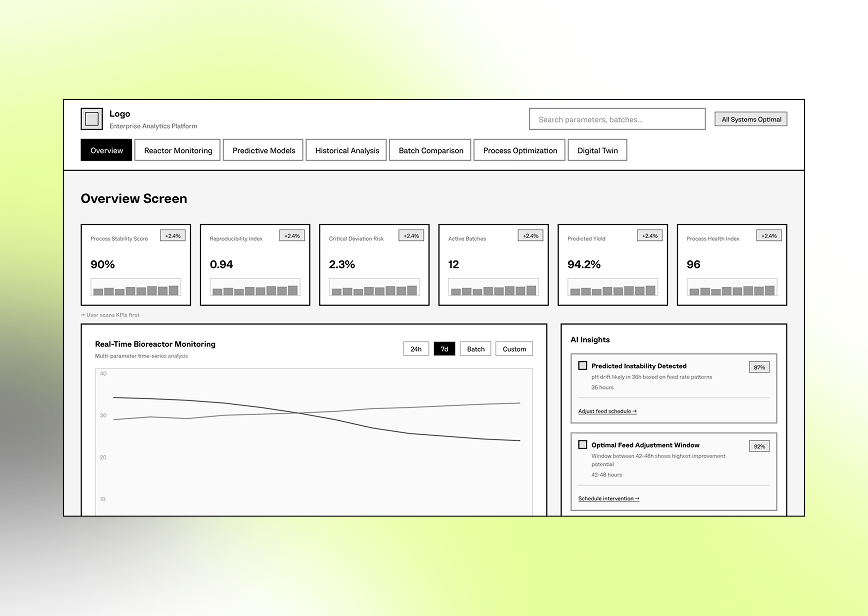
Embedding predictive models directly into operational dashboards allowed teams to intervene earlier, stabilize cultivation phases, and reduce downstream variability.
As the next stage of platform evolution, the client is extending the solution with a Bioprocess Digital Twin layer. This phase transforms the existing AI-driven process analytics into an interactive virtual replica of the cultivation process, enabling simulation, visualization, and predictive testing before applying changes to live bioreactors.
The planned functionality includes interactive reactor-state visualization; what-if scenario testing for feed timing, oxygen levels, and agitation strategies; predictive feedback loops that estimate the impact of yield and reproducibility; and continuous learning based on new batch and laboratory data to strengthen decision support for operators and R&D teams.