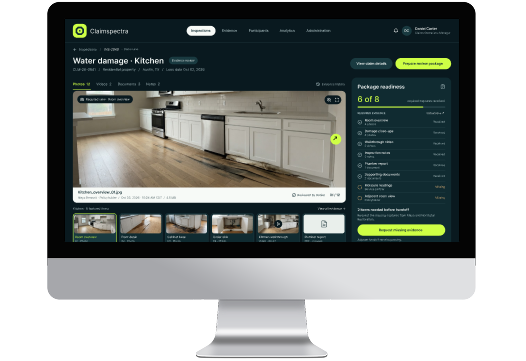
The client is a U.S. insurance technology provider supporting P&C insurers, claims organizations, adjusters, and service partners. Claimspectra provided remote claims inspection software for cases in which photos, videos, inspection notes, and supporting documents had to be collected and reviewed from distributed participants.
The platform also functioned as claims evidence management software, organizing submitted media, documentation, inspection progress, and claim context within one structured workflow.
Across selected remote inspection workflows, evidence preparation time decreased by 33%, manual effort spent organizing visual claim evidence by 28%, and follow-up interactions for missing materials by 31%.
The client develops digital solutions for Property & Casualty insurers, claims organizations, adjusters, and external service partners involved in remote and field inspections.
Its insurance inspection software supports scenarios in which policyholders, field participants, adjusters, and service providers can all contribute photos, videos, notes, and supporting documents before a claim can move forward.
Effective insurance claims collaboration depends on keeping submitted evidence, participant activity, and claim context connected throughout the inspection process.
Claims teams relied on photos, videos, inspection notes, and supporting documents collected via various communication channels. Evidence could become fragmented before adjusters received a complete view of the claim.
The client needed a structured visual claims inspection process to guide participants through evidence collection while keeping submitted materials linked to the relevant claim.
The project also required insurance software development capable of supporting media-heavy workflows, role-based collaboration, claim-data handling, and integrations with the wider insurance environment.
Computools analyzed remote inspection scenarios and mapped the flow of evidence, claim documentation, and participant communication through the process. The platform functioned as remote damage assessment software, organizing the evidence required for subsequent claims review. Guided steps helped participants capture and submit relevant materials while keeping each item connected to claim context.
A structured claims photo documentation process brought claim-related images, videos, inspection notes, and supporting documents into one workspace.
The experience also supported insurance field inspection scenarios, allowing field participants and external service providers to contribute evidence through mobile-ready workflows.
Guided visual evidence capture made submitted materials, outstanding requirements, and inspection progress easier to follow. Role-based access and shared claim context strengthened claims workflow collaboration between policyholders, adjusters, claims operations teams, and external service partners.
Claimspectra reduced the need for manual evidence preparation and improved the consistency of remote inspection files before adjuster review:
Mobile-ready interfaces delivered through web development gave policyholders, field participants, adjusters, and service partners a clearer way to capture evidence and follow inspection progress.
To keep inspection materials connected to the relevant claim context, data engineering supported consistent handling of media, claim information, participant activity, and downstream reporting data.
The structured evidence model also created a foundation for future AI development in areas such as media classification, evidence-quality checks, and assisted damage analysis.
Better-organized claim files reduced preparation friction and provided claims teams with clearer visibility into evidence before the next operational step.
The engagement required coordinated expertise across claims operations, media-heavy user journeys, mobile-ready UX, role-based collaboration, structured claim data, and insurance-system integrations.
Computools brought these requirements into one delivery process, allowing evidence flows, user responsibilities, data structures, and integration dependencies to be validated together.
The resulting product experience kept claim context connected across participants and evidence while giving the client a practical foundation for expanding remote inspection workflows.

The design focused on making remote evidence collection clear for claim participants while giving claims teams a consolidated view of inspection progress and submitted materials.
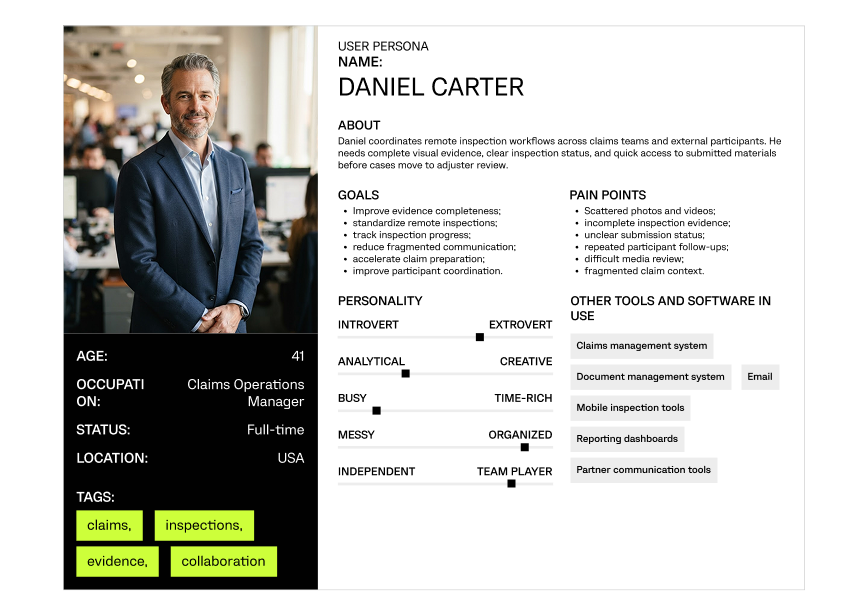
Defining the needs of a claims operations professional responsible for remote inspection quality, evidence completeness, and participant coordination.
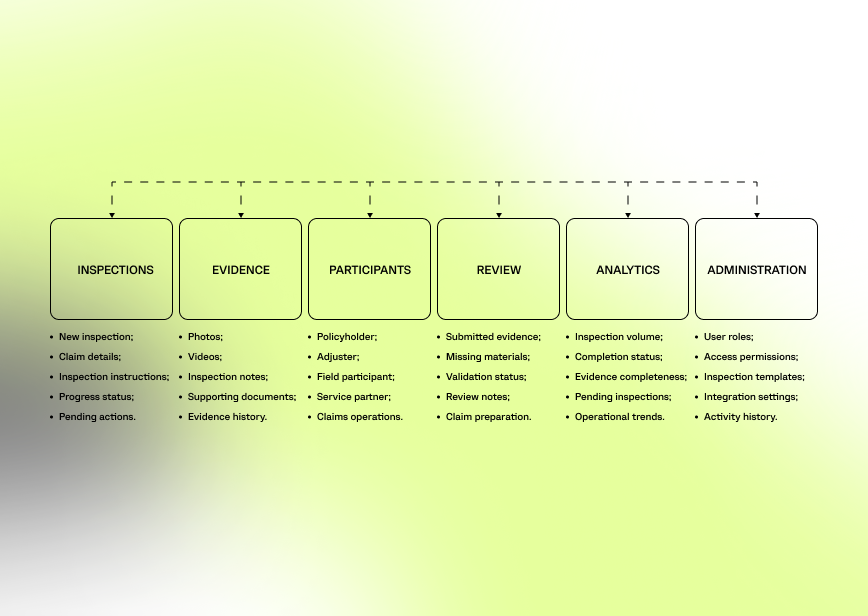
Organizing inspection requests, evidence, participants, claim context, progress, and reporting around the remote inspection workflow.
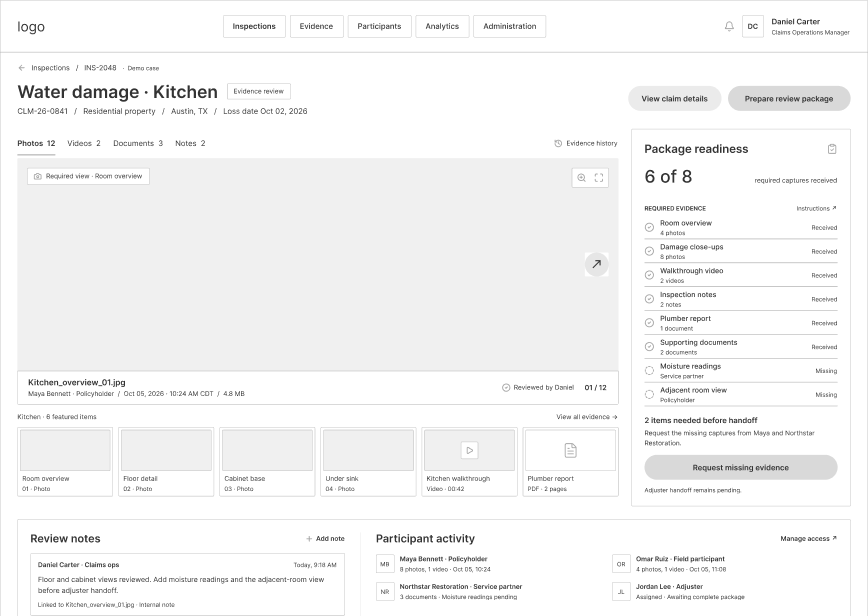
Testing evidence capture, inspection progress, claim review, and participant interactions before interface development.
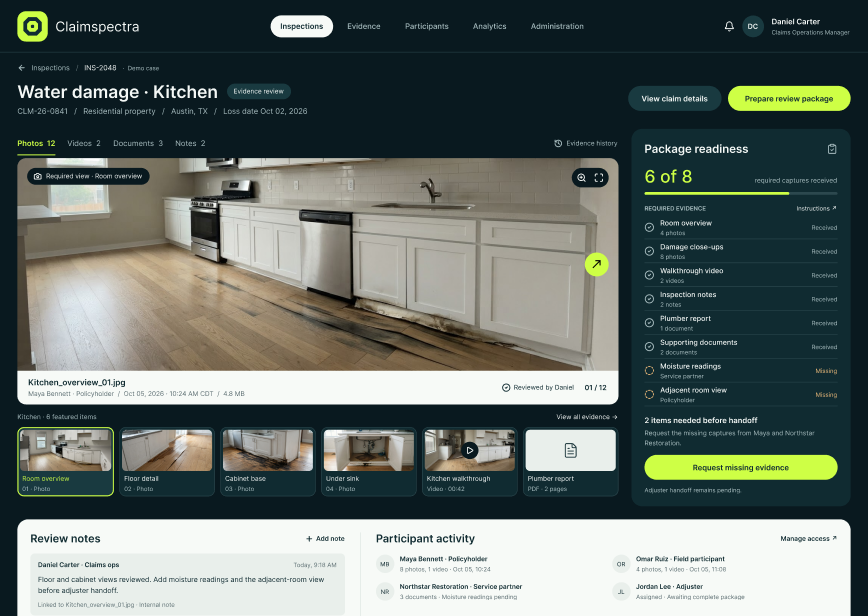
Creating mobile-ready, role-based views that make evidence requirements, inspection status, and submitted materials easier to understand.

React
Powered responsive interfaces for policyholders, adjusters, claims operations teams, and external service partners. It supported guided inspection steps, evidence upload, progress tracking, claim review, and role-specific operational views.

TypeScript
Added stronger typing across user-facing workflows and application logic, supporting more predictable handling of claim records, inspection states, participant actions, and evidence metadata.

Node.js
Supported server-side workflow logic, inspection processing, participant activity, media-processing requests, evidence status management, and integrations with external insurance systems.

PostgreSQL
Stored structured claim, inspection, participant, workflow, and evidence metadata used across the platform, keeping inspection progress, review states, media references, and claim context connected.

AWS
Provided the cloud infrastructure supporting application deployment, platform operations, and scalable remote inspection workflows.

Amazon S3
Supported secure storage of claim-related photos, videos, and supporting documents, with media objects linked to structured claim and inspection records through application metadata.
REST API
Connected Claimspectra with claims platforms and other insurance systems, allowing claim data, participant information, evidence references, and workflow status to move between systems.
OCR and AI
Supported classification and extraction of information from uploaded documents and evidence, helping structure claim data for completeness checks and adjuster review.

RBAC
Applied role-based permissions across policyholders, adjusters, claims operations teams, external service partners, and administrators, helping restrict access to sensitive claim and evidence data.
FFmpeg
Supported server-side processing of uploaded video content, preparing media for consistent playback and review across web and mobile-ready experiences.
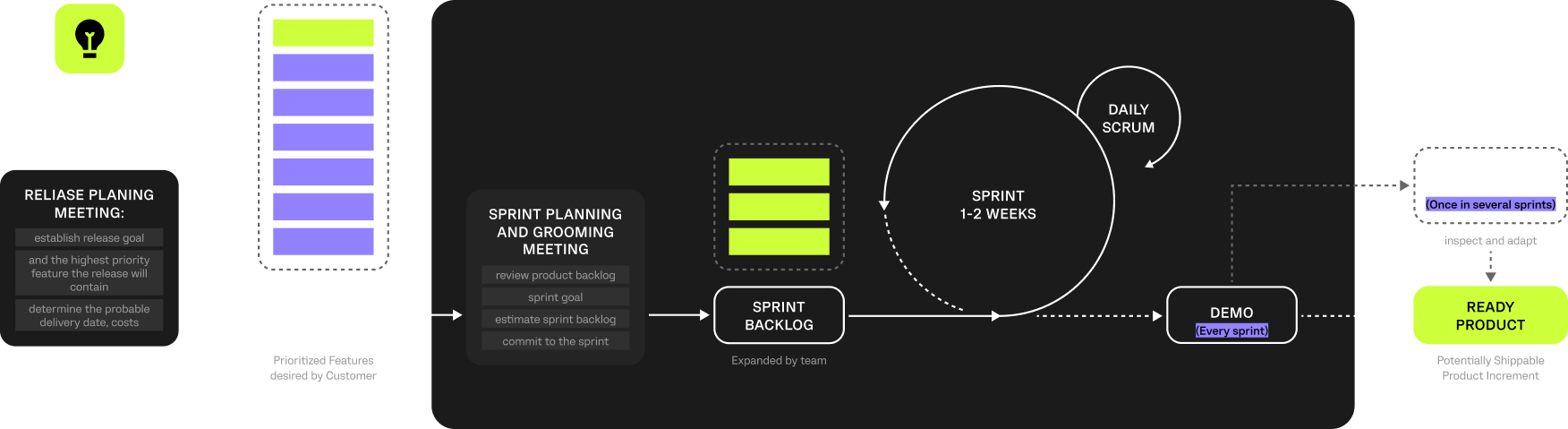
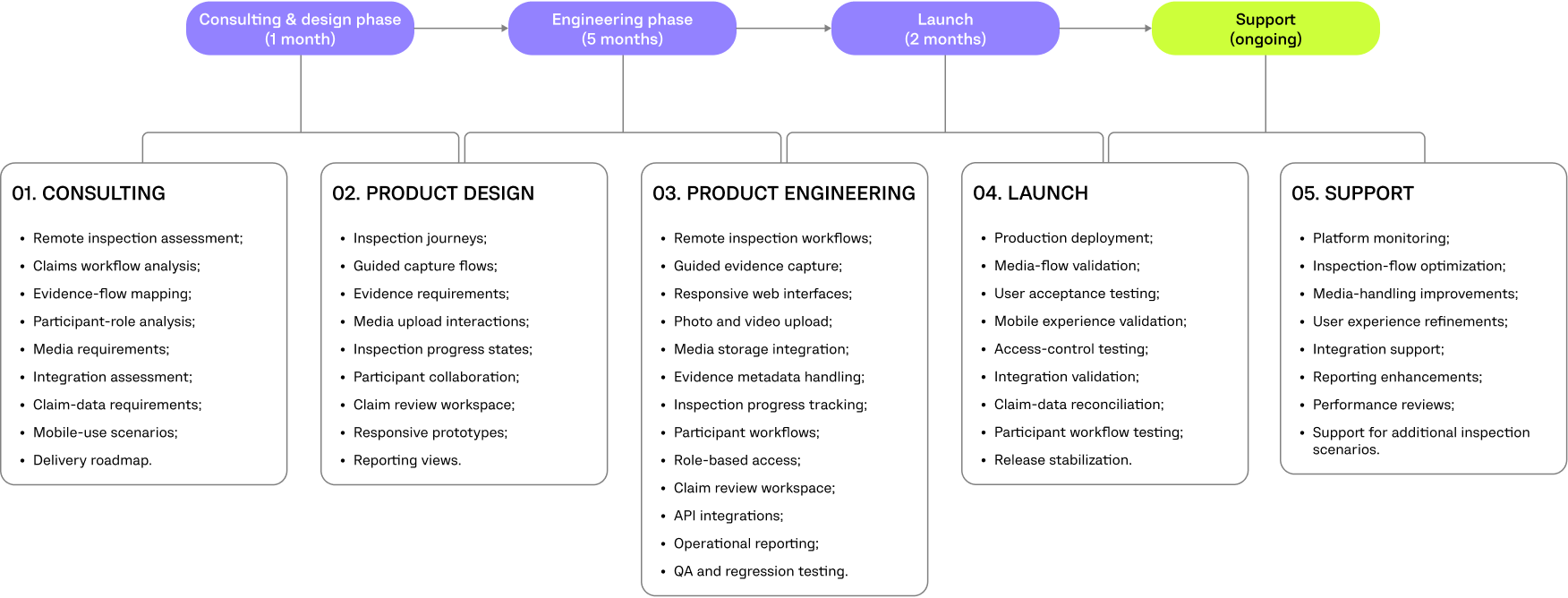
Computools used a Scrum-based delivery model with two-week iterations and regular validation by product, claims operations, insurance-domain, technical, and implementation stakeholders. Each iteration focused on a defined part of the remote inspection lifecycle, including evidence capture, media handling, inspection progress, participant access, claim review, integrations, or operational visibility.
Workflow changes were reviewed against representative inspection scenarios across policyholders, claims teams, field participants, and external service providers. Media handling, role permissions, mobile interactions, and integration behavior were tested throughout development to reduce release risks across distributed claim workflows.
Before Claimspectra, we could have plenty of photos and still not know whether we had what the adjuster actually needed. People were sending files through different channels, and it took too much time to work out what was missing. Now the team can see the evidence in one place, understand what still needs to be collected, and move the claim forward with much less back-and-forth.




Computools | 341 Raven Cir, Camden Wyoming, Delaware 19934, US