Background
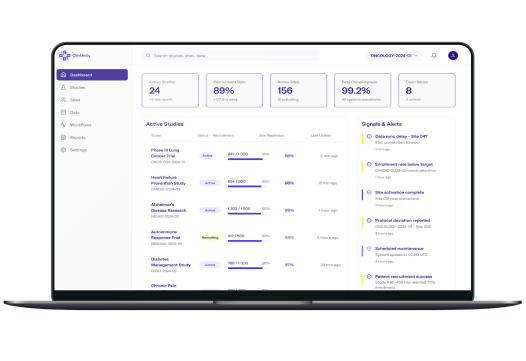
The client operated in a complex clinical research environment where multiple studies were managed in parallel through disconnected systems and manual coordination. While core applications supported specific functions, they did not provide a unified operational layer across study setup, site management, recruitment tracking, and reporting.
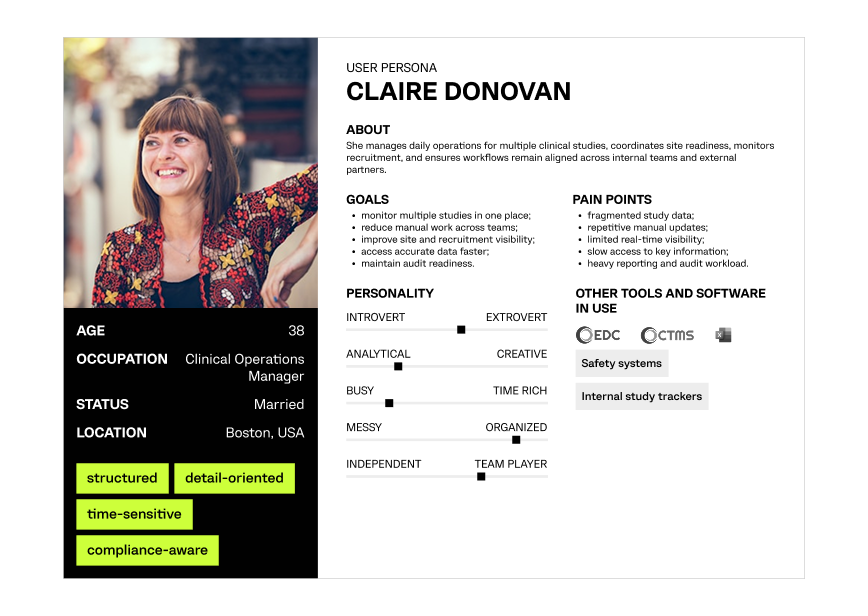
As the number of active trials grew, the limitations of this approach became clear. Teams relied on Excel, local tracking files, and manual updates between systems. This led to duplicated, delayed, or inconsistent information, making oversight across studies difficult.
Meanwhile, the company faced growing pressure to accelerate timelines, maintain audit readiness, and reduce the operational cost of trial execution. To support future growth, it required a platform to centralize control without replacing its existing clinical systems.
Approach to solution
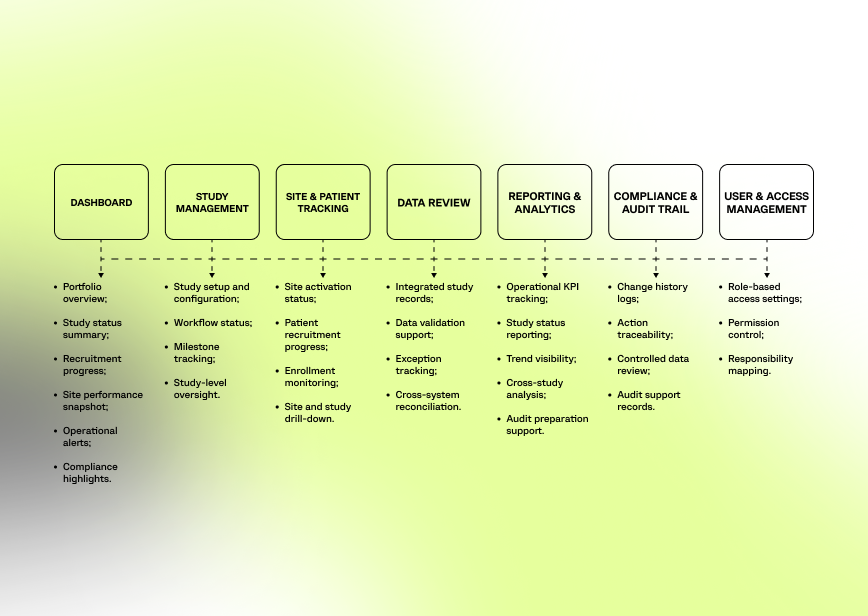
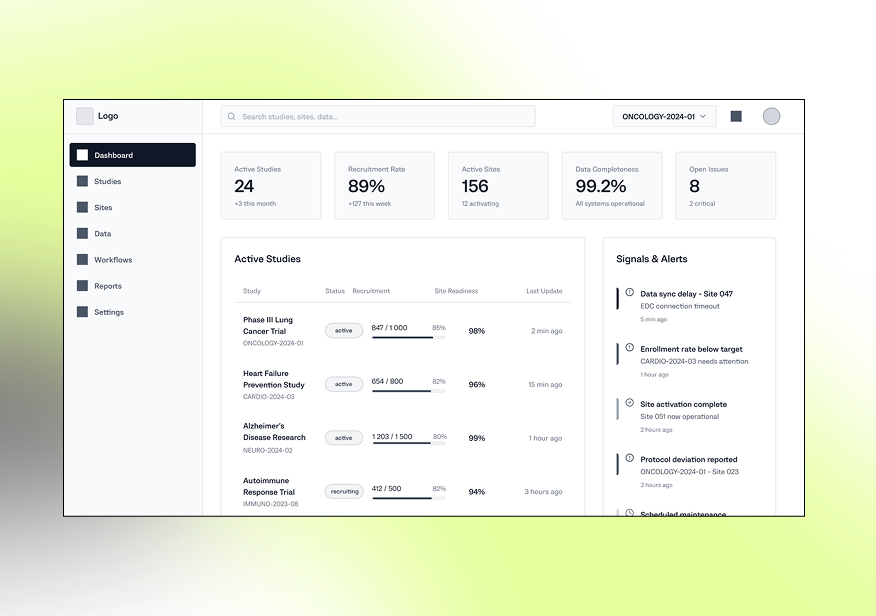
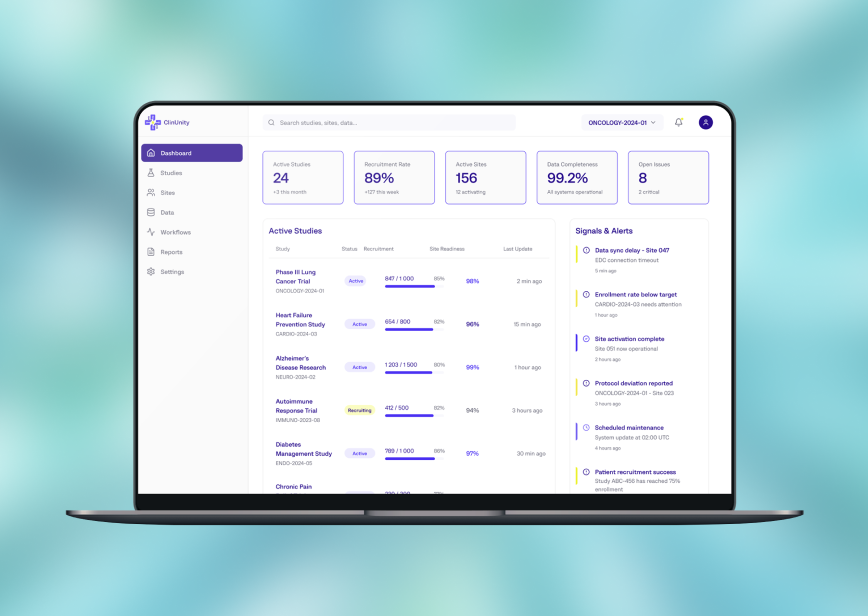
The goal was not simply to deploy new software but to create a single operational environment across fragmented processes. The first priority was to build a centralized platform layer that could connect fragmented systems and standardize operational workflows across multiple studies. This included aligning study, site, patient, and compliance-related data into a consistent structure that could support fast access, reliable reporting, and coordinated execution.
The architecture was designed as a scalable platform for multi-study clinical trial management, with strong emphasis on secure integrations, workflow traceability, and role-specific access to operational information.
Computools role
Computools served as the end-to-end technology partner, transforming fragmented clinical operations into a structured, scalable, and compliant digital environment.
The team led:
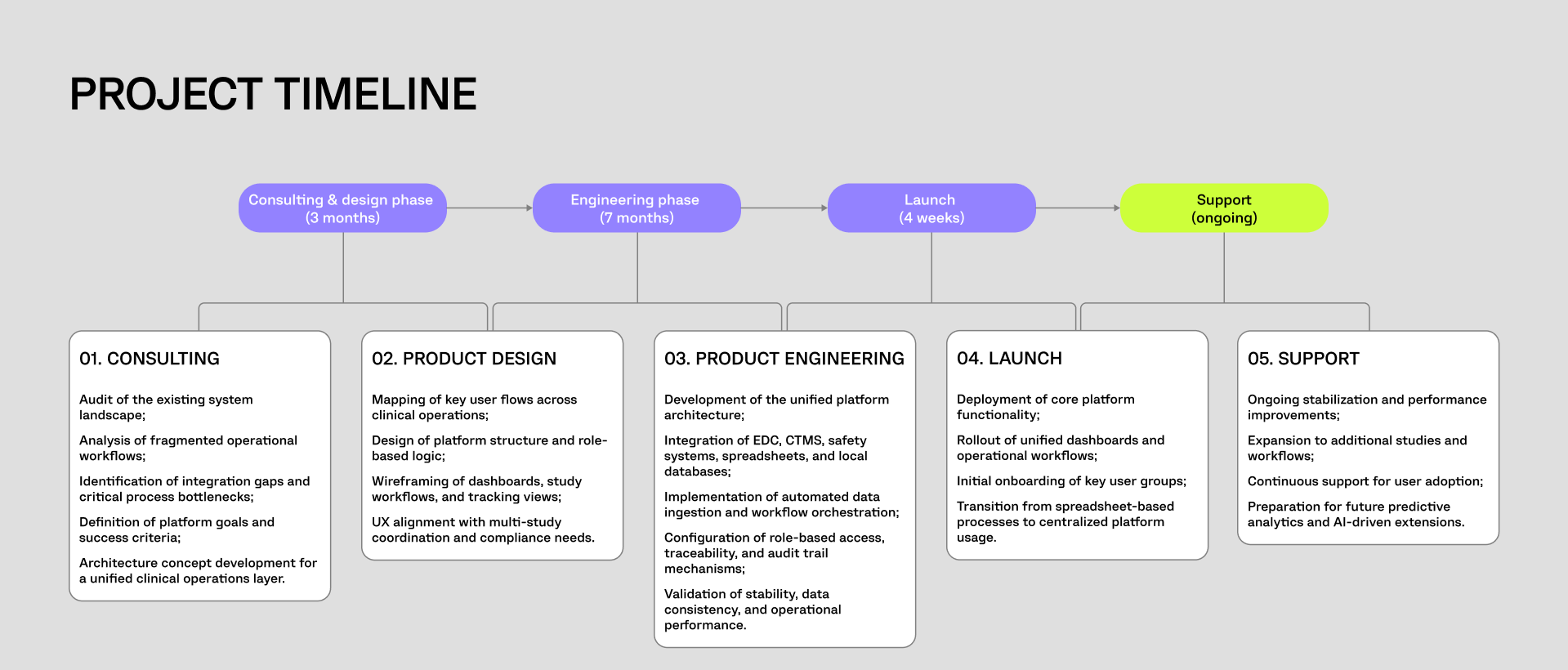
- Platform architecture
- Integration of EDC, CTMS, safety systems, and internal sources
- Automated data pipelines and workflow orchestration
- Access control and audit trail implementation
- Secure modular platform delivery
- Close collaboration with operations and compliance teams
By aligning platform logic with actual clinical workflows, Computools ensured the solution supported daily study execution instead of introducing another disconnected layer.
Key decisions and outcomes
A key architectural decision was to implement a unified data model that standardized information across studies and systems. This reduced inconsistency, simplified reporting, and provided teams with a more reliable operational view.
Another important decision was to adopt an event-driven architecture to enable timely updates and coordinated workflows across connected systems. This improved responsiveness without requiring the client to replace existing tools.
The modular structure allowed phased platform deployment, beginning with core operational capabilities and expanding to additional studies over time. This reduced implementation risk, accelerated adoption, and provided a practical path for broader digital transformation in clinical operations.
For the next phase, the client is considering predictive analytics to forecast patient dropout risk and anticipate study delays. This would extend the platform from centralized coordination to more proactive operational planning.