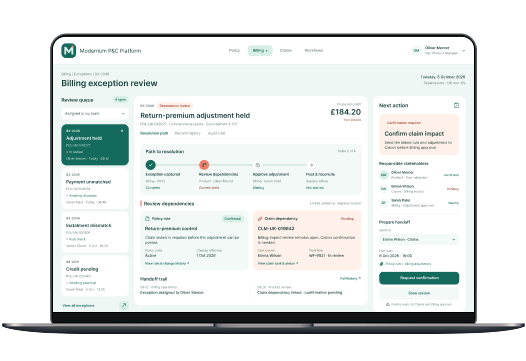
The client uses a Sapiens-based Property & Casualty insurance environment for policy administration, billing, and claims. The platform supported core non-life insurance operations but had become increasingly difficult to review, extend, and align with new business requirements.
Computools delivered insurance core platform modernization focused on structuring business workflows around the existing Sapiens environment. The Sapiens insurance platform modernization approach connected platform constraints, workflow improvements, automation opportunities, and analytics requirements without positioning the project as a full core replacement.
The updated environment reduced manual handoffs across selected workflows by 35%, improved policy servicing time by 28%, and accelerated billing exception resolution by 31%.
The client is a UK-based P&C insurer using Sapiens solutions to support non-life insurance operations across policy administration, billing, and claims.
The platform sat at the center of day-to-day insurance operations, so platform changes had to preserve continuity across established processes and stakeholder responsibilities. Product, operations, and technical teams needed a clearer view of workflow dependencies, platform constraints, and the implications of future updates across the existing environment.
Policy administration modernization therefore had to account for established business rules and operational dependencies already embedded in the Sapiens-based platform.
The existing Sapiens environment continued to support core insurance operations, but modernization decisions became difficult because workflow dependencies, platform constraints, and future requirements were not documented in a form business and technical stakeholders could evaluate together.
The client needed P&C insurance platform modernization that could improve workflows while retaining the existing core environment.
The project also required insurance legacy system modernization focused on component-level improvements, business-process clarity, and integration readiness.
Broader expertise in insurance software development was required across policy, billing, claims, automation, and operational analytics.
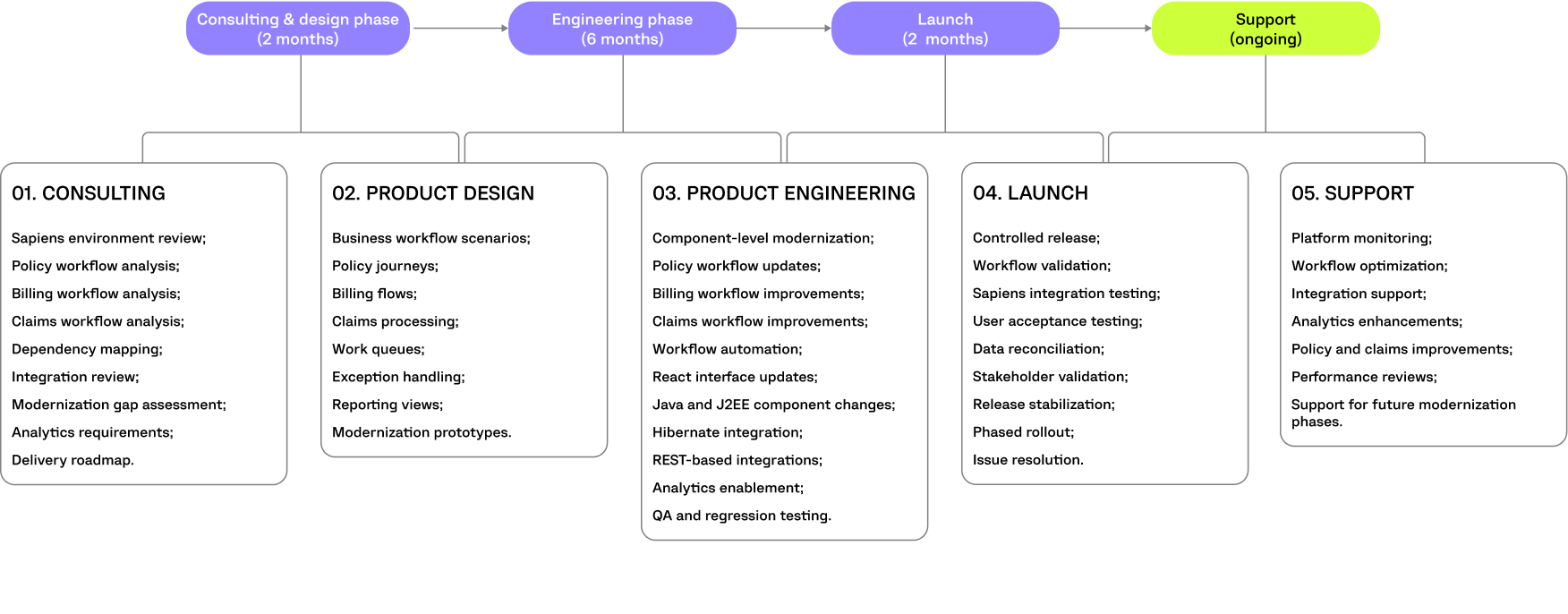
Computools mapped the existing Sapiens-based operating environment and translated policy, billing, and claims processes into structured workflows that business and technical stakeholders could review together.
The modernization approach preserved the existing insurance policy administration system while defining clearer component boundaries, process states, integration points, and future update scenarios. The insurance billing software was updated with clearer processing states and exception-handling rules across selected billing activities.
Insurance workflow automation reduced repeated manual steps across policy, billing, and claims processes while keeping business rules visible to operational teams.
Updates to the insurance claims management software improved visibility into claim status, task ownership, and handoff structure.
The solution also connected workflow design with analytics requirements so future changes could be evaluated against operational performance, bottlenecks, and processing patterns.
Modernum P&C Platform improved workflow clarity and operational efficiency across the insurer’s Sapiens-based P&C environment:
Business and operations teams gained clearer visibility into process states, dependencies, bottlenecks, and ownership across policy, billing, and claims.
Modernized interfaces created through web development made workflow status, exceptions, and operational actions easier to review within the existing Sapiens environment. More consistent reporting was supported by data engineering, which aligned operational information across policy, billing, claims, and analytics workflows.
The component-based structure also made future platform changes easier to scope, validate, and introduce without disrupting established insurance operations.
The engagement required a team capable of translating a complex Sapiens-based environment into a modernization plan that business and technical stakeholders could validate together.
Computools combined P&C domain analysis with legacy modernization expertise to define component boundaries, sequence platform changes, and connect automation and analytics requirements to actual insurance workflows. This approach reduced ambiguity before implementation and gave the insurer a practical basis for prioritizing subsequent modernization work.
The resulting architecture also created clearer data and integration boundaries for future AI development, should the insurer expand its decision-support capabilities.

The design made policy, billing, claims, and operational status easier to review across the existing Sapiens-based environment.
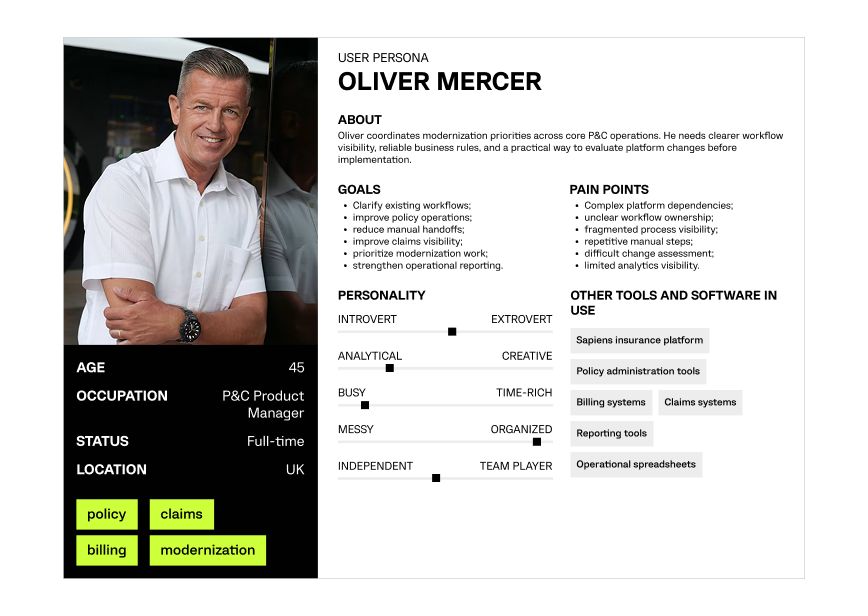
Defining the needs of a P&C product leader responsible for policy, billing, claims, and platform modernization.
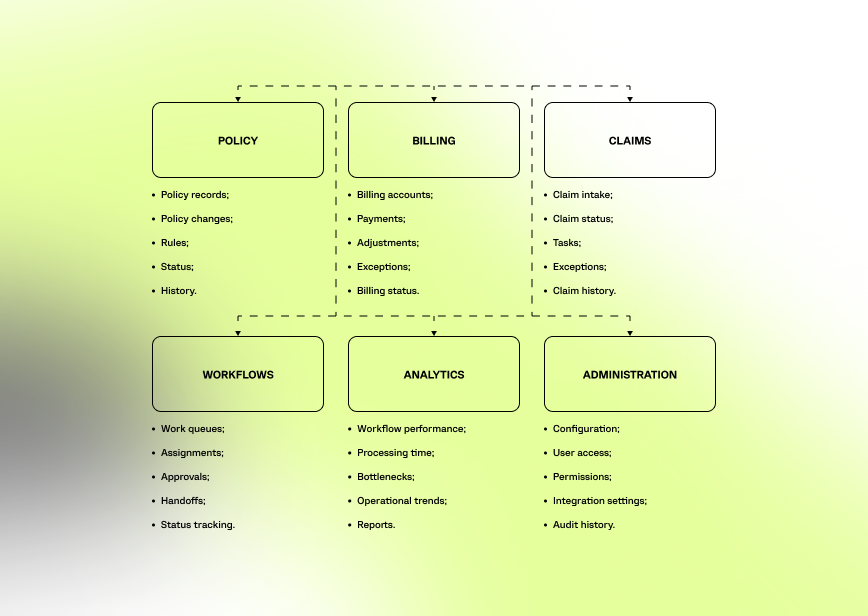
Organizing policy, billing, claims, workflows, and analytics around the existing Sapiens environment.
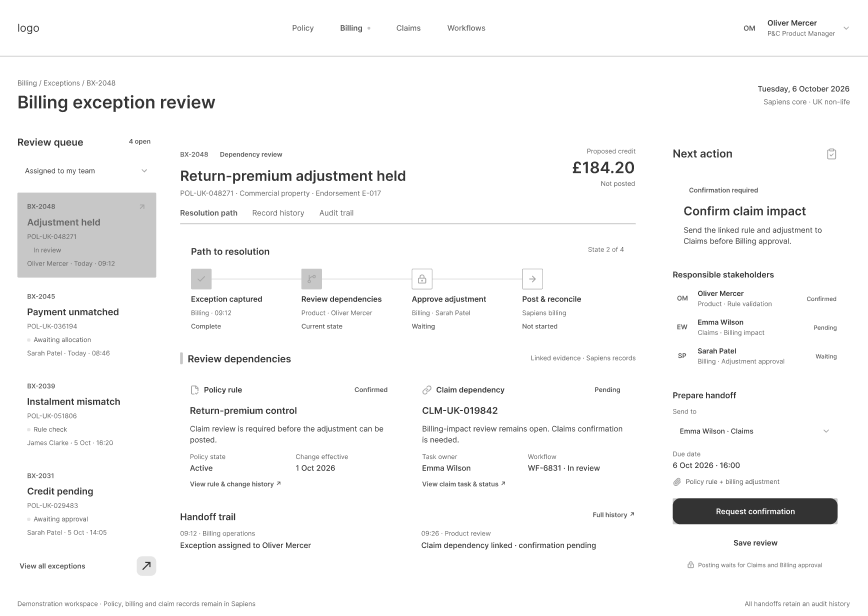
Testing policy, billing, claims, workflow, and analytics interactions before interface development.
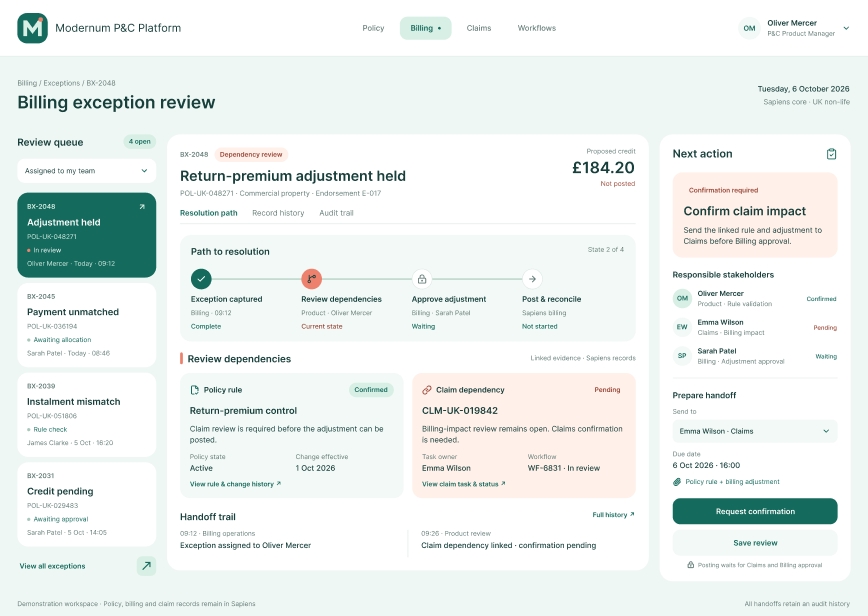
Creating clearer operational views for P&C workflows and modernization planning across the Sapiens-based platform.

Sapiens
Remained the core P&C environment supporting policy administration, billing, and claims processes.

Java
Supported existing business logic and selected modernized platform components across core insurance workflows.

Spring Boot
Supported modular Java services around selected legacy functions and reduced coupling between components.

React and TypeScript
Powered updated user-facing interfaces for structured policy, billing, claims, and operational workflows, with TypeScript improving maintainability and code reliability.

PostgreSQL
Supported structured storage and management of operational data across modernized insurance workflows.

Hibernate
Managed application persistence across the Java environment and supported separation between business logic and data-access operations.

JSON and REST
Connected modernized components and existing Sapiens-based functions through structured service interfaces.

Docker
Provided consistent runtime environments for modernized components across testing and release stages.

Jenkins
Supported automated build, testing, and release workflows during phased modernization.
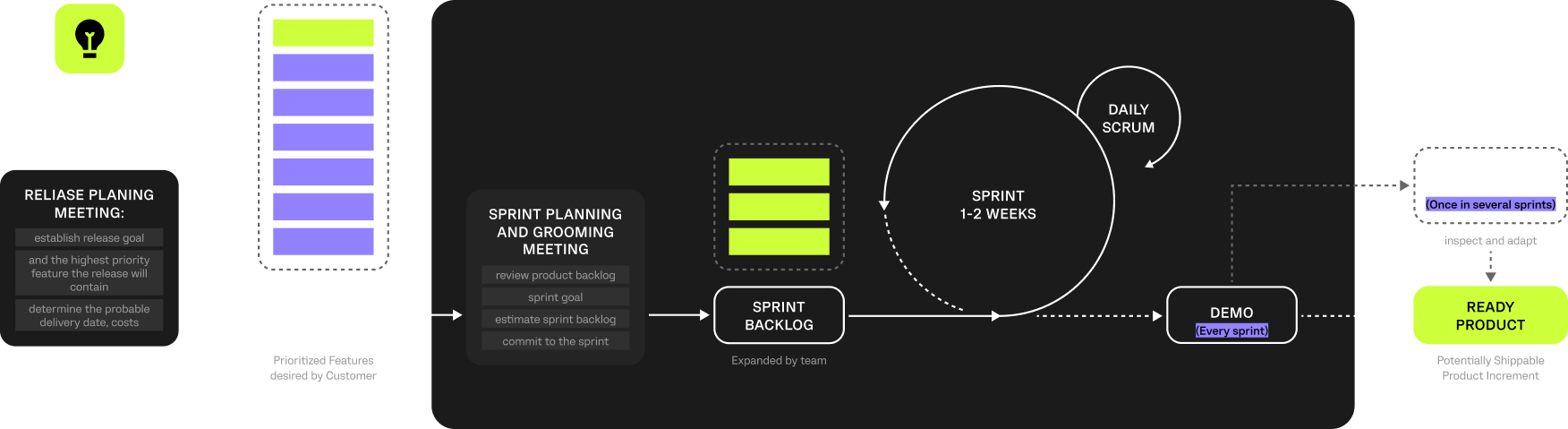
Computools used a Scrum-based delivery model with two-week iterations and regular validation by product, insurance operations, architecture, and technical stakeholders.
Each iteration linked a modernization decision to a specific requirement in policy, billing, claims, automation, or analytics.
Workflow scenarios and component changes were reviewed against existing Sapiens behavior before implementation. This allowed modernization priorities to be validated incrementally while preserving continuity across active insurance operations.
We weren’t looking to replace the Sapiens platform. We needed to understand where the biggest workflow problems were and what we could improve without disrupting day-to-day operations. Modernum P&C Platform gave us a much clearer view of what to change first and how to move forward across policy, billing, and claims.




Computools | 341 Raven Cir, Camden Wyoming, Delaware 19934, US