
THE AUTHOR:

If hotel groups want to develop a hotel reservation system that works across multiple properties, they need a single structure for availability, pricing, booking rules, and guest data, rather than separate workflows for each location. That pressure is visible in the 2025 market data.
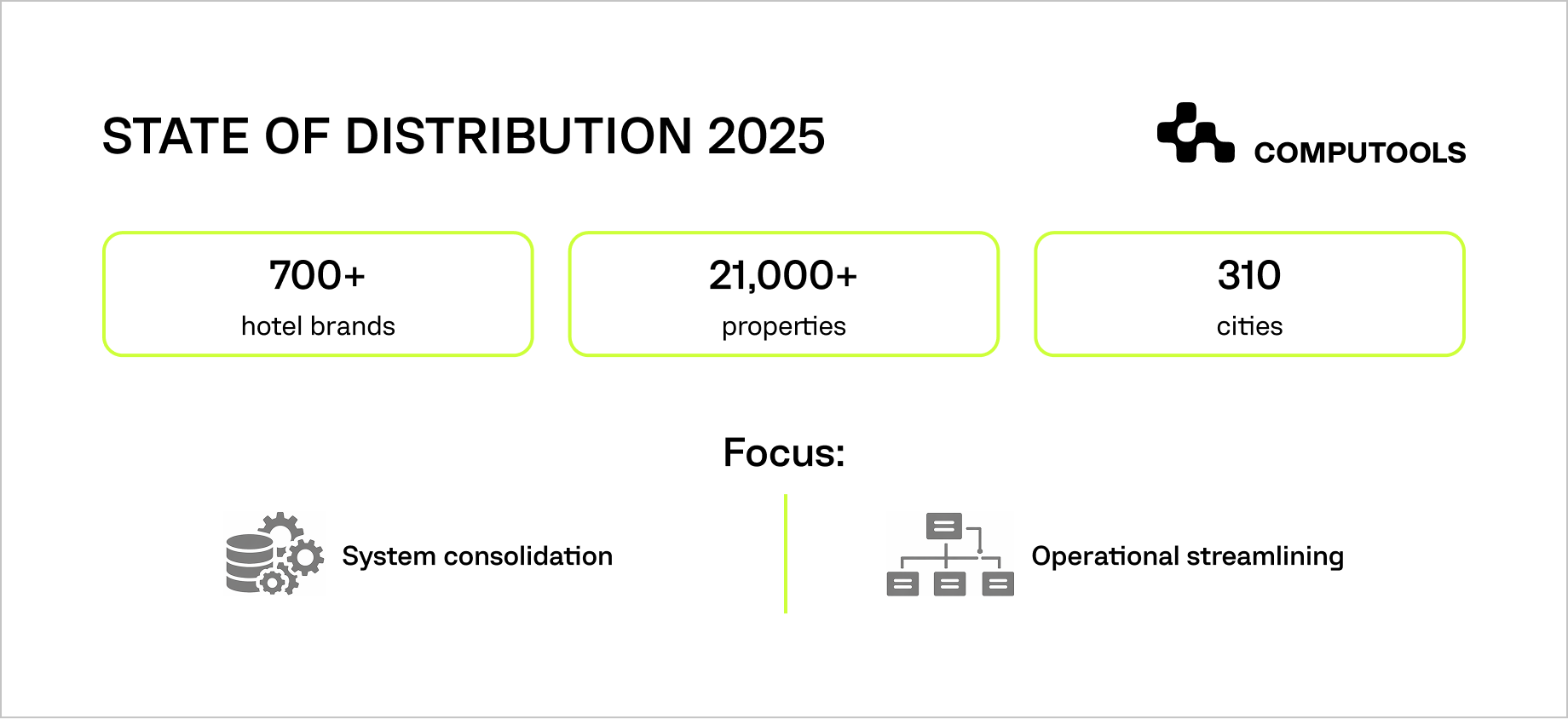
The State of Distribution 2025 report, based on input from more than 700 hotel brands and 21,000+ properties across 310 cities, shows that larger chains are focusing on system consolidation and operational streamlining.
SiteMinder reports that in 2025, hotel websites generated an average of US$516 per booking, compared to US$312 for OTAs. Additionally, the average booking window extended to 32.15 days. Revinate also reports that 85% of users give up on the hotel booking engine. For hotel chains, those losses grow faster when booking logic, rate presentation, and reservation workflows are fragmented across properties instead of being managed through a multi-property hotel reservation system.
This article breaks down the main pain points hotel chains face, shows how we solved them in Radesso Prime, and explains the key steps required to support booking control, scalability, and stronger reservation performance across multiple properties.
How Computools developed a hotel reservation system for an Austrian hotel chain
In the Radesso Prime project, we worked with a hotel group from Austria that needed stronger control over reservations across multiple urban properties. The business experienced steady demand and healthy occupancy, but the majority of bookings still came through OTAs, which increased commission costs and offered little control over guest relationships, repeat bookings, and overall booking performance across the portfolio. The client required a platform capable of handling repeat reservations across various properties as the group planned for expansion.
Within our travel and hospitality software development services practice, we designed the solution for a hotel group that needed centralized reservation control, cleaner booking operations across multiple properties, and a platform that could support future expansion. The project included redesigned property and room pages, improved booking flow logic, direct-offer communication, guest data capture, and integration support for marketing and retention activities. This improved the reservation process for guests and strengthened the hotel’s ability to manage bookings across multiple locations.
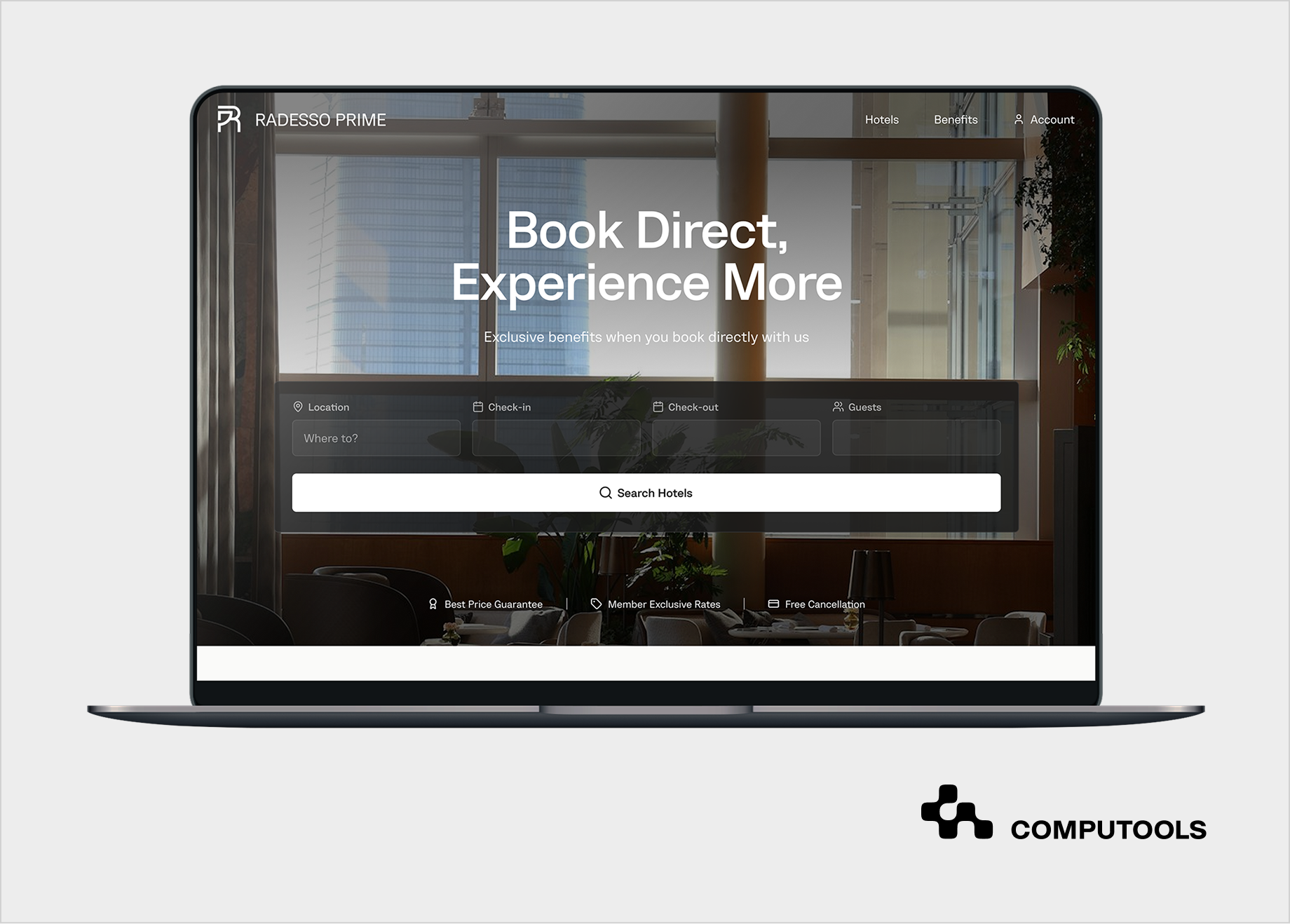
The client had already outgrown standard web development services and needed a system that could integrate booking logic, property-specific content, landing pages, retention workflows, and analytics into a single product. On the engineering side, the platform used Next.js and React for the guest-facing experience, Node.js and NestJS for reservation workflows, PostgreSQL for booking and guest data, AWS and Docker for scalable deployment, and Strapi for managing room descriptions, promotional offers, and location-specific content. That stack supported a scalable hotel reservation platform that grew with the chain as new properties and booking scenarios were added.
The delivery model also covered areas that usually sit outside isolated booking builds. Computools handled booking-flow audit, UX redesign, property-specific content architecture, SEO and AEO support, guest data capture, retention workflows, and channel attribution. Hotels typically expect comprehensive software engineering services for reservation systems that integrate with acquisition, operations, and repeat-booking performance.
Approximately six months after launch, direct bookings rose from roughly 10% to 55%, enabling the hotel group to better control customer acquisition and retention.
For a broader view of the current vendor landscape, you can also explore our overview of the Top 25 Travel & Hospitality Software Development Companies in 2026.
How to develop a multi-property reservation system for hotel chains: step-by-step process
A hotel chain needs to understand how to develop a hotel reservation system for multiple hotel properties without turning each location into a separate booking workflow. The reservation layer must maintain consistent booking rules, accommodate local differences where needed, and provide the brand with a clearer view of demand, guest data, and booking performance across the portfolio. The Radesso Prime project is a good example of that kind of work because the platform had to support multiple properties, direct reservations, content updates, retention workflows, and future growth within a single system.
Step 1. Map how reservations are handled across the chain before rebuilding the platform
Effective hotel reservation system development starts with a clear view of how bookings, property content, room structures, and guest-data workflows are managed across the chain. For a hotel chain, this work is less about checking one conversion funnel and more about identifying where fragmented processes are already slowing down coordination.
In practice, the team needs to review how booking logic changes across properties, where information is duplicated, which workflows depend on manual updates, and how inconsistencies appear between room presentation, pricing, and post-booking communication. These issues often stay hidden while the portfolio is small. Once the group expands, they start affecting content accuracy, reservation control, reporting, and campaign execution across multiple locations.
In Radesso Prime, the client already had a steady demand and a recognizable local presence, but the reservation model was overly dependent on external channels and underpowered on the brand side. The booking process was unclear, with a disjointed room selection experience, and the website struggled to retain users away from OTAs. This made the initial review crucial, as the team needed to identify booking hurdles and structural gaps that restricted control throughout the system.
The output of this step should be a chain-level map of booking workflows, property content structure, reservation bottlenecks, and ownership gaps. That gives the project a clear starting point for system design and prevents the next stages from being built on top of already fragmented operations.
Step 2. Define the shared property structure across the chain
A chain needs one reservation model for all properties. That model covers property profiles, room categories, occupancy rules, rate types, booking conditions, taxes, add-ons, and content fields. When these elements are described differently across properties, the platform becomes harder to manage, reporting becomes noisy, and each update requires more manual work.
The structure has to be detailed enough for daily operations. Teams need the same logic for how properties are listed, rooms are grouped, rates are labeled, and booking conditions are shown. The platform also needs clear rules for what can vary at the property level, including local landing pages, seasonal packages, and city-specific offers.
This part of the system affects more than the content. It shapes how booking logic is stored, how reservations move through the platform, and how new properties are added later. If the chain expands without a shared model, every new location introduces extra exceptions in room setup, rate logic, and content handling. Those exceptions slow down rollout and increase support load.
In the Radesso Prime project, Computools rebuilt property and room pages, improved booking flow logic, and strengthened property-specific content architecture. The platform also used Strapi to manage room descriptions, promotional offers, landing pages, and location-specific website sections.
On the backend development, Node.js and NestJS supported reservation workflows designed to scale across multiple properties. This gave the hotel group a centralized hotel booking platform with a single operational structure for booking management and sufficient flexibility for property-level demand and content updates.
The output must include a shared property schema, a room taxonomy, a rate hierarchy, a booking-condition model, content-governance rules, and a list of property-level exceptions. This provides the teams with a unified model for expansion, avoiding the need to rebuild reservation logic as the chain expands.
Step 3. Define roles, permissions, and operating rules across the chain
A reservation platform for a chain needs clear operating rules. The team must define who controls rates, who updates offers, who manages property pages, who owns booking exceptions, and how reservation data flows between marketing, revenue, and operations. Without that structure, the platform may look unified on the surface while each property continues to run its own version of the process behind the scenes.
This part of the work usually covers role ownership, approval logic, and update frequency across the portfolio. Some decisions belong at the chain level, such as rate naming, booking-condition structure, campaign standards, and guest-data rules. Others sit at the property level, such as local offers, landing-page content, or city-specific package adjustments. The reservation system has to clearly reflect that split so teams know what they can change and what must stay aligned across the brand.
The same logic applies to reporting. Chains need one view of booking performance across properties, but they also need property-level visibility into local demand, conversion patterns, and offer performance. If reporting sits in separate workflows, commercial decisions slow down, and the chain loses consistency in how it manages demand, pricing, and direct-booking activity. Good hotel chain booking management depends on a single operational structure for decision-making, data, and execution.
In our project, we approached the work as a comprehensive end-to-end delivery scope. This included booking-flow audit, property-specific content architecture, direct-offer communication, guest data capture, retention workflows, and analytics. The team coordinated the booking journey structure, offer positioning, and reporting logic within a unified delivery model, providing the client greater control over how guests discover, book, and return across the group..
The output should provide a clear governance model that outlines chain rules, property permissions, booking ownership, guest data management, and reporting procedures. This provides the reservation platform with a maintainable structure as more properties, campaigns, and booking scenarios are added.
Step 4. Design the guest booking flow across multiple properties
A chain can standardize internal rules and still lose bookings if the guest-facing layer is hard to use. A hospitality reservation system has to help users compare properties, understand room differences, read rate conditions, and complete a reservation without jumping between disconnected pages. For hotel groups, that means the booking flow has to stay clear even when the platform covers several locations, room types, and direct-booking offers.
This part of the product starts with how the chain presents choice. Guests need to see what changes from one property to another, which room fits their stay, what the rate includes, and what happens if plans change. The system has to keep those answers visible while the user moves from property discovery to room selection and checkout. If the booking path hides policy details, breaks comparisons, or makes rate differences hard to understand, users return to OTAs because they can compare more quickly there.
The same layer also has to support direct-booking incentives without turning the interface into a promo board. Flexible cancellation, lower direct rates, upgrade options, package logic, and repeat-stay offers need a clear place in the flow. Guests should understand the advantage when making the booking decision, not after they have already opened another tab.
In the Radesso Prime project, we redesigned the direct booking experience for desktop and mobile users, strengthened booking flow logic, and refined the property-specific content structure. We also developed a clear booking architecture through site map planning, wireframes, and interface work that simplified booking decisions and reduced drop-off across key screens. Using Next.js and React on the frontend, we built a fast, mobile-friendly reservation journey across property pages, room details, and booking flows.
This step’s output includes booking-flow rules, property-to-room navigation, rate-display patterns, policy visibility, and a consistent structure for direct-booking incentives.
Step 5. Turn guest data into repeat bookings across the chain
A multi-property reservation system should remain operational after a booking is confirmed. The chain must be able to collect guest data during the reservation process, organize it effectively, and connect it with follow-up communications, targeted offers, and repeat-stay initiatives. That is where custom hotel reservation software starts affecting revenue beyond the first transaction.
The data model has to be practical. Teams need contact details, stay history, property preferences, booking source, offer interactions, and consent settings in a single usable record. If this information sits in separate tools or arrives in inconsistent formats, retention becomes slower and less accurate. Hotels end up sending generic campaigns, missing cross-property opportunities, and treating repeat guests like first-time leads.
This part of the system also matters for chain-level coordination. A guest who stayed at one property may be a good fit for another location in the same group. A reservation platform should make that visible. It should support post-stay messaging, return-booking offers, property-aware campaigns, and communication that reflects actual stay history instead of one broad mailing list with wishful thinking, where strategy should be.
In the Radesso Prime project, we integrated guest data capture and retention workflows from the beginning. This included follow-up messaging, personalized offers, and encouraging repeat stays. We utilized HubSpot and email automation to enhance personalized outreach, which helped drive repeat bookings.
The output should include a guest data model, a CRM field structure, rules for consent, scenarios for data retention, and logic for cross-property communication. This helps the hotel chain understand guest journeys from initial reservation through subsequent stays, reducing reacquisition waste and leveraging guest history across the portfolio.

Want to increase direct bookings up to 3x while managing all properties from one system? Talk to our experts to design your multi-property reservation platform.
Step 6. Connect reservation data with operational systems across the chain
A multi-property reservation platform needs a clear data structure behind the booking flow. Reservation details, guest records, room information, property content, and booking events must be stored in a format the chain can use across teams and properties. If those records live in separate tools or move through manual exports, operations slow down, and the system becomes harder to trust.
This step defines how the reservation layer exchanges data with the hotel property management system, content tools, analytics, and communication workflows. The team needs to decide which records are created inside the reservation platform, which fields are shared with operational systems, how booking updates are tracked, and how property-level changes affect the wider chain. That work matters because hotel groups do not manage bookings in isolation. Reservations affect front-desk planning, guest communication, reporting, and campaign performance long after the checkout page is closed.
The structure also has to support daily operational work. Local teams need current room content, offer details, and booking information. Central teams need a consistent view of reservation activity across the portfolio. When the platform stores data in a structured way and applies clear rules, the chain can add properties, update content, and review booking performance without rebuilding the workflow every few months.
In our project, we used PostgreSQL to store booking data, guest records, room information, and relationships between platform content. We used Strapi to manage room descriptions, promotional offers, landing pages, and location-specific website sections.
For a broader view of how reservation workflows connect with hotel operations, read our guide on Streamlining the Guest Experience: A Hotel Automation Guide.
Step 7. Build a shared reporting and coordination layer across the portfolio
A central reservation system for hotel chains needs a single reporting structure for the entire portfolio. The chain has to see how bookings move across properties, which locations convert better, where users drop off in the flow, which offers drive conversions, and how demand changes by source, property, and campaign. Without that visibility, revenue, marketing, and property teams start making decisions based on separate dashboards and assumptions.
This part of the system covers event tracking, attribution logic, visibility of booking status, and chain-level reporting rules. Teams need to know which metrics are shared across all properties and which stay local. That usually includes property-level conversion, booking source, room and rate performance, campaign impact, repeat-booking behavior, and guest-response patterns after the stay. A chain also needs a way to compare properties without flattening their differences. Good reporting should show both common patterns and location-specific performance.
This layer affects execution as much as analysis. If the chain can see which properties need stronger landing pages, which offers produce better repeat demand, or where booking friction is rising, teams can act faster. Marketing can adjust campaigns. Commercial teams can refine packages and pricing. Property teams can update content and booking communication with a clearer view of the flow.
For the Radesso Prime project, we implemented GA4 and Google Tag Manager to monitor user behavior, the booking funnel, traffic sources, and conversion events across the platform. This provided the hotel group with clearer insights into how guests transitioned from search and ads to direct reservations, enabling us to measure booking performance across various properties.
Step 8. Launch the platform in controlled phases across the portfolio.
A chain should not launch a reservation platform across all properties in one uncontrolled move. Hotel booking software for multiple properties needs a phased rollout with clear release priorities, shared validation rules, and a way to compare performance before the next property or feature set goes live. That reduces operational risk and makes it easier to see which changes improve booking performance and which create friction.
The rollout plan usually starts with a limited set of properties, booking scenarios, or commercial functions. Teams need time to validate room and rate logic, test property-specific content, review booking behavior, and confirm that guest data flows, reporting, and follow-up communication work as expected. This provides the chain with a more efficient way to expand the platform, avoiding the need to repeatedly fix the same structural issues after each release.
A phased rollout also helps local and central teams stay aligned. Property teams can see how the platform behaves under real demand. Central teams can review whether booking rules, content updates, and reporting stay consistent as more locations are added. That gives the chain a more stable path to full adoption and makes later expansion easier to manage.
With the Austrian hotel project, we worked in short iterations and released improvements in stages. We used real performance signals to refine booking conversion, content management, acquisition support, and retention workflows while keeping the client closely involved as priorities evolved. That delivery model made the platform easier to validate and easier to grow across multiple properties.
Step 9. Standardize how new properties are added to the reservation model
As a hotel chain grows, each new property should be added to the platform using the same onboarding logic. The team needs one method for property setup, room and rate mapping, content templates, local exceptions, and launch rules. Without that structure, expansion becomes repetitive manual work, booking rules drift across locations, and every new property increases the support load.
This is also where hotel booking engine development for a chain needs a different mindset. The booking layer cannot be reconstructed from scratch each time a new location is introduced. It requires shared templates for elements such as room cards, rate display, booking conditions, landing page layout, and direct-offer positioning. Local teams still need room for city-specific packages, property-level promotions, and content updates, but those changes should sit inside a controlled framework.
The same rule applies to rollout. New properties need a defined path for content population, rate setup, booking validation, tracking, and internal review before they go live. That gives central teams a predictable launch process and reduces the risk of inconsistent booking flows across the portfolio. It simplifies training by enabling local teams to adopt a unified operating model, avoiding different setups for each property.
In the Radesso Prime, we built property-specific content architecture, supported room descriptions, promotional offers, landing pages, and location-specific website sections using Strapi, and implemented reservation workflows in Node.js and NestJS that could scale as the hotel group added new properties and booking scenarios. This provided the platform with a more solid base for growth, avoiding the need for the team to redesign the booking system for each location.
This step’s output must include a property-onboarding framework, room and rate mapping rules, content templates, local exceptions, and release rules for new locations. This keeps expansion manageable and helps the chain grow within a single reservation model instead of multiple booking setups.
Step 10. Keep the platform adaptable as the chain grows
A reservation platform for a hotel chain changes as the business changes. Hotel booking system development continues after launch because the chain adds new properties, updates offers, changes campaigns, expands room structures, and learns more about guest behavior over time. The system has to support that movement without turning every commercial change into a structural problem.
This step covers long-term ownership. Teams need rules for release planning, performance review, content governance, reporting updates, and architecture changes as the chain grows. That includes deciding which parts of the platform can evolve quickly, which parts need deeper testing, and how new properties are added without breaking the existing reservation model.
Optimization involves reviewing conversion paths, booking-source quality, rate performance, content effectiveness, and repeat-stay behavior to prioritize improvements. Changes may influence guest flow, data structure, reporting, or content operations. The platform stays useful by adapting to commercial needs.
In Radesso Prime, we structured delivery into short Scrum iterations and used each release to improve a specific part of the platform, from booking performance to content operations to retention workflows. That made it easier to validate changes under real demand, adjust priorities faster, and keep the reservation model manageable as the platform expanded across the chain.
Why choose Computools for a hotel chain
Computools works with travel and hospitality companies that need reservation logic, property-level content, guest data, and booking performance to operate within a single system.
In the Radesso Prime project, we redesigned the reservation process, enhanced the property and room pages, optimized direct-offer communication, implemented guest data capture and retention workflows, and established analytics and attribution across the platform. Six months post-launch, direct bookings rose from approximately 10% to 55%, helping the group decrease commission costs and gain greater control over acquisition and retention.
A hotel chain requires a unified system that handles booking logic, showcases properties, displays direct offers, creates campaign landing pages, manages guest communication, and performs post-launch optimization. That is why our work combines platform architecture, operational logic, and custom data engineering for reservation records, guest profiles, reporting, and content relationships across multiple properties.
We develop platforms for booking engines, RMS, PMS, CRS workflows, guest applications, reservation automation, front-desk operations, and retention tools. With 250+ experts, we’ve completed 40+ global projects, achieving a 40% faster booking and check-in process, and a 35% cost reduction.
Beyond hotel platforms, our portfolio includes software development services for HoReCa. We also work in heritage tourism software development, which gives us a broader view of how reservation systems connect with hospitality operations, visitor journeys, and location-specific digital products.
For hotel chains, this allows a single team to handle everything related to reservations, from the IT infrastructure to deployment. We can cover booking flows, property logic, integrations, content operations, analytics, retention, and the coordination required to scale the platform across multiple locations without turning growth into another set of disconnected workflows.
If you are considering developing a platform for managing multiple property reservations, get in touch with us at info@computools.com.
For a wider perspective on the market, you can also check out our overview of the 20 Best Travel Booking Platform Development Companies.
Conclusion
For hotel chains, the reservation layer affects booking control, property coordination, guest data, and long-term scalability across the whole portfolio. A system built for multiple properties provides the brand with a single structure for rates, booking rules, content management, and retention workflows.
To develop a hotel reservation system for a hotel chain, the work must cover shared booking logic, local flexibility, structured data, and an architecture that supports expansion without adding more fragmentation. That is what turns the reservation platform into a stable operational and commercial layer for the whole group.
Computools
Software Solutions
Computools is an IT consulting and software development company that delivers innovative solutions to help businesses unlock tomorrow.