Modernum P&C Platform

How Modernum P&C Platform reduced manual handoffs by 35% across policy, billing, and claims workflows.

case image

AT A GLANCE

The client uses a Sapiens-based Property & Casualty insurance environment for policy administration, billing, and claims. The platform supported core non-life insurance operations but had become increasingly difficult to review, extend, and align with new business requirements.

Computools delivered insurance core platform modernization focused on structuring business workflows around the existing Sapiens environment. The Sapiens insurance platform modernization approach connected platform constraints, workflow improvements, automation opportunities, and analytics requirements without positioning the project as a full core replacement.

The updated environment reduced manual handoffs across selected workflows by 35%, improved policy servicing time by 28%, and accelerated billing exception resolution by 31%.

THE CLIENT

The client is a UK-based P&C insurer using Sapiens solutions to support non-life insurance operations across policy administration, billing, and claims.

The platform sat at the center of day-to-day insurance operations, so platform changes had to preserve continuity across established processes and stakeholder responsibilities. Product, operations, and technical teams needed a clearer view of workflow dependencies, platform constraints, and the implications of future updates across the existing environment.

Policy administration modernization therefore had to account for established business rules and operational dependencies already embedded in the Sapiens-based platform.

BUSINESS CHALLENGE

The existing Sapiens environment continued to support core insurance operations, but modernization decisions became difficult because workflow dependencies, platform constraints, and future requirements were not documented in a form business and technical stakeholders could evaluate together.

  • Complex workflow dependencies. Policy, billing, and claims processes crossed multiple components and operational responsibilities.
  • Limited business visibility. Product and operations teams needed a clearer view of how existing workflows behaved before defining future changes.
  • Manual process steps. Selected insurance workflows still depended on repeated handoffs and operational intervention.
  • Unclear modernization priorities. Business expectations, technical constraints, automation opportunities, and analytics needs were not yet integrated into a single implementation path.
  • Core continuity requirements. Modernization had to preserve established Sapiens-based insurance operations.

The client needed P&C insurance platform modernization that could improve workflows while retaining the existing core environment.

The project also required insurance legacy system modernization focused on component-level improvements, business-process clarity, and integration readiness.

Broader expertise in insurance software development was required across policy, billing, claims, automation, and operational analytics.

SOLUTION SUMMARY

Computools mapped the existing Sapiens-based operating environment and translated policy, billing, and claims processes into structured workflows that business and technical stakeholders could review together.

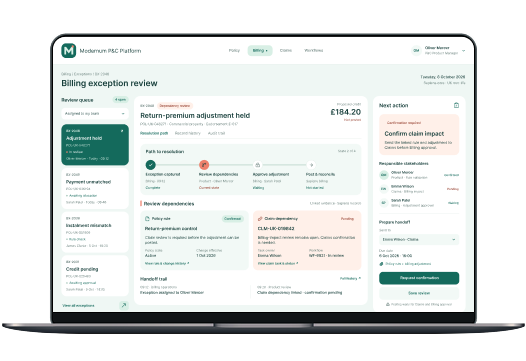
The modernization approach preserved the existing insurance policy administration system while defining clearer component boundaries, process states, integration points, and future update scenarios. The insurance billing software was updated with clearer processing states and exception-handling rules across selected billing activities.

Insurance workflow automation reduced repeated manual steps across policy, billing, and claims processes while keeping business rules visible to operational teams.

Updates to the insurance claims management software improved visibility into claim status, task ownership, and handoff structure.

The solution also connected workflow design with analytics requirements so future changes could be evaluated against operational performance, bottlenecks, and processing patterns.

IMPACT

Modernum P&C Platform improved workflow clarity and operational efficiency across the insurer’s Sapiens-based P&C environment:

  • Policy servicing time decreased by 28%.
  • Billing exception resolution time decreased by 31%.
  • Claims workflow processing time decreased by 26%.
  • Manual handoffs across selected workflows decreased by 35%.
  • Operational reporting preparation time decreased by 40%.

Business and operations teams gained clearer visibility into process states, dependencies, bottlenecks, and ownership across policy, billing, and claims.

Modernized interfaces created through web development made workflow status, exceptions, and operational actions easier to review within the existing Sapiens environment. More consistent reporting was supported by data engineering, which aligned operational information across policy, billing, claims, and analytics workflows.

The component-based structure also made future platform changes easier to scope, validate, and introduce without disrupting established insurance operations.

WHY COMPUTOOLS

The engagement required a team capable of translating a complex Sapiens-based environment into a modernization plan that business and technical stakeholders could validate together.

Computools combined P&C domain analysis with legacy modernization expertise to define component boundaries, sequence platform changes, and connect automation and analytics requirements to actual insurance workflows. This approach reduced ambiguity before implementation and gave the insurer a practical basis for prioritizing subsequent modernization work.

The resulting architecture also created clearer data and integration boundaries for future AI development, should the insurer expand its decision-support capabilities.

Launch your software solution within 1-3 months instead of years. Unlock tomorrow. Build a future-ready business through innovation.

STORY IN DEPTH

Background

The client’s Sapiens-based platform supported policy administration, billing, and claims across core P&C operations. Over time, platform constraints and interconnected workflows made modernization decisions increasingly difficult. Business users understood individual operational processes, while technical teams understood system dependencies, but both views were difficult to reconcile in a single modernization roadmap.

This affected the insurer’s ability to evaluate automation opportunities, analytics requirements, and future platform changes.

Approach to solution

Computools began by mapping how the existing Sapiens environment supported policy, billing, and claims workflows. The team identified platform dependencies, integration points, workflow bottlenecks, and areas with limited business visibility.

Core insurance processes were then translated into structured scenarios that product, operations, and technical stakeholders could review together.

A component-based modernization path connected each proposed workflow change with platform constraints, automation opportunities, analytics requirements, and implementation dependencies.

Computools role

Computools was responsible for:

  • reviewing the existing Sapiens-based platform environment;
  • mapping policy, billing, and claims workflows;
  • identifying workflow bottlenecks and technical dependencies;
  • defining component-level modernization priorities;
  • structuring business-readable workflow scenarios;
  • identifying automation opportunities across selected processes;
  • defining analytics and reporting requirements;
  • mapping integration points around the existing platform;
  • preparing modernization scenarios for stakeholder validation;
  • supporting implementation planning and future rollout.

Key decisions and outcomes

The existing Sapiens environment remained the operational core. Modernization focused on selected components and workflows with the greatest need for change.

Business-readable workflow scenarios were defined before implementation. Product, operations, and technical stakeholders could validate proposed changes against existing processes before development began.

Automation and analytics were tied to specific workflow states and operational requirements. This kept modernization focused on concrete process issues and gave the insurer a clearer basis for future implementation decisions.

DESIGN

The design made policy, billing, claims, and operational status easier to review across the existing Sapiens-based environment.

USER PERSONA → SITE MAP → WIREFRAMES → USER INTERFACE

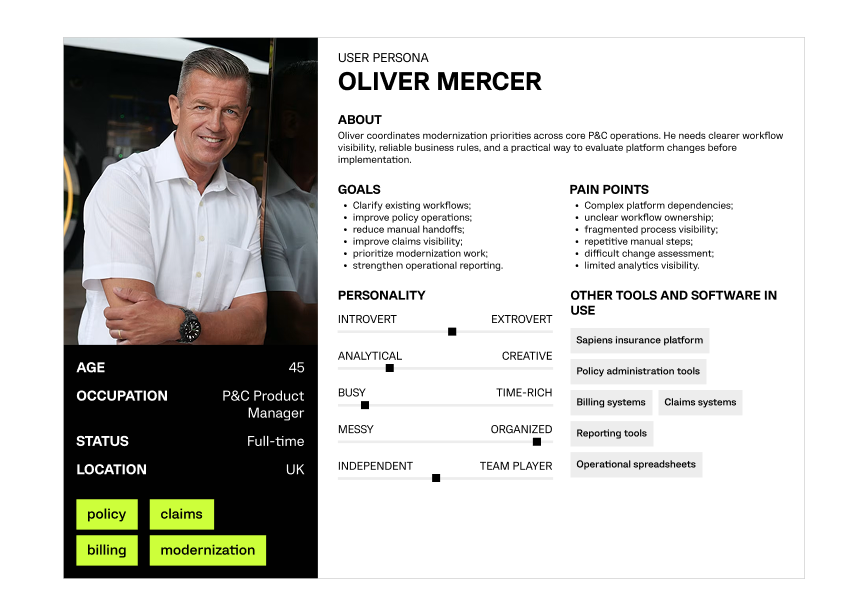
USER PERSONA

Defining the needs of a P&C product leader responsible for policy, billing, claims, and platform modernization.

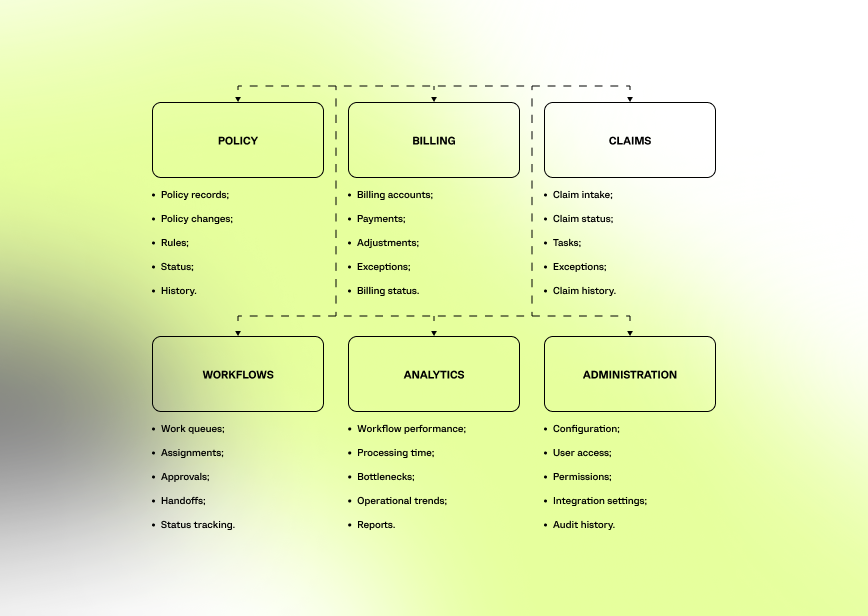
SITE MAP

Organizing policy, billing, claims, workflows, and analytics around the existing Sapiens environment.

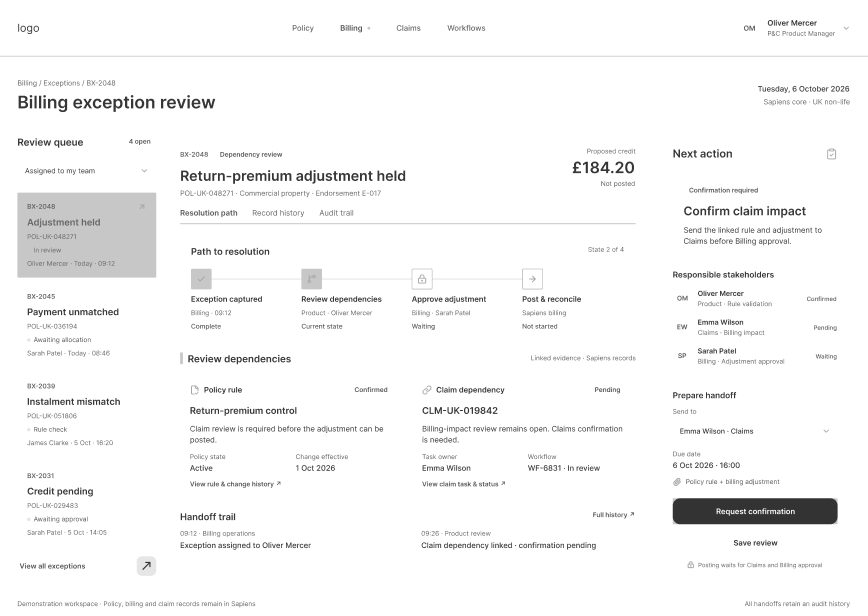
WIREFRAMES

Testing policy, billing, claims, workflow, and analytics interactions before interface development.

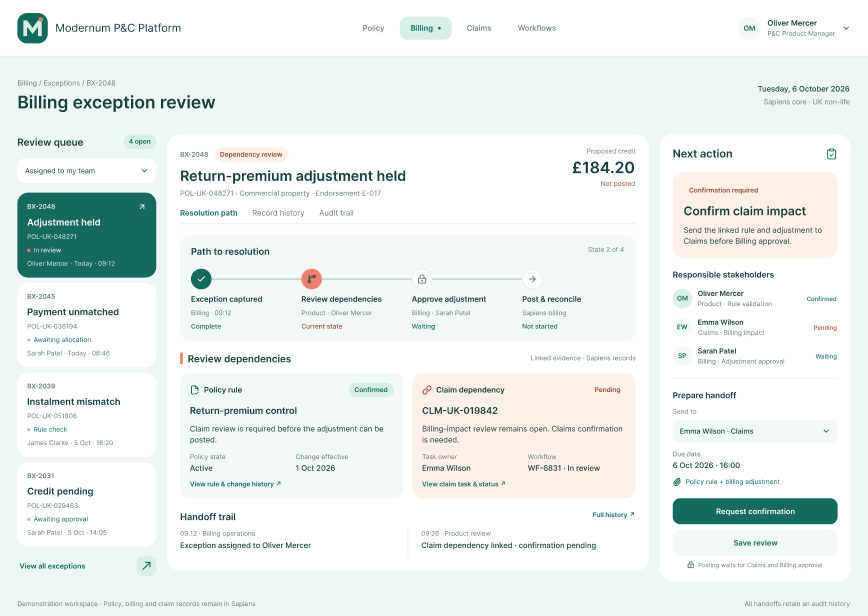
USER INTERFACE

Creating clearer operational views for P&C workflows and modernization planning across the Sapiens-based platform.

DIGITAL PLATFORM & TECHNOLOGY

Modernum P&C Platform used the client’s established Sapiens and Java environment while introducing clearer component boundaries and modernized web interfaces.

PROJECT MANAGEMENT METHODOLOGY

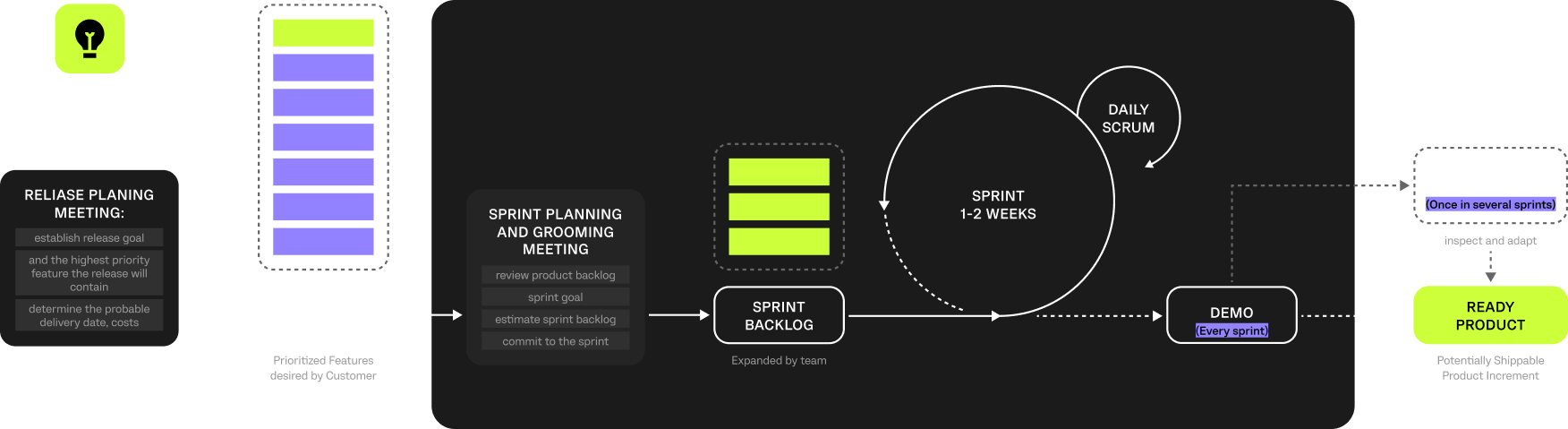
Computools used a Scrum-based delivery model with two-week iterations and regular validation by product, insurance operations, architecture, and technical stakeholders.

Each iteration linked a modernization decision to a specific requirement in policy, billing, claims, automation, or analytics.

Workflow scenarios and component changes were reviewed against existing Sapiens behavior before implementation. This allowed modernization priorities to be validated incrementally while preserving continuity across active insurance operations.

PROJECT MANAGEMENT METHODOLOGY

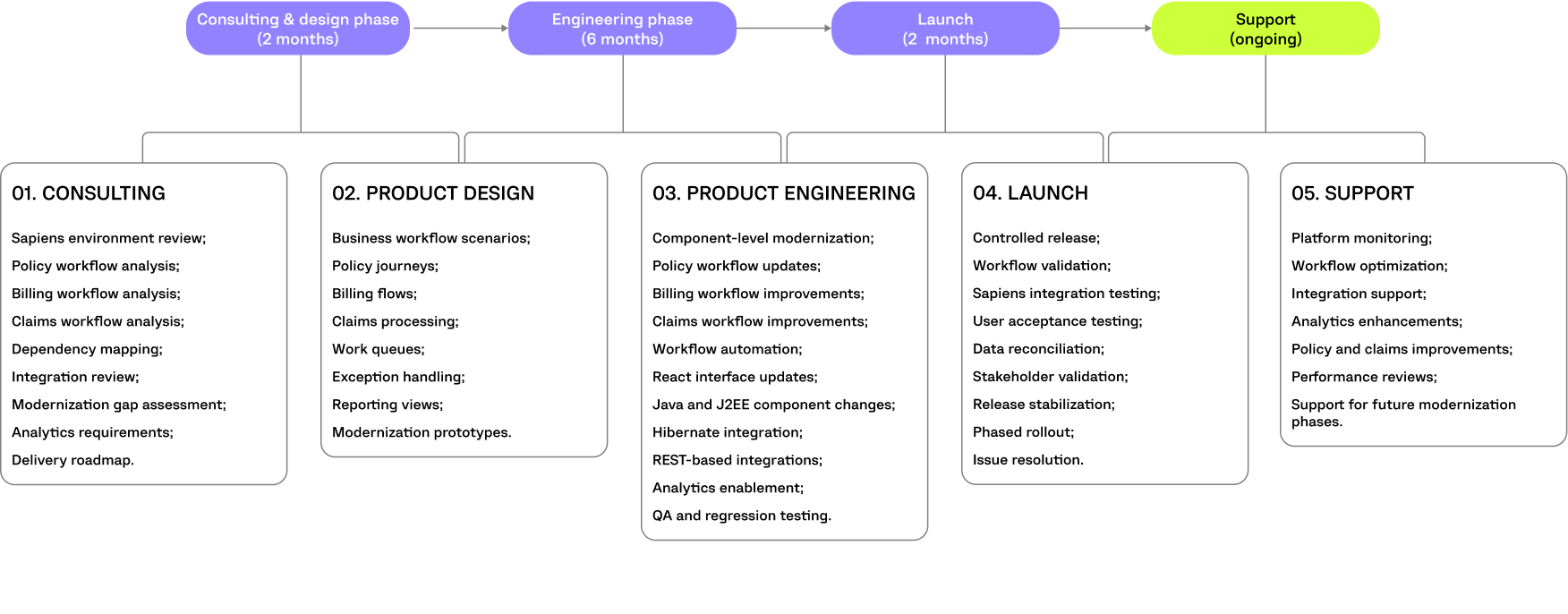
PROJECT TIMELINE

image

WHAT OUR CLIENT SAID

We weren’t looking to replace the Sapiens platform. We needed to understand where the biggest workflow problems were and what we could improve without disrupting day-to-day operations. Modernum P&C Platform gave us a much clearer view of what to change first and how to move forward across policy, billing, and claims.

CONTACT US TO GET A COST-EFFECTIVE
PROJECT ESTIMATE

Thank you for your message!

Your request will be carefully researched by our experts. We will get in touch with you within one business day.

WHAT HAPPENS NEXT?

01.
We deeply analyse your request.
02.
We create project roadmap, accelerating your time-to-value.
03.
We co-scope features, minimizing project risk upfront.
04.
We submit a comprehensive project proposal.
Trusted by: