



THE AUTHOR:

Companies planning to build logistics marketplace platform solutions are doing so under growing margin pressure, rising operational complexity, and increasing demand for real-time freight visibility.
According to Statista, the global logistics market surpassed $10 trillion in 2024 and is projected to reach approximately $14.4 trillion by 2029, growing at around 8% annually.
At the same time, digital freight forwarding is expanding significantly faster, with a projected CAGR close to 19% through 2030 and market estimates ranging from $33–49 billion today to nearly $95–119 billion within the decade.
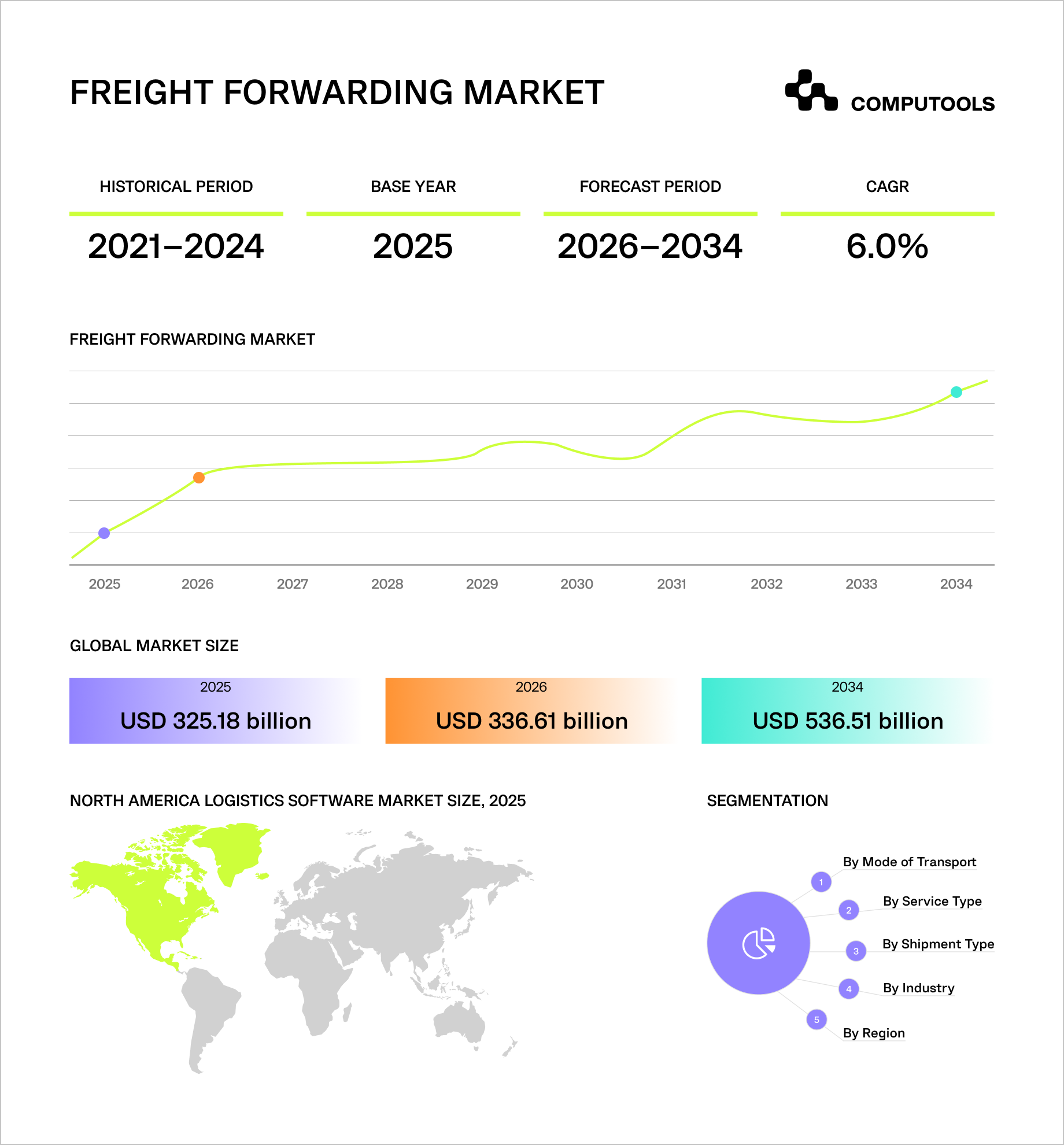
This divergence highlights a shift: traditional freight grows, but digital infrastructure scales faster. As rate volatility rises, empty miles hurt efficiency, and manual coordination slows cycles. Freight operators turn to marketplace models to restore margins and transparency.
A B2B logistics marketplace acts as a capacity layer connecting carriers, shippers, brokers, and financial services, automating matching, enabling real-time tracking, and embedding payments into freight workflows.
How we delivered a real B2B logistics marketplace platform: Locargo case
As part of our B2B logistics marketplace development practice, we partnered with LOCARGO, a Texas-based trucking platform operating in a highly competitive ground freight market with strategic access to the Port of Houston. The client’s goal was to move beyond traditional brokerage and build a scalable digital ecosystem connecting shippers, independent drivers, and small carriers.
LOCARGO needed a fully operational marketplace capable of consolidating shipments from multiple customers, dynamically allocating transport capacity, and supporting freelance carriers within an on-demand economy model. Operational fragmentation, underutilized fleet capacity, rising fuel costs, and limited visibility were directly impacting profitability.
We approached the project as a full-cycle logistics marketplace app development. First, we analyzed order placement workflows, shipment tracking logic, capacity utilization patterns, and invoicing operations.
Based on this assessment, we designed a platform architecture combining real-time GPS monitoring, automated route optimization, electronic document management, and integrated accounting support.
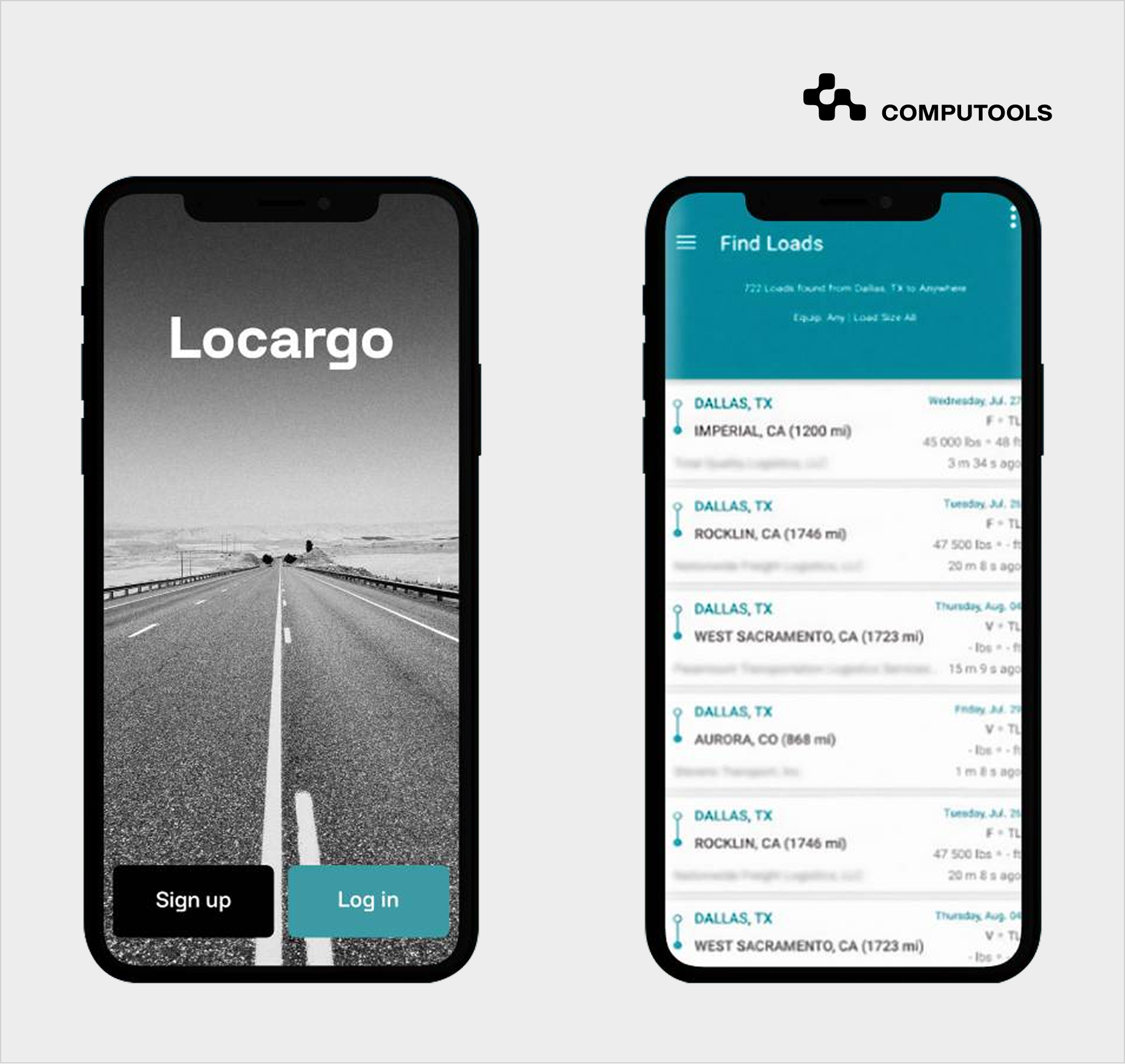
Through our IoT development services, we implemented sensor-based fleet monitoring and live vehicle tracking, enabling intelligent distribution of loads across available drivers. The optimization engine reduced empty mileage and improved route efficiency, directly impacting operational costs. Integration with Google Maps enhanced navigation precision and driver assignment accuracy.
From a technology standpoint, we delivered a scalable backend architecture using Java and Spring, supported by MongoDB, MySQL, and Redis to ensure both transactional reliability and high-performance data processing. The system was designed to support rapid growth in transaction volume and ecosystem participants, aligning with long-term marketplace scalability goals typical in ground transportation software development environments.
The measurable impact was notable. Within two years of launching the platform, LOCARGO’s revenue grew five times. During the initial operational phase, the system cut fuel costs by 20%, boosted driver productivity by 15%, and increased customer satisfaction by 10%. More importantly, the company shifted from being a regional cargo service provider to a digital collaboration platform managing a local logistics ecosystem.
LOCARGO’s transformation shows that a successful B2B logistics marketplace is built on operational infrastructure. Revenue growth came from optimized capacity utilization, real-time visibility, and automated coordination, not from adding more participants to the network.
How to build a B2B logistics marketplace platform for freight operators: A step-by-step guide
Our expertise in developing and scaling operational freight platforms allows us to outline a practical step-by-step guide to build a B2B logistics marketplace platform grounded in real-world execution, infrastructure decisions, and measurable business outcomes.
Step 1: Marketplace model definition
Start with the transaction design. Define the participants (shipper, carrier, driver, dispatcher, and admin), the contract structure, and the responsibility split: who posts loads, who accepts loads, who confirms delivery, and who approves invoices. Clarify whether the platform operates as a broker, a network marketplace, or a private ecosystem for verified partners, since this decision directly affects licensing, liability exposure, and revenue structure.
Establish the economic logic early. Define your monetization model (transaction fee, subscription, hybrid), target take rate, payment flow, and cash cycle timing. Freight marketplaces are capital-intensive environments where margin compression and delayed settlements can destabilize growth if unit economics are not modeled upfront.
Liquidity sequencing must also be planned at this stage. Decide whether you onboard supply first (carriers), demand first (shippers), or secure anchor clients to guarantee initial transaction volume. Without a defined liquidity strategy, even a technically strong platform will struggle to reach sustainable transaction density.
Operational rules must be codified before development begins: SLA logic, cancellation policies, penalty structures, dispute workflows, and risk allocation between parties. These rules later become product logic.
In LOCARGO, the model followed an on-demand trucking structure similar to Uber’s capacity orchestration approach. The main goal was to prevent overloading the list and to establish a scalable execution flow for fragmented, independent drivers and small carriers. This clear structure enabled the platform to develop into a production-ready marketplace infrastructure that can scale beyond manual coordination.
Step 2: Segment and liquidity strategy
Define the smallest viable transaction environment where supply and demand can realistically interact at sufficient frequency. This can be a single state, a metropolitan corridor, a port-driven network, or a cluster of high-volume lanes. The objective is not geographic reach but transaction density. Marketplace economics in freight depend on repeat matching, predictable capacity availability, and measurable service performance within a defined area.
Segmentation directly affects onboarding strategy, pricing logic, and matching algorithms. A multi-region launch dilutes capacity concentration and increases time-to-match, which weakens both shipper confidence and carrier engagement. Low density leads to slower acceptance rates, higher manual intervention, and margin pressure. Early-stage marketplaces must prioritize depth over breadth.
Liquidity strategy should be modeled explicitly. Define which side of the marketplace enters first and why. In fragmented freight markets, onboarding carriers first can reduce shipper acquisition friction by guaranteeing available capacity. In enterprise-led models, securing anchor shippers with committed volume can create immediate transactional flow, attracting carriers. The acquisition sequence must align with the segment characteristics and competitive environment.
Set measurable liquidity thresholds before expansion. These may include minimum loads per day per lane, carrier acceptance rate within defined SLA, average time-to-assignment, repeat transaction rate, and stability of load-to-truck ratio.
These metrics determine when the initial segment is operationally stable enough to scale.
In LOCARGO’s case, the focus on Texas, combined with proximity to the Port of Houston, created a structurally logical starting network. The region provided consistent freight flow, access to small carriers, and predictable operational patterns. Concentrating activity within this defined ecosystem reduced early coordination friction, improved assignment speed, and allowed route optimization logic to mature under real transaction load before geographic expansion.
This disciplined segmentation approach reflects a principle common in logistics SaaS platform development: early adoption and repeat usage drive network credibility more effectively than premature market expansion.
Step 3: Workflow architecture and role separation
After defining the segment and the liquidity model, the next structural priority is to formalize execution workflows. A scalable transportation marketplace platform must convert real-world freight coordination into deterministic system logic rather than leaving it to human intervention.
Freight operations are state-driven. Each shipment should move through clearly defined lifecycle phases: draft, posted, quoted or matched, assigned, in transit, delivered, verified, and settled. Every transition must trigger system-level rules—notifications, document requirements, visibility permissions, billing events, or exception workflows. Without strict state control, operational complexity grows linearly with transaction volume.
Role separation is critical at this stage. Shippers, carriers, dispatchers, drivers, and administrators operate under different objectives and constraints. The system must isolate permissions and dashboards accordingly. Drivers require execution clarity and low-friction task interfaces. Dispatchers require real-time fleet oversight and reassignment capabilities. Shippers require visibility and SLA control. Marketplace architecture must reflect these operational realities rather than applying uniform UI logic.
LOCARGO’s build phase began with the decomposition of workflows. We mapped how orders were created, how capacity was distributed across independent drivers, how dispatch monitored delivery progress, and how administrative tasks were processed. Mobile and web interfaces were derived from validated user stories rather than assumed marketplace behavior. Exception handling, including delayed pickups, reassignment, and documentation gaps, was embedded directly into workflow logic to prevent operational drift.
The objective of this stage is operational determinism. When workflows are formally modeled and system-enforced, scaling transaction volume does not proportionally increase coordination overhead. That structural discipline is what allows a marketplace to transition from a transactional tool to a scalable freight infrastructure.
Step 4: Platform architecture and infrastructure
Once workflows are formalized, the next layer is engineering a resilient and scalable system architecture. At this stage, the objective is not feature expansion but infrastructure integrity. A freight marketplace processes high-frequency state changes, real-time tracking events, pricing logic, and financial transactions. Without a modular and scalable backend, operational growth quickly exposes architectural weaknesses.
The system must be built around an API-first structure that separates core services: order management, carrier management, dispatch logic, pricing engine, tracking service, document management, and billing module. This separation allows independent scaling of critical services.
For example, tracking events may generate significantly higher loads than invoice processing, and infrastructure must accommodate such asymmetry without degrading performance.
Data modeling is crucial, ensuring transactional consistency amid dynamic operations like order states, reassignments, route updates, and exception handling, requires a structured data layer supporting concurrency and quick read/write operations. Poor models cause errors, delays, and conflicts. Real-time features using asynchronous messaging for GPS and status updates are vital. Infrastructure must support horizontal scaling to handle peak volumes without latency issues.
Security and access control must be embedded in the architecture, not added later. Role-based permissions, audit logging, and encrypted communication layers are baseline requirements for B2B freight systems. Marketplace credibility depends on predictable data integrity and controlled access across stakeholders.
In the LOCARGO project, the backend architecture was designed for scalability from the outset. Java and Spring were used to build modular services capable of supporting marketplace growth, while a combination of MongoDB, MySQL, and Redis enabled efficient handling of structured transactions and rapid access to operational data. The infrastructure was engineered to support expansion in the user base and transaction volume without re-architecting core components.
This architectural discipline distinguishes production-grade digital freight marketplace solutions from early-stage prototypes. Infrastructure must be capable of absorbing growth before growth happens. Otherwise, marketplace traction becomes constrained by technical debt rather than operational demand.
After defining marketplace transaction logic, dispatch automation becomes critical. Load assignment, route adjustments, and driver coordination must be structured to avoid manual bottlenecks, as outlined in our guide on Trucking Dispatch Software: Everything You Should Know.
Step 5: Visibility and real-time intelligence
Real-time visibility is not an enhancement layer; it is a structural requirement for freight marketplaces. Without continuous shipment tracking and event transparency, platforms degrade into coordination tools rather than execution systems. Visibility reduces disputes, shortens response cycles, and directly impacts retention.
A modern logistics platform for freight operators must integrate live tracking inputs, GPS feeds, driver application signals, status confirmations, and geofencing triggers into a unified event stream. Each shipment should generate a structured audit trail capturing pickup validation, in-transit milestones, delays, route deviations, and proof of delivery. These records must be time-stamped, consistent, and accessible under controlled permissions.
Tracking ingestion and presentation logic should be architecturally separated. High-frequency telemetry must be processed asynchronously to prevent performance bottlenecks, while dashboards expose actionable insights, including ETA calculations, SLA risk indicators, and exception flags. Predictive ETA modeling should be introduced only after baseline tracking reliability is achieved and sufficient lane data have been accumulated.
When deviation thresholds are crossed, late pickup, route variance, and idle time, the system should initiate predefined workflows. Automated escalation reduces dispatcher workload and maintains service predictability as transaction volume increases.
In LOCARGO’s implementation, GPS monitoring combined with routing integration allowed dispatch to manage assignments using synchronized location data. This improved coordination quality and supported measurable gains in fuel efficiency and driver productivity, reinforcing operational stability during growth.
Step 6: Pricing logic and financial infrastructure
Freight marketplaces operate in a margin-sensitive environment where rate volatility, fuel price fluctuations, and lane imbalances directly affect profitability. Pricing logic must therefore be structured, transparent, and adaptable. At this stage, define whether the platform supports fixed rates, dynamic pricing, bidding models, or hybrid structures combining algorithmic rate suggestions with negotiation bands.
Dynamic rate modeling should incorporate lane history, capacity availability, seasonality, fuel indices, and acceptance behavior. However, pricing sophistication must align with transaction maturity. Early-stage marketplaces benefit from controlled rate structures to stabilize carrier participation before introducing advanced pricing automation.
Financial flow architecture must be clearly defined. This includes payment sequencing (shipper-to-platform-to-carrier or direct settlement), escrow logic, invoice approval workflows, payout timing, and fee calculation. Cash cycle timing is critical. Delayed settlements reduce carrier loyalty and increase the risk of churn. Accelerated payout programs, including optional quick-pay models, can strengthen retention but must be supported by working capital planning.
A structured approach to freight exchange platform development requires aligning monetization logic with platform behavior. Transaction fees must reflect real value creation, faster matching, improved utilization, and reduced disputes, rather than simply extracting margin from transactions. Alternative revenue layers may include subscription tiers, premium visibility, analytics access, or embedded financial services such as factoring or insurance partnerships.
LOCARGO integrated administrative task management and invoicing support directly into the platform workflow. This reduced manual reconciliation overhead and improved financial predictability across participants. By formalizing billing logic within the system, the platform minimized friction between operational completion and financial closure.
Robust financial infrastructure ensures that transaction growth does not introduce settlement instability. Monetization must scale predictably with transaction volume while preserving trust between marketplace participants.
For operators whose freight coordination depends on synchronized inventory and fulfillment data, warehouse-side automation becomes a critical dependency, as explored in Warehouse Automation: What It Is, How It Works, and Why It Matters.
Step 7: Compliance, governance, and risk management
Freight marketplaces operate under strict regulations and liability concerns. Before increasing transaction volume, platforms must formalize compliance and risk allocation, clarifying broker status, licensing, insurance standards, and contractual roles. Carrier onboarding should include verification of operating authority, insurance, safety ratings, and documentation, all enforced automatically to prevent bottlenecks and compliance risks as volume grows.
Governance rules must also define dispute-resolution workflows, chargeback handling, SLA-breach penalties, and cancellation logic. These rules should be embedded in platform logic so that operational actions automatically trigger financial and contractual consequences. For example, a missed pickup window may result in a system-recorded SLA breach, which can affect performance scoring or future matching priority.
Risk management extends to data integrity and operational transparency. Role-based access control, audit logs, and structured approval layers protect against internal misuse and transactional ambiguity. Every shipment should maintain a traceable digital record from posting to settlement.
In advanced supply chain marketplace software, compliance and governance are not separate modules; they are embedded across the system architecture. The order states that billing workflows, tracking events, and performance metrics must align with regulatory and contractual frameworks.
In the LOCARGO case, consolidating shipment tracking, assignment logic, and invoicing into a single system reduced operational ambiguity and improved oversight across fragmented drivers and partners. This unified control environment strengthened accountability and reduced friction during growth.
Governance infrastructure ensures that scaling transaction volume does not proportionally increase operational risk. In freight marketplaces, growth without structured compliance mechanisms often leads to dispute escalation and margin erosion.
Step 8: Scaling strategy and performance optimization
Once compliance, pricing, and execution layers are stabilized, the focus shifts to controlled scaling. Growth in freight marketplaces must follow operational maturity, not marketing ambition. Scaling too early amplifies coordination errors, settlement delays, and service inconsistency.
Scaling requires measurable readiness indicators. Before geographic expansion or volume acceleration, the platform should demonstrate stable assignment times, consistent carrier acceptance rates, predictable SLA compliance, and controlled dispute ratios. Expansion decisions must be driven by operational KPIs rather than demand projections alone.
Infrastructure scalability is vital, requiring support for increasing order volumes, tracking events, and transaction throughput without performance loss. It involves horizontal scaling, optimized queries, load balancing, and asynchronous processing. Monitoring should track latency, API response times, failure rates, and resource use during peaks.
Data becomes a competitive asset in scaling, with historical performance, carrier scores, pricing, and utilization guiding expansion. Growth should be data-validated rather than blindly copying the marketplace model to new regions.
At this stage, many operators engage external logistics platform development services to audit infrastructure stability, refactor performance-critical modules, or extend system integrations. Independent architectural review helps identify scaling bottlenecks before they impact transaction reliability.
In LOCARGO’s evolution, scaling followed operational stabilization within the Texas ecosystem. Only after coordination efficiency and administrative automation were functioning predictably did growth accelerate. This disciplined approach led to a fivefold increase in revenue over two years without destabilizing execution quality.
Sustainable growth in freight marketplaces is achieved by expanding controlled systems, not by expanding assumptions. Platform maturity must precede network expansion.
Step 9: Intelligence layer and competitive defensibility
After operational stability and controlled scaling are achieved, the next phase focuses on competitive defensibility. Freight marketplaces that remain limited to transaction matching become interchangeable. Long-term advantage emerges from intelligence and automation built on accumulated operational data.
At this stage, platforms should leverage historical lane performance, carrier reliability metrics, pricing elasticity, and demand variability to introduce predictive capabilities. These may include dynamic pricing refinement, predictive capacity allocation, demand forecasting, automated anomaly detection, and performance-based carrier prioritization.
The introduction of advanced modeling requires structured data governance and consistent event logging across all prior stages. Intelligence cannot compensate for poor workflow discipline or fragmented tracking. Data maturity must precede AI adoption.
Many marketplace operators at this phase engage specialized AI development services to implement predictive routing models, pricing algorithms, or performance scoring systems that enhance matching accuracy and margin stability. AI integration should remain aligned with measurable business objectives, such as reducing empty miles, improving acceptance rates, and optimizing payout cycles.
In LOCARGO’s trajectory, early investment in structured tracking and workflow enforcement created the data foundation necessary for optimization logic. That foundation enabled measurable efficiency improvements and supported revenue growth without proportional increases in manual coordination.
Freight marketplaces that evolve into data-driven coordination systems strengthen switching costs and reduce margin erosion. Intelligence, not interface expansion, defines long-term sustainability.

Define the infrastructure, APIs, and marketplace mechanics required for scalable freight operations—engage our architects to estimate build complexity and launch timelines.
Key risks when you build logistics marketplace platform infrastructure
This risk matrix reflects structural challenges typical for a custom logistics marketplace solution, where platform viability depends not only on software architecture but also on disciplined operational design and controlled liquidity growth.
| Risk Area | Description | Business Impact | Mitigation Approach |
| Liquidity imbalance | Low transaction density within initial lanes leads to slow carrier response times and low acceptance rates. | Loss of trust from both shippers and carriers, weak network effects, and stalled growth. | Launch within a focused geographic cluster; define measurable liquidity KPIs (loads per lane, response time, acceptance rate); scale only after stability. |
| Regulatory misclassification | The platform operates functionally as a broker without proper authority, bonding, or payment structure. | Legal exposure, fines, and forced operational shutdown. | Define legal role early; align payment flows and compliance structure with jurisdictional requirements. |
| Margin compression | Pure price transparency without operational efficiency reduces platform take rate. | Eroded profitability despite transaction growth. | Introduce efficiency gains (route optimization, reduced empty miles, automation) alongside pricing logic. |
| Operational overload | Manual onboarding, dispute handling, and invoice processing increase in proportion to volume. | Scaling increases headcount instead of margin. | Automate compliance checks, document management, payout logic, and exception workflows from early stages. |
| Weak data governance | Inconsistent event logging and fragmented workflows limit future optimization capabilities. | Inability to deploy predictive models, dynamic pricing, or performance analytics. | Standardize transaction schema; enforce structured tracking across all marketplace interactions. |
Why Computools is chosen for freight marketplace engineering
Building a production-grade freight marketplace demands a deep understanding of operational logistics, regulatory structures, distributed coordination, and scalable backend architecture.
Our approach to logistics platform development services combines transaction design, infrastructure engineering, and operational modeling. We do not treat marketplaces as listing portals—we design coordinated capacity ecosystems with measurable liquidity targets and enforceable execution logic.
In projects such as LOCARGO, we focused on structured end-to-end execution flows, implemented GPS-based fleet visibility, automated routing logic, and built accounting integration to ensure margin control and operational scalability, the foundation of a reliable online freight booking platform operating under real market pressure.
With 250+ engineers and 400+ delivered projects, we bring engineering depth beyond feature delivery. We operate under ISO 9001 and ISO 27001 and build solutions compliant with GDPR and HIPAA, embedding security, auditability, and controlled change at the system level.
Our work is trusted by organizations such as Visa, Epson, and IBM and supported by partnerships with Microsoft and AWS.
Our freight platforms are engineered to reduce empty mileage, increase carrier productivity, and improve transaction velocity metrics that directly influence marketplace unit economics.
Real-time shipment visibility is now a baseline requirement in freight ecosystems. Broader industry dynamics shaping visibility demand are analyzed in Top 20 Supply Chain Visibility Software Development Companies Worldwide.
Conclusion
A freight marketplace’s value depends on coordinating capacity, standardizing processes, and enhancing efficiency, not just moving load booking online.
When structured correctly, the platform becomes a scalable logistics digital transformation platform, consolidating tracking, compliance, financial workflows, and performance analytics into a single controlled environment.
Sustainable growth is determined by architectural rigor, process discipline, and a clear understanding of freight market dynamics.
Computools
Software Solutions
Computools is an IT consulting and software development company that delivers innovative solutions to help businesses unlock tomorrow.










“Computools was selected through an RFP process. They were shortlisted and selected from between 5 other suppliers. Computools has worked thoroughly and timely to solve all security issues and launch as agreed. Their expertise is impressive.”