



THE AUTHOR:

The growing inefficiency of global transportation networks is accelerating demand for logistics capacity sharing software platforms that can reduce empty miles, improve asset utilization, and unlock new revenue streams for carriers and logistics operators.
According to Eurostat, 21.8% of freight vehicle journeys in the EU are empty runs, meaning nearly every fifth trip incurs costs without generating revenue. In the United States, empty truck miles account for approximately 29% of total mileage, contributing to an estimated $30 billion in additional operational costs annually.
At the same time, average freight load factors often remain between 54% and 57%, leaving nearly half of physical transport capacity underutilized. This structural inefficiency increases fuel consumption, carbon emissions, and pressure on already thin logistics margins. For transportation networks operating at scale, even a 5–10% improvement in utilization can translate into millions in recovered revenue.
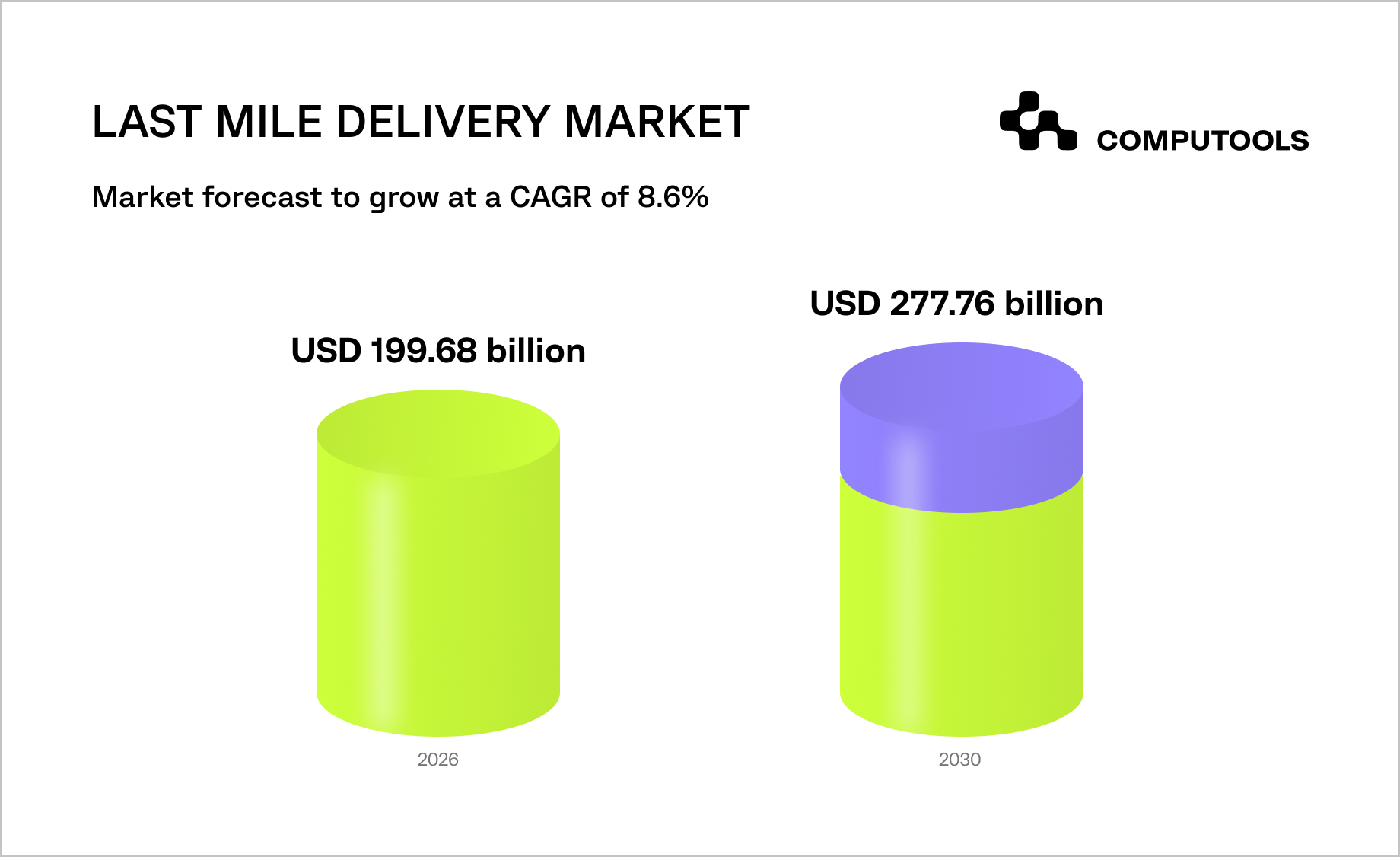
The problem becomes even more visible in the final stages of delivery. Industry research shows that more than 60% of logistics providers identify last-mile delivery as the most resource-intensive part of their operations, while the global last-mile delivery market is projected to grow from $184.2 billion in 2025 to $199.68 billion in 2026, reflecting the continued expansion of e-commerce, urban distribution networks, and rising consumer demand for faster deliveries.
As market volatility, sustainability regulations, and cost pressures intensify, the ability to dynamically match available transport capacity with real-time demand is becoming a competitive requirement.
How we build logistics capacity sharing software for transportation networks
Our approach to building logistics platforms is grounded in real-world expertise with complex transportation ecosystems where fragmented fleets, independent carriers, and fluctuating freight demand create constant operational inefficiencies.
We applied similar architectural principles while developing LOCARGO, a B2B logistics platform in Texas that connects local carriers, drivers, and businesses through an on-demand freight marketplace.
LOCARGO required a scalable digital infrastructure capable of coordinating shipments across multiple independent operators while improving visibility into available transport capacity. To address these challenges, our team implemented real-time freight capacity tracking, route optimization algorithms, and IoT-enabled fleet monitoring.
The solution allowed operators to identify unused capacity, dynamically match shipments with available vehicles, and manage transport workflows through a unified digital interface.
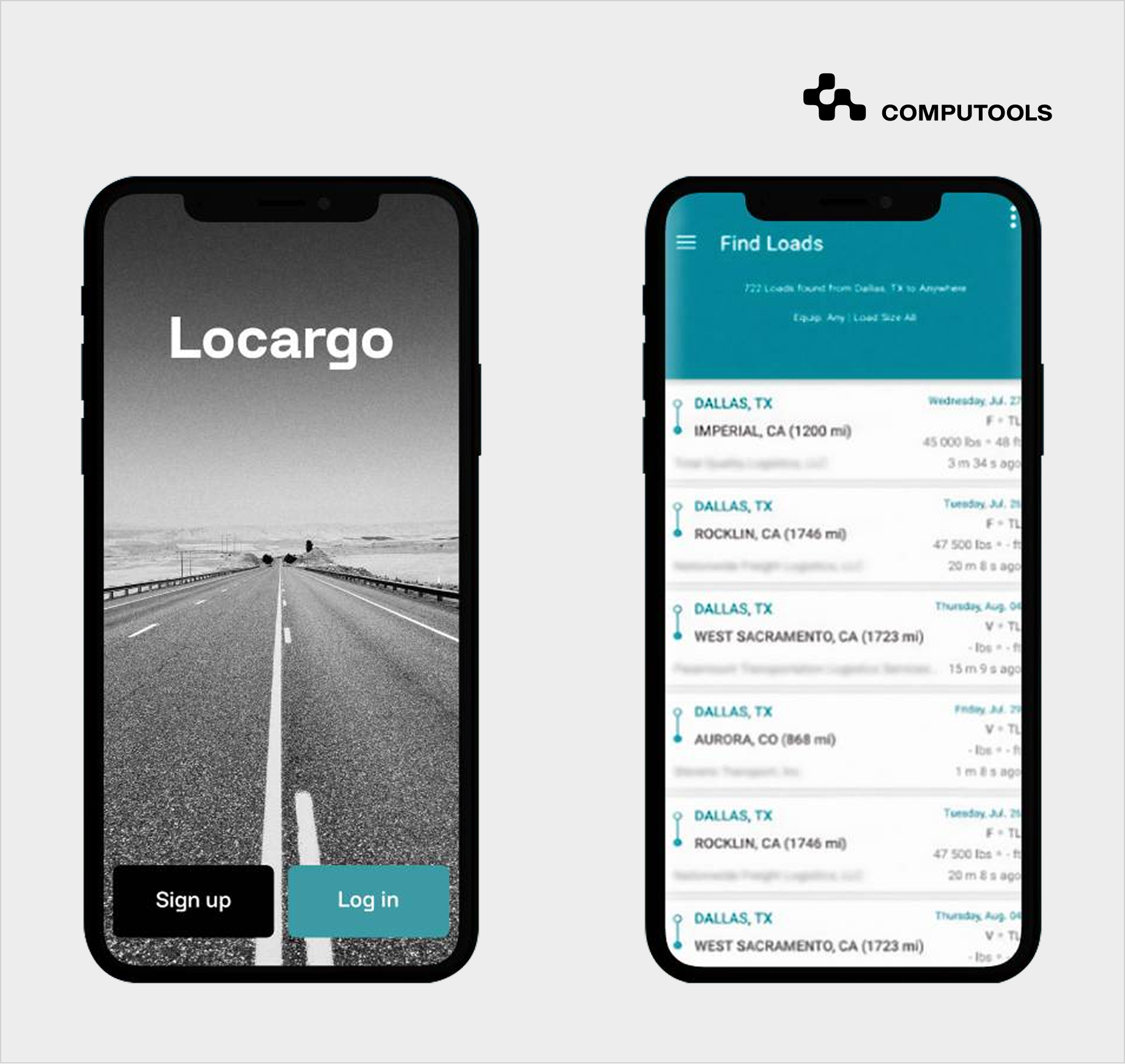
The system included driver mobile applications, dispatch and order management portals, and integrated navigation using Google Maps. Through advanced IoT development services, the platform collected operational data from vehicles and delivery processes, enabling better route planning, real-time shipment monitoring, and improved operational coordination across the logistics network.
As a result, LOCARGO evolved from a regional logistics operator into a collaborative freight marketplace serving multiple participants in the Texas freight ecosystem. The platform improved operational efficiency and enabled the client to rapidly scale the marketplace, increasing revenue by a factor of 5 within two years.
This experience shapes how we approach ground transportation software development today. Capacity visibility, dynamic freight matching, and scalable digital infrastructure must be designed into the platform architecture from the beginning to ensure operational efficiency and long-term platform growth.
How to develop capacity sharing software for transportation networks: 10 key steps
Capacity sharing platforms must coordinate shipments, vehicle availability, and operational data across multiple carriers and drivers in real time. Having worked on logistics platforms and providing logistics software development services, we’ve seen what it takes to build systems that actually improve capacity utilization. Based on this experience, below we break down the key steps required to develop capacity-sharing software for transportation networks.
Step 1. Define the capacity-sharing business model and ecosystem participants
Before writing any code, transportation capacity sharing platforms must clearly define how the logistics ecosystem will operate. Unlike traditional logistics systems that manage a single company’s fleet, capacity-sharing platforms coordinate interactions among multiple independent participants, including carriers, brokers, fleet operators, shippers, and drivers. This multi-party environment requires a carefully designed operating model that determines how resources, responsibilities, and economic incentives are distributed across the network.
At this stage, organizations must clearly identify the core participants and their roles within the platform. Carriers provide vehicle capacity, drivers execute deliveries, shippers generate freight demand, and dispatch or brokerage entities coordinate operations. Each participant group has different priorities and operational constraints, so defining access levels, permissions, and operational responsibilities early prevents conflicts once the system goes live.
Equally important is defining how capacity will be represented and shared within the platform. Companies must determine whether capacity will be offered as full truckloads, partial loads, delivery slots, route segments, or time-based availability windows. These decisions influence how freight matching algorithms work later in development and determine how efficiently the platform can allocate transport resources across the network.
Pricing and incentive models must also be designed during this phase. Capacity sharing platforms typically operate on transaction-based commissions, subscription models, dynamic pricing mechanisms, or hybrid approaches. Clear pricing logic encourages carriers to participate while ensuring that the platform remains commercially sustainable.
Modern collaborative logistics platforms succeed when they establish transparent rules for capacity distribution, service-level agreements, dispute resolution, and partner onboarding. Without clear governance structures, multi-party logistics ecosystems quickly become chaotic and difficult to scale. Therefore, this stage should also define onboarding procedures, compliance checks, and performance evaluation metrics for network participants.
In the LOCARGO project, this step involved a detailed analysis of the trucking ecosystem in Texas, particularly around the Port of Houston, one of the largest freight hubs in the United States. Our team mapped the relationships between local carriers, independent drivers, and freight customers to understand how shipments moved across the region and where unused capacity existed.
This research enabled us to design a marketplace model that aggregates fragmented transport resources from multiple providers while maintaining transparent operational workflows for all participants in the network.
Step 2. Design a scalable transportation platform architecture
Once the business model and ecosystem structure are clearly defined, the next step is designing the technical architecture that will support the platform. Capacity sharing systems operate in highly dynamic environments where shipment requests, vehicle availability, and route information change constantly. The platform must therefore be able to process large volumes of operational data in real time while maintaining system stability and fast response times.
Unlike traditional logistics systems, which typically manage a single fleet or a company’s operations, capacity-sharing platforms coordinate activities across multiple independent carriers and drivers. This requires infrastructure capable of supporting continuous data exchange between dispatch systems, driver applications, telematics devices, and external logistics services. Without a robust architectural foundation, the platform may struggle to scale as more participants and shipments enter the network.
Modern logistics network optimization software typically relies on modular, cloud-based architectures that separate core operational components into independent services. This approach allows engineering teams to scale different parts of the system independently as demand grows. Key architectural elements usually include microservices-based backends, event-driven data processing pipelines, scalable APIs for external integrations, and distributed databases that support high transaction volumes.
Real-time communication is essential. Capacity-sharing platforms must handle frequent updates like vehicle locations, driver statuses, new shipment requests, and delivery confirmations. Event-driven architectures and message queues enable processing thousands of events per minute without overloading services.
Integration features are also crucial during design. Transportation platforms often connect with mapping, telematics, accounting, warehouse, and logistics systems. Building flexible API layers from the start allows seamless integration with third-party systems, avoiding major changes later.
During the LOCARGO implementation, our engineers designed a distributed platform architecture that can coordinate transport operations among multiple independent drivers and delivery providers.
The system architecture supported continuous operational updates from driver applications and dispatch workflows while maintaining fast response times for route planning and order processing. This scalable foundation allowed the platform to expand as new carriers and customers joined the network.
Step 3. Build a unified data layer for logistics operations
After the architecture is defined, the platform needs a data foundation that can connect all operational signals into a single, consistent view. Capacity sharing depends on accurate, up-to-date information about demand (shipments) and supply (vehicles, drivers, and available capacity). If operational data is fragmented across multiple systems, freight-matching decisions become unreliable, and transport resources remain underutilized.
A unified data layer defines how the platform collects, normalizes, and processes key logistics data across the ecosystem. This includes shipment requests, pickup and delivery windows, route information, equipment types, vehicle capacity constraints, driver schedules, GPS coordinates, and delivery status updates. Without centralized data management, logistics networks struggle to maintain accurate visibility into available transport capacity.
Many organizations already rely on supply chain capacity optimization tools to analyze freight utilization and operational performance. However, capacity-sharing platforms go further by integrating operational data from multiple carriers and logistics providers into a shared environment, where transport capacity can be dynamically allocated across the network.
At this stage, development teams must define the platform’s core data model, including relationships between shipments, vehicles, routes, drivers, and capacity units. They also need to implement data ingestion pipelines that collect operational data from APIs, telematics systems, and driver applications while ensuring consistent data validation and synchronization across the platform.
In the LOCARGO project, we consolidated operational data from delivery workflows, vehicle monitoring systems, and order management processes into a centralized data infrastructure. This allowed the platform to maintain a real-time view of available fleet capacity and distribute shipments more efficiently across participating drivers and carriers.
Efficient capacity sharing also depends on real-time visibility across supply chains. Read more in our article: Top 20 Supply Chain Visibility Software Development Companies Worldwide.
Step 4. Implement real-time fleet visibility and capacity tracking
Capacity sharing platforms depend on continuous visibility into vehicle availability and shipment status. Without real-time operational data, logistics operators cannot identify unused transport capacity or dynamically assign freight to available vehicles. As a result, shipments may remain unallocated while vehicles travel partially loaded or empty.
To support real-time monitoring, the platform must integrate multiple operational data sources. These typically include GPS tracking from driver mobile applications, telematics data from fleet systems, and dispatch status updates generated during shipment execution. Together, these signals create a constantly updated operational picture of the transportation network.
In modern logistics ecosystems, platforms often rely on carrier capacity management tools to monitor vehicle utilization, track driver availability, and evaluate delivery progress across multiple fleets. When integrated into a capacity-sharing system, these tools help dispatch teams quickly identify available transport resources and allocate shipments more efficiently.
From a technical perspective, real-time fleet visibility typically requires event-driven infrastructure capable of processing continuous streams of location updates and operational events. Streaming data pipelines and messaging systems ensure that dispatch decisions are based on the latest operational information without overloading the platform.
In the LOCARGO project, our engineers implemented real-time fleet monitoring by integrating GPS tracking and driver mobile applications directly into the platform. Dispatchers could track vehicle locations, monitor delivery progress, and immediately identify available capacity across participating drivers, enabling more efficient freight allocation across the network.
Step 5. Develop freight matching and route optimization algorithms
Once real-time fleet visibility is established, the platform can begin making allocation decisions based on operational data. The next stage is implementing the logic that matches shipment demand with available transport capacity across the network.
Freight matching requires the system to continuously evaluate multiple operational variables, including vehicle location, remaining capacity, driver availability, delivery time windows, and route feasibility. These parameters must be processed together to determine which vehicle can complete a shipment with minimal detours, reduced idle time, and optimal delivery sequencing.
From a technical perspective, freight allocation engines usually operate in multiple stages. The first stage applies hard constraints, such as vehicle-type compatibility, load capacity, and regulatory restrictions. The second stage evaluates operational parameters like proximity to pickup points, estimated travel time, and driver availability. The final stage calculates optimization scores that prioritize assignments, improving overall network efficiency.
Platforms implementing digital freight matching solutions typically rely on rule-based allocation combined with optimization models to balance route efficiency, delivery timelines, and vehicle utilization across the network.
In the LOCARGO project, our engineers developed a distribution optimization algorithm that evaluated shipment requests against driver locations and route conditions. The system dynamically assigned deliveries to available drivers, allowing the platform to use previously unused transport capacity and significantly improve dispatch efficiency.
Route planning plays a critical role in maximizing vehicle utilization and reducing empty miles. Learn more in our guide: Route Optimization Software: A Must-Have Tool for Modern Logistics Businesses.
Step 6. Enable dynamic truckload capacity sharing
Once freight matching logic is implemented, the platform must support mechanisms that allow transport capacity to be distributed dynamically across the network. Traditional dispatch systems typically assign one shipment to one vehicle, which often results in partially filled trucks and inefficient route utilization. Capacity sharing platforms address this limitation by enabling flexible allocation of available vehicle space across multiple shipments and operators.
This stage focuses on representing transport capacity in a structured way so the system can evaluate how shipments fit into available vehicles. Instead of treating capacity as a binary state (available or unavailable), the platform must track dimensions such as remaining volume, weight limits, pallet positions, delivery sequences, and route compatibility. This data allows the system to determine whether multiple shipments can be combined within a single transport operation.
At the operational level, truckload capacity sharing systems allow logistics platforms to consolidate freight from different shippers and distribute loads across multiple carriers. The system can evaluate whether shipments moving along similar routes or time windows can be combined, reducing empty space in vehicles and improving overall transport utilization.
Technically, this requires implementing load-consolidation logic, route-segmentation models, and dynamic reassignment capabilities. When disruptions occur, such as shipment cancellations or delays, the platform must recalculate allocation decisions and redistribute loads across available vehicles without disrupting ongoing deliveries.
On the LOCARGO platform, our engineers implemented logic that evaluated shipments from different clients against available driver routes and vehicle capacity. This enabled the system to combine compatible deliveries and distribute them across participating drivers more efficiently, reducing unused vehicle capacity and improving operational productivity across the network.
Step 7. Integrate operational workflows and dispatch systems
Once capacity-sharing and freight-allocation mechanisms are in place, the platform must support the full operational lifecycle of a shipment. Capacity matching alone is not enough; logistics operators also need tools for order management, dispatch coordination, shipment tracking, and administrative processes that support day-to-day transportation operations.
At this stage, the platform should integrate core logistics workflows, including order intake, dispatch planning, route monitoring, delivery confirmation, and billing processes. These workflows connect the capacity-sharing logic with the operational tasks performed by dispatchers, drivers, and logistics coordinators.
These processes are closely connected with warehouse operations where shipments are prepared and dispatched. Explore this topic in our article: Warehouse Management System (WMS): Main Features, Facts, and Benefits.
Many companies expand their platforms through transportation management system (TMS) development, enabling shipment execution, carrier coordination, and operational monitoring within a single environment. Integrating TMS-level capabilities ensures that the capacity sharing system is not isolated from the rest of the logistics infrastructure.
From a technical standpoint, this step typically involves building modules for shipment lifecycle management, route planning interfaces, delivery status updates, and operational reporting dashboards. The platform must also support integration with accounting systems, warehouse platforms, mapping services, and external logistics tools to maintain consistent operational data across the organization.
In the LOCARGO project, our team developed a web portal that allowed delivery providers to process orders, manage transport requests, and monitor shipment progress. The platform also integrated Google Maps for navigation and implemented administrative workflows for invoicing and operational coordination. This integration enabled dispatch teams to manage freight assignments and logistics workflows in a single, unified system.
Step 8. Implement automated logistics workflows and documentation
Once operational dispatch and shipment management processes are integrated into the platform, the next step is automating the administrative workflows that support transportation operations. Logistics platforms must handle a large volume of operational documentation, billing processes, shipment confirmations, and compliance-related records. Without automation, these tasks quickly become operational bottlenecks as the platform scales.
Automated workflows allow the system to process operational events such as shipment creation, delivery completion, or status updates, and automatically trigger the corresponding business processes. For example, once a delivery is confirmed, the platform can generate shipping documentation, update order records, and initiate invoice generation without manual intervention.
This stage typically includes implementing electronic document management systems, automated billing workflows, digital proof-of-delivery records, and operational reporting tools. These capabilities reduce the manual workload for logistics teams while improving data consistency across the platform.
In addition to improving operational efficiency, automated workflows provide traceability across the logistics network. Every shipment event, capacity allocation decision, and operational update can be recorded and stored within the system. This ensures that dispatch teams, carriers, and platform administrators can track operational history and resolve disputes if necessary.
In the LOCARGO platform, our engineers implemented an electronic document management workflow that simplified administrative processes for delivery operators. Shipment records, delivery confirmations, and billing information were automatically processed within the platform, reducing manual paperwork and improving transparency across the logistics ecosystem.
Step 9. Enable continuous optimization and platform scaling
After the platform becomes operational, the focus shifts from development to continuous optimization and ecosystem expansion. Transportation networks constantly evolve as shipment volumes fluctuate, new carriers join the platform, and operational conditions change. Capacity-sharing systems must therefore support ongoing performance monitoring and iterative improvement.
Analytics modules play a critical role at this stage. The platform should track key performance indicators such as vehicle utilization rates, empty miles, route efficiency, delivery times, and carrier performance metrics. These insights allow logistics operators to refine dispatch strategies and improve network performance over time.
As the platform matures, it begins to function not only as a dispatch environment but also as a strategic freight capacity management software layer that provides visibility into network-wide capacity usage. This allows logistics operators to monitor fleet utilization across multiple carriers, identify inefficiencies, and make data-driven decisions about capacity allocation.
Continuous optimization also involves adjusting matching algorithms, updating route planning models, and refining operational rules based on real-world usage patterns. As more operational data becomes available, the platform can improve the accuracy of decision-making and allocate transport capacity more effectively.
In our project, operational analytics and user feedback were continuously incorporated into system updates. This allowed the platform to refine dispatch logic, improve driver allocation, and support the expansion of the logistics network as new carriers and customers joined the platform.
Over time, LOCARGO evolved from a regional cargo operator into a collaborative logistics ecosystem connecting multiple participants across the Texas transportation market.
Step 10. Ensure security, integrations, and ecosystem governance
As transportation networks grow, capacity-sharing platforms must support secure data exchange and reliable integrations among multiple participants in the logistics ecosystem. Unlike internal enterprise systems, these platforms often connect independent carriers, drivers, brokers, and shippers who rely on shared operational data to coordinate freight movement.
This makes platform security and access governance critical components of system design. Development teams must implement role-based access control, encrypted data transmission, secure API gateways, and activity audit logs to ensure that operational data remains protected while still enabling collaboration between network participants.
Integration capabilities are equally important. Capacity-sharing platforms typically integrate with mapping services, telematics providers, accounting systems, warehouse platforms, and other enterprise logistics tools. When implemented correctly, these integrations transform the platform into part of a broader ecosystem of smart logistics technology solutions that support digital coordination across the transportation network.
Operational governance mechanisms should also be introduced at this stage. These may include carrier verification processes, performance-monitoring dashboards, dispute-resolution workflows, and service-level tracking to maintain transparency across the network.
On the LOCARGO platform, we implemented secure authentication, role-based access controls, and API integrations for navigation and operational services. This ensured that multiple carriers and drivers could safely interact within the platform while maintaining strict control over operational data and system access.

Assess the platform architecture needed to support dynamic capacity management across fleets, carriers, and logistics partners—connect with our specialists to scope your project.
Benefits of capacity sharing software for transportation networks
Capacity sharing platforms help logistics operators use transport resources more efficiently without expanding fleets or infrastructure. By connecting multiple carriers, drivers, and shippers within a unified digital ecosystem, companies can dynamically allocate freight demand to available vehicles and improve operational efficiency across the network.
Well-designed logistics capacity sharing software delivers several measurable advantages for transportation networks.
Key benefits include:
1. Improved vehicle utilization. Freight can be dynamically matched with available vehicles across multiple carriers, reducing empty miles and increasing fleet productivity.
2. Faster dispatch and shipment allocation. Automated matching mechanisms allow shipments to be assigned to available transport resources in seconds rather than through manual coordination.
3. Lower operational costs. Better capacity utilization reduces fuel consumption, idle driver time, and operational overhead related to inefficient routing.
4. Scalable logistics networks. As new carriers and drivers join the ecosystem, the platform can expand network capacity without requiring additional fleet investments.
5. New revenue opportunities. Unused transport capacity can be offered to external partners or independent drivers, turning idle assets into additional revenue streams.
6. Improved visibility across the network. Real-time operational data enables dispatchers and logistics managers to monitor fleet movements, shipment status, and resource availability.
Challenges of building capacity sharing platforms
Despite their operational advantages, capacity-sharing platforms are technically complex systems that must coordinate multiple participants, data streams, and operational processes within a single digital infrastructure.
Developing capacity pooling software for logistics requires careful planning, scalable system architecture, and advanced optimization capabilities.
Common challenges include:
1. Fragmented carrier ecosystems. Independent carriers, brokers, and drivers often operate with different tools and workflows, making ecosystem coordination difficult.
2. Data integration complexity. Platforms must integrate data from telematics systems, dispatch tools, driver applications, and external logistics services while maintaining data consistency.
3. Real-time operational decision-making. Freight allocation systems must continuously process operational updates such as location changes, shipment requests, and delivery events.
4. Trust and governance between participants. Multi-party logistics ecosystems require transparent rules for freight allocation, performance monitoring, and dispute resolution.
5. Scalable optimization algorithms. Efficient freight allocation requires sophisticated algorithms that can simultaneously evaluate routes, delivery windows, and vehicle capacity.
6. AI-driven network optimization. Many modern platforms rely on predictive models and routing optimization built with AI development services to forecast demand, analyze network patterns, and improve allocation decisions.
7. Maintaining performance as the network grows. As more carriers and shipments enter the ecosystem, the platform must maintain real-time responsiveness without disrupting dispatch operations.
Why companies choose Computools for logistics platform development
Computools supports logistics companies through end-to-end software engineering services, helping businesses design and build digital platforms that improve fleet utilization, automate dispatch operations, and integrate transportation workflows across multiple supply chain participants.
Today, our engineering teams include 250+ in-house experts, software developers, data engineers, and solution architects experienced in building scalable digital platforms for complex operational environments.
With 12+ years of experience, we have helped transportation and logistics companies modernize their technology stacks and launch new digital products across global markets.
Our portfolio includes 40+ logistics and maritime software projects, ranging from freight management platforms and fleet monitoring systems to collaborative logistics marketplaces connecting multiple carriers and drivers. These solutions consistently deliver measurable operational improvements for our clients.
Across logistics transformation programs, our platforms have enabled:
• 45% faster delivery operations through optimized dispatch coordination and automated workflows
• 35% reduction in operational costs by improving capacity utilization and reducing manual processes
• 23% increase in customer satisfaction thanks to better shipment visibility and faster delivery execution
Our experience also includes building advanced transportation platforms for real-world logistics ecosystems. For example, we developed a real-time cargo monitoring system for a Western European rail operator, enabling intelligent positioning of freight fleets and monitoring critical safety parameters such as volume, pressure, and temperature. The platform uses IoT sensors and the MQTT protocol to generate instant alerts when parameters deviate from safe ranges.
Another example is the LOCARGO platform in the United States, where our team helped transform a regional logistics operator into a digital B2B marketplace connecting carriers, drivers, and local businesses. The platform introduced IoT-enabled fleet-monitoring and distribution-optimization algorithms, enabling the ecosystem to utilize previously unused transport capacity.
Through projects like these, Computools helps logistics companies transform fragmented transportation operations into scalable digital ecosystems that improve capacity utilization and support modern freight networks.
If you are planning to build a logistics platform or capacity sharing solution, contact our team at info@computools.com to discuss your project.
Conclusion
Transportation networks are becoming more complex as freight volumes grow and supply chains become more interconnected. Traditional logistics systems struggle to handle fragmented fleets, demand changes, and rising costs.
Capacity-sharing platforms unlock unused capacity, boost fleet utilization, and coordinate shipments across carriers. Investing in these platforms reduces empty miles, boosts efficiency, and supports scalable future growth.
Computools
Software Solutions
Computools is an IT consulting and software development company that delivers innovative solutions to help businesses unlock tomorrow.










“Computools was selected through an RFP process. They were shortlisted and selected from between 5 other suppliers. Computools has worked thoroughly and timely to solve all security issues and launch as agreed. Their expertise is impressive.”