
THE AUTHOR:

The travel booking industry is entering a phase of so-called intelligent expansion. Tools that served as transactional layers for hotel and flight reservations are rapidly turning into multi-functional AI-backed ecosystems.
They now manage the entire lifecycle from discovering the dream destination to the after-trip engagement, and everything in between. This powerful shift redefines the role of travel booking platform development companies in the industry.
In this article, we explore the key trends shaping modern reservation systems, the capabilities businesses should expect from technology partners, and a curated list of companies best equipped to build scalable, intelligent travel industry software solutions.
20 best travel booking platform development companies:
1. Computools
2. Accenture
3. Epam Systems
4. Globant
5. Endava
6. Intellectsoft
7. Itransition
8. AltexSoft
9. Yalantis
10. Ciklum
11. DataArt
12. SoftServe
13. Grid Dynamics
14. Travelopro
15. Eleks
16. Netguru
17. Simform
18. Appinventiv
19. Fueled
20. MindInventory
How travel booking platform development companies fit into the future of the sector
The global travel technology market is expected to reach $18681.63 million by 2033, growing at a 6% CAGR from 2025 to 2033.
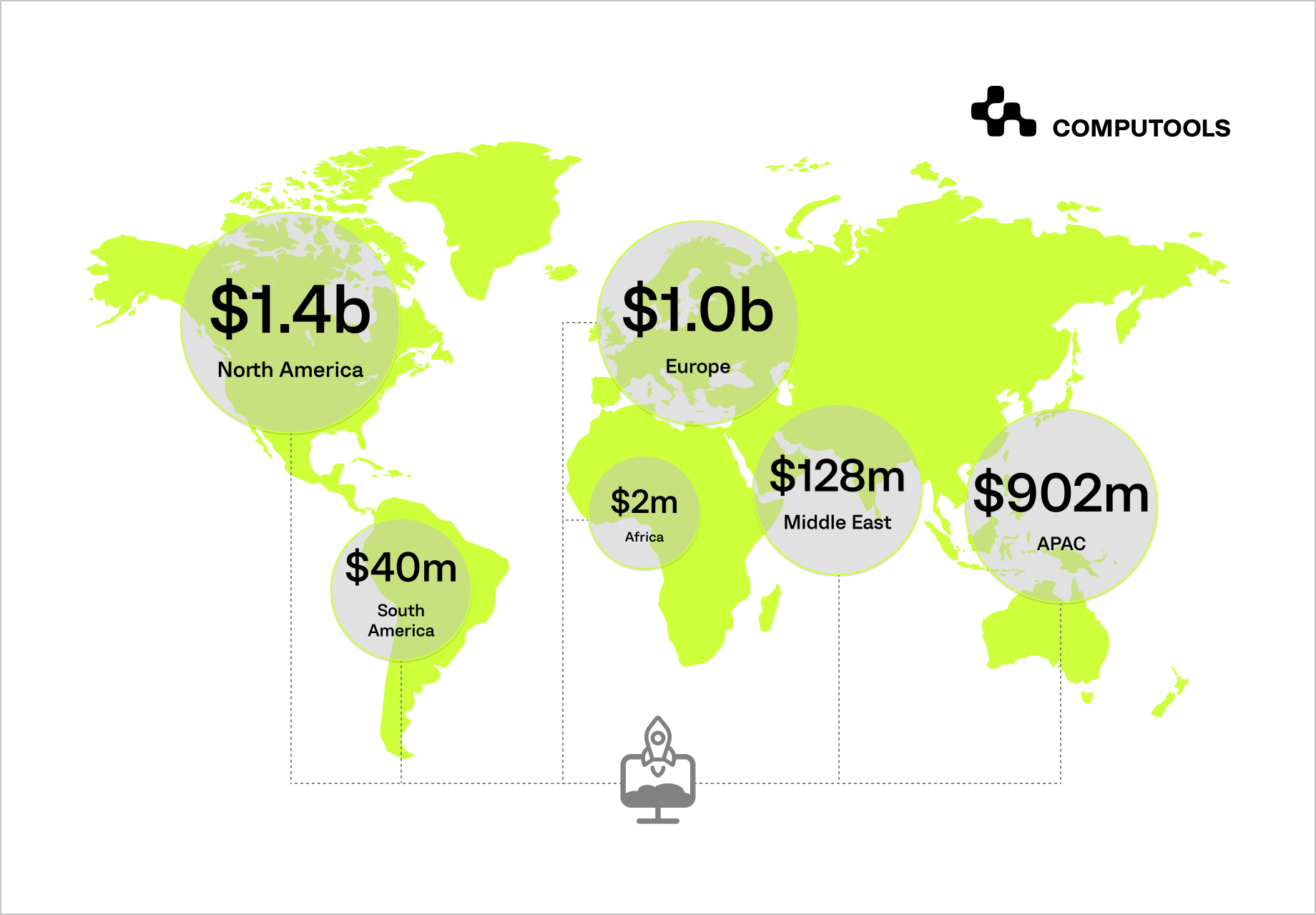
Geography of adoption
• Asia-Pacific (APAC)
This region has been identified by IMARC and Phocuswright as the most rapidly progressing area across the globe. The primary focus of travel tech development is on “Super-Apps” (e.g. Trip.com, WeChat) that merge travel bookings with social networking, insurance, and ride-hailing services.
• North America
Dominates in market size and the use of AI in travel management systems (TMS) for business travel, with an impressive 68% adoption.
• Europe
The main center for Green Tech adoption. Innovations in this area focus on the integration of carbon-tracking APIs and multi-modal ‘rail-plus-air’ bookings, driven by stringent EU sustainability regulations.
The shift that redefines travel booking software development
The more players enter the market, the more cut-throat the competition becomes. Industry giants used to differentiate themselves through inventory. Now, success depends on the ability to create a seamless, predictive, and personalized experience at scale.
Users are seeking “Connected Trip” offerings (as defined by McKinsey & Company), with all components, such as flights, hotels, transportation, and activities, seamlessly integrated into a single travel reservation system.
The way users look for destinations and make bookings has also evolved. According to Phocuswright, traditional search declined from ~51% in late 2024 to ~36% in 2025, while AI-driven discovery forms are rapidly increasing from 6% to 15%.
This is a clear indication of a new structural shift in the market: from search → compare → book to delegate → automate → optimize.
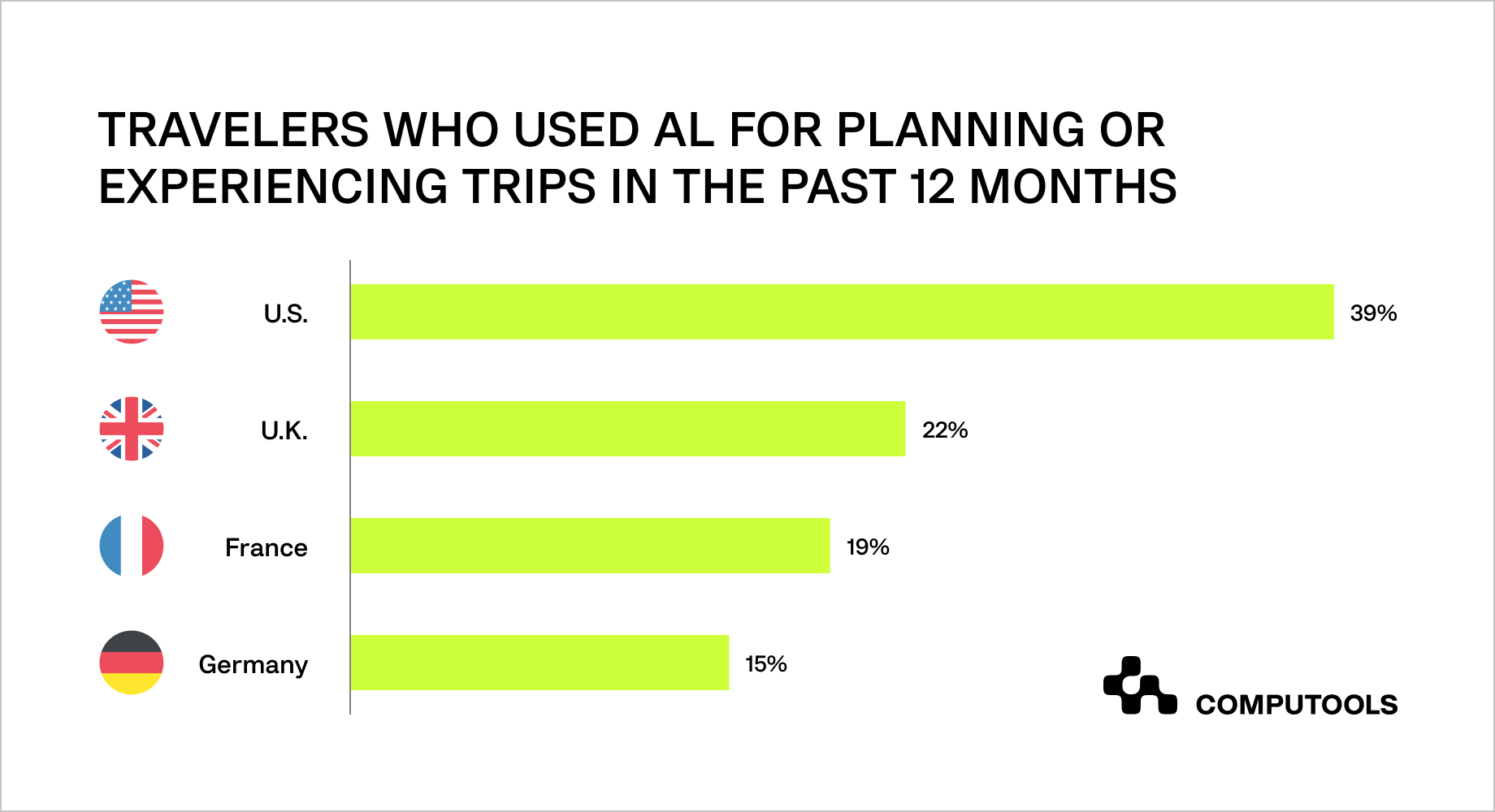
What users expect in 2026
Smart, effortless, and reliable booking-to-stay experiences have become the expectation for the new generations of travel consumers (millennials and Gen Z).
1. Personalization
No 2 individuals are the same, and the averages do not suffice in personalization. Users expect platforms:
- to anticipate their personal needs based on past trips, preferences, and budget;
- to incorporate real-time factors (weather, travel restrictions, price surges, etc.);
- to segment the purpose (business, leisure, *staycations, etc.).
Itineraries that require browsing multiple options are a thing of the past.
2. Minimal Effort
Travel should feel automatic from the instant purchase to the end of the journey. Processes that require touch points from the end user should be completely streamlined:
- fast check-ins (including biometrics);
- real-time updates on itinerary changes;
- automatic modifications of their travel plans.
3. Transparency and Trustworthiness
Platforms are including AI in their functionalities but consumers demand integrity when it comes to:
- travel recommendations;
- genuine user-generated reviews;
- pricing (no hidden/unexpected costs).
4. Sustainability
Eco-friendly travel is becoming the standard expectation, and sustainability is a non-negotiable, including:
- giving travelers the option to view the carbon footprints for their itineraries;
- providing eco-certified options (hotels, services, etc.);
- offering alternative routes (e.g. rail instead of short flights) that are more sustainable.
Evaluation criteria for choosing the right travel technology development company
Given the shift in customer preferences taking place in 2026, a tech partner should be able to build, integrate, and scale complex online travel booking software ecosystems.
| Factor | Description | Impact |
| Domain Expertise | Deep understanding of booking platform development, pricing logic, and travel workflows. | Speeds up the delivery process and minimizes mistakes. |
| Integration Capability | Experience with GDS, NDC, hotel systems, and other third-party APIs. | Enables real-time data and continuous user journeys. |
| Scalable Architecture | Building systems that are cloud-native and based on microservices with support for rapid changes. | Protects revenue during peak demand by avoiding downtime. |
| AI & Personalization | Automation and AI applicable to pricing and recommendations. | Increases conversion, upsell, and retention. |
| UX & Conversion Focus | Designs that are user-friendly and have clear pathways from search to checkout. | Strongly influences the booking process completion. |
| Payment & FinTech Expertise | Payments in multiple currencies and refund requests with PCI-DSS compliance. | Errors during transactions are minimal. |
| Security and Compliance | Practices that involve GDPR compliance, data minimization and secure data-handling with DevSecOps. | Focus on data protection and less business risk. |
| End-to-End Delivery | Capability to conceptualize, construct, and continuously refine the platform, not just code. | Guarantees the product will be successful in the long run. |
| Future-Readiness | Ability to accommodate the introduction of further AI automation, multi-modal travel, and other emerging technologies. | Ensures the platform will remain competitive in the years to come. |
20 leading travel booking platform development companies
1. Computools
- 13+ years on the market
- 250+ engineering experts
- 400+ custom-built software projects
- 40+ travel and hospitality projects delivered globally
- Top clients include Visa, Epson, IBM, Dior, Bombardier, and the British Council
- ISO 9001 and ISO 27001
Computools is a global software engineering and IT consulting company dedicated to building complex, high-load digital products for enterprise, mid-market clients and startups.
As part of our travel and hospitality software development services, we stand as a technology partner for end-to-end delivery, combining mobile applications, backend systems, and AI-driven capabilities into a single, unified, and intelligent data ecosystem.
A system-first mentality is what separates us from the rest. We create platforms in which all system parts are unified, allowing for intelligent data distribution, seamless real-time decision-making, and a uniform user experience across all levels.
Computools operates at the intersection of engineering, integration, and applied AI development services. We assist customers with moving from disparate tools to intelligent and scalable solutions that foster revenue growth and operational efficiency.
How We Approach Custom Travel Booking Platform Development
At Computools, we develop systems that think, adapt, and self-optimize in real time.
They are built on three fundamental components:
- Data layer – input consolidation from PMS, CRM, APIs, and user behavior.
- AI layer – user personalization, demand forecasting, and pricing intelligence.
- Experience layer – Mobile applications and booking flows that enable effective conversion.
This structure is designed to address the biggest issue industry players face – disconnected systems and integrations, while enabling efficient business automation across operations, customer experience, and decision-making.
Constructed to Expand from Day One
Due to microservices and cloud-native architecture, booking engines are built to withstand:
- Crippling demand from seasonal events;
- Geographical expansion;
- Extensive data processing required for AI.
This enables rapid growth for our clients without the need to reconstruct systems.
Mobile as a Data & Conversion Engine
With Computools, mobile applications are not simple frontends; they are infused with cutting-edge features for:
- Behavioral data capture;
- Personalized experience triggers;
- Integrated scheduling, check-in, and payments.
This means our mobile app development services are directly tied to revenue and retention, not just usability.
Proven Impact Through Real Projects
Computools addresses core business challenges of travel portal development – enhanced discovery, improved speed, and optimized data flow – and translates them to clearly defined measurable growth outcomes, as showcased by our recent projects.
SMARTCITY – revenue generation through geo-based user engagement. Computools developed a social networking app where travelers can discover events and attractions in proximity, engage with other users, and obtain contextual information about their locations.
Some of the principal features include:
- Location-based search for points of interest and events.
- In-app social and messaging features.
- Augmented reality for immersive experiences.
- 3D navigation for better spatial orientation.
- User-generated content (share photos, stories, etc)
Result: with platform scaling, revenue and user adoption growth accelerated.
Multitrading – a booking platform for increased demand. An entertainment startup selling tickets to various events aimed to upgrade its system to accommodate the growing number of users and remove friction in the booking process.
Computools designed a multithreaded web solution that considerably decreased latency, maintained solid performance under high loads, and simplified ticket browsing and purchasing.
The key improvements include the following:
- High-load architecture designed for millions of simultaneous requests.
- Quicker booking due to lower latency and enhanced flow.
- User experience improvements in ticket selection and purchase.
- Integrated user analytics for data collection and storage.
- API integrations for event data and real-time inventory updates.
Outcome: Elevated user experience and increased customer spending.
Computools’ approach to platform development goes beyond booking flows. Our work aligns with broader trends in automation, where systems streamline operations and enhance guest experiences across the entire journey, as detailed in this hotel automation guide and insights on digital transformation in restaurant operations.
2. Accenture
- 35+ years on the market
- ~775,000 employees
Accenture services large corporations in need of large-scale transformation rather than software development.
They integrate IT consulting, engineering, and collaboration with airlines, governments, and OTAs. This gives them an edge in biometric travel, digital identity, and massive ecosystem platforms.
Their capabilities include:
- Multi-modal platform orchestration (air, rail, mobility);
- Digital Travel Credentials and identity systems;
- Enterprise AI and data solutions.
Trade-offs to consider: They are not a lightweight option; planning and executing on a strategic enterprise-level is not cheap.
Best fit: Go with them to develop a national platform, airline ecosystems, or a super-app.
3. EPAM Systems
- 33+ years on the market
- ~63,000 employees
EPAM excels in cloud-native architecture, data engineering, and distributed systems, making it a good fit for solutions expected to endure high load and complex operations.
Their travel portfolio harbors airlines and their associated booking systems; as such, EPAM is privy to industry-associated challenges concerning:
- Synchronization of real-time inventory;
- Price consistency and fare caching;
- Booking flows that can scale under load.
Trade-offs to consider: product design and UX may require additional focus.
Best fit: choose EPAM if performance, scalability, and reliability are top priorities.
4. Globant
- 23+ years on the market
- ~30,000 employees
For solutions prioritizing user experience, Globant pairs innovation in AI with solid product design.
Predictive personalization and AI recommendations are becoming essential in travel booking engine development, making the company a good fit in these areas as well.
They have the following strengths:
- Personalization driven by AI;
- Recommendations backed by behavioral data;
- Cutting-edge frontend design.
Trade-offs to consider: less depth in travel-specific integrations (GDS/NDC).
Best fit: partner with Globant if you are looking for an advanced, modern user experience powered by AI.
5. Endava
- 26+ years on the market
- ~11,400 employees
Endava specializes in developing systems where transactions, payments, and reliability are critical.
They are experts in event-driven architecture and back-end consistency. This means that booking and payment engines will work, no matter the volume. This is especially critical in the travel industry, where mistakes can lead to lost revenue and diminished customer trust.
Their strengths are:
- Payment orchestration, refunds, and handling;
- Idempotent transactions;
- Event-driven architecture, such as Kafka-based.
Trade-offs to consider: limited focus on frontend UX and product design.
Best fit: pick Endava if you need complex payment systems and transactional reliability in a platform.

Want to create a travel booking platform that competes with industry leaders? Speak with our experts to assess the scope and estimate your project.
6. Intellectsoft
- 19 years on the market
- ~300 professionals
For businesses looking for uncomplicated custom travel systems, Intellectsoft is a suitable partner.
The company offers structured, business-oriented solutions that include mobile apps and backend systems with standard integrations. Their approach is practical and execution-oriented, as opposed to experimental.
Their capabilities include:
- Mobile booking applications on both Android and iOS.
- Backend systems with custom standard API integrations.
- Admin dashboards and other operational management tools.
Trade-offs to consider: limited expertise in advanced travel standards and AI-driven systems.
Best fit: Intellectsoft is best for businesses with straightforward needs that expect certainty with time and budget.
7. Itransition
- 28+ years on the market
- ~3,000 employees
Itransition is a top choice for a rich backend framework and sophisticated business logic. The company is more focused on corporate travel systems that require multi-level booking, approvals, and integrations.
Itransition’s engineering style emphasizes endurance and sustainability.
They can provide:
- Business process orchestration and complex booking engines.
- Heavy value data systems and reporting.
- Integration of enterprise solutions.
Trade-offs to consider: frontend UX may require additional investment.
Best fit: Well-suited for a backend-dominant software development, or if the business logic is intricate.
8. AltexSoft
- 19+ years on the market
- 300+ experts
AltexSoft is a travel app development company with deep industry expertise.
They work directly with GDS systems, NDC standards, and airline APIs, which allows them to handle the complexity of real-world booking platforms. This is essential for eliminating challenges in ticketing, price, and availability.
The company excels in:
- GDS integrations (Amadeus, Sabre, Travelport);
- Airline NDC APIs;
- Fare logic and ancillary services.
Trade-offs to consider: less focus on frontend innovation and design.
Best fit: opt for AltexSoft if travel-specific integrations and precision for your platform are paramount.
9. Yalantis
- 18+ years on the market
- 500+ employees
For user-friendly travel apps, Yalantis is an excellent choice with quick time to market.
Clean user experience (UX) and rapid mobile-first development are exactly what the company provides. This makes them particularly effective for MVPs.
They excel in:
- Mobile-first development;
- Intuitive booking flows;
- Agile product delivery,
Trade-offs to consider: may require additional expertise for complex integrations.
Best fit: well-suited for developing a consumer app with speedy delivery without over-engineering.
10. Ciklum
- 24+ years on the market
- ~4,500 employees
Ciklum will work best as a long-term development partner, rather than a one-off vendor.
They offer flexible models, with large teams that can assist with both back-end and front-end development as your platform continues to grow.
The company provides:
- Dedicated development teams;
- Full-stack engineering;
- Scalable delivery model.
Trade-offs to consider: less specialization in travel-specific technologies.
Best fit: a tech partner that can support development needs over the years.
11. DataArt
- 29+ years on the market
- 6,000+ experts
DataArt constructs platforms reliant on data, personalization, and customer understanding.
What they do best is transforming user inputs into tailored recommendations, strategic pricing, and retention solutions.
Thanks to their travel industry experience, they can align data with genuine business impact.
Key areas of their expertise are:
- Personalization and recommendation systems;
- Customer data platforms;
- Loyalty and retention features.
Trade-offs to consider: projects may become consulting-heavy.
Best fit: select DataArt if personalization and data-driven growth are the focus of your plans.
12. SoftServe
- 33+ years on the market
- ~12,000 employees
SoftServe is a perfect match for platforms that aspire to be data-centric or AI-driven systems.
They offer expertise in machine learning, predictive analytics, and cloud infrastructure for a more sophisticated booking experience.
The company prioritizes the development of intelligent solutions over simply functional systems.
Key areas of their expertise are:
- Predictive analytics and demand forecasting;
- Dynamic pricing systems;
- Cloud-native data platforms.
Trade-offs to consider: less depth in travel-specific integrations.
Best fit: Go for SoftServe if AI and advanced analytics are in your product roadmap.
13. Grid Dynamics
- 20+ years on the market
- ~5,000 employees
Grid Dynamics designs platforms where search functionality and recommendations lead to revenue.
They optimize the user experience for discovering and selecting travel options, which contributes to the conversion rate.
Their expertise is on a par with highly efficient e-commerce systems, making them a nice option as a travel marketplace development company.
Key areas of development are:
- High-speed search and filtering;
- Recommendation engines;
- Performance optimization.
Trade-offs to consider: narrower scope compared to full-cycle vendors.
Best fit: Select Grid Dynamics if search, filtering, and recommendations are the main pillars of your business.
14. Travelopro
- 15+ years on the market
- 200+ employees
Travelopro is a travel technology company specializing in booking engines, OTA platforms, and API-based travel systems.
They consider themselves partners in building end-to-end booking systems with advanced GDS and API integrations as opposed to bespoke software development for other purposes.
Things they do best are:
- Integrations with GDS (Amadeus, Sabre, Galileo, Travelport);
- APIs for booking flights, hotels, cars, and tours;
- Development of B2B and B2C OTA platforms;
- Synchronous real-time inventory and pricing.
They also offer pre-integrated booking engines, which can greatly accelerate your time to market versus building everything from the ground up.
Trade-offs to consider: less focus on advanced UX, AI, or highly customized enterprise architecture.
Best fit: the right choice if you need a travel-centered booking engine with excellent API/GDS integration and quick turnaround time, or are looking for an OTA platform development company.
Send your project details and move closer to launching a powerful travel and hospitality software solution.
15. ELEKS
- 35+ years on the market
- ~2,500 employees
ELEKS offers quality engineering balanced with cost-effectiveness. They build dependable backend systems and data platforms without the cost of enterprise consultancies.
Their structured development processes reduce delivery risk.
Areas of excellence:
- Backend system and integrations;
- Data platforms, analytics included;
- Solutions for data, travel and logistics.
Trade-offs to consider: less focus on cutting-edge innovation.
Best fit: the company meets the demand for good engineering with no enterprise pricing.
16. Netguru
- 18+ years on the market
- ~800 employees
Netguru is ideal for teams aiming to hit the market early and test concepts with well-crafted products. They emphasize UX, MVP development, and fast iteration, which allows companies to reach product-market fit in a shorter period of time.
Netguru pairs the delivery speed with good design.
Areas of excellence include:
- UI/UX and product design;
- MVP development;
- Rapid iteration cycles.
Trade-offs to consider: not ideal for complex backend systems.
Best fit for: companies looking to test a new travel product and enter the market without delays.
17. Simform
- 16+ years on the market
- ~1,000 employees
When it comes to building scalable platforms focused on cost savings, Simform is a great option.
They build modern cloud-based systems that scale without large investments up front.
Their delivery methods are sound without being overcomplicated.
Notable advantages of partnering with Simform include:
- Cloud-native systems (e.g. AWS);
- API-centered design;
- Robust and scalable backend systems.
Trade-offs to consider: limited travel-specific expertise.
Best fit: an optimal choice for developing large-scale solutions on a budget.
18. Appinventiv
- 11+ years on the market
- 1,500+ employees
Appinventiv has established its place as a mobile-first development company with quick turnaround times. They specialize in developing booking apps with less complicated backend systems. Speed and accessibility are their strongest attributes.
They are well-known for:
- Developing mobile booking applications;
- Delivering rapidly;
- Developing economically;
Trade-offs to consider: not suited for complex or large-scale platforms.
Best fit: when the top priority is launching a mobile app quickly.
19. Fueled
- 19+ years on the market
- 200+ employees
Fueled caters to companies with a strong appreciation for design, branding, and user experience.
They specialize in creating visually appealing products that target premium markets with strong competition. Their focus is on how the product feels as much as how it works.
Other advantages include:
- Industry-leading high-end UX/UI design;
- Mobile app development;
- Product branding.
Trade-offs to consider: limited backend and infrastructure depth.
Best fit: when design and branding are strong differentiators.
20. MindInventory
- 15+ years on the market
- 250+ employees
MindInventory is a good option for simple platforms and initial-stage MVP development on a budget. They prioritize delivering the essential functions in a prompt and economical manner.
The company has a straightforward approach focused on execution.
What to expect:
- Basic booking functions;
- Development of mobile and web applications;
- Rapid prototyping.
Trade-offs to consider: not suitable for complex or scalable systems.
Best fit: developing an initial stage iteration of the system on a tight budget.
Choosing the right tech partner is critical for long-term success. If you’re evaluating vendors beyond booking system development, you can also review our list of top travel and hospitality software development companies to compare capabilities and expertise.
Conclusion: building the next generation of travel platforms
The primary focus of the travel sector has migrated from transactions to experiences, intelligence, and connectivity. The ability to leverage data and automation to provide frictionless end-to-end journeys is where the competitive advantage resides, not the inventory.
For businesses, this shift raises the bar for technology partners. Systems and workflows are more complicated, and technology needs to reflect that. What sets the best travel booking platform development companies apart from the others is the ability to weave data, decision automation, and streamlining the user journey end-to-end.
Why clients choose Computools for booking engine development
Computools stands out in this landscape by approaching travel platforms as intelligent systems, not isolated products. Our strength lies in combining engineering depth with real business impact.
1. System-first architecture
Our solutions operate as interconnected ecosystems where data, AI, and user experience mesh seamlessly, removing fragmentation and creating untapped revenue streams.
2. End-to-end delivery
Computools covers all delivery aspects from travel website development services and mobile applications to back-end systems and AI, all tailored to real travel workflows and business objectives.
3. Strong integration expertise
Real-time data interchange and a seamless, consistent user experience are supported by integration with PMS, CRM, GDS, APIs, and other 3rd party systems.
4. AI-driven performance and personalization
Demand prediction, dynamic pricing, and personalization are built-in and improve conversion, retention, and upsell.
5. Scalability by design
Microservices and cloud-native architecture accommodate peak loads, geographical reach, and large data volumes without re-platforming.
6. Mobile as a revenue engine
Applications are designed for revenue impact via data capture, monetization, and customer engagement.
7. Deep industry specialization
Experience across niche domains, including heritage tourism software development and land-based casino software development, where booking logic and user flows are highly specific.
We also provide tailored software development services for HoReCa that align with real operational workflows and customer expectations.
8. Proven, measurable outcomes
Our projects demonstrate improvements in booking speed, user experience, platform scalability, and revenue growth, not just technical delivery. Clients consistently validate this through 90+ five-star reviews on Clutch.
Final Thought
As travel becomes more AI-led and fully interconnected, companies that invest in the right technology foundation today will define the market tomorrow.
Partnering with Computools means more than constructing a travel booking system; it means developing a platform that will learn, adapt, and support the customer’s growing business in a smart travel ecosystem.
If you’re thinking about where your platform goes next, it’s worth having a conversation with Computools. Get in touch with our team at info@computools.com.
Computools
Software Solutions
Computools is an IT consulting and software development company that delivers innovative solutions to help businesses unlock tomorrow.