THE AUTHOR:

If a hotel wants to build a hotel booking engine for direct reservations, the system must handle pricing logic, live availability, payment flows, and guest-facing clarity in one place.
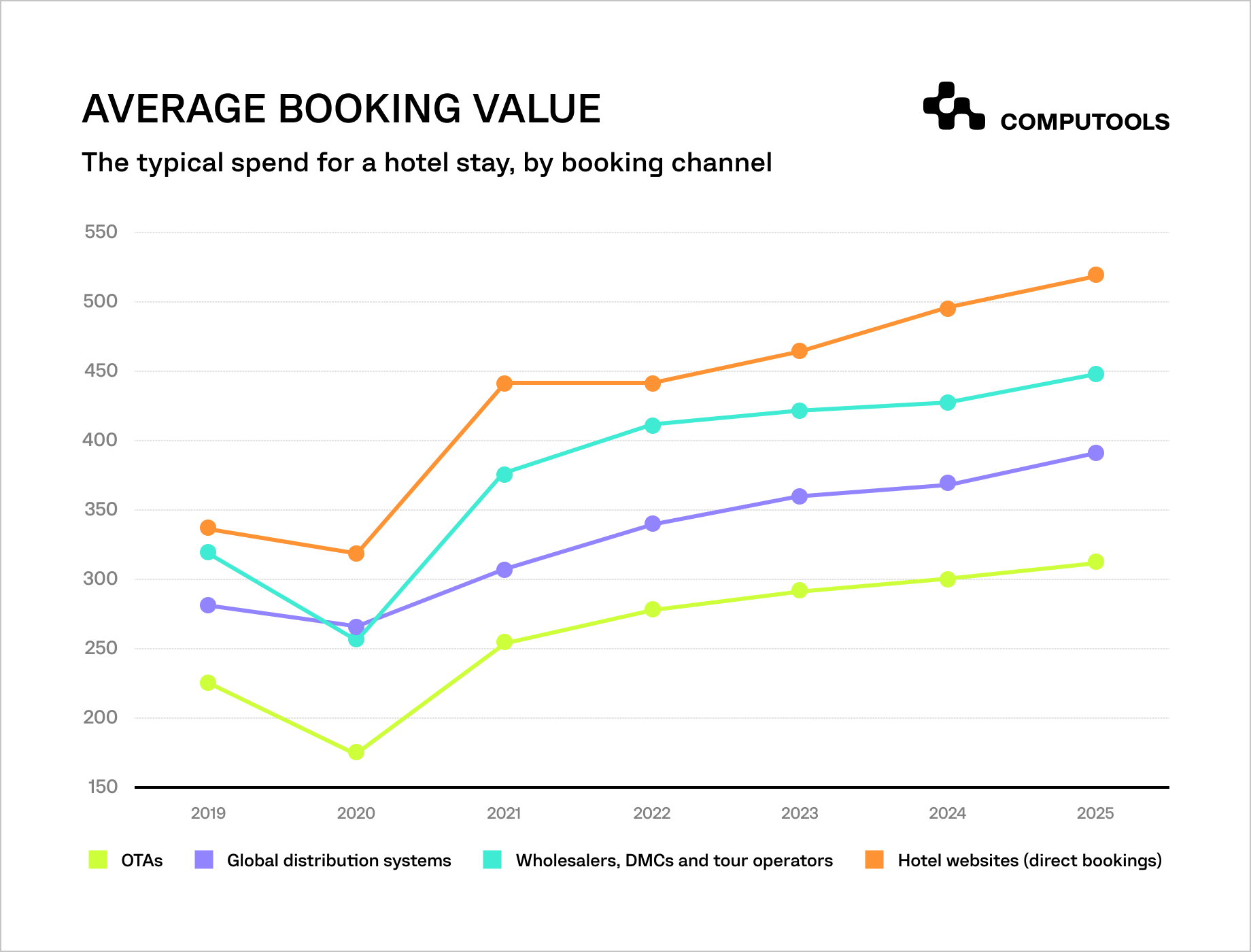
SiteMinder’s 2025 data shows why this matters: direct bookings remained within 1.5 percentage points of the previous year in 95% of markets, stayed among the top three revenue sources in 90% of markets, and delivered the highest average booking value at US$516 per booking, compared with US$312 for OTAs.
That makes the direct channel more valuable per transaction, but only when the booking path is reliable and easy to complete.
Margin pressure makes booking-engine quality even more important. Revinate’s year-to-date 2025 hospitality data shows that hotels retained 94.87% of guest-paid revenue from direct website bookings, compared with 82.06% from OTA channels. The same source reports that 85% of users abandon the hotel booking engine, and only 2.4 out of 100 website visitors complete a booking. Hotels can spend on search, metasearch, and brand campaigns, only to lose the transaction due to a slow or confusing reservation flow.
Booking behavior in 2025 gave hotels more room to convert direct demand before arrival. SiteMinder reports an average booking window of 32.15 days and an average cancellation rate of 19.15%. A stronger booking engine helps hotels use that lead time better through accurate pricing, clearer rate presentation, cleaner mobile checkout, and better placement of packages, upgrades, and add-ons before payment.
How we built a hotel booking engine for direct reservations
In one of our recent projects for an Austrian hotel group, we built a hotel booking platform to reduce reliance on OTAs and strengthen the client’s direct sales channel. The business already had stable demand, positive guest reviews, and enough market presence to support expansion, but most reservations still came through third-party platforms. That left the group exposed to rising commissions, limited access to guest data, and weak control over repeat bookings. Approximately 70-80% of bookings were generated via OTA platforms, which charged commissions ranging from 15% to 25%.
We approached the solution as part of broader travel and hospitality software development services focused on revenue recovery and channel control. The client did not need another brochure-style website. It needed a booking system that could compete on speed, clarity, pricing visibility, and trust. We redesigned the reservation flow, improved property and room page structure, added direct-only offer logic, and built a cleaner path from discovery to checkout. We combined that work with guest data capture, retention mechanics, and integration support for marketing and post-stay communication.
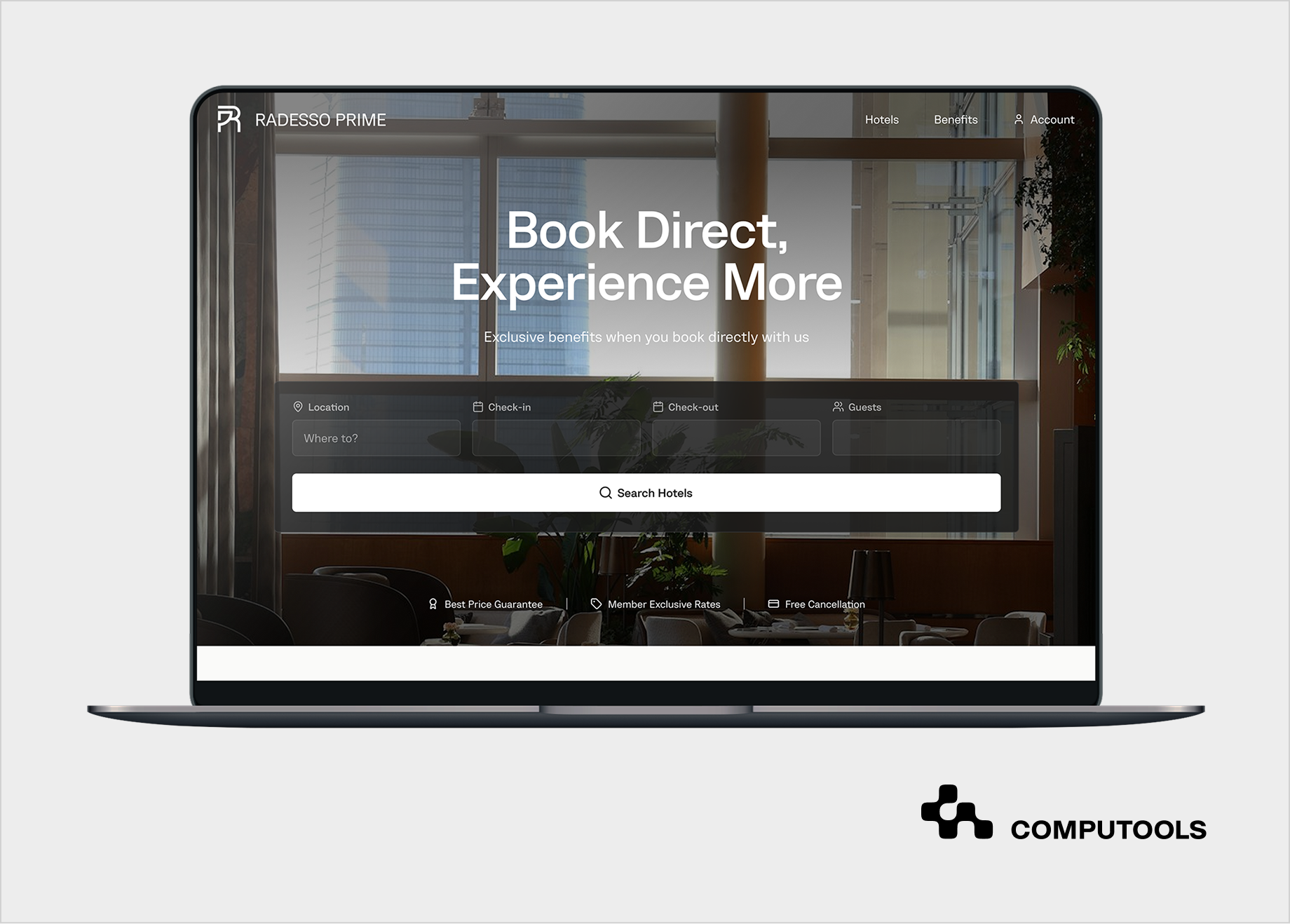
The implementation also addressed the commercial aspects surrounding the booking process. We enhanced on-page SEO and AEO, developed landing pages targeting high-intent local customers, and contributed to the design of direct booking incentives, including reduced rates, flexible cancellation policies, and room upgrade options. Once the platform improved in conversion and discovery, the client could leverage paid search, retargeting, and follow-ups more effectively. This made the direct channel more usable for both first-time bookings and repeat stays, which is exactly the kind of work businesses expect from strong software development services for HoReCa.
Within about six months post-launch, direct bookings rose from approximately 10% to 55%. OTA commission pressures eased, and the hotel chain gained greater control over customer acquisition and retention. The project provided the client with a more sustainable channel mix and established a stronger base for growth across multiple properties.
Step-by-step guide: how to build a hotel booking engine for direct reservations
Below is a step-by-step guide to build a hotel booking engine for hotels based on how we approached the Radesso Prime project for an Austrian hotel group. The work focused on the booking flow itself, the structure of property and room pages, direct-offer logic, guest data capture, analytics, and retention support.
Step 1. Start hotel booking engine development with a full booking flow audit
Strong hotel booking engine development begins with a detailed audit of the existing reservation journey. The team needs to understand how guests move from the first property page to checkout, where they hesitate, where they leave, and which parts of the flow create doubt before payment. This work usually covers the navigation structure, search and availability logic, room comparison, rate presentation, policy visibility, form length, mobile behavior, page speed, and the clarity of booking call-to-action buttons.
The audit should also separate technical friction from commercial friction. Some users leave because the flow is slow or fragmented. Others leave because room differences are unclear, rate conditions are hard to compare, cancellation terms are buried, or the booking page does not feel trustworthy enough to complete a transaction. These issues affect conversion in different ways, so they need to be documented as separate problem areas before design and software engineering begin.
For hotel groups with multiple properties, the audit also has to review how users move between location pages, room categories, and property-specific offers. If that structure is inconsistent, guests spend more time interpreting the interface and less time booking. That increases drop-off and weakens the direct channel, especially when OTAs present the same stay with faster comparisons and fewer decisions.
In the Radesso Prime project, this first step exposed the main weaknesses in the existing reservation journey. The website did not convert efficiently because navigation lacked clarity, room selection felt fragmented, and the booking path did not build enough trust to keep users on-site. Our team audited the existing journey, identified conversion barriers, and used that analysis to redesign the direct booking experience for desktop and mobile users, implement stronger booking flow logic, and improve the property-specific content architecture.
The output of this step should be practical. The team needs a prioritized list of conversion issues, a clear booking-flow structure, requirements for room and rate presentation, and a decision map outlining what must change in UX, backend logic, content architecture, and analytics. That gives the project a real implementation baseline and keeps later work tied to measurable friction instead of assumptions.
Step 2. Structure properties, room pages, and rate logic around the booking decision
The structure of a booking engine for hotel website has to follow the way guests actually choose a stay. People do not read hotel websites from top to bottom. They compare location, room type, occupancy, inclusions, cancellation terms, price differences, and booking conditions in a short decision window. The interface has to support that behavior. If the user has to jump between pages to understand which room fits, what the rate includes, or why one option costs more than another, the flow slows down and confidence drops.
This part of the product usually starts with content architecture. Each property needs a clear page hierarchy, a consistent set of room cards, stable rate labels, and a booking entry point that stays visible throughout the journey. Multi-property hotel groups need an additional layer of logic because users often compare one location to another before comparing room types. That means the platform has to organize destination details, property highlights, room inventory, and direct-booking offers in a way that keeps the path to reservation short and readable.
Room pages need more than descriptions and photos. They have to answer operational questions that affect the booking decision: who the room is for, how many guests it accommodates, what is included, what the cancellation terms are, which dates are available, and which upgrade path makes sense. When this information is incomplete or scattered, users return to OTA pages because those platforms compress comparison into a simpler format. A hotel site has to make the decision clearer, not heavier.
Rate logic belongs in the same structure. Flexible rate, non-refundable rate, breakfast-included option, upgrade package, and member pricing should be readable at a glance. Guests should understand the trade-off without opening additional tabs or guessing what changes at checkout. This is especially important when the direct channel competes against OTAs on clarity and trust, not only on price.
In the Radesso Prime project, we rebuilt that layer by redesigning property and room pages, improving booking flow logic, and implementing a clearer booking architecture. The design work covered site map, wireframes, and interface decisions aimed at simplifying booking choices and reducing drop-off across key screens. That gave the hotel group a cleaner path from discovery to reservation across multiple properties and made the direct channel easier to use under real booking conditions.
The output here should be tangible: a property-page structure, room-page templates, rate-display rules, and a booking-entry logic that stays consistent across the platform. That structure supports design, backend mapping, CMS setup, and conversion work later in the project. Without it, the team ends up patching isolated screens instead of building a coherent reservation journey.
Step 3. Add direct-booking logic that gives guests a clear reason to stay on the hotel site
A direct hotel booking system needs a clear offer structure inside the booking journey. Guests compare channels quickly. They consider price, flexibility, room conditions, perceived safety, and how easy it is to complete the reservation. If the hotel website displays the same information in a less user-friendly format, the user returns to the OTA tab and books there. The direct channel has to explain its value during the decision, not after it.
This step focuses on offer logic. The team needs to decide which advantages belong to the direct channel and how they appear across the journey. That can include lower direct rates, flexible cancellation, room upgrades, package variations, loyalty benefits, or post-stay perks. These offers need a stable place in the interface. They should appear next to room and rate selection, inside comparison states, and near checkout decisions where users are most likely to hesitate. If direct-booking value is hidden in banners or buried in generic copy, it does not affect behavior.
The wording also matters. Guests should understand the benefit in one read. “Breakfast included,” “free cancellation until 6 PM,” “best rate on our website,” or “upgrade available with direct booking” work because they are concrete. Vague promo language adds noise and forces the user to interpret the value on their own. That slows the booking path and weakens trust.
The same logic applies to the rate structure. Direct-only offers have to align with how real booking decisions are made. If the guest sees three rates with unclear differences, the platform creates friction instead of helping with comparison. The booking flow should explain why a flexible rate costs more, what a package rate includes, and where the direct offer creates a practical advantage. A strong direct-booking layer helps the hotel compete on clarity, not only on nominal price.
In the Radesso Prime project, this step was built into the product and communication logic. We helped shape direct-only benefits such as lower rates, flexible cancellation, and room upgrade opportunities, then reflected them in the booking journey itself. The platform also supported redesigned booking flow logic and direct-offer communication, which made the value of booking on the hotel’s own site easier to understand during the reservation process.
The output of this step should include a direct-offer framework, placement rules for booking incentives, rate-label logic, and content requirements for room cards, rate modules, and checkout screens. That gives design, content, and development teams a single, consistent system to work from and helps the direct channel function as a real sales path rather than a fallback option.
Step 4. Connect guest data capture with repeat-booking workflows
A booking engine should continue to function after the reservation is confirmed. Hotels need a way to capture useful guest data during the booking process, pass it into post-stay communication, and use it for repeat-booking activity later. This affects retention, direct revenue, and the cost of bringing the same guest back through paid channels.
Guest data capture must be carefully planned. The booking flow needs enough information to support confirmation, support requests, segmented offers, and future communication, but it should not overload the checkout with fields that slow completion. Hotels usually need contact details, stay preferences, property selection, booking history, and permission-based communication settings. These inputs are more useful when structured from the start rather than collected later through disconnected tools.
This is also the point at which the platform begins functioning as direct reservation software for hotels rather than a one-time checkout tool. Once reservation data flows into retention workflows, the hotel can support follow-up messaging, personalized offers, room upgrade campaigns, return-stay incentives, and targeted communication based on guest behavior. That creates a stronger owned channel and reduces the need to reacquire the same customer through OTA-heavy or paid acquisition routes.
In the Radesso Prime, guest data capture and retention mechanics were part of the solution scope from the beginning. The client introduced communication flows for follow-up messaging, personalized offers, and repeat stays after the platform was optimized for conversion and discovery. On the technology side, HubSpot and email automation tools were used to support post-stay communication and drive repeat bookings through personalized outreach.
The output of this step should include a guest-data map, CRM, and email workflow requirements, form-field priorities, consent logic, and a clear connection between booking data and retention scenarios. That gives the hotel a clear path from the first reservation to the second and third stays, making the direct channel more valuable over time.
Step 5. Connect measurement, attribution, and channel visibility before scaling traffic
A hotel can improve the booking flow and still lose revenue if the team cannot see what drives reservations and where users drop out. This part of the implementation covers measurement. The platform needs event tracking for search, room views, rate selection, checkout progress, completed bookings, and drop-off points across the funnel. Those signals show whether the problem sits in discovery, comparison, form completion, payment, or offer clarity.
At the product level, this work defines how the business reads performance. Hotels usually need to understand which traffic sources bring booking intent, which landing pages support direct reservations, which offers convert, and where paid traffic leaks before checkout. That is where hotel booking engine integration becomes operationally important. The booking platform must pass clean data to analytics and attribution tools. Otherwise, the team ends up optimizing campaigns and pages without seeing what actually happens inside the reservation journey.
The same layer supports channel decisions. Direct bookings often depend on a mix of organic search, brand traffic, metasearch, retargeting, email, and location-specific landing pages. If attribution is weak, the hotel sees traffic volume but cannot connect it to booking quality, conversion rate, or revenue. That makes scaling expensive and slows down improvements because budget decisions are based on partial visibility.
In the Radesso Prime project, analytics and channel attribution were part of the delivery. We were responsible for setting up analytics and channel attribution to measure post-launch performance, and the technology stack included GA4 and Google Tag Manager to track user behavior, the booking funnel, traffic sources, and conversion events across the platform. This gave the hotel group visibility into how guests moved from search and ads to direct reservations, helping the team optimize marketing spend more accurately.
This step should produce a measurement framework, event map, attribution model, dashboard requirements, and reporting logic tied to booking outcomes. Once that foundation is in place, the hotel can scale search, retargeting, email, and landing-page campaigns with clearer feedback from the booking journey itself.
Step 6. Build the platform architecture for scale, content control, and stable booking operations
A booking engine has to stay manageable after launch. Hotels change rates, update room descriptions, add landing pages, run seasonal offers, expand to new properties, and adjust campaigns throughout the year. That work becomes slow and expensive when content, booking logic, and deployment are tied together too tightly. The platform needs an architecture that supports frequent operational changes without turning every update into a development task.
Frontend performance affects how quickly guests move between property pages, room details, and checkout. Backend services handle availability display, reservation processing, and business rules. The database stores booking data, guest records, room information, and content relationships. Deployment setup affects release speed, rollback safety, and stability during traffic peaks. Each of these layers influences how reliably the direct channel works day to day.
For multi-property hotel groups, hotel direct booking technology must also support content operations at scale. Internal teams need a practical way to update room descriptions, promotional offers, landing pages, and location-specific sections without waiting for every small change to go through engineering. If marketers cannot update booking-related content quickly, campaigns slow down, and direct offers lose relevance.
In our hotel project, the architecture was built around those operational needs. We used a stack such as Next.js and React for the guest-facing experience, Node.js and NestJS for booking workflows and reservation handling, PostgreSQL for structured booking and guest data, AWS and Docker for deployment and scalability, and Strapi as a headless CMS for room descriptions, promotional offers, landing pages, and location-specific sections. That setup supported growth across multiple properties and made the platform easier to manage as working hospitality booking software rather than a static website with a reservation add-on.
The output of this step should include application architecture, CMS scope, a data model, deployment approach, and a clear ownership map for content and technical updates. That gives the hotel a platform that can support ongoing commercial work and future expansion without constant rework.
For a broader look at operational workflows beyond the booking flow, see our guide, Streamlining the Guest Experience: A Hotel Automation Guide.
Step 7. Support direct acquisition with landing pages, search visibility, and campaign-ready content
A booking engine does not bring traffic on its own. Hotels still need search visibility, clear entry pages, localized intent targeting, and content that matches the booking journey. When those layers are disconnected, users arrive on a generic page that fails to answer the booking question quickly enough and sends them back to aggregator platforms or search results.
This part of the implementation usually covers landing-page structure, property-specific content, booking-oriented page hierarchy, and direct-offer messaging built around real search behavior. Hotels need pages that align with how users search for city stays, business trips, short breaks, weekend bookings, or location-based accommodation. Those pages have to connect cleanly with the reservation flow. A weak handoff between discovery and booking usually results in wasted traffic, lower conversion rates, and higher acquisition costs.
For that reason, a hotel booking system for websites must support more than just room selection and checkout. It has to give marketing teams enough control over SEO-facing content, promotional sections, local landing pages, and campaign-specific updates. If every acquisition page sits outside the booking logic, the user journey fragments again. The platform may look polished, but the route from search intent to reservation stays inefficient.
In the Radesso Prime project, this layer was built into the platform itself. The solution was reinforced by SEO and AEO, paid search, retargeting, and post-stay email communication. Computools created landing pages for high-intent local demand and enabled on-page SEO and AEO optimization as part of delivery. Once the booking flow and property structure were easier to use, the client could activate paid search and retargeting more effectively and support a stronger direct-acquisition model.
The output of this step should include a landing-page framework, search-intent content map, direct-offer content rules, and handoff logic between campaign pages and booking screens. That gives the hotel a cleaner path from discovery to reservation and helps the direct channel convert traffic with less waste.
Step 8. Roll out in short iterations and refine the platform after launch
Release planning deserves the same attention as architecture and booking logic. Hotels operate in real time, with live demand, active campaigns, changing offers, and property-specific updates. A full launch with too many changes at once makes it harder to see what improves conversion, what creates friction, and what needs immediate correction. Shorter releases give the team cleaner feedback and reduce operational risk.
For that reason, hotel reservation system development should proceed through controlled iterations with clearly defined areas for improvement. One release can focus on booking conversion. Another can cover content management, acquisition support, or retention workflows. This gives product, marketing, and engineering teams a shared view of what changed, why it changed, and how the platform responded after release.
Post-launch optimization needs a working rhythm. The team should regularly review funnel behavior, landing-page performance, offer interactions, form completion, and completed reservations. That data helps prioritize the next round of updates. Some improvements will sit in UX and content. Others will affect booking logic, analytics setup, or the handoff between discovery pages and reservation screens. The point is to keep improving the system with real performance signals instead of treating launch as the end of the work.
That was also the delivery model in the Radesso Prime project. Computools used a Scrum-based approach with short iterations focused on defined improvement areas, including booking conversion, content management, acquisition support, and retention enablement. The team released improvements in stages, refined the solution based on performance signals, and kept the client closely involved as priorities evolved. Within approximately six months after launch, direct bookings increased from around 10% to 55%, while the hotel group gained more control over acquisition and retention.
The output of this part should include a phased release plan, a post-launch review cadence, priority rules for optimization, and a decision framework for what gets changed first after real users start booking. That keeps the platform aligned with business performance instead of freezing it at launch.

Want to increase direct bookings by up to 3x while reducing OTA dependency? Contact our experts for architecture guidance and project estimation.
What hotels gain from a stronger direct booking engine
A stronger booking engine gives hotels more control over conversion, pricing, guest data, and repeat-booking activity.
- Higher direct booking conversion through a clearer reservation path, better room comparison, and fewer drop-off points.
- More control over pricing, packages, direct-only offers, and how rates are presented across the booking journey.
- Lower dependence on OTA channels and better balance between third-party distribution and direct reservations.
- Stronger guest data capture for post-stay communication, repeat-booking campaigns, and retention workflows.
- Faster launch of seasonal offers, landing pages, and local campaigns across the hotel website.
- Better visibility into booking behavior, traffic sources, and funnel performance through connected analytics and attribution.
- A more scalable setup supported by reliable booking technology across multiple properties.
Why choose Computools for hotel booking engine development
Computools builds booking platforms for travel and hospitality businesses that treat direct reservations as part of a controlled revenue channel. In the Radesso Prime project, the team redesigned the booking journey, improved property and room page structure, shaped direct-offer communication, supported guest data capture and retention workflows, and set up analytics and channel attribution.
Within about 6 months of launch, direct bookings grew from around 10% to 55%, while the client reduced OTA commission pressure and gained greater control over acquisition and retention.
This kind of work goes beyond standard web development services. A hotel needs a single system that supports booking logic, pricing visibility, room and rate presentation, content updates, campaign landing pages, guest data flows, and post-stay communication without breaking the reservation path. That usually means building a custom hotel booking engine around the hotel’s commercial model, operational structure, and direct-channel goals.
Computools develops solutions for booking engines, guest apps, travel platforms, PMS, and automation for reservations, housekeeping, and front desk tasks.
The company has 250+ experts on board, delivered 40+ projects globally, reported a 40% faster booking and check-in process, a 35% reduction in operational costs, and a 4.9 Clutch rating based on 94 reviews.
Its travel and hospitality offering also includes software engineering services to increase direct bookings, improve property operations, and support more connected guest journeys.
For hotels, that means one team can cover the booking flow, content architecture, integrations, retention setup, and post-launch optimization inside a single custom reservation system. The result is easier to manage, easier to scale across multiple properties, and more useful as part of the hotel’s long-term direct sales strategy.
If you are planning to build a hotel booking engine for direct reservations, write to us at info@computools.com
You can also explore our overview of the 20 Best Travel Booking Platform Development Companies for a broader look at the current travel software landscape.
Conclusion
A strong direct booking channel depends on how clearly the hotel presents rooms, rates, policies, and booking value across the full reservation journey. The booking flow must support live availability, accurate pricing, smooth checkout, guest data capture, analytics, and repeat-booking activity within a single connected product.
For hotels with growing direct sales goals, a reliable hotel reservation engine gives the business more control over conversion, retention, and channel mix. It also creates a stronger foundation for campaign traffic, direct-only offers, post-stay communication, and multi-property growth.
As guest expectations, distribution models, and commercial pressures continue to change, online hotel booking software must integrate with the hotel’s revenue system. Hotels that invest in that structure are better prepared to reduce OTA dependence, improve booking performance, and manage direct reservations with more consistency over time.
For a related view on digital operations in hospitality, read Boosting Restaurant Operations Through Digital Transformation.
Computools
Software Solutions
Computools is an IT consulting and software development company that delivers innovative solutions to help businesses unlock tomorrow.