



THE AUTHOR:

The adoption of AI healthcare technology is accelerating worldwide as providers, payers, and MedTech companies seek smarter ways to manage growing data volumes, rising patient expectations, and increasing operational pressures.
Demand for healthcare automation is reshaping the industry — from diagnostics and surgery to patient engagement and clinical decision support — making AI agents a central driver of efficiency, personalization, and innovation in modern care delivery.
Market growth and forecasts
• In 2024, the global AI agents market was valued at USD 5.43 billion and is projected to rise from USD 7.92 billion in 2025 to USD 236.03 billion by 2034, at a CAGR of 45.82% (2025–2034).
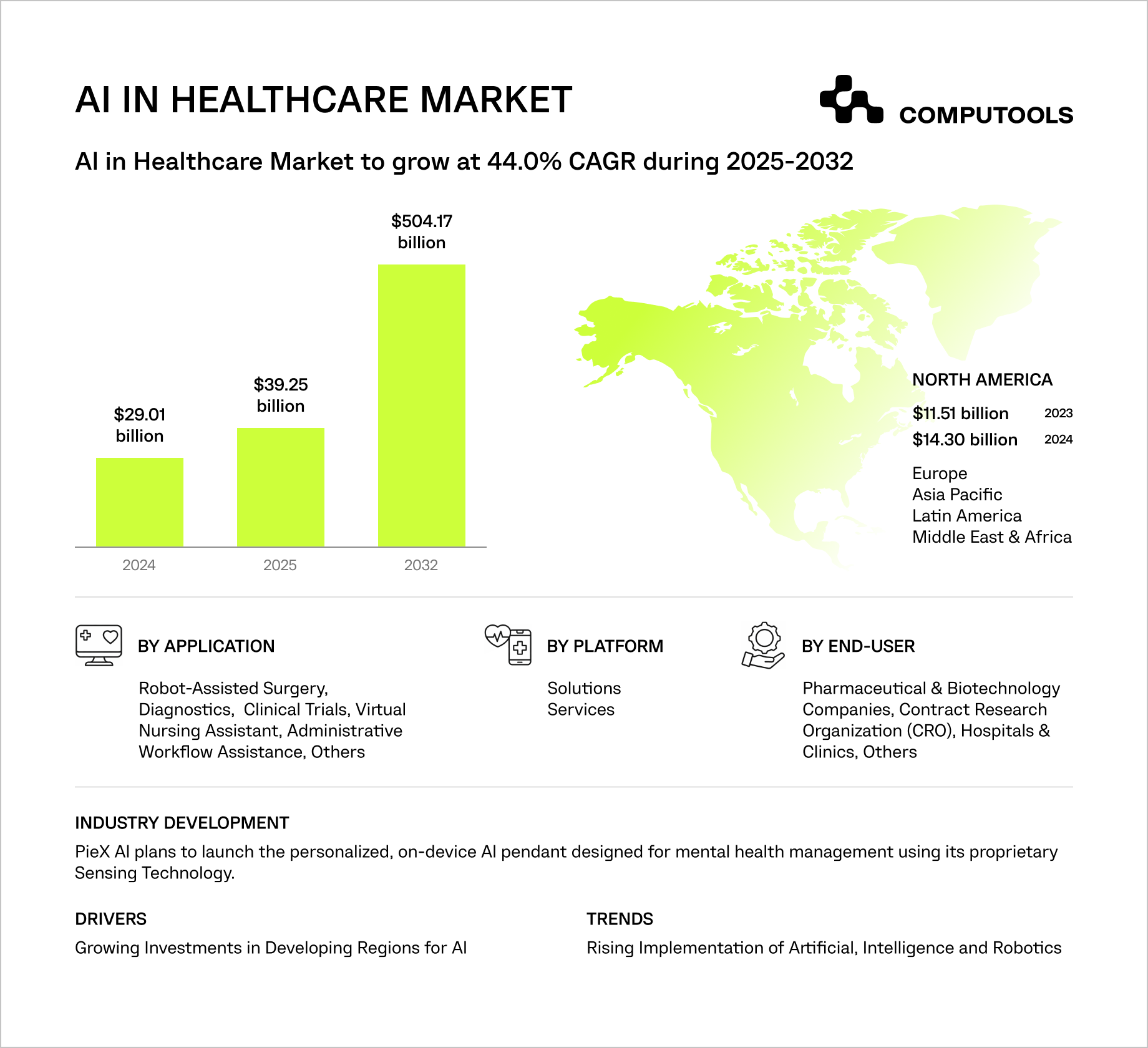
• The broader AI healthcare market reached USD 29.01 billion in 2024 and is expected to expand to USD 504.17 billion by 2032, growing at a CAGR of 44.0%.
North America led the market in 2024 with a 49.29% share, supported by advanced infrastructure and strong adoption of AI tools in hospitals and clinics.
The U.S. is at the forefront of AI-based imaging, diagnostics, and patient monitoring, reinforced by partnerships such as GE HealthCare + AWS for generative-AI diagnostics.
Asia-Pacific shows the fastest growth, with Japan investing in AI-enabled devices and China scaling AI medical technologies to serve its large population.
Europe, the U.K., and Germany are accelerating adoption through pharma and biotech applications, particularly AI-driven drug discovery.
Top AI-powered healthcare apps
1. Robot-Assisted Surgery
• In 2025, the largest segment is expected to be driven by the rising prevalence of chronic diseases and an increasing demand for minimally invasive procedures that enable faster recovery and better patient outcomes.
• The integration of AI enhances surgical precision, efficiency, and accessibility.
For example, Smith+Nephew introduced CORIOGRAPH Pre-Operative Planning and Modeling Services for the CORI Surgical System, providing AI-powered software tailored for personalized partial and total knee arthroplasty procedures.
2. Diagnostics
• One of the fastest-growing segments is driven by the demand for accurate imaging, early disease detection, and quicker turnaround times.
• AI platforms speed up diagnostics, enable personalized treatment planning, and enhance decision-making for clinicians.
3. Virtual Nursing Assistants and Administrative Workflow Solutions
• The increasing demand for remote patient monitoring, patient flow management, human resources operations, and insurance claims processing drives growth.
For instance, in September 2022, AGS Health launched its AI Platform to automate the entire revenue cycle process in hospitals, aiming to tackle labor shortages and support scalable expansion.
4. Clinical Trials and R&D
• AI agents speed up drug discovery, assist with clinical data management, and boost research efficiency.
For example, Microsoft Corporation collaborated with Providence to expand AI innovations and promote clinical research throughout healthcare systems (Fortune Business Insights).
These applications highlight how Medical AI software is shaping the future of healthcare from surgery and diagnostics to patient engagement and clinical research, creating smarter, more automated, and outcome-driven healthcare systems.
Healthcare priorities and the rise of Generative AI
Healthcare organizations are shaping their AI adoption strategies around immediate operational needs and long-term innovation.
The most common areas of adoption are charge capture and reconciliation at 39%, patient data structuring and analysis at 37%, and workflow automation at 36%. Providers focus on these quick wins to reduce administrative burdens and enhance efficiency.
Over time, there’s a growing focus on predictive analytics and risk scoring, now at 44%, along with clinical decision support AI at 41%, and AI-powered diagnostics and treatment guidance at 37%. These trends show how quickly the field is evolving to incorporate smarter, more helpful technologies.
Generative AI is also gaining significant traction. According to a McKinsey Q1 2024 survey of 100 U.S. healthcare leaders, 70% of organizations are piloting or implementing generative AI. Among adopters, 59% are co-building customized solutions with third-party vendors, while 41% of non-adopters plan to purchase off-the-shelf tools to accelerate deployment. Notably, nearly 60% of early adopters report positive ROI or expect it soon, even at this early stage.
These adoption patterns show how healthcare moves from tactical automation to strategic digital transformation. By combining generative AI with clinical decision support AI, providers can drive earlier interventions, smarter diagnostics, and measurable improvement in patient experience, setting new standards for modern care delivery.
What is an AI agent in medicine?
AI agents are artificial intelligence-based programs that can perform tasks autonomously. They are created to authentically imitate human actions, make decisions, and engage with users or other systems through developed algorithms.
AI agents in healthcare are systems that assist in various medical and administrative processes. They can automate administrative tasks (scheduling, managing patient data) and assist in clinical decision-making without in-person visits. AI for hospital management can also support virtual consultations and ensure smooth operation in a hospital or clinic.
Healthcare chatbots and AI-powered agents have the most significant impact across diverse medical institutions:
• Hospitals simplify administrative workflows, automate patient record management, and even support diagnostic processes, enabling staff to focus on high-value clinical work.
• Clinics, often constrained by limited resources, leverage healthcare chatbots to handle appointment scheduling, patient intake, and follow-ups, boosting operational efficiency and patient satisfaction.
• Pharmacies use these solutions to automate prescription refills, manage inventory, and respond to patient queries quickly and accurately, reducing human error and improving service quality.
• Research facilities gain a competitive edge as AI agents accelerate data collection, analysis, and experiment tracking, shortening time-to-discovery.
For healthcare providers, implementing healthcare chatbots goes beyond cost savings; it focuses on developing scalable, patient-centered operations that enhance outcomes and improve ROI.
Why does healthcare need AI agents for better care delivery?
The healthcare sector is under unprecedented pressure: rising patient volumes, clinician shortages, and administrative overload are pushing systems to their limits.
AI agents are emerging as critical technologies to address these gaps by combining large language models (LLMs), predictive analytics, and real-time data streams.
1. Streamlining Healthcare Workflow Automation
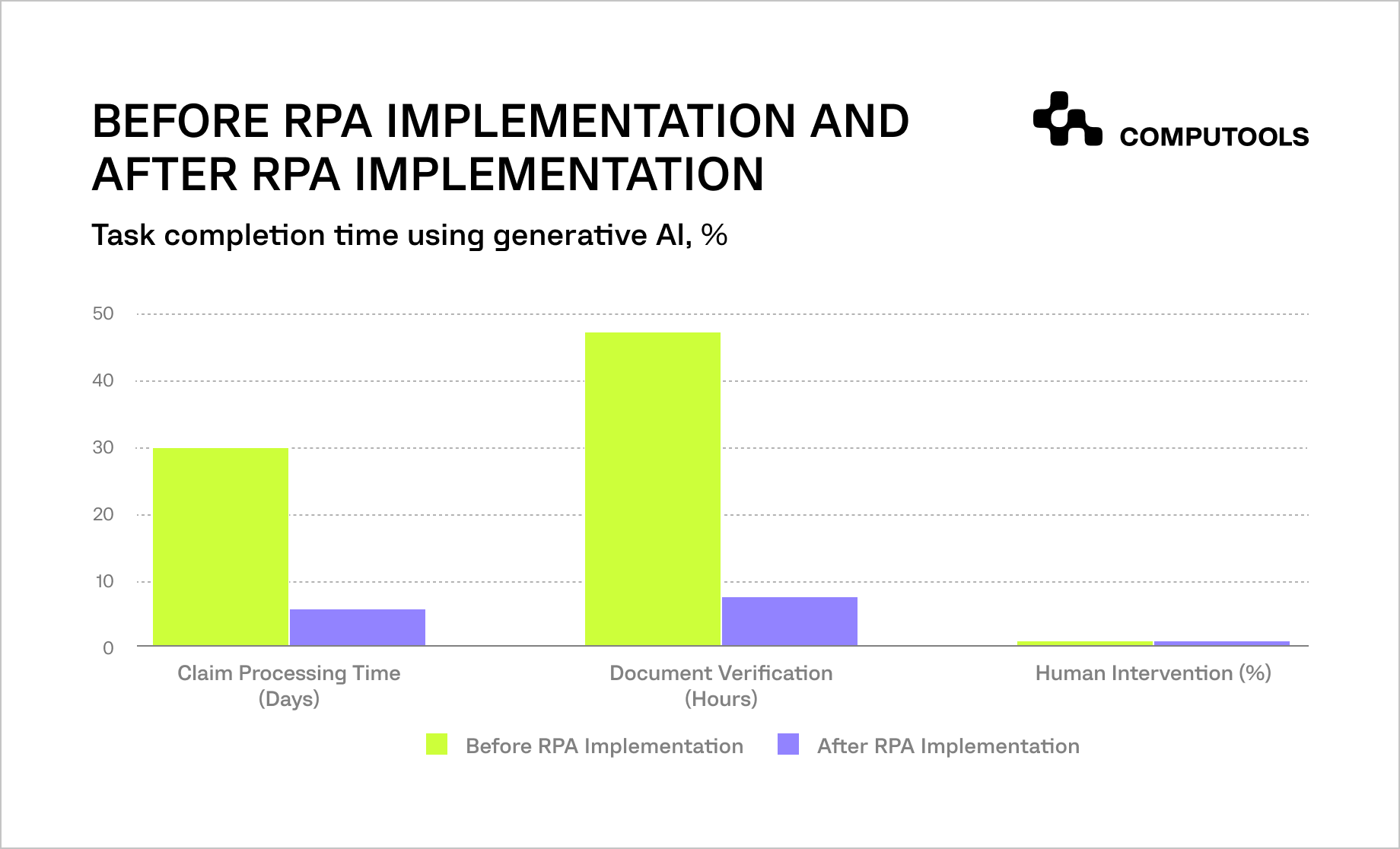
Administrative complexity consumes nearly a quarter of U.S. healthcare spending. Clinicians spend 44% of their day on EHR and documentation instead of on patients. AI agents change this equation by automating key workflows across registration, billing, coding, and claims reconciliation.
Through healthcare workflow automation, agents capture clinical conversations, extract structured data, and autopopulate records. They handle repetitive documentation, flag errors, and even reconcile payer reimbursements.
Hospitals implementing AI-powered workflow automation have reported 30–40% faster case processing and reduced claim denials. This allows providers to redirect resources toward patient-facing care.
2. Enhancing Patient Experience via Personalization
Automation alone is insufficient; healthcare must also improve patient engagement with the system. Traditional follow-up models often fail because they are generic and impersonal. AI agents fill this gap by personalizing care journeys.
They analyze medical histories, lifestyle data, and behavioral patterns to deliver tailored reminders, educational content, or motivational nudges.
A diabetes patient, for instance, might receive daily medication alerts, personalized nutrition advice, and remote monitoring updates sent directly to their device—this patient experience improvement results in higher treatment adherence and satisfaction. Personalized engagement strategies increase adherence rates by up to 60%.
3. Improving Clinical Decision Support
Beyond business process automation and engagement, AI agents act as clinicians’ decision-support partners. By scanning research databases, lab results, and prior case data, they provide context-rich recommendations at the point of care.
For oncology specialists, this may mean surfacing similar case histories and highlighting the latest evidence-based therapies. With hundreds of medical studies published daily, such tools are essential for reducing variation and improving outcomes.
4. Real-Time Monitoring and Predictive Insights
AI agents integrate with wearable devices and remote monitoring systems to track patient health continuously. Instead of relying only on in-clinic visits, physicians gain access to ongoing data streams that alert them to early warning signs.
If an AI agent detects abnormal heart rhythms, it can notify providers instantly and recommend evidence-based interventions.
Harvard Business Review has shown that such predictive monitoring can cut hospital readmissions by up to 25%.
5. Building Trust Through Compliance and Security
Patients and providers alike must trust AI-driven systems. AI agents are designed to align with HIPAA, GDPR, and other healthcare regulations by automating compliance checks, logging access trails, and spotting anomalies in billing or documentation.
This non-compliant layer is non-negotiable; data breaches affected 133 million individuals in 2023, according to HIPAA Journal.
6. The Future of Patient-Centered Automation
The emergence of AI technology signifies a transition towards workflow automation, relieving clinicians from administrative tasks and enhancing patient experiences through personalized care.
Organizations that balance these priorities will achieve higher productivity, reduced costs, and stronger patient trust, all while empowering clinicians to focus on what matters most: healing.
As Forbes highlights, AI-powered agents are already transforming efficiency across critical areas of healthcare. Analyzing massive data sets from lab results to imaging scans helps reduce diagnostic errors and personalize treatment pathways.
Administrative automation relieves staff from repetitive tasks, lowering operational costs and freeing time for patient care. Virtual health assistants extend impact by engaging patients 24/7, answering common questions, sending medication reminders, and collecting pre-consultation data.
These applications improve care delivery and strengthen continuity and patient satisfaction, proving the growing value of intelligent healthcare automation.
Integration, security, and compliance of AI agents
Integrating AI agents into healthcare is not simply about deploying new software but ensuring these systems work seamlessly across existing platforms while staying secure and compliant with strict regulatory frameworks.
Organizations that approach this strategically gain efficiency and resilience against risk.
1. Technical Integration
AI agents are most effective when embedded directly into the healthcare ecosystem. Modern deployments focus on interoperability through standards such as HL7 FHIR (Fast Healthcare Interoperability Resources), which enable data exchange across EHRs, laboratory systems, and telehealth platforms.
According to KLAS Research (2024), 67% of healthcare CIOs cite interoperability as their top priority for AI adoption, emphasizing the need for smooth data flow across care settings.
Integration also extends to real-time data sources. For example, the Cleveland Clinic has piloted AI tools that ingest continuous data streams from wearables, ensuring alerts are automatically tied to patient records in Epic systems.
This reduces fragmentation and enables clinicians to act on unified insights rather than juggling siloed dashboards.
2. Security and Privacy
Healthcare is one of the most targeted industries for cyberattacks. Beyond traditional encryption and access controls, organizations are moving toward privacy-preserving machine learning techniques such as federated learning, where models train on local datasets without moving raw patient data. This approach is increasingly adopted in Europe under GDPR to minimize cross-border data risk.
Another innovation is the use of synthetic data for AI model training. Gartner predicts that by 2030, 60% of all healthcare AI models will be trained on synthetic or de-identified datasets, significantly lowering compliance risk while improving model robustness.
3. Compliance and Governance
Regulatory compliance is expanding beyond HIPAA and GDPR into AI-specific governance.
The EU AI Act (2024) classifies healthcare AI as “high-risk,” requiring providers to demonstrate transparency, human oversight, and risk management before deployment. In the U.S., the FDA has issued guidance for AI/ML-enabled medical devices, focusing on explainability and continuous monitoring of algorithms in clinical use.
Healthcare providers are also adopting internal governance frameworks to track AI recommendations, audit algorithmic outputs, and ensure explainability for clinicians.
For example, Mayo Clinic reports that embedding AI outputs directly into physician workflows with documented reasoning improved clinician trust and adoption rates by over 45%.
4. Business Value and Strategic Advantage
Compliance-driven integration is not just a defensive move; it also creates a competitive advantage. By ensuring robust security and governance, healthcare organizations position themselves as trusted providers, especially in markets where patient confidence is fragile.
A PwC survey (2024) found that 72% of patients are more likely to use providers that disclose how AI tools safeguard their data and support clinical decisions.
This trust translates into adoption, loyalty, and financial sustainability. Instead of being viewed as a “compliance cost,” AI governance drives improvement in patient experience and long-term ROI.
AI agents benefits for healthcare and patient care
Integrating AI-powered agents into healthcare systems delivers measurable benefits across clinical, operational, and financial dimensions. Unlike traditional software, agents adapt dynamically to workflows, providing real-time intelligence while reducing the burden on staff.
These advancements highlight the benefits of AI agents in hospital operations, where efficiency, accuracy, and patient satisfaction are critical drivers of success.
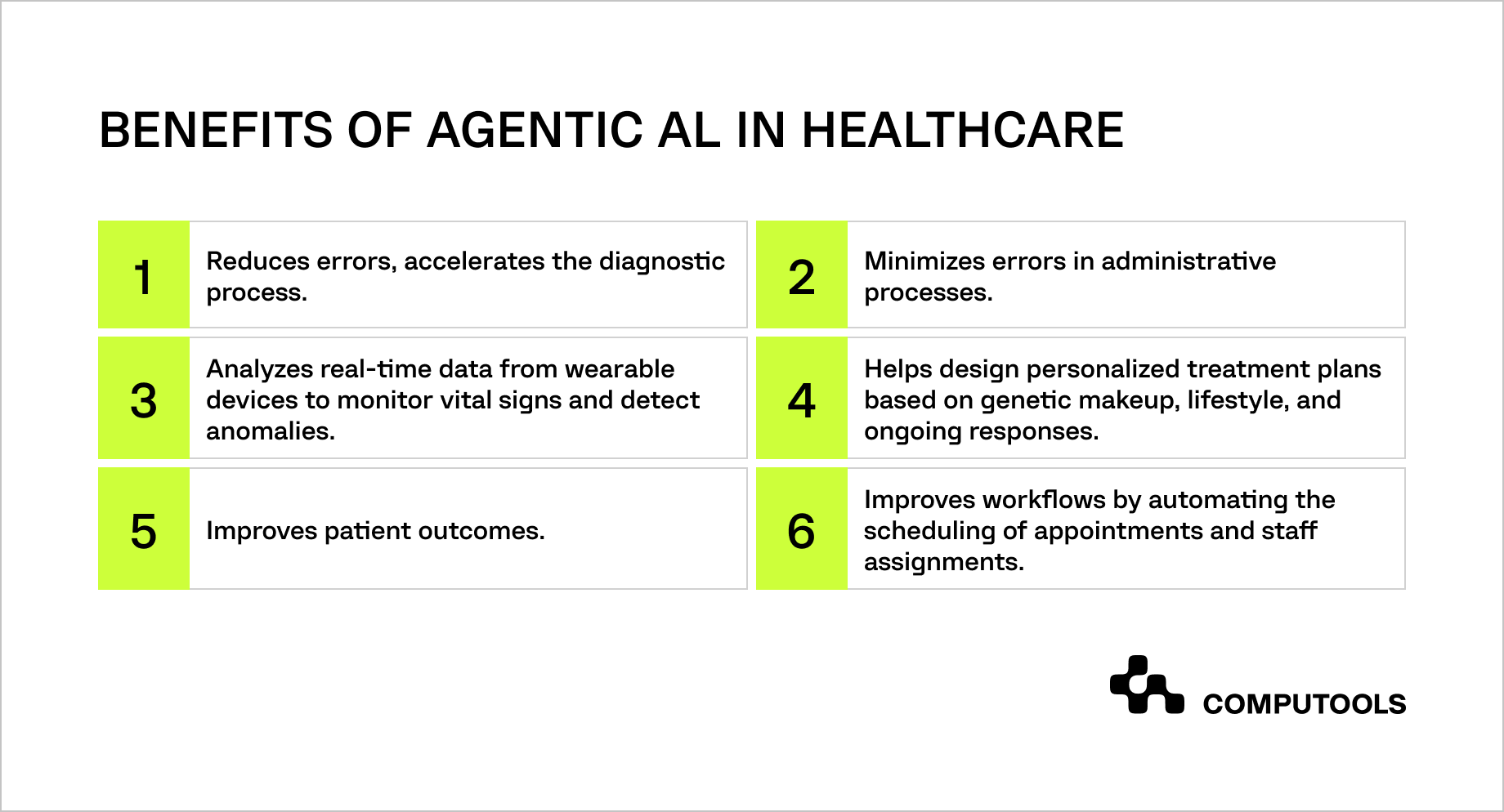
1. Faster response time and proactive decisions. AI agents process requests and data instantly, leveraging LLMs and healthcare data analytics to predict patient outcomes and prioritize interventions.
For clinics and hospitals, this translates into shorter wait times, faster diagnostics, and a smoother flow of patient care. Providers can see more patients without compromising quality, while patients gain confidence that their needs are addressed in real time.
2. Tailored treatment plans for better outcomes. By analyzing medical history, lifestyle factors, and patient preferences, AI agents help clinicians design truly personalized treatment pathways. This level of precision improves adherence, enhances patient satisfaction, and boosts long-term health outcomes.
Practices offering data-driven personalization are more likely to earn patient trust and referrals, strengthening their reputation in a competitive market.
3. 24/7 monitoring and early intervention. Connected to IoT-enabled devices, AI agents monitor patient conditions continuously, sending real-time alerts to providers when abnormalities appear. Early detection prevents costly emergency interventions and reduces readmission rates.
This proactive approach ensures patients receive timely care, while healthcare organizations minimize avoidable expenses.
4. Simplified operations and lower costs. AI agents automate administrative workflows such as appointment scheduling, insurance verification, and patient intake. Reducing manual workloads frees staff to focus on direct care while cutting operational costs.
According to industry research, workflow automation in healthcare can lower administrative expenses by up to 15%, unlocking resources for reinvestment in innovation and better patient services.
5. Scalable, future-ready solutions. As healthcare demands grow, AI agents scale effortlessly with your practice. They handle increasing patient volumes and evolve with new technologies and compliance requirements.
This ensures that providers stay aligned with global standards and remain competitive in an industry that demands constant adaptation.
Best global use cases of AI in healthcare
AI agents have proven their effectiveness in various areas of medicine, from clinical diagnostics to pharmaceutical research. Below are examples that demonstrate real cases of AI healthcare solutions.
Case 1: Mayo Clinic
Mayo Clinic has integrated AI assistants into radiology workflows. Multimodal models combine medical images with medical history and laboratory data, helping doctors make more informed decisions. For example, automatic tumor or structure tracing, measuring fat tissue composition, can significantly reduce physician workload and improve diagnostic accuracy.
According to a report of Mayo Clinic, AI-assisted medical image reading reduces report processing time by 30%.
In addition, the World Journal of Advanced Engineering Technology and Sciences reported a 15% reduction in the workload of radiologists and savings of about $2 million per year in operating costs.
Mayo Clinic demonstrates how AI agents can automate routine processes, improve radiology department productivity, reduce staff workload, and reduce costs.
Case 2: Insilico Medicine
Insilico Medicine has developed the inClinico AI-based transformer-based system that predicts the results of Phase II clinical trials.
In the study, the platform demonstrated:
• 79% accuracy in predicting the results of real-world Phase II→Phase III trials.
• Achieving 0.88 ROC‑AUC in a quasi-prospective evaluation.
• 35% ROI over nine months in a virtual investment portfolio.
InClinico from Insilico Medicine is a powerful R&D tool that allows you to accelerate drug development processes, increase the accuracy of predictions, and give investors a clear return on investment.
Case 3: NHS
NHS launches pilot at Chelsea and Westminster Trust: AI platform automatically generates discharge documents, extracting key information (diagnoses, test results).
Doctors only have to review the ready-made summaries, which speeds up discharges, frees up beds, and allows them to work with patients, not with papers.
The National Health Strategy sees such technology as the key to digital transformation and a £45 billion increase in productivity.
Case 4: Cera
Cera, a HealthTech unicorn, uses AI tools to predict patients’ conditions at home.
The company claims its system has reduced:
• Reduce hospital admissions by up to 70%
• Reduce patient falls by 20%
• This model saves the NHS up to £1 million per day
The company also uses autonomous robots that make over 3,000 weekly visits: reminding them to take medication, eat, collect health data, and notifying them of the need for intervention. This type of AI for patient care allows staff to focus on severe cases.
These cases prove that AI-powered virtual assistants for healthcare providers drive more intelligent decision-making, accelerate treatment processes, and improve healthcare delivery at scale.

Explore how AI agents are moving healthcare from reactive workflows to proactive, patient-centric automation at scale.
Challenges of AI agents implementation in healthcare
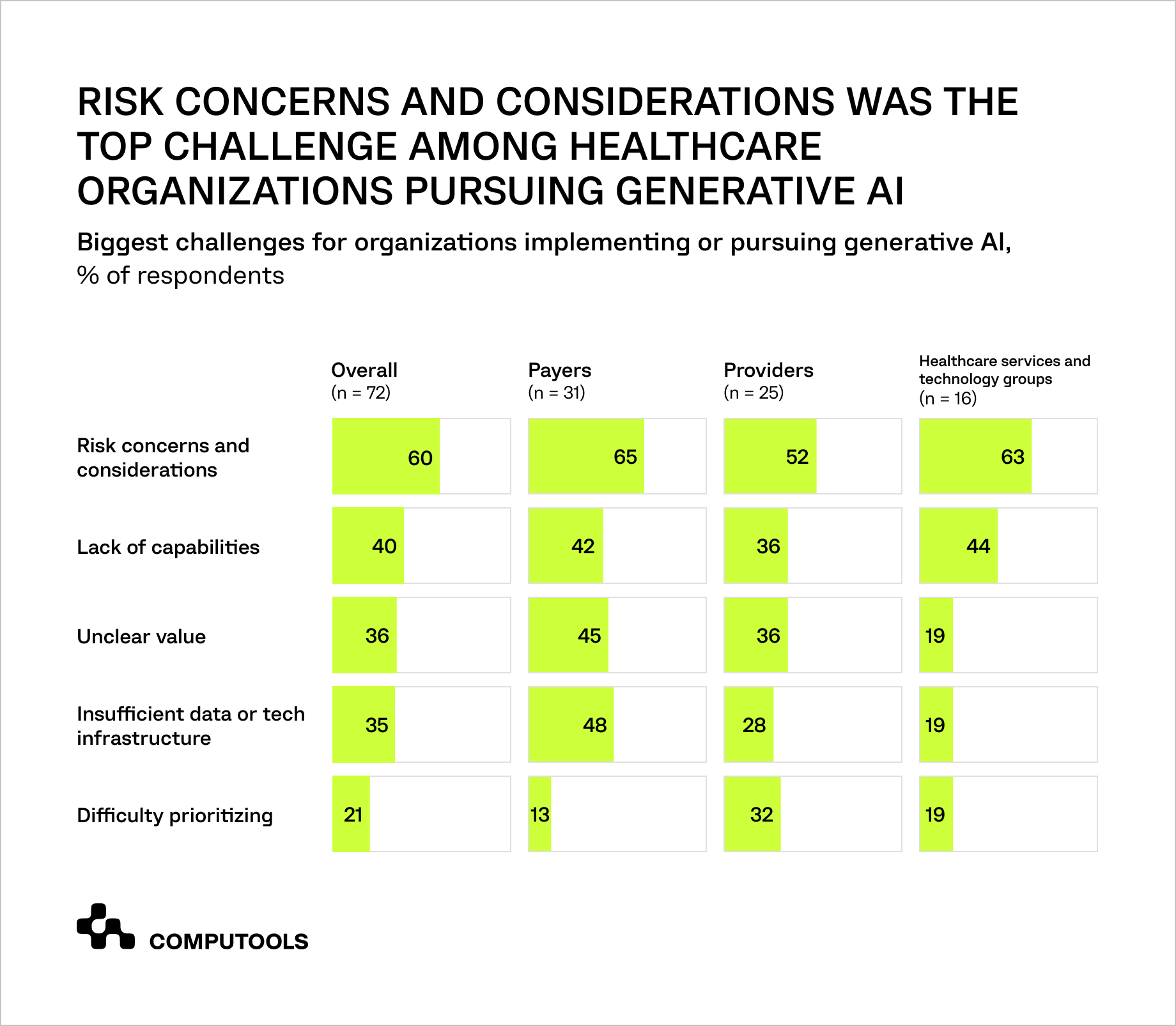
According to a McKinsey survey, risk management is the primary challenge in scaling AI in medicine. This concern spans all stakeholders, from providers and payers to organizations driving digital transformation.
Key factors include the unproven nature of the technology, the significant investments required to build capabilities, and ongoing regulatory uncertainty. These issues highlight the need for strategic approaches to risk management from data security to clinical outcomes to ensure compliance and high-quality care.
Respondents also pointed to additional barriers, such as limited technical capacity, weak data infrastructure, and difficulty demonstrating clear value.
These findings indicate that many organizations remain only partially prepared for the large-scale deployment of generative AI and AI Agents in healthcare. They will need structured strategies to validate and scale their capabilities.
Forbes notes that the clear benefits of integrating AI Agents in healthcare systems come with several critical challenges: data privacy and security, bias and fairness, clinical trust, and integration complexity.
Building on this, experts also highlight additional barriers:
• Regulatory uncertainty. Constantly changing standards make it difficult for providers to remain compliant while innovating.
• Operational readiness. Many healthcare organizations lack the IT infrastructure, technical talent, and data maturity needed for large-scale deployment.
• Proof of value. Demonstrating ROI and tangible improvements in patient outcomes is still a significant obstacle for broad adoption.
These challenges illustrate why healthcare providers increasingly turn to trusted technology partners to enable the safe, compliant, and effective implementation of digital health solutions.
In addition to the widely discussed concerns around data privacy, bias, trust, and integration complexity, healthcare organizations face numerous other challenges when deploying AI assistants.
Addressing these barriers is essential for unlocking the full potential of AI in medical diagnostics and ensuring long-term value in healthcare systems.
• Interoperability gaps. Many hospitals rely on fragmented EHR systems that are difficult to integrate with AI agents.
• Cost and scalability. Initial investments in AI infrastructure are high, and scaling across multiple clinics or hospital networks requires further resources.
• Change management. Resistance to change among staff and the lack of a data-driven culture complicate adoption.
• Continuous monitoring. AI agents require ongoing monitoring, model updates, and retraining to remain accurate and safe.
• Liability and accountability. Uncertainty about who is responsible in case of an AI-driven error introduces significant legal risks.
Addressing these challenges is essential for realizing how AI improves patient experience in healthcare, from faster diagnostics to more personalized treatment pathways.
The role of technology partners in deploying and supporting AI agents
The effective adoption of AI Agents in healthcare requires technology and collaboration with experienced software development partners. Their expertise ensures that solutions are technically sound but also secure, compliant, and scalable.
• Seamless integration. Technology partners bridge the gap between AI agents and fragmented EHR, billing, and telehealth platforms, enabling smooth workflows and faster deployment.
• Regulatory compliance. Providers benefit from partner expertise in HIPAA, GDPR, and FDA regulations, ensuring AI solutions for engagement and telemedicine meet strict industry standards.
• Security and risk management. Vendors deliver advanced data protection, encryption, and monitoring to safeguard sensitive patient information.
• Continuous maintenance and support. AI agents require frequent updates, retraining, and monitoring; dedicated partners ensure reliability and long-term performance.
• Patient-focused results. With external support, healthcare providers can maximize the benefits of smart automation solutions for patient engagement and drive innovation through AI in telemedicine.
Ultimately, by relying on trusted technology partners, healthcare organizations can accelerate digital transformation, improve patient care, and build the foundation for future-ready smart healthcare systems.
Unlock a strategic launch-ready AI agent platform engineered for healthcare, bringing intelligent automation, system integration, and measurable impact into clinical and administrative workflows.
Future of AI agents in healthcare industry
The future of AI assistants is defined by fast innovation, predictive analytics, and virtual health assistants that go beyond automation to enable actual patient experience improvement, setting new standards for personalized, proactive, and scalable care delivery. Let’s overlook trends of development of AI agents в healthcare.
1. Intelligent, patient-centered care
Forbes highlights that patients have higher expectations as healthcare changes, data is more complex, and operational challenges increase. Organizations that use AI-driven solutions will be better positioned to provide high-quality, personalized, and scalable care.
Providers embracing AI healthcare innovation can expect measurable outcomes, productivity, and patient satisfaction gains.
2. From back-office automation to proactive treatment
AI agents will increasingly move beyond back-office functions, operating silently in the background to support physicians and engage patients at critical moments. This marks a shift from reactive models to proactive, intelligent systems offering continuous care powered by Virtual health assistants that improve patient communication and treatment adherence.
3. Robotics and AI-powered surgeries
According to Fortune Business Insights, integrating AI and robotics is revolutionizing healthcare: AI-assisted robotic surgeries enhance precision, enable minimally invasive procedures, and reduce recovery times.
The 2024 partnership between Johnson & Johnson and NVIDIA illustrates how MedTech leaders are building digital surgery ecosystems at scale.
4. Balancing automation with human oversight
The report The Path Forward: Intelligent Automation with Human Oversight emphasizes that the most effective deployments combine automation with human judgment.
AI agents manage routine tasks, uncover hidden patterns, and suggest treatment options, while clinicians provide critical context and empathy.
Five key applications transforming 2025 and beyond
Recent breakthroughs highlight diverse use cases for AI agents:
1. Medical Diagnosis Systems – At Massachusetts General Hospital and MIT, AI detected lung nodules with 94% accuracy (vs. 65% for radiologists) and achieved 90% sensitivity in breast cancer detection.
2. Custom Treatment Design – In Japan, IBM Watson identified rare leukemia with a 99% alignment with physician conclusions.
3. 24/7 Digital Health Support – In Mumbai, an AI system integrated with 200+ lab instruments cut workflow errors by 40% and improved patient satisfaction.
4. Disease Prevention Analytics – Siemens Healthineers developed the Atellica® COVID-19 Severity Algorithm, trained on 14,500+ patients, showcasing the power of Predictive analytics in healthcare for early detection of conditions like Alzheimer’s or kidney disease.
5. Office Task Automation – At Johns Hopkins Hospital, a partnership with Microsoft Azure AI streamlined documentation and lab processes, with an estimated savings of $200–360 billion.
AI agents are becoming embedded in the fabric of modern care, from diagnostics and predictive analytics to personalized engagement and robotic surgeries. This evolution signals the rise of smart healthcare systems, where automation, intelligence, and human expertise converge to deliver accessible, efficient, and patient-centered care.
Why partner with Computools for AI in healthcare
Computools is an international company that has delivered more than 400 successful projects worldwide. We combine deep industry expertise with advanced technical knowledge to ensure seamless healthcare software development services integration, even within the most complex environments.
With 20+ healthcare and 20+ healthtech projects delivered globally, we have built long-term partnerships rooted in trust: 100% of Computools’ healthcare clients continue to rely on us for ongoing digital transformation and innovation.
Our custom software solutions, including electronic health records (EHR), hospital management systems, telemedicine, custom personal health apps, and remote monitoring platforms, are designed to enhance efficiency, reduce costs, and deliver measurable improvements in patient outcomes.
Computools delivers tailored AI software development services that enable hospitals, clinics, and research institutions to unlock the full potential of automation, predictive analytics, and data-driven decision-making. Our teams build scalable, secure platforms that comply with HIPAA, GDPR, and other regulatory standards while aligning with your organization’s strategic goals.
As experts in AI agents development services, our team helps healthcare providers deploy intelligent digital assistants that streamline workflows, improve patient experience, and support clinical staff in making informed decisions.
For example, Medicare Assistance in Norway partnered with us to create a digital platform that automated patient data entry, appointment scheduling, and insurance management, resulting in faster workflows and improved quality of care.
Similarly, Medirect leveraged our AI-driven platform to unify medical records, prescriptions, and scheduling, boosting diagnostic accuracy and helping the startup expand its market share by 15%.
With Computools, you gain more than a vendor; you secure a long-term international partner committed to innovation, compliance, and measurable ROI. To explore how our expertise can transform your healthcare operations, contact us at info@computools.com.
Computools
Software Solutions
Computools is an IT consulting and software development company that delivers innovative solutions to help businesses unlock tomorrow.










“Computools was selected through an RFP process. They were shortlisted and selected from between 5 other suppliers. Computools has worked thoroughly and timely to solve all security issues and launch as agreed. Their expertise is impressive.”