
THE AUTHOR:

The healthcare sector has begun to actively use custom blockchain software to ensure patient data confidentiality, interaction, and information processing. This industry accounts for about 20% of the total adoption of blockchain technologies in various industries.
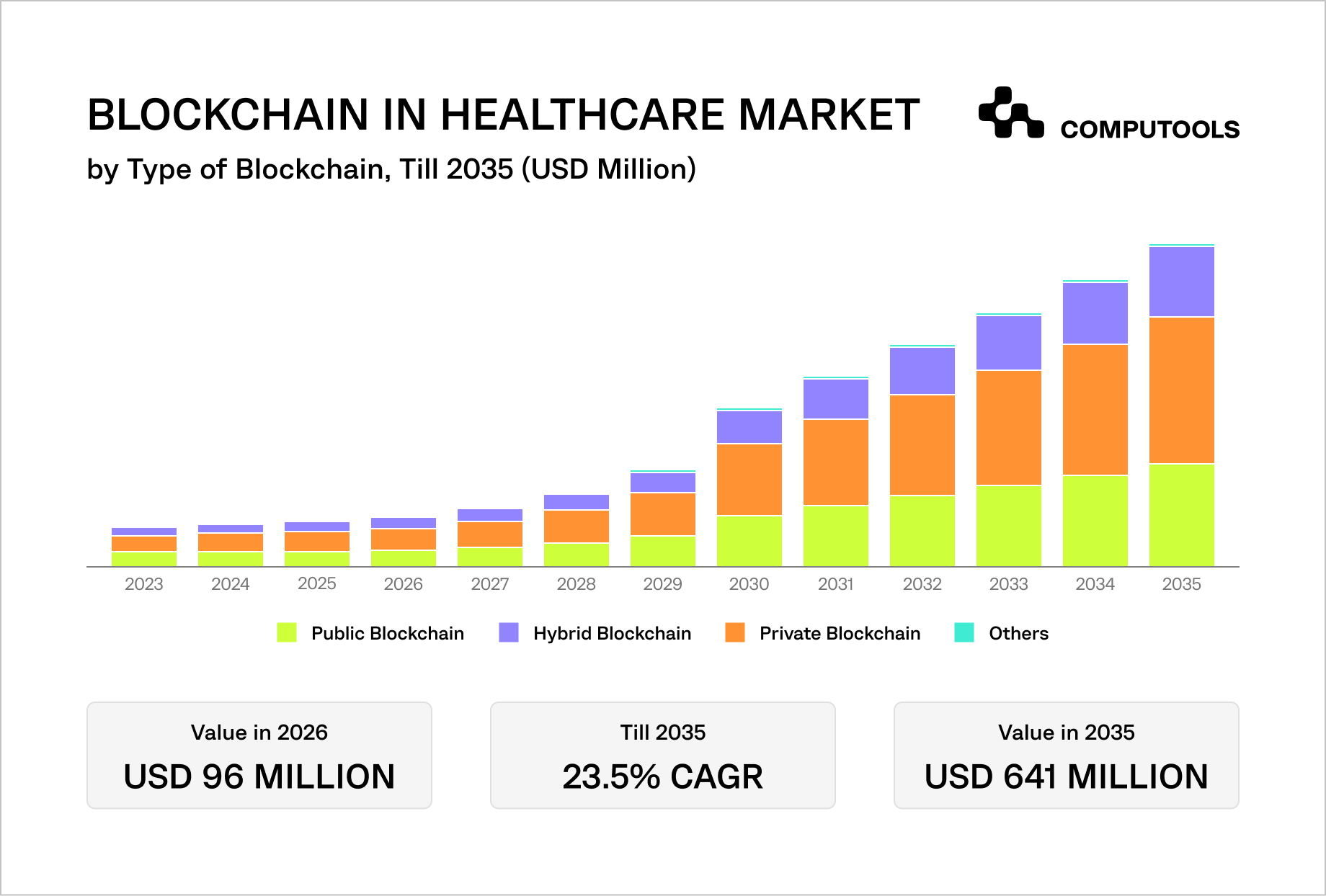
Modern healthcare is rapidly evolving through the adoption of innovative technologies, with blockchain occupying a prominent role. According to analysts, the blockchain technology market in healthcare is expected to grow from USD 67 million in 2025 to USD 641 million by 2035, exhibiting an impressive compound annual growth rate of over 22%.
Additionally, a Statista report highlights that about 55% of healthcare applications will adopt blockchain for commercial deployment by 2026. This rapid growth is driven by blockchain’s ability to significantly enhance the security and privacy of medical data, facilitate seamless interoperability between different systems, and optimize pharmaceutical supply chains.
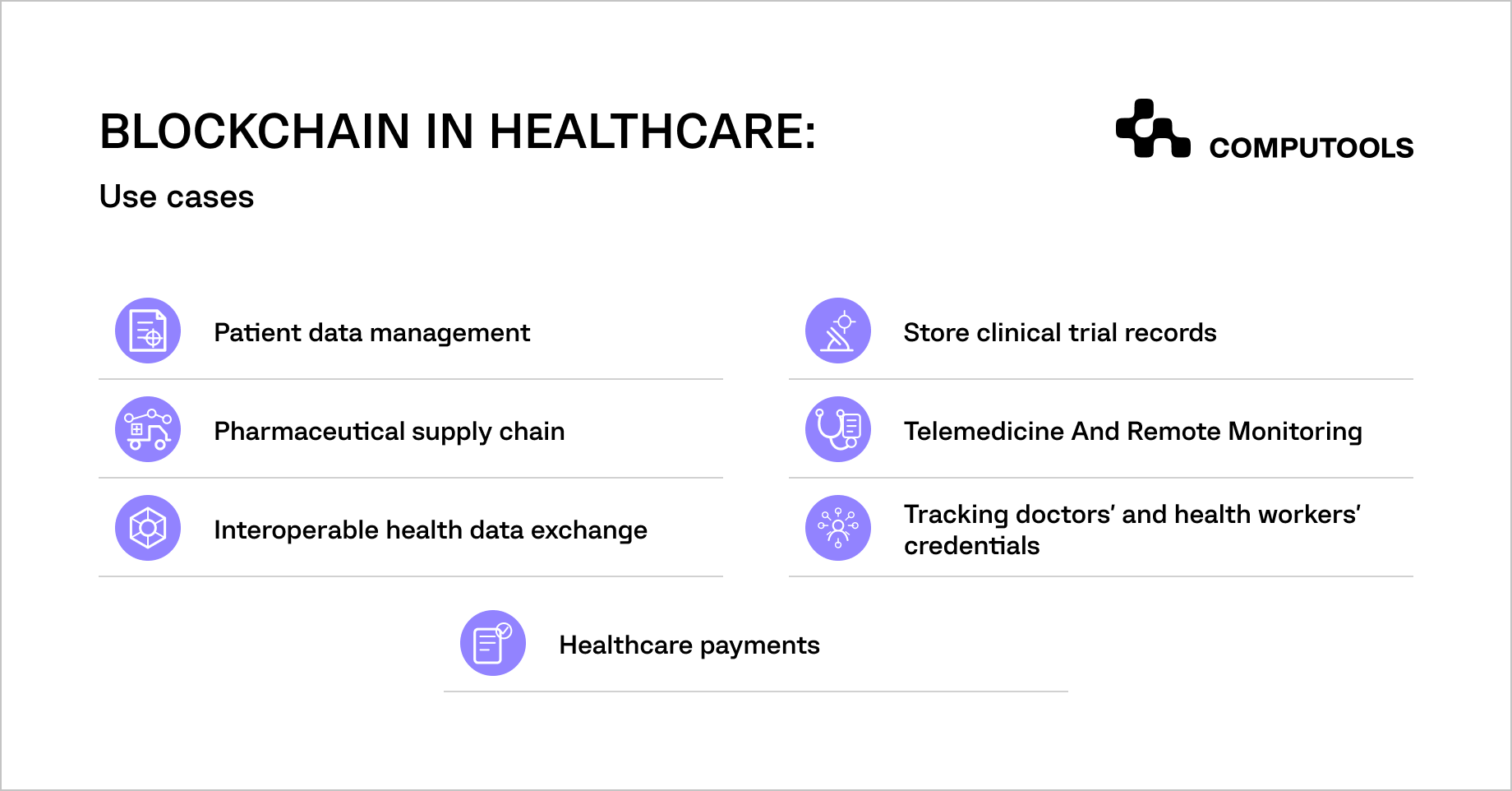
The core use cases include combating counterfeit drugs, enabling clinical data interoperability, and supporting value-based care models. Blockchain ensures enhanced security, process automation, and personalized patient care.
In China, healthcare apps integrated with blockchain features are seeing rapid user growth, with Ping An Good Doctor leading at 21.5 million monthly active users, followed by Haodf and SoYoung.
In the United States, the Healthcare IoT market is also expanding significantly, with projected revenue reaching $33.04 billion by 2026. This reflects the increasing integration of blockchain into digital health solutions and highlights the rising importance of innovation in healthtech software development.
What about others?
Europe is also showing steady growth, with countries actively implementing blockchain to protect medical data, ensure transparency, and improve traceability in supply chains.
The Asia-Pacific region’s growth is driven by strong demand for efficient and transparent healthcare solutions, a growing population, and substantial government and private sector investments in smart technologies.
India, in particular, is experiencing rapid development, with its healthcare market reaching $372 billion in 2023. By 2026, the telemedicine sector is expected to grow to $5.4 billion, while the e-health market is projected to reach $10.6 billion.
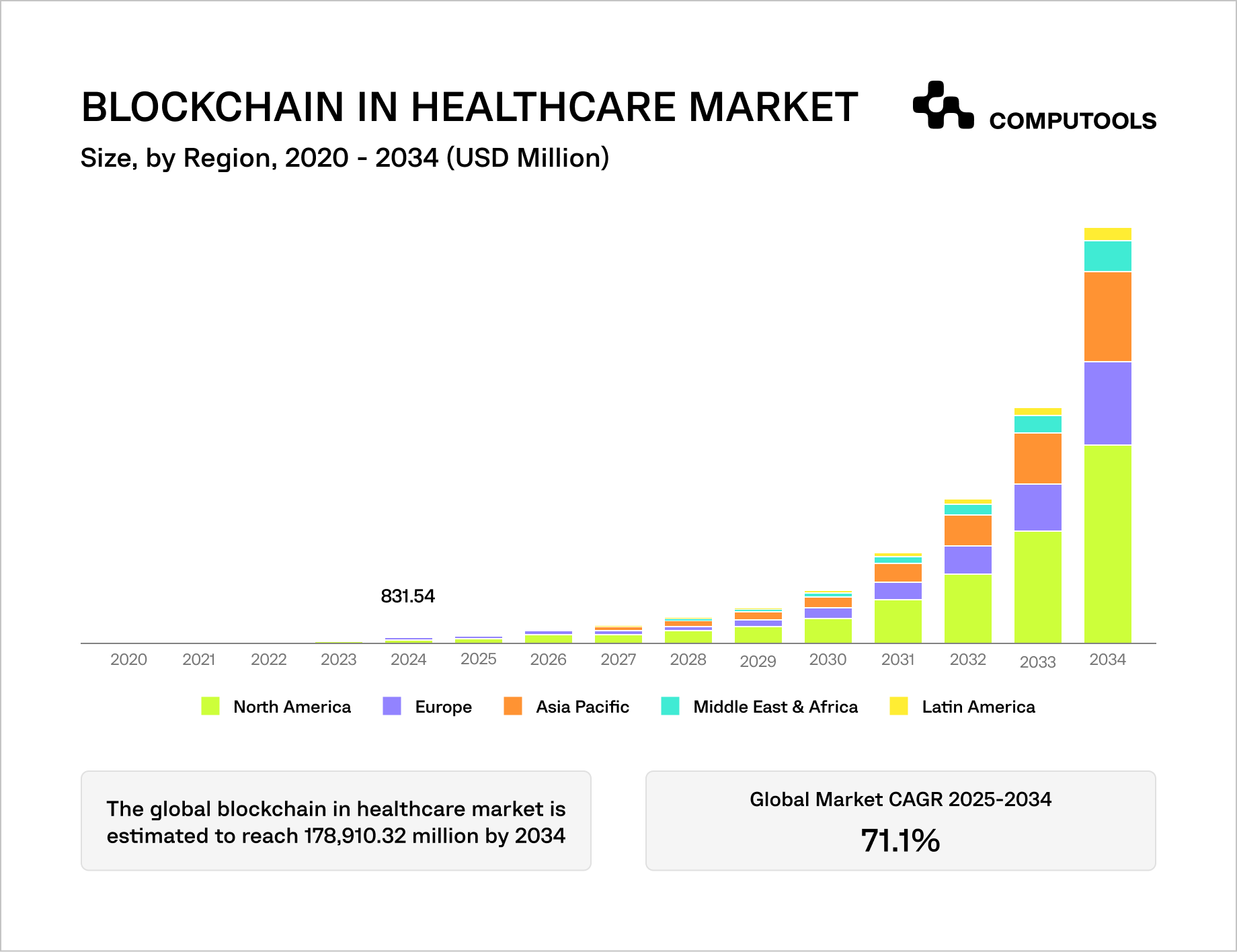
This article will explore key trends and challenges in the blockchain healthcare software development market and the outlook for healthcare app development in the coming years.
Blockchain in healthcare app development: what it can fix and how
HealthTech software development allows medical institutions to modernize operations, ensure data integrity, and improve patient care quality. Blockchain technology is immune to privacy breaches common in traditional methods, where unauthorized access risks exist. It also enables secure real-time data interoperability, reducing administrative inefficiencies.
Let’s explore the key blockchain opportunities for medical institutions in healthcare and real-world implementations that demonstrate the full potential of blockchain in mobile app development.
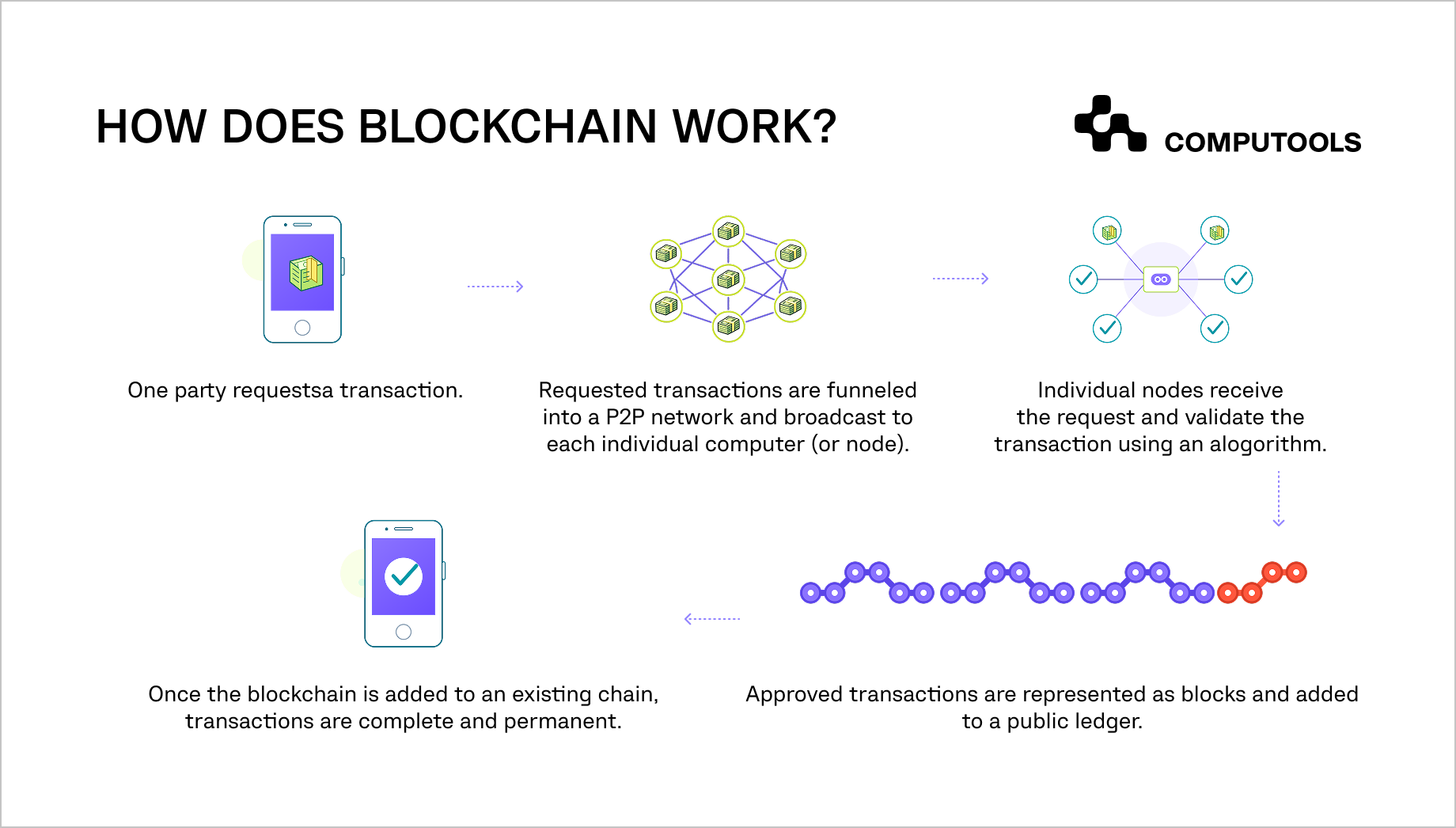
1. Secure electronic health records (EHRs)
Healthcare professionals often lack access to complete patient history due to fragmented data. To solve this, a blockchain-based system is integrated with existing EHR software. The decentralized system securely stores and manages records, providing a unified view of a patient’s medical history. Patients gain the ability to approve changes, control who can view their records, and regulate how they’re shared among healthcare institutions.
This is a powerful example of the use of blockchain in healthcare, enhancing transparency and trust in managing sensitive medical data. For example, Medicalchain is a pioneer in blockchain healthcare, offering a decentralized platform for the secure storage and sharing of medical data. Patients control access to their records, which can be shared with doctors and healthcare providers. The platform tracks data sources to protect patient identities. In 2018, Medicalchain launched telemedicine services via MyClinic.com, allowing patients to consult doctors online and pay using their blockchain-based MedToken.
2. Clinical trial research
Clinical trials and ongoing medical research are vital to healthcare innovation but often face challenges in data integrity. Blockchain is a single source of truth that improves and secures data storage and exchange while maintaining patient confidentiality. The technology also enforces ethical checkpoints to ensure compliance throughout the research process.
Blockchain applications in healthcare can automatically record all changes in clinical trial data using timestamps and audit functions. Smart contracts guarantee compliance with regulations, which is critical for the trial’s reputation and legal integrity. Solutions like Avaneer Health use blockchain to enhance healthcare with secure data management and seamless medical data exchange. Supported by top providers like the Cleveland Clinic and Anthem, it streamlines claims processing and provider directories.
3. Pharmaceutical supply chain management
Counterfeit medicines remain a serious threat in the healthcare sector. Blockchain provides transparency at every stage of the supply chain, ensuring full traceability of medical products. In a field where fake drugs lead to thousands of deaths annually, blockchain helps prevent such risks by verifying authenticity.
4. Verification of medical staff credentials
Blockchain can record and verify healthcare workers’ credentials, like supply chain tracking. Verified records become accessible to other institutions, ensuring transparency and streamlining recruitment and credential sharing. Blockchain securely stores healthcare professionals’ credentials, enabling fast, transparent, and tamper-proof verification. This simplifies onboarding and boosts institutional trust by making verified information accessible to authorized parties. For example, U.S.-based ProCredEx has developed a medical credential verification system using the R3 Corda blockchain protocol.
5. Remote patient monitoring
The rise of wearable sensors allows for real-time remote monitoring of patient vitals, supporting preventative care. Blockchain supports this by enabling encrypted communication and protecting devices from cyberattacks and data tampering. This is where blockchain development services play a key role in boosting security across connected health applications. IoT devices connected to the blockchain platform through special applications transmit secure data on vital signs in real-time. This increases trust in telemedicine and allows for a faster response to changes in patient conditions.
6. Health data interoperability
Patients often see multiple specialists, and accessing unified health records is challenging. Blockchain allows standardized, secure provider data exchange, solving format inconsistency and privacy issues. Developers can create applications where data is transferred between healthcare systems according to common standards (HL7, FHIR) via the blockchain while maintaining its authenticity and compliance with GDPR/HIPAA requirements.
7. Healthcare Payments
Transactions between clinics, insurers, labs, and patients involve sensitive financial data. Blockchain encrypts such data and streamlines payments by eliminating intermediaries, reducing costs, and speeding up the process. Smart contracts on blockchain platforms automate claims processing, reducing administrative costs and eliminating intermediaries. Blockchain also encrypts financial data to minimize fraud. For example, the app can automatically debit funds from an insurance account after receiving confirmation of the service. This speeds up the process and eliminates intermediaries.
With platforms like EncrypGen, healthcare providers and researchers can securely share and monetize genetic data. Gene-Chain ensures anonymity and compliance, expanding access to valuable medical research and innovation datasets.
Learn how to design a HIPAA-compliant AI architecture that ensures secure data handling, regulatory compliance, and scalable healthcare innovation in this expert guide.
As of 2026 and beyond, the blockchain in the healthcare industry is gaining traction among health insurance providers, although the technology is still in its early adoption phase. More insurers are piloting or gradually rolling out blockchain-based solutions to tackle pressing challenges such as fraud, data tampering, and operational inefficiencies. However, large-scale implementation remains limited.
Emerging markets are showcasing successful use cases. A notable example is the AID: Tech-powered blockchain system for Tanzania’s National Health Insurance Fund (NHIF). This initiative represents a breakthrough in African health insurance, demonstrating how blockchain solutions for healthcare can increase security, trust, and transparency across the entire insurance value chain.
The system uses blockchain-based digital identities linked directly to insurance accounts. This prevents unauthorized access and ensures that only verified individuals can claim services. Every transaction, policy issuance, claim, and payout is securely recorded in a decentralized ledger with immutable entries. This tamper-proof structure reduces the risk of cyberattacks and eliminates data manipulation, reinforcing system reliability.
These use cases exemplify how blockchain technology in healthcare markets empowers healthcare institutions to modernize operations, protect sensitive information, and improve patient outcomes. Healthcare software development opens new possibilities for secure, transparent, and efficient medical ecosystems.
Challenges and solutions in implementing blockchain in healthcare apps
Despite all the advantages we’ve discussed, implementing blockchain solutions for healthcare faces several challenges that must be addressed for successful adoption.
1. High implementation risks and costs
Before integrating blockchain technology, healthcare organizations should conduct a thorough cost-benefit analysis and pilot projects to assess the system’s impact. Early evaluation of operational costs and potential savings helps mitigate risks and justify investments. This is a key aspect of blockchain implementation challenges.
2. Limited scalability and data storage
Storing patient medical records in traditional databases while recording data hashes on the blockchain is recommended to handle growing data volumes. This approach allows tracking changes without overloading the network with excessive information. A clear scalability plan is essential to manage data storage and processing efficiently.
3. Data privacy and security concerns
Although blockchain resists many common vulnerabilities, it is not immune to cyberattacks or social engineering. When developing healthcare software solutions based on blockchain, it is crucial to rigorously test security, implement zero-knowledge proofs, and continuously monitor the system to ensure patient data protection.
4. Limited integration with legacy systems
Many legacy healthcare IT systems lack compatibility with blockchain technology. To overcome this, interoperability should be considered from the project’s inception, including developing custom APIs or connectors and updating software to facilitate blockchain integration. Additionally, choosing market-available blockchain platforms that best-fit integration needs is advisable.
5. Data onboarding obstacles
Migrating existing information to a shared ledger can be complex and time-consuming. Ensuring the accuracy and integrity of historical data is an obvious challenge.
6. Usability (UX)
Web3 applications often require users to manage cryptographic keys and navigate complex interfaces. Improving user experience while maintaining a high level of security remains an ongoing challenge.
7. Energy consumption
Proof-of-Work (PoW) algorithms like Bitcoin and Ethereum are energy-intensive. Healthcare organizations aiming for environmental sustainability may consider alternative consensus mechanisms or new blockchain networks (which regularly emerge but most quickly disappear).
8. Lack of education and awareness
There is a shortage of specialized knowledge about blockchain technologies in the industry. Healthcare professionals, administrators, and IT specialists often need additional training to understand and effectively use blockchain solutions.
Overcoming these challenges through targeted education, innovative technology choices, user-centric design, and selecting a reliable development partner is crucial to unlocking the full transformative potential and realizing the key benefits of blockchain technology in healthcare.
Discover the leading healthtech software development companies driving innovation in digital healthcare, telemedicine, AI diagnostics, and patient-centric solutions.

Launch your blockchain-powered healthcare platform in 1–3 months, not years, and eliminate the operational friction slowing patient care and data exchange.
Future of blockchain in healthcare
Despite some challenges, blockchain in healthcare app development holds great potential to transform the industry. In the coming years, its use will likely expand to data analytics, more inclusive clinical trials, asset tokenization, international data sharing, and improved patient engagement.
1. Advanced data analytics and AI integration
With AI and data analytics increasingly applied across healthcare, from diagnostics to prevention, access to comprehensive datasets is crucial. Training AI models on blockchain-stored data enable healthcare institutions to gain valuable insights while protecting patient privacy.
2. Inclusive clinical trials
Blockchain-powered decentralized clinical trials will allow global participation without geographic limits, broadening research opportunities with diverse participants. The technology ensures secure patient consent, immutable data, and trustworthy trial results.
3. Organ tracking
Proven effective in tracking medical supplies, blockchain is naturally suited to monitor organ transplants, aggregating information on sourcing, transport, and transplantation, while promoting trust and ethical compliance.
4. Tokenization of healthcare assets
Healthcare tokenization is expected to accelerate, converting assets like patient data, clinical trials, and medical services into tokens. This will enable secure exchanges on a blockchain, creating transparent and traceable transactions throughout healthcare trials, treatments, and insurance.
5. Cross-border health data exchange
As healthcare globalizes, blockchain will facilitate seamless, secure, and consensual sharing of clinical data across borders, enhancing research, treatment development, and patient care worldwide.
6. Patient engagement
Blockchain solutions will give patients control over their health data, allowing them to grant access via Soulbound tokens (SBT). Smart contracts will automate routine workflows like issuing medical certificates and empowering patients to manage, transfer, and monetize their health records actively.
These trends highlight the vital role of healthcare software and app development, integrating blockchain to create secure, transparent, and efficient medical ecosystems.
Why choose Computools for healthcare projects
To successfully navigate the complexities of blockchain implementation and fully leverage its benefits in healthcare, partnering with experienced and trustworthy experts is essential. That’s where our company comes in as a reliable partner for your healthcare software development needs, helping you build a future-ready business through innovation.
With domain expertise in the healthcare industry we have successfully delivered 50+ healthcare software projects globally, including TransMeds — a comprehensive app designed for transplant patients to manage their medication schedules effectively. This app features immunosuppressant intake scheduling, personalized notifications, gamification elements to boost patient motivation, educational content, detailed medication lists, automated email reminders, dedicated user support, and flexible controls for dosage and timing adjustments.
You can explore our case-studies that demonstrate tailored solutions addressing industry-specific challenges such as data privacy, interoperability, and regulatory compliance. We have successfully delivered projects using our expertise in healthcare development and blockchain.
For instance, in collaboration with Safety Healthcare, we created a user-friendly application leveraging RFID tags and barcodes to track and manage medical equipment. This solution streamlined operational workflows, leading to enhanced clinical results and greater efficiency in medical procedures.
Consider our clients’ testimonials, and clients reviews on Clutch which reflect our commitment to delivering innovative, secure, and efficient blockchain-powered applications that transform healthcare.
Conclusion
In summary, blockchain technology is a powerful tool with far-reaching implications for the healthcare sector. Its primary strengths, enhanced security, transparency, and data governance, are already being explored across various applications. From securing patient records to streamlining clinical trials and preventing counterfeit drugs, blockchain offers innovative solutions to some of the industry’s toughest challenges.
However, despite its promise, the widespread adoption of blockchain in healthcare still faces notable obstacles, including regulatory hurdles, scalability issues, and interoperability concerns. Overcoming these will be critical to unlocking its full potential.
By enabling tamper-proof records and automating workflows through smart contracts, blockchain helps healthcare systems manage growing volumes of patient data, reduce fraud, and improve care coordination. Leading organizations such as Pfizer, AstraZeneca, and the Mayo Clinic are already investing in blockchain, signaling confidence in its continued growth.
As mobile app development continues to evolve in the healthcare space, integrating blockchain will be key to building secure, efficient, and patient-centric solutions for the future.
Explore the key steps to building an efficient clinical documentation system for hospitals, from improving data accuracy and compliance to streamlining workflows and patient care in this practical guide.
Computools
Software Solutions
Computools is an IT consulting and software development company that delivers innovative solutions to help businesses unlock tomorrow.