
THE AUTHOR:

Rail freight moves a massive share of global cargo, yet operational visibility remains surprisingly limited. As logistics networks become more digital, many operators are looking to build railway wagon tracking system solutions that provide real-time location and operational data across rail networks.
Globally, more than 5 million freight rail wagons are in operation, but industry estimates suggest that less than 20% are equipped with telematics or IoT tracking devices, leaving the majority of assets difficult to monitor during transit.
This lack of real-time tracking creates measurable operational inefficiencies. According to rail logistics studies, freight wagons can spend up to 30–40% of their lifecycle idle or waiting in yards, largely because operators lack accurate data on wagon availability and location.
At the same time, shipment delays and coordination gaps across rail networks remain common, particularly when wagons move between multiple operators or across borders.
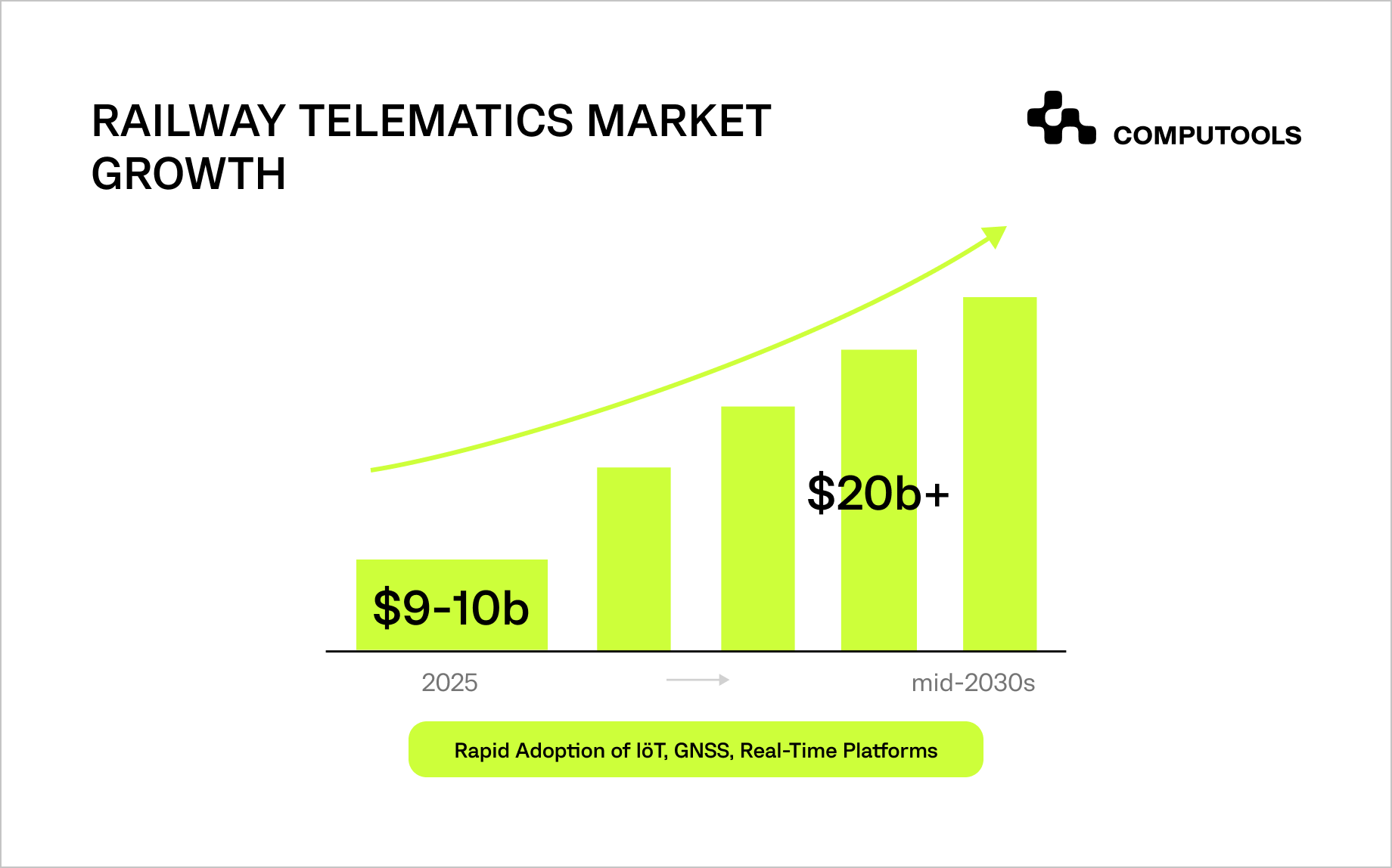
These challenges are becoming more costly as global rail freight demand continues to grow. The railway telematics market was valued at about USD 9–10 billion in 2025 and is expected to exceed USD 20 billion by the mid-2030s, driven by the rapid adoption of IoT sensors, GNSS tracking technologies, and real-time logistics platforms that improve asset visibility and fleet utilization.
To explore how multi-operator logistics ecosystems improve capacity utilization, read How to Develop Capacity Sharing Software for Transportation Networks on our website.
How Computools helped a western european rail operator build a real-time wagon monitoring system
A Western European rail operator partnered with Computools to modernize cargo fleet visibility by implementing a real-time wagon-monitoring platform. The solution combined IoT sensors, streaming data processing, and centralized analytics to give operators continuous insight into wagon location and cargo conditions.
Leveraging our expertise in ground transportation software development, the platform was designed to operate reliably across large rail networks and process high volumes of telemetry data from moving assets.
Before implementation, the operator had no reliable way to monitor wagon location or cargo conditions during transit. Wagons moved across multiple routes and operators, making it difficult to detect safety issues or respond quickly to incidents. Manual inspections were required twice per day to verify key parameters, increasing operational costs and slowing response times. The company needed a digital solution that could continuously monitor wagon fleets and automatically detect potential risks.
Computools engineers developed a real-time tracking platform using sensors installed directly on cargo wagons. These devices collect critical parameters, including location, temperature, pressure, and cargo volume.
The data is transmitted through a secure MQTT-based communication layer to a central platform where it is processed and analyzed. Using our IoT development services, the system enables continuous fleet monitoring and automatically alerts operators when measured values deviate from normal ranges.
The platform includes a centralized monitoring dashboard that allows operators to track wagon movements, monitor cargo conditions, and receive instant alerts. Data is processed using distributed analytics tools to provide real-time insights and historical reporting.
The system architecture was also designed to support advanced analytics modules that can later incorporate predictive models through AI development services.
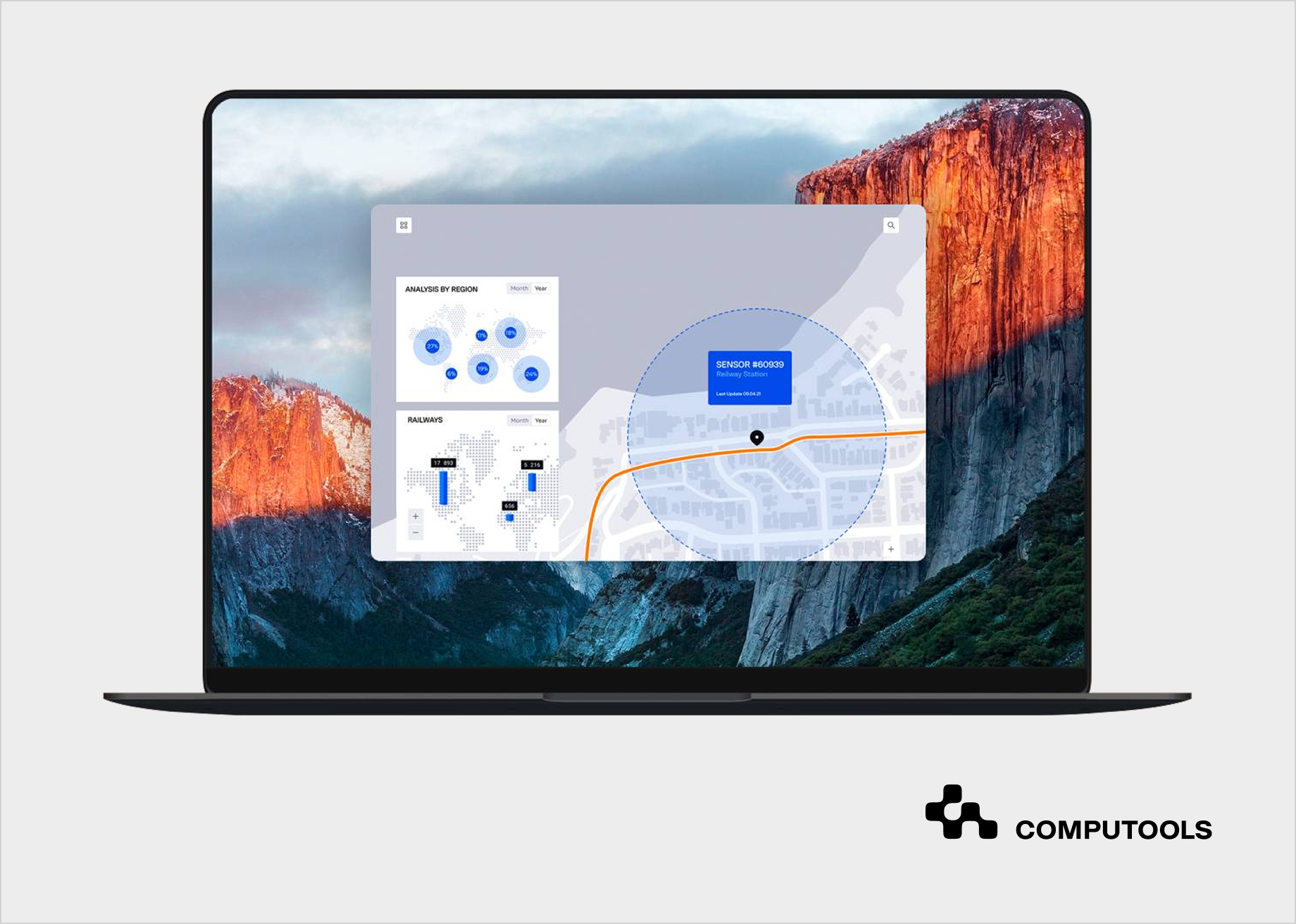
The deployment of the wagon monitoring platform delivered several operational improvements for the rail operator, including:
- 24/7 monitoring of wagon location and cargo safety parameters, including temperature, pressure, and cargo volume.
- Reduced reliance on manual inspections, replacing the previous requirement of two physical checks per day.
- Faster detection of safety deviations, enabling immediate response to potential risks.
- Improved fleet visibility and operational control across the rail network.
- Higher operational efficiency through automated monitoring and faster incident response.
Building on this experience, we will now explain how to build railway wagon tracking system using IoT sensors, outlining the key technologies, software architecture, and development steps required to implement a reliable real-time tracking platform for modern rail logistics.
How to build a real-time railway wagon tracking system using IoT sensors
Building a reliable wagon monitoring platform requires a combination of IoT hardware, scalable data infrastructure, and domain expertise in rail operations. Modern IoT-based railway tracking solutions integrate sensor networks, real-time data processing, and operational dashboards to provide continuous visibility into rail cargo movements and fleet conditions.
Below, we outline the key steps required to design and implement such a system, illustrating each stage with insights from a real project delivered by Computools.
1. Define What Needs to Be Tracked
The first stage of railway wagon tracking system development is to define the operational parameters that the platform must monitor. Rail operators manage complex logistics networks in which wagons travel long distances, often passing through multiple rail operators, terminals, and maintenance hubs. Without clearly defined monitoring objectives, tracking systems risk collecting large volumes of data that provide little operational value.
At this stage, companies identify which operational indicators directly impact safety, cargo integrity, and fleet efficiency. In many rail logistics settings, the system must deliver real-time railway wagon tracking, enabling dispatchers to instantly see the location and condition of cargo wagons in transit.
Nevertheless, location information alone is often not enough. Cargo operators might also require insights into environmental and safety parameters, especially depending on the nature of the goods being transported.
Typical monitoring data include location coordinates, cargo temperature, humidity levels, pressure conditions in tank wagons, shock or vibration events, door-opening events, and load status. These parameters allow operators to detect cargo risks, identify delays, and prevent safety incidents before they escalate.
Equally important is identifying the user roles that will interact with the system. Dispatchers, logistics coordinators, fleet managers, and maintenance teams often require different types of operational data. For example, dispatch teams focus on route visibility and ETA predictions, while maintenance teams rely on equipment condition indicators and anomaly detection.
Another key task at this stage is mapping how the tracking platform will integrate with existing transport systems. Rail operators already use dispatch tools, scheduling platforms, and operational databases, so the tracking system must align with these workflows. Companies that provide logistics software development services often begin with architecture planning and operational analysis to ensure the tracking platform fits naturally into the existing digital ecosystem.
During the Computools project with a Western European rail operator, the first step was to identify the most critical parameters affecting cargo safety and fleet visibility. The client needed accurate wagon positioning along its route network as well as continuous monitoring of cargo conditions.
Together with the client’s engineering team, we defined a monitoring model that included location tracking, temperature, pressure, and cargo volume indicators. These parameters served as the foundation for the monitoring architecture and guided the selection of sensors and system components in subsequent development stages.
2. Select the Right Sensors and Hardware Infrastructure
Once the monitoring requirements are defined, the next step is selecting the hardware to collect operational data. Sensors form the foundation of any IoT sensors for railway logistics architecture because they determine what information the system can capture from moving wagons in real operating conditions.
Freight wagons travel long distances across different climates, infrastructure conditions, and connectivity zones, which means sensor equipment must be highly durable, energy-efficient, and capable of operating autonomously for extended periods.
Hardware reliability is particularly important in rail logistics because devices installed on wagons may remain in operation for years without direct maintenance. Sensors must withstand vibration, dust, humidity, temperature fluctuations, and mechanical stress caused by rail operations. For this reason, industrial-grade IoT devices designed for transportation environments are typically used when building a railway monitoring platform.
At the core of most tracking platforms is GPS tracking for railway wagons, which enables continuous location monitoring as wagons move across the rail network. GNSS modules allow operators to determine exact wagon coordinates, track routes, and estimate arrival times more accurately. This real-time positioning capability significantly improves operational visibility compared to traditional manual tracking methods.
However, location tracking alone rarely provides sufficient operational insight. Depending on the cargo type and safety requirements, operators often need to monitor additional parameters. Temperature and humidity sensors are commonly used to monitor sensitive cargo such as food products, chemicals, and pharmaceuticals.
Pressure sensors are critical for tank wagons transporting liquids or gases. Vibration sensors help detect shocks or abnormal movement that may indicate potential damage during transport. Door sensors can detect unauthorized access to cargo compartments and immediately notify operators.
Another important aspect of hardware design is power management. Many railway IoT devices rely on long-life batteries designed to operate for several years. Efficient data transmission protocols and low-power sensor modules help minimize energy consumption while maintaining reliable monitoring capabilities.
In the Computools project, sensors were installed directly on cargo wagons to capture key operational and safety parameters. The system collected location data together with temperature, pressure, and cargo volume indicators. This sensor network provided continuous telemetry from moving wagons, allowing the operator to monitor fleet activity and cargo conditions across its entire rail network in real time.
For a broader view of how connected tracking technologies transform transport operations, read IoT in Fleet Management: How Tracking Systems Redefine Logistics Operations on our website.
3. Build a Reliable Data Transmission Layer
Once sensors begin collecting operational data, the next challenge is ensuring that this information is transmitted reliably from moving wagons to the central platform. Connectivity plays a critical role in rail cargo tracking using IoT, because freight wagons travel across long routes, often passing through rural areas, tunnels, or cross-border rail networks where network coverage can vary significantly.
To maintain stable communication, railway tracking platforms typically rely on a combination of connectivity technologies. Cellular networks such as 4G or 5G are commonly used where coverage is available, while LPWAN technologies or satellite communication can support routes with limited infrastructure. The system must also be able to buffer data locally when connectivity temporarily drops and transmit it once the connection is restored.
Another key component of this layer is the communication protocol used to transfer telemetry data. Lightweight protocols such as MQTT are widely used in transportation IoT systems because they allow devices to transmit data efficiently while minimizing bandwidth usage and power consumption. This is especially important for battery-powered sensors installed on freight wagons that must operate for long periods without maintenance.
A properly designed transmission layer ensures that data flows continuously from sensors to the central platform, allowing operators to maintain full operational visibility and respond quickly to potential risks.
In the Computools project, sensor data was transmitted through a secure MQTT-based communication layer designed for high reliability and efficient data exchange. The system delivered wagon telemetry to the central monitoring platform in real time while maintaining stable performance, even as connectivity conditions fluctuated along rail routes.
4. Build a Scalable Data Processing Platform
Once telemetry data from wagons begins to arrive, the next step is to build a platform capable of receiving, processing, and storing large volumes of operational data. At the core of a smart railway asset tracking system architecture is a centralized environment where incoming sensor signals are analyzed and transformed into actionable operational insights.
Rail fleets generate a continuous stream of telemetry events, especially when hundreds or thousands of wagons are equipped with sensors. The system, therefore, needs a scalable data pipeline capable of ingesting high-frequency signals, processing them in real time, and storing historical records for analytics and reporting.
Modern platforms typically rely on distributed processing frameworks, streaming technologies, and flexible cloud data storage systems that can adapt to changing operational loads.
In addition to real-time processing, the platform must support alert generation and rule-based monitoring. For example, if a sensor reports abnormal temperature, pressure, or cargo conditions, the system should immediately detect the anomaly and trigger alerts. These capabilities allow operators to react quickly to operational issues rather than discovering them during delayed manual inspections.
A well-designed architecture also prepares the platform for future expansion. Historical telemetry data can later support predictive analytics, fleet optimization, and maintenance forecasting. As railway operators increasingly rely on digital infrastructure, the ability to scale data processing capabilities becomes a critical factor in long-term system performance.
In our case, the central platform was designed to collect telemetry from sensors installed on cargo wagons and process it in real time. Using technologies such as Apache Spark for distributed data processing and MongoDB for flexible data storage, the system analyzed incoming signals and generated alerts when safety parameters exceeded defined thresholds.
This architecture allowed the operator to maintain continuous visibility into fleet operations while efficiently managing large volumes of sensor data.
5. Develop a Real-Time Monitoring Dashboard
Once the platform can process incoming telemetry, the next step is turning raw data into a clear operational view for dispatchers, logistics teams, and fleet managers. This is where the system begins to function as a railway asset tracking platform, providing operators with a single interface to monitor wagon movements, cargo conditions, and safety events in real time.
A practical dashboard should do more than show wagon coordinates on a map. Operators need to see current status, movement history, sensor readings, route progress, and active alerts in one place. The interface should help teams quickly understand which wagons are moving normally, which are delayed, and which require immediate attention due to abnormal conditions. If the dashboard is overloaded or poorly structured, even high-quality telemetry loses much of its operational value.
This layer is also essential for real-time rail logistics monitoring, as rail operations involve multiple stakeholders who require varying levels of visibility. Dispatchers may focus on fleet movement and routing, while cargo operators need data on load conditions and safety thresholds. Maintenance teams may need access to alerts for abnormal pressure, vibration, or recurring operational deviations. A well-designed dashboard supports all of these workflows without forcing users to navigate fragmented systems.
The monitoring interface should also support historical views and reporting. Real-time data is critical for immediate decisions, but operators also need access to past events to analyze delays, recurring incidents, and fleet utilization patterns. This helps companies move from simple visibility toward more structured operational improvement.
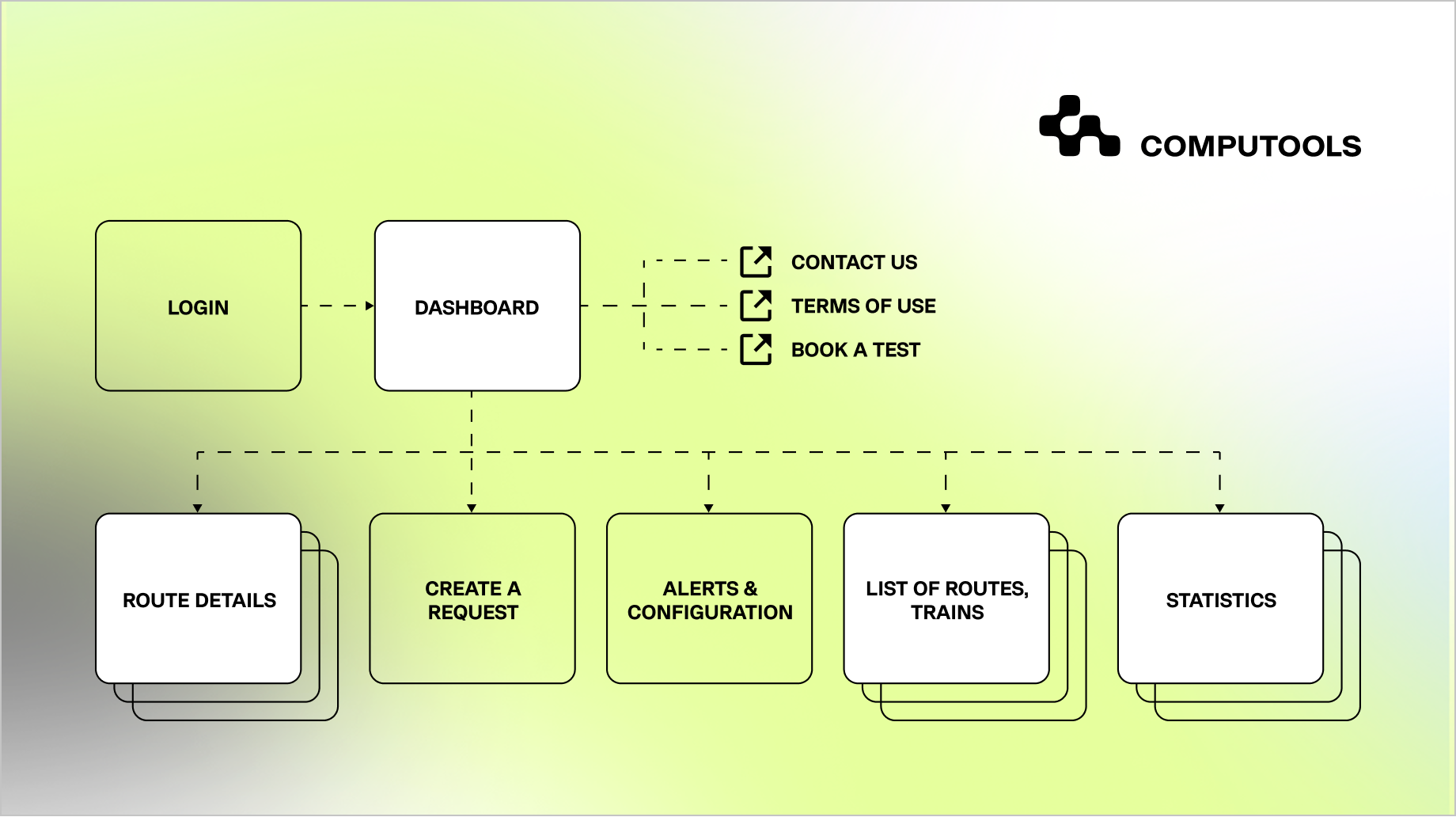
In the Computools project, we built a centralized monitoring interface that allowed operators to track wagon positions, monitor cargo parameters, and receive instant alerts about deviations from normal values. The dashboard provided the client with continuous visibility into fleet activity and enabled quick response to incidents across the rail network.
6. Add Alerts and Automated Response Logic
A tracking platform becomes far more valuable when it not only displays data but also reacts to it. This is where IoT freight wagon monitoring system capabilities move from passive visibility to active control. Instead of waiting for dispatchers or inspectors to notice a problem, the system should automatically detect abnormal conditions and notify the right teams immediately.
In railway operations, even small deviations can lead to larger operational or safety issues if not addressed promptly. A sudden pressure change in a tank wagon, an unexpected rise in temperature, unusual vibration, or unauthorized door opening may all require immediate action. Automated alert logic helps operators respond faster, reduce manual oversight, and prevent minor incidents from escalating into service disruptions or cargo losses.
To make alerts useful, the system should be configured around clear operational rules. Not every data fluctuation should trigger a notification. Thresholds must be based on cargo type, wagon type, route conditions, and safety requirements. Alerts can also be prioritized by severity, allowing operators to distinguish between informational warnings and events that require urgent intervention.
This step is also important for companies that want to build railway wagon tracking system solutions that scale well across large fleets. As the number of connected wagons grows, teams cannot manually monitor every data stream. Automated response logic enables managing high volumes of telemetry while keeping human attention focused on the most critical events.
In the Computools project, the platform automatically generated alerts whenever monitored parameters such as temperature, pressure, or cargo volume deviated from predefined ranges. This allowed the rail operator to detect potential safety issues more quickly, reduce reliance on manual checks, and improve reaction times across its cargo fleet.
7. Integrate the Tracking Platform with Operational Systems
To deliver full operational value, the tracking solution must operate within a broader digital ecosystem rather than as an isolated monitoring tool. Integration is a critical stage in Industrial IoT in railway transportation, where telemetry data from wagons is combined with dispatch systems, logistics platforms, and maintenance tools to support daily operational decisions.
Rail operators typically manage complex digital infrastructure, including scheduling systems, cargo management tools, and dispatch platforms. If tracking data remains disconnected from these systems, operators must manually transfer information between platforms, reducing efficiency and increasing the risk of errors. By integrating the tracking platform with existing operational systems, telemetry data can automatically support route planning, cargo monitoring, and incident management.
This integration layer also plays an important role in railway fleet management software, where tracking data helps operators better understand fleet utilization and wagon availability. When dispatch teams can see the real-time location and condition of assets within their existing logistics tools, they can plan routes more efficiently, reduce idle time, and improve coordination across terminals and rail networks.
Another benefit of integration is improved data consistency across the organization. Instead of multiple teams relying on separate information sources, the tracking platform serves as a shared operational data layer, feeding accurate, real-time insights into various enterprise systems.
In the Computools project, the wagon monitoring platform was designed to integrate with the client’s existing digital infrastructure. This allowed sensor data from wagons to support operational workflows, such as cargo monitoring and fleet oversight, while ensuring real-time telemetry could be used directly within the operator’s broader logistics management environment.

Launch your real-time railway wagon tracking system in 1–3 months instead of years, gain end-to-end wagon visibility, accurate location tracking, and real-time operational control.
8. Prepare the System for Scaling and Analytics
Once the core platform is operational, the next step is preparing the system for long-term growth and data-driven optimization. A modern smart freight wagon tracking technology platform should not only monitor wagons in real time but also support large-scale data processing as the number of connected assets increases.
Rail operators often begin with pilot deployments involving a limited number of wagons. However, as the system proves its value, fleets may scale to hundreds or thousands of connected units. The platform architecture must therefore support high data volumes, distributed processing, and flexible storage capable of handling continuous telemetry streams.
Scalable infrastructure also allows operators to extract more value from collected data. Historical telemetry can be used to analyze route efficiency, identify recurring operational disruptions, and understand how wagons are utilized across the network. Over time, these insights help operators improve scheduling, reduce idle fleet capacity, and optimize cargo flows.
Another important advantage of scalable architecture is the ability to introduce advanced analytics capabilities. With sufficient data, rail operators can begin implementing predictive maintenance models, anomaly-detection algorithms, and performance-optimization tools. These capabilities help transform tracking platforms from simple monitoring tools into strategic operational intelligence systems.
In the Western European rail operator project, the platform architecture was designed with scalability in mind from the start. The system processes continuous telemetry streams from sensors installed on wagons and stores historical data that can later support analytics and predictive operational insights.
To see how digital logistics platforms are evolving across adjacent transport segments, read Top 20 Air Freight Management Software Development Firms on our website.
9. Deploy the System and Validate Performance
Before full-scale rollout, the platform must be tested in real operating conditions. Railway environments are complex: wagons travel long distances, traverse areas with unreliable connectivity, and operate under heavy mechanical stress. For this reason, pilot deployments are typically conducted to validate sensor performance, data transmission reliability, and overall system stability.
During this phase, operators evaluate how accurately the platform delivers location data, sensor readings, and alerts across different routes. Software testing also helps identify integration issues with existing dispatch or operational systems. Pilot programs usually involve a limited number of wagons operating on selected routes.
This allows software engineering teams to refine sensor calibration, optimize connectivity settings, and verify alert thresholds before scaling the system to the entire fleet.
In the Computools project, the monitoring platform was first deployed on a limited number of cargo wagons. This allowed the team to validate telemetry collection, test alert functionality, and ensure stable system performance before expanding the deployment across the client’s fleet.
10. Ensure Security and Device Management
As fleets become connected through IoT railway infrastructure, security and device management become essential parts of the system architecture. Each sensor installed on a wagon becomes a connected endpoint that must be authenticated, monitored, and protected against unauthorized access.
Secure communication protocols, encrypted data transmission, and access control mechanisms help ensure that operational data remains protected. At the same time, device management tools allow operators to monitor sensor status, update firmware remotely, and manage large numbers of connected devices across the fleet.
A robust security and device management layer helps operators maintain system reliability while protecting critical logistics data. As railway operators continue adopting connected technologies, secure infrastructure becomes a fundamental requirement for sustainable digital rail operations.
In the Computools solution, secure communication protocols and controlled access to telemetry data ensured that operational information from wagons could be transmitted and processed safely within the monitoring platform.
Why choose Computools to build railway wagon tracking system
Building a railway monitoring platform involves more than just setting up sensors and dashboards. Operators must manage telemetry from moving assets, ensure reliable data transfer over fragmented infrastructure, and maintain real-time visibility across thousands of kilometers.
Our approach to building a railway wagon tracking system platform combines IoT architecture design, real-time data processing, operational workflow modeling, and data engineering services to manage large volumes of telemetry generated by connected rail assets.
We design integrated monitoring environments that leverage telemetry, alerts, and fleet analytics to support real operational decision-making across dispatch, cargo monitoring, and safety control.
Our logistics engineering experience includes several complex transportation platforms. For a Western European rail operator, we implemented an IoT-based wagon monitoring platform with sensor-driven cargo tracking and MQTT-based telemetry transmission.
In the Navis Horizon project, we built a real-time cargo visibility platform that reduced manual dispatch operations by 40% and improved incident resolution time by 18%.
For LOCARGO, we developed a B2B freight marketplace that integrates IoT-based fleet visibility with route-optimization algorithms.
In the EquipShare project, we created a blockchain-powered fleet-sharing platform that improved vehicle utilization across logistics partners.
With 250+ engineers and 400+ delivered projects, Computools develops scalable transportation platforms that operate under ISO 9001 and ISO 27001 standards and comply with GDPR and HIPAA requirements.
Contact our team to discuss your railway tracking platform project at info@computools.com.
To sum up
Real-time visibility is essential in modern rail logistics. As fleets expand and supply chains rely more on data, operators require reliable systems to continuously monitor wagon locations, cargo conditions, and operational risks.
Integrating IoT sensors, secure data transmission, scalable analytics, and intelligent dashboards enables companies to build wagon-tracking systems that improve fleet utilization, reduce safety risks, and accelerate decision-making.
When properly designed, these systems transform traditional rail operations into connected logistics environments, where real-time data supports dispatch, maintenance, and cargo monitoring throughout the rail network.
Computools
Software Solutions
Computools is an IT consulting and software development company that delivers innovative solutions to help businesses unlock tomorrow.