
THE AUTHOR:

The U.S. marinas industry was valued at $7.7 billion in 2025, with a slight 0.2% decline in market size that year and a -0.2% CAGR between 2020 and 2025. At the same time, the global marinas market was estimated at $10.49 billion in 2024 and is projected to reach $16.28 billion by 2034, with an expected 5% CAGR.
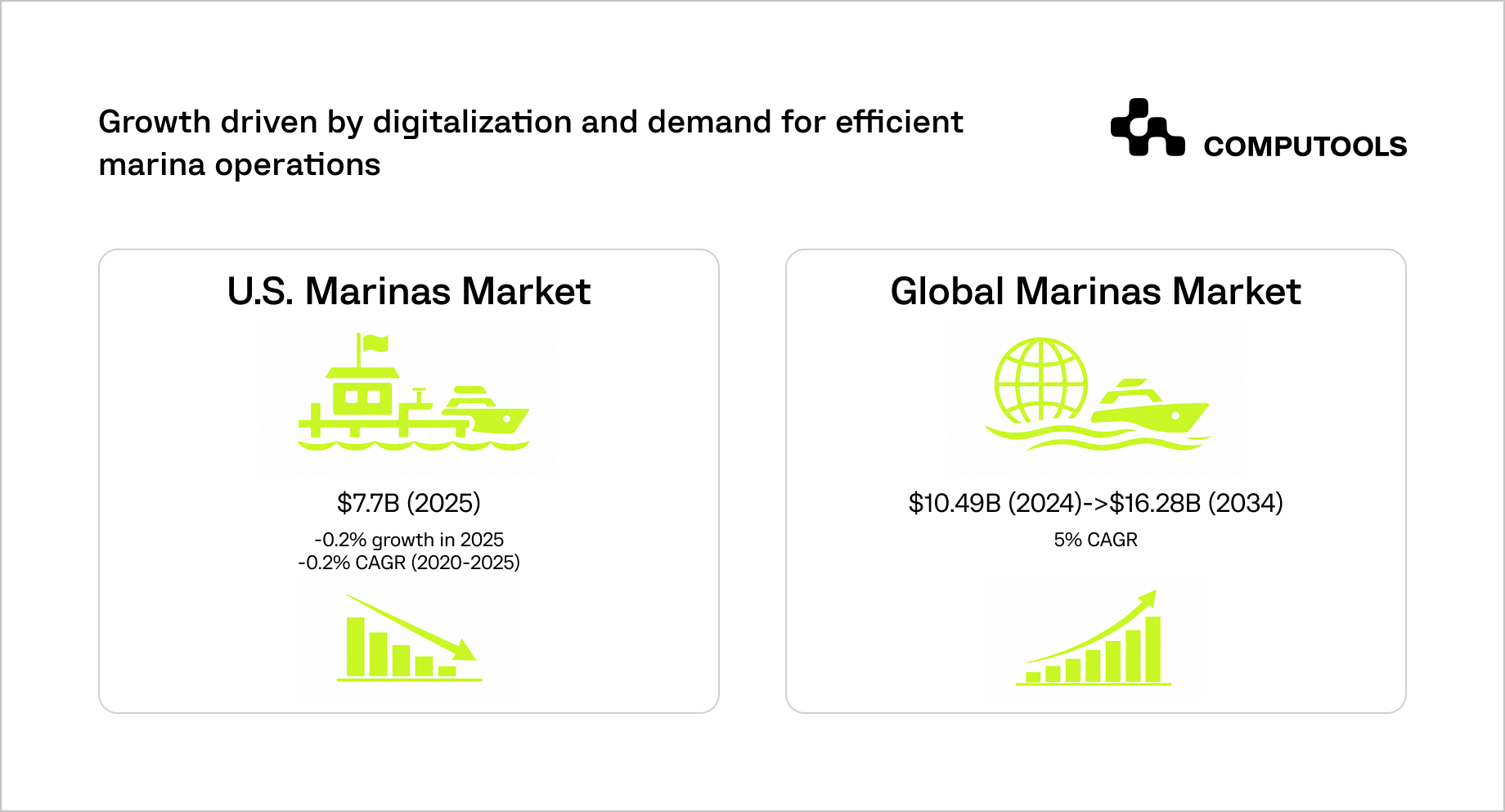
For operators planning to develop boat slip management software, these numbers point to a structural issue: marina growth depends on how efficiently operators use existing slips, staff time, and booking data. Slip availability is finite, while demand fluctuates across seasons, vessel types, and events. Without precise allocation and visibility, even high-demand marinas lose revenue through underutilized berths and operational delays.
The core issue is operational fragmentation, with reservations, vessel specs, berth assignments, pricing, and payments managed across disconnected tools. This causes double bookings, inefficient slip allocation, slow responses, and poor occupancy and revenue visibility. A centralized slip management system integrates these layers, enabling marinas to control capacity, automate allocation, and respond to demand in real time.
How Computools implemented a marina management solution
Computools applied its experience in maritime software development services to build the HubMarine platform for an Israeli startup serving boat owners, marina operators, and harbor authorities. The client needed to improve vessel placement, berth booking, navigation, and communication between boat owners, staff, and port authorities. Existing systems did not meet these operational requirements, especially where private vessel data, sailing history, and real-time marina visibility were involved.
We developed boat dock management software that integrated vessel data, berth planning, custom maps, and operational workflows into a single platform. The solution integrated with Automatic Identification Systems to capture vessel information and used machine learning to support more accurate space allocation. Marina staff could check vessel parameters, permits, sailing history, vessel type, and mooring location through a clearer interface designed for day-to-day operations.
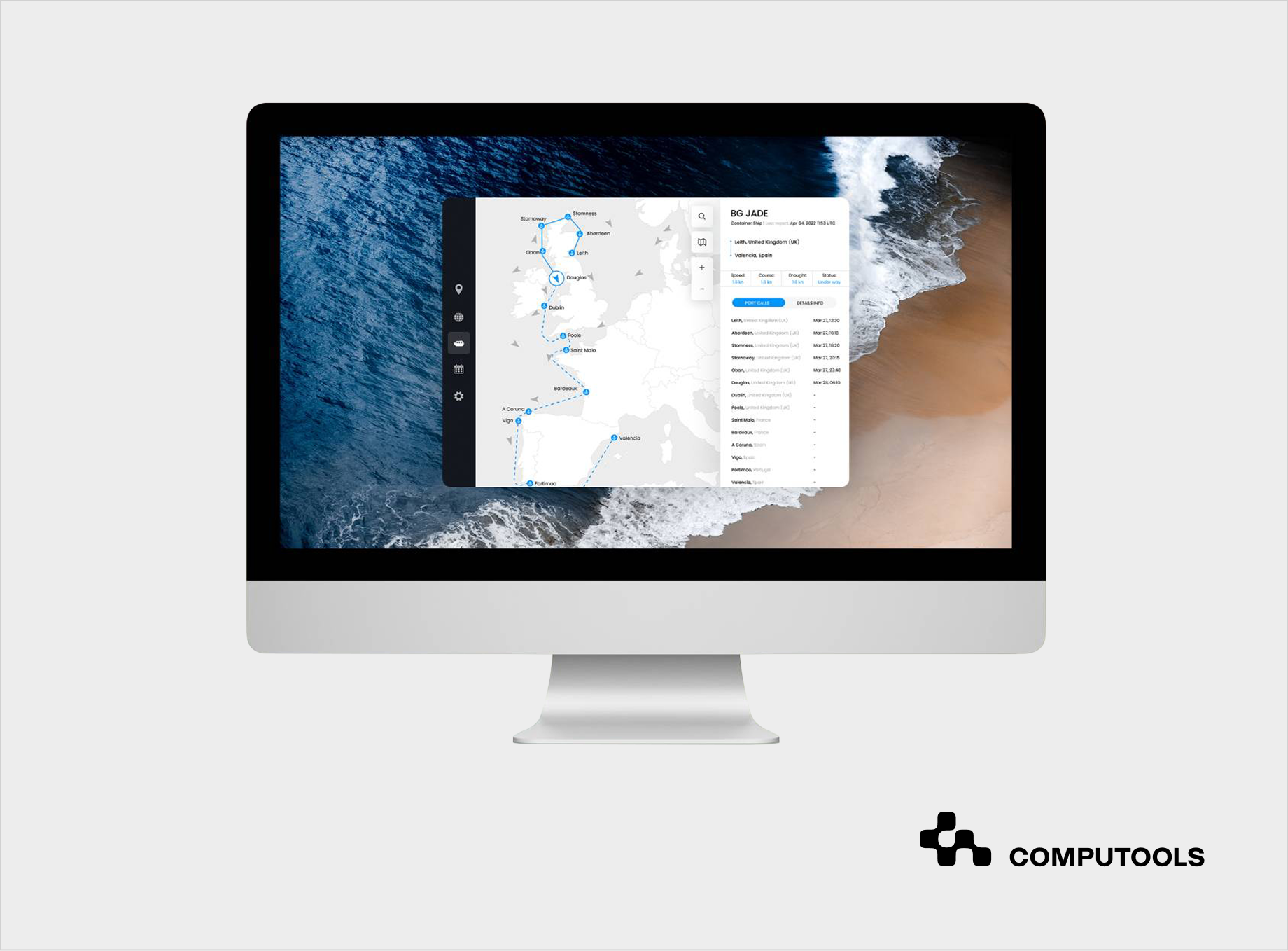
As a result, the platform reduced time spent on communication and berth pre-booking by up to 75% and improved transparency across marina operations.
For boat owners, the system made it easier to book the right location. For marina operators, the custom boat slip reservation system helped use available resources more efficiently, reduce manual coordination, and make vessel placement decisions based on structured operational data, not assumptions.
How to develop a boat slip management system for marinas and yacht clubs: 10 steps
To develop boat slip management software for yacht clubs, start by understanding the operational logic for each berth. Slip allocation depends on berth dimensions, vessel parameters, membership rules, contract types, utility access, staff workflows, and real-time occupancy. These factors define how the system should manage capacity, confirm reservations, and support daily marina operations.
Our work on HubMarine showed that a reliable platform requires a connected foundation: marina infrastructure, vessel data, reservation rules, and operational coordination, all working in one system.
Step 1. Map marina infrastructure and operating constraints
Before reservation logic can work, the platform needs a precise digital model of the marina. This model should include docks, zones, individual slips, berth dimensions, water depth, utility access, service availability, access rules, and restrictions by vessel type.
It should also reflect how the marina actually operates: which slips are reserved for long-term members, which are available to transient boaters, which require staff confirmation, and which are suitable only for specific vessel sizes or service conditions.
When teams develop boat slip management software, this infrastructure layer serves as the foundation for all subsequent functions. A marina cannot rely on a simple “available/occupied” status if placement depends on LOA (Length Overall), beam, draft, electrical capacity, water access, dock location, arrival time, and contract type. Without this structure, the system may show a slip as available while it is unsuitable for the incoming boat, leading to manual corrections, delays, double-handling, and poor use of limited dock space.
In the HubMarine project, we built this structural layer to support vessel placement, berth booking, and marina navigation. The platform had to help marina operators see where boats could be placed and which operational factors supported each placement. Berth characteristics were linked to vessel parameters, sailing history, permits, and mooring location data, providing staff with a clearer basis for allocation and reducing the need for repeated checks before confirmation.
The output of this step should be a reliable berth model that can support booking, allocation, pricing, navigation, and reporting. Once the marina infrastructure is mapped correctly, the system can match vessels with suitable slips, flag conflicts before confirmation, show realistic availability, and prepare the platform for real-time tracking, staff coordination, and future optimization
Step 2. Build vessel and customer profiles as the allocation data layer
Slip allocation depends on how precisely the system understands both the vessel and the customer behind the booking. The platform should store structured vessel data, including LOA, beam, draft, vessel type, registration details, and technical constraints that affect berth compatibility. Alongside this, customer profiles should capture membership status, contract type, service requirements, historical stays, and behavioral patterns such as preferred locations or seasonal usage.
For yacht clubs, the risk is higher because the platform has to account for member priority, seasonal contracts, guest access, transient stays, service entitlements, and approval workflows. Members, long-term contract holders, and transient boaters follow different booking priorities, pricing conditions, and approval flows. Without this separation, the system cannot consistently enforce allocation logic, leading to manual overrides, booking conflicts, and inefficient use of slips.
In the HubMarine project, the client needed access to private vessel information that was not usually publicly available. We integrated the platform with Automatic Identification Systems (AIS), enabling marina staff to access vessel parameters, permits, sailing history, vessel type, and mooring location in a single operational environment.
This profile layer also enables further system capabilities. Allocation can be automated based on compatibility rules, conflicts can be detected before confirmation, and pricing logic can be applied according to vessel size, stay duration, and customer category. It also supports operational workflows such as arrival planning, service assignment, and communication with boat owners.
When correctly implemented, the system shifts from basic reservation handling to controlled berth allocation, where each booking is assessed against real constraints and rules, not processed as an isolated request.
Step 3. Design reservation rules and berth allocation logic
Reservation logic must reflect how the marina actually operates across daily, seasonal, and long-term scenarios. The system should define which slips can be booked instantly, which require staff approval, which are reserved for members, and how transient bookings are handled during peak demand. It also needs to manage arrival and departure dates, minimum stay rules, seasonal contracts, cancellations, waiting lists, no-shows, and last-minute changes.
A boat slip booking software layer should go beyond a simple availability calendar. Each booking has to be evaluated against vessel parameters, berth constraints, customer status, contract type, service needs, and future reservations. The platform should recommend suitable slips, block incompatible options, and flag cases where one confirmed booking may create conflicts later in the schedule.
In the HubMarine project, this logic was central to reducing manual coordination before booking. Vessel placement and berth booking were supported by structured operational data: vessel parameters, permits, sailing history, vessel type, and mooring location. Staff could review the relevant constraints in a single interface instead of checking each request through separate calls, messages, or disconnected records.
The allocation layer also protects capacity and revenue. Assigning a small boat to a large slip may solve one request, but it can block a better-fit vessel during peak demand. The system should consider berth size, stay duration, customer priority, upcoming reservations, and expected occupancy before confirming placement. This helps marina operators reduce wasted capacity and avoid manual reshuffling after a booking is already approved.
For boat owners, clear reservation rules create a more predictable experience. They can see realistic availability, understand confirmation conditions, and receive faster responses. For marina teams, the same logic reduces repeated checks, prevents avoidable conflicts, and keeps allocation decisions consistent across staff members.
Step 4. Build real-time berth visibility and operational control
Slip allocation remains accurate only when the system reflects actual dock conditions. Reservations, arrivals, delays, early departures, service requests, and berth usage change throughout the day. A static “booked/available” status cannot support this level of movement, because staff need to understand what is planned, what is happening now, and where action is required.
A real-time operational layer should show current occupancy, expected arrivals, assigned slips, vessels already at the dock, slips under preparation, delayed departures, and available capacity. In a yacht club marina management system, this view should also reflect member reservations, guest access rules, long-term slip holders, and staff responsibilities. The goal is to give operators one reliable place to check the marina’s current state and adjust plans before small inconsistencies turn into booking conflicts or arrival delays.
In the HubMarine project, we implemented a marina map that displayed vessel type and mooring location, supported by AIS integration for vessel movement and history. This allowed staff to connect reservation data with actual dock conditions and navigate placement decisions with better context. The platform improved transparency across marina operations and reduced the time spent on communication and pre-booking coordination by up to 75%.
This layer is especially important during peak periods. Several boats may arrive close together, one vessel may leave later than planned, another may require a specific utility connection, and staff may need to prepare or reassign slips quickly. With real-time berth visibility, operators can respond to the actual situation rather than manually rebuild the plan from calls, messages, and fragmented records.
The output of this step is operational control: fewer surprises at arrival, faster staff decisions, more accurate availability, and better alignment between confirmed reservations and physical dock usage.
Real-time dock visibility is part of a broader shift toward operational automation across the transport sector. The same logic is already changing how carriers manage dispatch, routing, tracking, and delivery execution in Trucking Operations Are Shifting to AI: What Carriers Need to Know.
Step 5. Implement pricing, contracts, and billing workflows
Revenue control in marinas depends on how accurately the system connects berth usage with pricing and financial terms. The platform should support rate rules based on vessel size, stay duration, seasonality, berth location, utility access, and additional services. It also needs to handle long-term agreements, seasonal allocations, member rates, transient bookings, deposits, penalties, cancellation terms, and contract renewals.
Pricing should work together with allocation logic. A large slip assigned to a small vessel during peak demand can reduce potential revenue, while an untracked service request can disappear from the final invoice. The system should calculate charges from confirmed bookings, actual stay duration, service usage, and contract terms, so marina teams do not have to rebuild invoices from notes, messages, and spreadsheets.
In yacht clubs, billing can become more complex because a single customer may combine several commercial relationships with the marina: membership fees, seasonal berth contracts, guest passes, maintenance services, storage, utilities, and event-related access. The platform should clearly separate these charges while still keeping them linked to the same customer and vessel profile. This helps staff see what has been booked, what has been used, what has been paid, and what still needs approval.
In the HubMarine project, structured vessel data and clearer berth visibility created a stronger basis for commercial control. When vessel parameters, mooring locations, permits, and stay information are available in a single system, marina teams can reduce billing disputes and avoid duplicate checks before invoicing.
The result is boat slip tracking and billing software that keeps reservations, usage, and revenue aligned. Marina teams can track occupancy, adjust charges when plans change, generate invoices more accurately, manage recurring contracts, and reduce revenue leakage caused by manual billing gaps.
Step 6. Connect marina operations with logistics and service workflows
A confirmed slip reservation triggers more work than a berth assignment. Marina teams need to prepare the dock, check utility access, coordinate arrival time, update staff tasks, manage service requests, and keep boat owners informed. These actions depend on timing, vessel parameters, berth location, staff availability, and current dock conditions.
Experience in logistics software development services helps structure this workflow because marina operations also depend on limited space, time-sensitive movement, resource availability, and clear task ownership. The system should connect each reservation with operational tasks: dock preparation, fuel or utility setup, maintenance checks, cleaning, security review, and arrival support. Staff need to see what is planned, what is delayed, and what requires action, without having to rebuild the schedule from calls and messages.
In the HubMarine project, the platform improved communication between boat owners, marina operators, and harbor authorities by centralizing vessel data, mooring information, and booking context.
A connected workflow also reduces conflicts after confirmation. Early arrivals, delayed departures, maintenance changes, and service requests can affect slip availability and staff planning. When these updates are tied to the reservation, operators can adjust assignments, update teams, and keep boat owners informed through one system.
The result is a marina platform where booking, berth usage, and daily operations move together. Staff spend less time coordinating manually, service tasks become easier to track, and operators gain better control over vessel movement across the marina.
Marina service coordination depends on timely status updates, especially when arrivals, departures, and berth readiness change during the day. A similar status-automation approach is used across maritime logistics in “How to Automate Shipment Status Management Across Maritime Supply Chains.”
Step 7. Add IoT data for berth status and on-site visibility
Real-time control improves when the platform receives data from the marina environment, beyond manual staff updates. Sensors can help track berth occupancy, utility usage, dock access, equipment status, and service readiness. This gives staff a more accurate view of what is happening on site and reduces the gap between confirmed reservations and actual dock conditions.
In a marina or yacht club, IoT data should support specific operational decisions. If a slip is occupied longer than planned, the system can update availability before the next vessel arrives. If utility access is active, staff can verify service usage. If a berth requires preparation, the task can be assigned before the delay reaches the customer. This makes IoT development services relevant to marina platforms when physical infrastructure needs to communicate with operational workflows.
In the HubMarine project, we used technology to improve transparency around vessel placement, berth booking, and marina navigation. The platform integrated with maritime data sources and supported map-based visibility of vessel type and mooring location, giving operators a clearer view of marina activity before confirming placement.
This layer should be implemented selectively. Not every marina needs sensors across every dock from the first release. A practical rollout can start with the areas where manual updates create the most operational risk: high-demand slips, visitor berths, utility-heavy zones, or locations where staff visibility is limited.
The result is stronger alignment between digital records and physical marina activity. Operators can reduce manual checks, update availability faster, and manage berth usage with fewer assumptions.
Step 8. Use AI to improve allocation, demand forecasting, and pricing decisions
Marina operations produce valuable data: vessel size, stay duration, booking frequency, seasonal demand, berth usage, cancellations, no-shows, service requests, and historical occupancy. Once this data is structured, the platform can use it to support better planning decisions rather than leaving staff to interpret patterns manually.
For marina operators, AI development services can be used in several practical areas. The system can recommend the most suitable slip for each vessel, identify high-demand periods, forecast occupancy, detect inefficient berth usage, and suggest pricing adjustments based on vessel category, season, stay length, and expected demand. These recommendations should support staff decisions, with clear override options where operational judgment is still required.
In the HubMarine project, machine learning was used to optimize marina space allocation. The client needed a system that could help boat owners book the right location while helping marina owners use available resources more efficiently. This made AI relevant to the platform’s operational core, as a practical part of allocation, forecasting, and pricing logic.
AI can also prevent revenue loss from poor allocation by avoiding placing small vessels in large slips during peak times, flagging conflicting bookings, and suggesting alternatives when preferred areas are full. Over time, it boosts occupancy and reduces manual reshuffling.
The result is a platform that turns historical and real-time data into planning support. Marina teams keep control over final decisions, while the system helps them allocate capacity, forecast demand, and adjust pricing with better consistency.
AI-supported allocation in marinas becomes even more valuable when connected with broader vessel planning, route visibility, and fleet operations. These principles are explored further in How to Build Maritime Fleet Management Software for Shipping Companies.
Step 9. Design a booking and self-service interface for boat owners
A marina system is effective only when boat owners can complete core actions without staff assistance. The interface should support search by vessel parameters, stay dates, preferred dock area, and required services. Availability must reflect berth dimensions, vessel compatibility, access rules, utility needs, and current occupancy.
For marina software solutions for yacht clubs, the booking flow should also reflect membership status, guest access, priority rules, applicable rates, and approval conditions. A member booking a seasonal slip, a guest requesting a short stay, and a transient boater arriving during peak demand may all require different flows. The interface must show boat owners what they can book, what requires confirmation, which documents are needed, and which costs apply before they submit a request.
In the HubMarine project, the platform included interfaces for boat owners, marina operators, and harbor authorities. Vessel data, mooring location, and navigation context were available in a single system, reducing back-and-forth communication before berth confirmation.
Mobile experience matters here because many updates happen while boat owners are already moving. Slow load times, unclear availability, missing vessel requirements, or vague confirmation rules push users back to calls and emails. A responsive self-service flow reduces staff workload and gives operators cleaner, more complete booking requests.
The result is a booking interface that supports independent customer action while keeping marina teams in control of approvals, capacity, and operational rules.
Step 10. Build a scalable architecture for multi-marina and yacht club networks
Marina systems rarely remain confined to a single location. Operators expand, manage multiple sites, or integrate yacht club networks with shared members and vessels. The platform should support this from the start: centralized control with the ability to handle local rules, pricing, berth structures, and operational differences across locations.
A yacht club management software architecture should separate core system logic from location-specific configurations. Each marina may have its own slip layout, contract rules, pricing models, and service workflows, while still sharing customer profiles, vessel data, reporting, and administrative control. This allows operators to manage multiple marinas without duplicating systems or losing visibility across the network.
In the HubMarine project, the client had already served boat owners and marinas across several countries, so the platform needed a structure that could support diverse operational contexts. At the same time, vessel data, booking logic, and user access were unified, which helped maintain consistency while allowing local flexibility.
Scalability also affects performance and reliability. The system should handle concurrent bookings, real-time updates, integrations with AIS and external services, and growing data volumes without slowing down operations. Cloud infrastructure, modular services, and clear data separation help support this growth without requiring a platform rebuild later.
The result is a system that can grow with the business. Operators can add new marinas, onboard new users, and expand services without restructuring the platform or losing control over operations and data.

Want to increase marina occupancy by 3X while reducing no-shows and operational chaos? Talk to our team about building your custom slip management platform.
Common mistakes when building boat slip management systems
Many marina platforms fail because they are designed around reservations, while the real problem is operational control. A booking screen can collect dates and customer details, but it cannot manage capacity unless the system understands berth dimensions, vessel parameters, service requirements, access rules, and current dock conditions.
For yacht clubs, the risk is even higher. Boat slip management software for yacht clubs has to account for member priority, seasonal contracts, guest access, transient stays, service entitlements, and approval workflows. When these rules are missing, staff continue managing exceptions manually, which creates booking conflicts, delays, and an inconsistent customer experience.
The most common mistakes include:
- building a basic booking calendar without a detailed slip model;
- treating all berths as interchangeable;
- missing LOA, beam, draft, vessel type, permit, and contract data;
- ignoring yacht club rules for members, guests, seasonal holders, and transient boaters;
- separating reservations from real-time berth status;
- managing staff tasks, utilities, and service requests outside the platform;
- disconnecting billing from actual stay duration, berth usage, and additional services;
- allowing manual changes without logs, validation, or conflict alerts;
- designing only for one marina when the operator may later need multi-location control.
These gaps create the same operational problems the system was supposed to solve: double bookings, poor slip utilization, slow confirmations, billing disputes, and constant manual coordination. A reliable platform should connect booking, allocation, dock visibility, services, and billing from the start.
Why choose Computools to develop boat slip management software
Computools builds maritime platforms where software must align with physical operations: vessel movement, berth availability, port workflows, service timing, and data from connected infrastructure.
Our team delivers maritime software development services across vessel tracking, berth scheduling, port and terminal operations, marine IoT, AI forecasting, and platform integrations, with 250+ experts, 12+ years of experience, and 10+ global maritime projects behind this expertise.
The HubMarine project is directly relevant to marina and yacht club operations. We built a platform that helped boaters, marina operators, and port authorities manage vessel data, permit checks, sailing history, berth allocation, map-based navigation, IoT-supported visibility, and AI-based pricing influenced by weather, facilities, historical occupancy, and nearby events.
When we develop boat slip management software, we design the product around the decisions marina teams make every day: where a vessel can be placed, which rules affect the booking, what staff need to prepare, how usage should be billed, and how the system should scale when one location becomes several.
Build a boat slip system for real marina operations? Write to info@computools.com to discuss your project.
Conclusion
Boat slip management software works only when it reflects how marinas actually operate: limited berth capacity, vessel constraints, member rules, real-time dock activity, service tasks, and billing.
For yacht clubs and marina operators, the strongest systems connect these layers into a single workflow, so teams can manage capacity more quickly, reduce manual coordination, and provide boat owners with a clearer booking experience.
For a wider perspective on the maritime logistics market, explore Top 20 Maritime Software Development Companies Globally.
Computools
Software Solutions
Computools is an IT consulting and software development company that delivers innovative solutions to help businesses unlock tomorrow.