
THE AUTHOR:

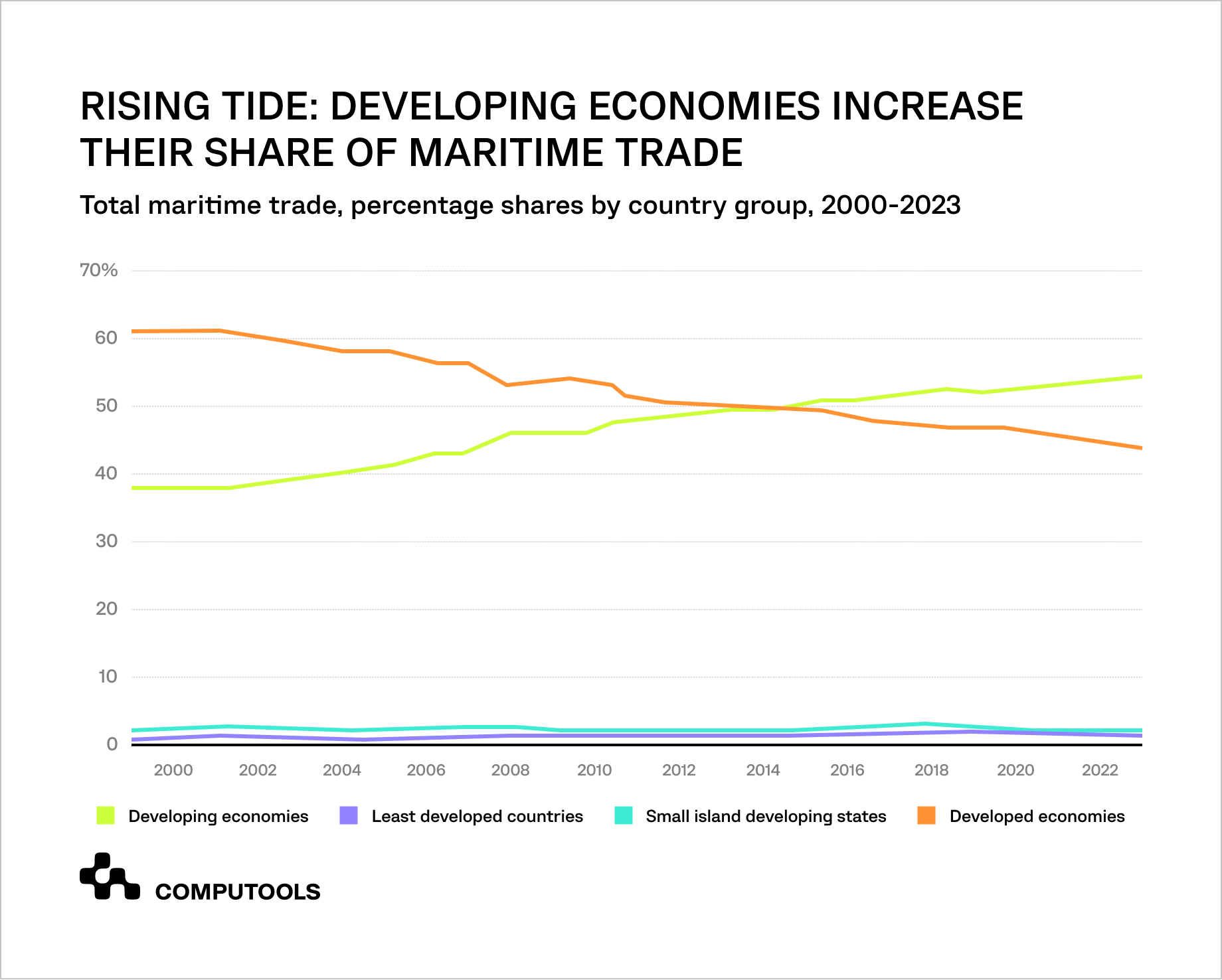
Global maritime logistics handles the majority of world trade, forming the backbone of global supply chains: according to UN Trade and Development (UNCTAD), maritime transport moves over 80% of the world’s merchandise trade by volume, connecting producers, manufacturers, and markets across continents and underpinning international commerce.
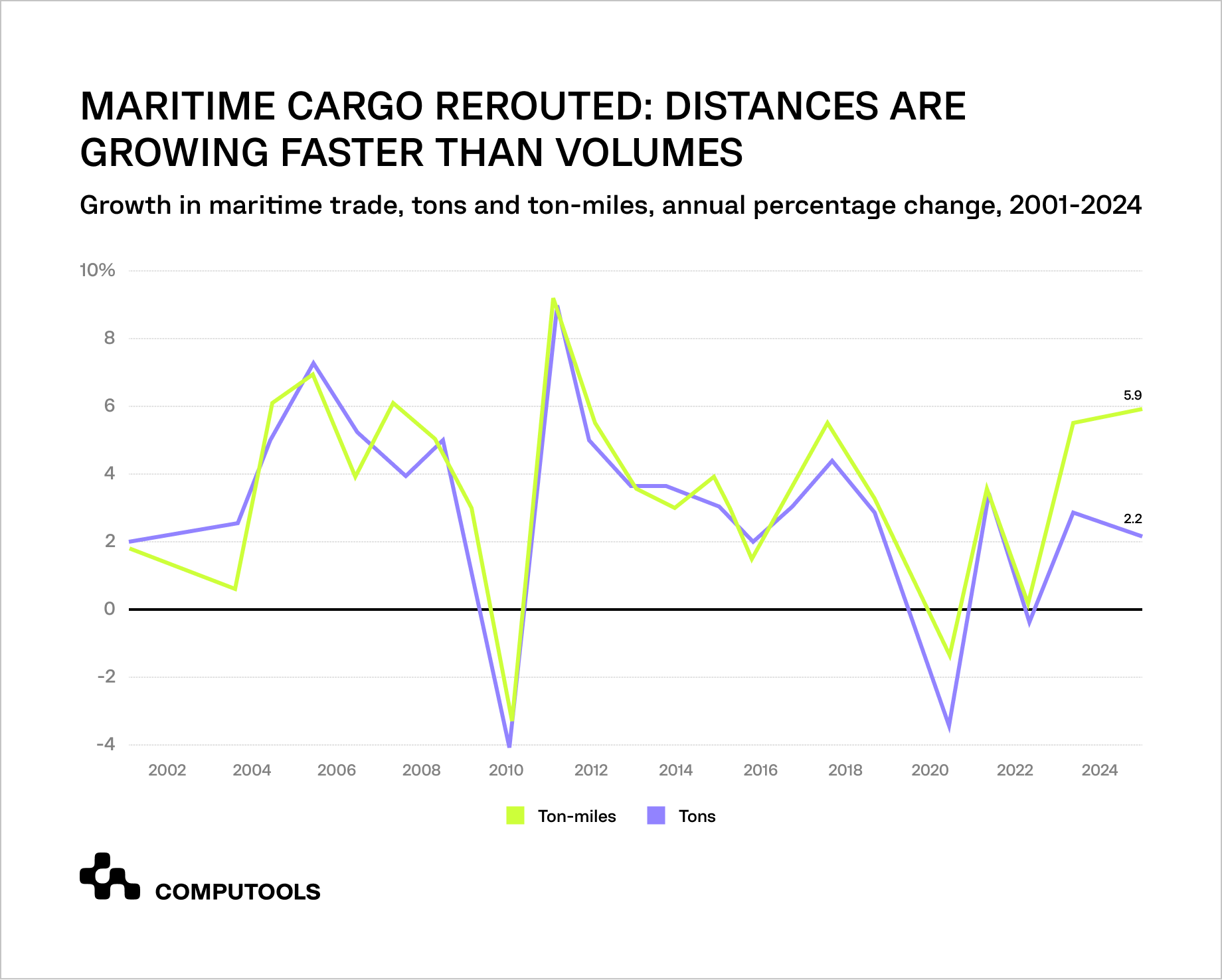
At the same time, the sector continues to face significant challenges – including port congestion, fragmented data systems, unpredictable delays, and rising operational costs – as recent UNCTAD data shows that maritime trade growth is slowing and freight rates remain volatile amid geopolitical disruption and shifting trade routes.
These dynamics highlight the urgent need for maritime logistics digital transformation and smarter operational systems that can adapt to complex global conditions.
This is where AI agents in maritime logistics are beginning to transform operations. Unlike traditional analytics tools that only provide retrospective insights, AI agents can analyse real‑time data, make autonomous decisions, and trigger operational actions across shipping networks.
These systems enable companies to optimize vessel routes, implement AI‑powered vessel operations, deploy AI cargo monitoring systems, automate dispatch decisions, and manage global fleets with unprecedented precision and responsiveness.
For executives such as CTOs, COOs, and heads of engineering, AI agents represent a new level of operational automation that leverages machine learning, IoT data streams, and predictive analytics to manage complex logistics environments at scale.
This article explores how AI agents improve efficiency in maritime logistics operations, support the automation of vessel and cargo workflows, define the architecture behind modern maritime logistics AI solutions, and unlock business value for companies navigating the future of global shipping.
The role of AI agents in maritime logistics
AI agents in maritime logistics are autonomous software systems designed to perceive, analyze, and act on operational data without constant human supervision. Unlike traditional analytics platforms that simply generate reports, AI agents can continuously analyze streaming data, detect patterns and anomalies, make recommendations, and automatically trigger operational workflows.
For instance, in shipping operations, an AI agent can monitor vessel performance, analyze weather forecasts, and recommend route adjustments in real time to reduce fuel consumption and improve delivery schedules.
These capabilities enable autonomous decision-making in shipping, helping maritime companies move beyond static dashboards toward smart shipping logistics technology and intelligent operational ecosystems.
Despite its global importance, the maritime industry still relies heavily on manual decision-making and fragmented digital systems. Modern vessels generate massive volumes of data from navigation instruments, engine sensors, cargo monitoring systems, port traffic networks, and satellite feeds. Managing this data manually is nearly impossible.
Inefficient routing, port congestion, and delays are frequent, costing operators significantly in fuel and lost time; industry studies indicate that poor route planning can increase fuel consumption by 10–15% per voyage. AI-based optimization, however, can reduce these inefficiencies while improving delivery reliability.
Furthermore, even experienced dispatchers cannot process thousands of variables simultaneously – AI agents augment human decision-making with real-time intelligence, forming intelligent dispatch systems in logistics.
AI agents also differ fundamentally from traditional maritime IT systems. While conventional platforms focus on data storage, visualization, and historical reporting, AI agents enable real-time predictive insights, autonomous decision-making, and automated operational actions.
Limited data integration in older systems is replaced by continuous multi-source data processing, integrating information from IoT sensors, AIS vessel tracking, port schedules, and ERP systems.
The result is faster, more accurate AI-driven maritime supply chain management, supporting better fleet performance and operational efficiency. Organizations adopting AI development services and maritime software development services are increasingly integrating AI agents into their platforms to optimize vessel operations, cargo monitoring, and dispatch processes, supporting full-scale maritime logistics automation.
Automating vessel operations with AI agents
Vessel operations are among the most complex areas of maritime logistics, as ships navigate long distances while responding to constantly changing factors such as weather conditions, ocean currents, port schedules, and fuel consumption constraints.
AI agents play a transformative role in optimizing these operations by continuously analyzing and integrating multiple real-time data streams.
For instance, by processing information from AIS vessel tracking systems, weather satellites, ocean current forecasts, traffic density data, and fuel consumption models, AI systems can calculate the most efficient route and speed profile for each voyage.
According to research from Gartner and maritime analytics providers, such AI-based route optimization can reduce fuel consumption by 5–15%, significantly lowering operational costs while improving delivery schedules. Beyond fuel efficiency, these systems help fleet managers reduce voyage times, minimize emissions, and avoid congested routes, forming a cornerstone of modern maritime operations optimization.
Weather and traffic intelligence are critical to operational safety and efficiency. AI agents analyze meteorological data to predict storm trajectories, wave height, wind direction, and other potential navigation hazards.
By continuously updating route calculations, vessels can avoid dangerous or inefficient paths, improving timeliness and safety while minimizing waiting times at congested ports. This capability also enhances overall port and shipping operations, allowing better coordination between vessels and terminal schedules.
Predictive maintenance is another key application of AI agents in vessel operations. Ship engines, propulsion systems, and onboard equipment generate extensive telemetry data that can be analyzed using machine learning models. AI can detect early signs of engine inefficiency, component degradation, abnormal vibration patterns, or temperature anomalies.
Instead of waiting for failures, maintenance teams receive predictive alerts, allowing repairs to be scheduled proactively.
The benefits are significant: reduced downtime, lower repair costs, improved safety, and extended equipment lifespan.
Predictive maintenance is increasingly recognized as a core component of AI for shipping and freight management, enabling fleets to operate more reliably, efficiently, and sustainably over time.
Real-time cargo monitoring with AI agents
Real-time cargo monitoring is another area where AI-based cargo tracking systems significantly improve operational reliability. Shipping companies transport a wide range of goods, from pharmaceuticals and food products to chemicals and electronics, many of which require strict environmental conditions throughout transportation.
Modern AI cargo monitoring solutions combine IoT sensors with AI algorithms to track cargo conditions continuously, providing visibility across the entire supply chain. Containers equipped with sensors collect data on temperature, humidity, vibration, light exposure, and location, which are transmitted to centralized analytics platforms for real-time analysis.
AI agents can detect deviations from safe thresholds and trigger alerts or automated responses, forming the foundation of AI maritime operations optimization in logistics. Companies developing these systems often rely on IoT development services to design scalable and robust sensor data architectures.
Preventing spoilage in perishable goods is a critical challenge. Items such as food, pharmaceuticals, and sensitive chemicals require strict environmental control, and even short deviations in temperature or humidity can render shipments unusable. AI-powered monitoring systems continuously analyze sensor data, detect anomalies, predict potential spoilage, and automatically initiate corrective actions, such as adjusting container conditions or rerouting shipments.
According to industry research referenced by Statista, implementing AI-based cargo monitoring can reduce product loss in cold-chain logistics by up to 30%, improving both safety and cost-efficiency. These capabilities are increasingly integrated into broader logistics software development services, enabling operators to scale AI monitoring across multiple vessels and ports.
AI agents also automate risk alerts and exception handling, replacing the need for constant manual supervision. Logistics operators receive real-time notifications for issues such as container temperature deviations, excessive vibration that may indicate damage risk, unauthorized container openings, or route delays threatening cargo conditions.
Advanced AI systems can even recommend corrective measures, such as rescheduling shipments, adjusting container environments, or coordinating with port operations to ensure timely delivery.
By integrating these capabilities into AI for shipping and freight management and broader logistics business process automation, companies can manage cargo risks at scale, improve operational efficiency, and enhance overall supply chain transparency.
AI assistant software streamlines logistics with smarter automation and real-time insights. Learn more in our guide: How to Build AI Assistant Software for Logistics Operations.
Intelligent dispatch decisions with AI agents
Efficient dispatching is one of the most critical operational tasks in maritime logistics, requiring constant coordination between vessels, cargo loads, and port infrastructure. AI agents significantly improve this process by analyzing large volumes of operational data in real time and generating optimized dispatch decisions.
These systems evaluate information about cargo type, shipment priority, vessel capacity, port congestion, weather conditions, and delivery deadlines to determine the most efficient allocation of shipping resources. Through continuous data analysis, AI agents can dynamically adapt dispatch strategies and support AI in port and shipping operations, ensuring smoother coordination between vessels, ports, and logistics operators.
By processing real-time information from shipping schedules, fleet management platforms, and port databases, AI agents enable automated vessel and cargo allocation. Instead of relying on manual planning or static rules, dispatch systems can automatically assign shipments to available vessels based on capacity, route efficiency, and operational constraints.
This approach reduces idle time for ships, optimizes cargo distribution, and ensures that resources are used more efficiently across the fleet. For logistics operators handling complex international shipping networks, such automation plays a key role in AI for shipping and freight management, helping companies manage large cargo volumes with greater accuracy and speed.
Another important advantage is the ability to optimize delivery and loading schedules. AI systems continuously monitor port workloads, berth availability, and vessel arrival times, adjusting dispatch decisions when disruptions occur.
For example, if a port experiences unexpected congestion, the system may automatically recommend rerouting cargo or adjusting vessel schedules to minimize delays.
These intelligent systems demonstrate how AI agents improve efficiency in maritime logistics operations, allowing companies to maintain consistent delivery performance even in highly dynamic global shipping environments. Organizations exploring advanced digital solutions often implement these capabilities as part of broader logistics transformation initiatives supported by specialized AI development services.
Dispatch and AI agents are only as reliable as the tracking data they rely on. Learn more in our guide: How to Build AIS and GPS Data Integration Software for Maritime Operations.

Want to automate vessel operations and cargo monitoring with AI agents? Contact our experts and explore how intelligent automation can transform maritime logistics.
Technology architecture of AI Agents in maritime logistics
The effectiveness of AI agents in maritime logistics depends heavily on the underlying technology architecture that supports data processing, integration, and decision-making.
Modern AI-powered logistics platforms rely on multiple data sources, including IoT sensors installed on vessels and containers, AIS vessel tracking systems, port management platforms, ERP systems, and global logistics databases. By aggregating these diverse datasets into a unified analytics environment, AI agents gain a comprehensive view of maritime operations and can generate more accurate insights and predictions.
At the core of these systems are machine learning models that process streaming data through scalable data pipelines. Cloud infrastructure allows companies to ingest and analyze massive amounts of operational data from vessels, ports, and cargo systems in real time.
These data pipelines continuously feed information into AI algorithms that detect patterns, forecast demand, and optimize operational workflows. Such architectures enable predictive analytics, automated alerts, and intelligent recommendations for shipping companies managing complex fleets and supply chains.
Another critical component is the integration of AI platforms with fleet management and supply chain management systems. AI agents must seamlessly connect with vessel monitoring platforms, cargo management software, port systems, and enterprise logistics applications.
This interoperability allows organizations to transform isolated data sources into a unified operational intelligence platform. Companies implementing these solutions often rely on specialized maritime software development services to design custom platforms that integrate AI capabilities into existing maritime infrastructure.
When combined with advanced analytics and automation technologies, these architectures enable shipping operators to build scalable systems for AI for maritime fleet management, ensuring that fleet performance, cargo tracking, and dispatch decisions are optimized across the entire logistics network.
Business benefits and the future of AI in maritime logistics
The adoption of AI agents in maritime logistics brings significant business benefits for shipping companies, logistics operators, and global supply chain organizations. One of the most immediate advantages is the reduction of operational costs.
By optimizing vessel routes, improving cargo monitoring, and automating dispatch decisions, AI systems help reduce fuel consumption, minimize delays, and improve asset utilization. Predictive maintenance capabilities further lower maintenance expenses by identifying potential equipment failures before they occur. These improvements enable companies to operate more efficiently while maintaining reliable service levels.
Another major benefit is the increased transparency and visibility across maritime supply chains. AI-powered monitoring systems provide real-time insights into vessel performance, cargo conditions, and port operations. This enhanced visibility allows logistics teams to detect disruptions earlier and respond more effectively.
As global supply chains become increasingly complex, AI-driven insights help companies coordinate shipping operations across multiple stakeholders, including carriers, ports, freight forwarders, and logistics providers.
Looking ahead, AI is expected to play an even larger role in the transformation of maritime logistics. Emerging trends include autonomous vessels capable of navigating shipping routes with minimal human intervention, digital ports equipped with AI-powered traffic management systems, and fully automated logistics ecosystems that coordinate cargo movements across sea, land, and air transportation networks.
These innovations will further accelerate the adoption of intelligent maritime technologies and redefine operational efficiency in global shipping.
As a result, companies investing in advanced AI for maritime fleet management and intelligent shipping systems today will be better positioned to compete in the rapidly evolving digital logistics landscape.
Why choose Computools for AI agents development: proven expertise in logistics and maritime solutions
Computools is a strong partner for AI agent development and advanced AI-driven solutions thanks to its deep expertise in digital transformation within transportation, and maritime operations.
This expertise is demonstrated through several real-world projects where complex industry challenges were addressed with scalable technology solutions, backed by over 12+ years of experience in the logistics industry and the successful delivery of 50+ custom software solutions for logistics businesses worldwide.
One of the notable examples is the Shipbuilding Management App, a digital transformation initiative for a UK-based company that has been providing ship repair, maintenance, and brokerage services for more than 20 years. The client needed a comprehensive platform to manage complex communication and operational processes between shipbuilders, shipowners, and customers.
Computools developed a custom management system with dedicated functionality for each user group, supported by a flexible analytics module and blockchain-based data security to ensure transparency and immutability of operational records. The platform streamlined collaboration between stakeholders and significantly improved operational workflows.
As a result, the client achieved an approximate 21% increase in operational productivity, and reduced administrative overhead by about 18%, and improved revenue performance thanks to more efficient coordination and data-driven decision-making.
Another case that highlights Computools’ expertise in logistics technology is the solution developed for a Western-European Rail Operator, where the team implemented an IoT-based cargo monitoring system for freight wagons. Before the project, the operator lacked a real-time monitoring mechanism, which made it difficult to track cargo conditions and respond to potential safety issues promptly.
Computools built a system that integrates sensors installed on wagons, a data acquisition infrastructure, and a centralized monitoring platform capable of analyzing parameters such as temperature, pressure, and cargo volume. Using reliable data transmission protocols and advanced analytics tools, the platform automatically generates alerts when safety thresholds are exceeded.
After implementation, the client significantly reduced the need for manual inspections, lowering inspection-related operational costs by around 30%, while increasing real-time visibility into fleet conditions by nearly 40%, enabling faster response to potential issues and improving overall logistics efficiency.
Computools also demonstrated strong expertise in maritime logistics and intelligent infrastructure through the development of the HubMarine platform, a smart solution for vessel tracking and marina management.
The client, an international startup serving more than 500,000 boat owners and over 100 marinas across multiple countries, needed a scalable platform to optimize berth reservations, vessel navigation, and communication between marina operators and boat owners.
Computools built an integrated system that includes a dedicated portal for users, advanced planning tools for marina operations, and a custom mapping interface showing vessel types and mooring locations. The platform integrates with Automatic Identification Systems (AIS) and applies machine learning algorithms to improve berth allocation and operational planning.
As a result, communication and berth pre-booking time was reduced by approximately 75%, while operational efficiency and marina resource utilization improved by more than 30%, significantly enhancing transparency and navigation safety across the platform.
Together, these projects demonstrate Computools’ ability to deliver sophisticated digital platforms for logistics and transportation ecosystems. By integrating AI capabilities, IoT infrastructure, blockchain security, and advanced analytics, the company helps organizations transform complex operational environments into data-driven systems that improve productivity, reduce operational overhead, and enable sustainable long-term growth.
If you’re seeking a reliable partner to develop logistics software for advanced dispatch and visibility workflows, reach out to us at info@computools.com.
Conclusion
AI agents are rapidly becoming a cornerstone of modern maritime logistics, enabling shipping companies to move beyond traditional analytics toward autonomous, data-driven operations. By continuously analyzing real-time data from vessels, cargo sensors, weather systems, and port infrastructure, these intelligent systems can automate critical processes such as vessel routing, cargo monitoring, predictive maintenance, and dispatch decision-making.
As global shipping networks grow more complex and supply chains face increasing volatility, the ability to process massive volumes of operational data and respond instantly becomes a strategic advantage. AI agents provide this capability by transforming fragmented data sources into a unified operational intelligence layer that supports faster decision-making and more efficient resource allocation.
The benefits are already measurable. AI-powered route optimization can reduce fuel consumption by up to 5–15%, predictive maintenance minimizes downtime and repair costs, and AI cargo monitoring systems can reduce product loss in cold-chain logistics by up to 30%. Intelligent dispatch systems further improve fleet utilization and help shipping operators respond quickly to port congestion, schedule disruptions, and changing market conditions.
Looking ahead, the role of AI in maritime logistics will only expand. From autonomous vessels and AI-powered ports to fully integrated digital supply chains, intelligent systems will increasingly coordinate cargo movements across global transportation networks.
Companies that invest in AI-driven maritime platforms today will be better positioned to operate efficiently, reduce operational risks, and remain competitive in the evolving digital shipping ecosystem.
Shipment visibility becomes even more powerful when paired with intelligent planning. Learn more in Route Optimization Software: A Must-Have Tool for Modern Logistics Businesses.
Computools
Software Solutions
Computools is an IT consulting and software development company that delivers innovative solutions to help businesses unlock tomorrow.