
THE AUTHOR:

Patient engagement software healthcare is no longer limited to simple reminders or appointment notifications. Today, it represents a strategic foundation for improving patient outcomes, strengthening long-term adherence, and building sustainable digital care models.
Effective platforms integrate patient adherence technology and digital patient engagement tools to influence real patient behavior while ensuring a seamless user experience. As healthcare systems increasingly shift toward patient-centered and remote-first delivery, engagement platforms are becoming critical bridges between clinical intent and everyday patient actions.
Recent industry data highlights this transformation clearly: patients who actively use patient portals are 21% more likely to adhere to prescribed medication regimens, while the adoption of digital engagement solutions has driven a 30%+ increase in overall patient engagement across primary care settings, with visible trends across age groups and chronic conditions.
In parallel, more than 65% of adults rely on mobile health apps to manage chronic diseases, reflecting a fundamental change in how patients expect to interact with healthcare services.
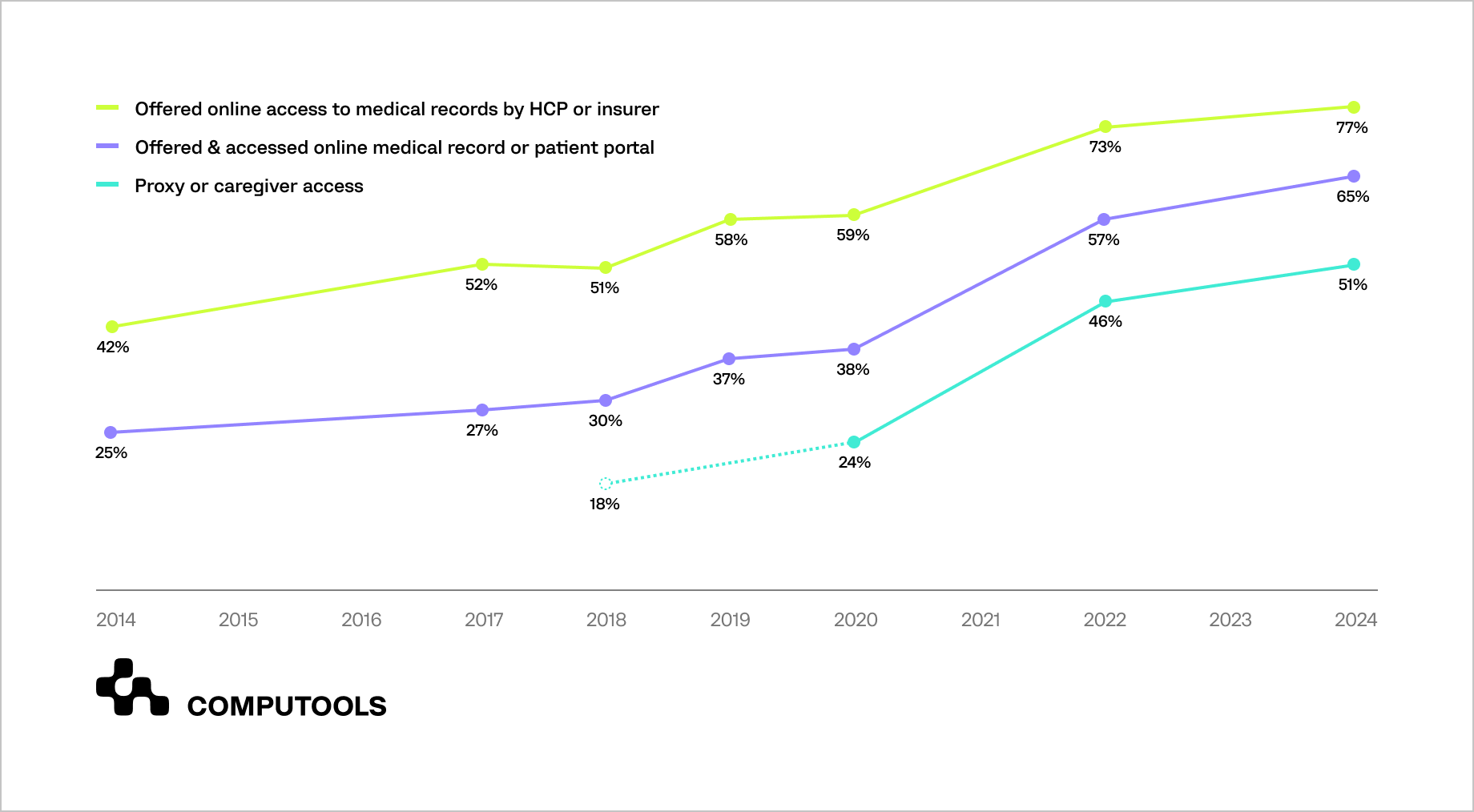
This trend is further supported by recent data showing that 77% of individuals nationwide were offered online access to their medical records by healthcare providers or insurers in 2024-2025 and that 65% accessed those portals at least once in the past year, with adoption rates having steadily grown over the past decade as illustrated in national patient portal access and use charts.
Against this backdrop, building an effective patient engagement platform is no longer a UX challenge alone — it is an architectural, behavioral, and operational one. Leveraging software architecture services and custom healthcare software, organizations can develop solutions that improve adherence and overall patient outcomes.
In this article, we explore how to design a patient engagement platform that genuinely improves adherence by combining robust system architecture, user-centric design, and real-world healthcare workflows — illustrated through the TransMeds case developed by Computools.
Why adherence is a system-level challenge
Patient adherence remains one of the biggest challenges in healthcare delivery. While many solutions provide reminders or portals, few digital patient engagement tools consistently change behavior over time. Effective patient engagement software healthcare integrates communication, motivation, and analytics to create experiences patients trust and use daily.
In our TransMeds project, the challenge was not only sending reminders but helping patients internalize medication routines with intuitive support — highlighting why many standalone solutions fail to move the needle. By combining behavioral insights with actionable data, we developed a system that encourages sustained engagement and improves clinical outcomes.
Implementing patient engagement platform development requires understanding the full care journey and aligning technology with real patient needs. A thoughtful approach ensures that digital tools are not just functional but genuinely supportive of everyday care.
Midway through this process, leveraging healthtech software development services helped us bridge the gap between generic apps and a fully integrated platform.
Learning from TransMeds: patient engagement rooted in user behavior
Developing a patient engagement platform starts with understanding how patients interact with care information. In TransMeds, designed for transplant patients who must follow strict immunosuppressive medication schedules, missing a dose could have serious consequences. This made adherence a core clinical outcome and a key focus of our design.
The Computools team applied user analytics, iterative feedback loops, and design thinking to ensure the platform did more than notify patients — it guided them through daily health routines. This behavioral-first approach is a hallmark of effective patient engagement systems for hospitals.
Features from remote patient engagement platforms and mobile patient engagement apps allowed patients to communicate with care teams, track their routines, and receive personalized guidance. Combining insights from pharmaceutical software development and digital transformation services enabled us to deliver patient-centered healthcare software that improves outcomes and patient experience.
By focusing on intuitive, adaptable, and scalable design through custom healthcare software development, the TransMeds platform became a robust digital health engagement platform that patients use consistently and trust.
Essential digital patient engagement tools that drive outcomes
At the core of any engagement strategy are tools that patients find helpful and easy to adopt.
TransMeds integrated multiple digital patient engagement tools, including:
- A dynamic medication schedule dashboard
- Multi-channel notification system (push, alarm, email)
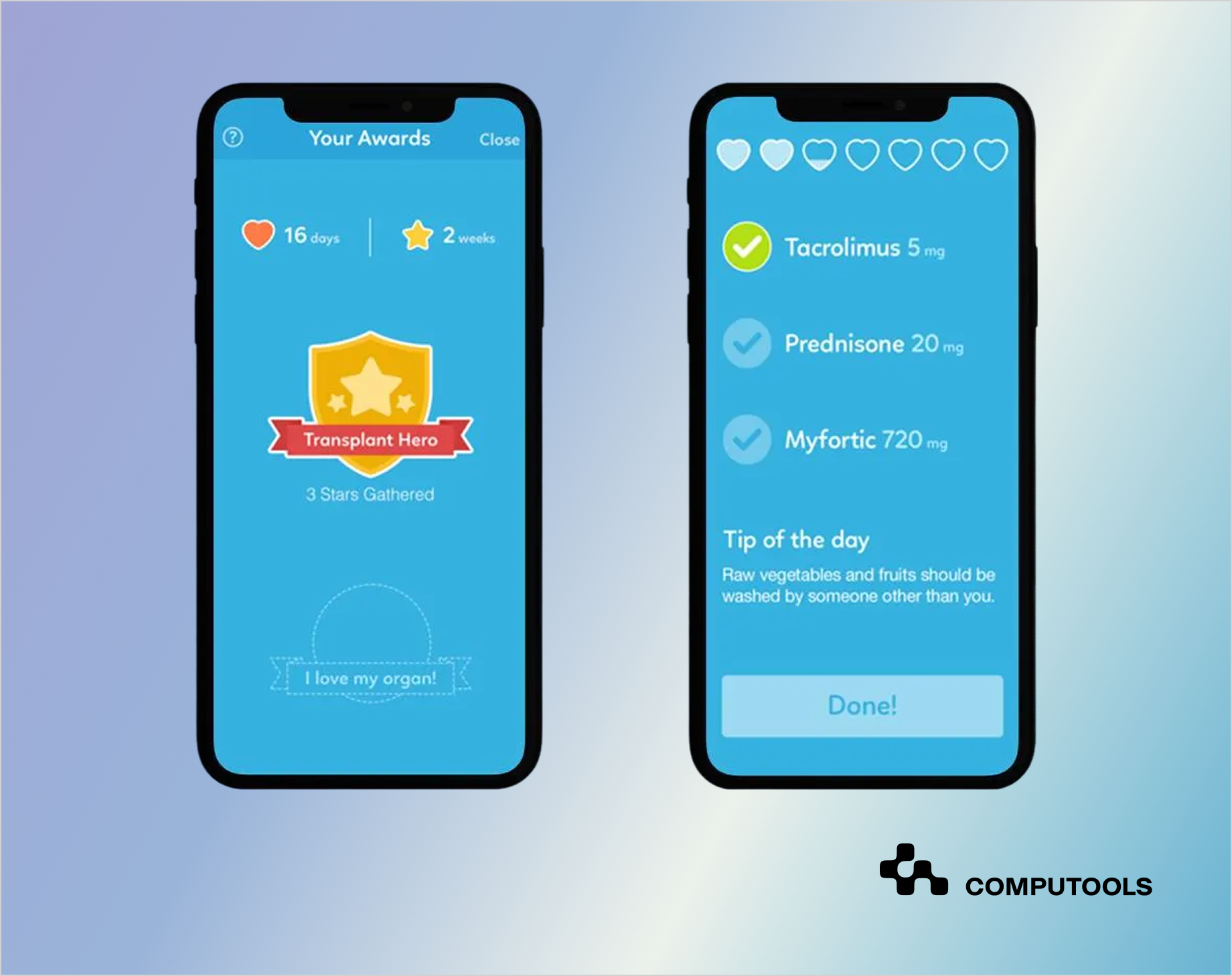
- Gamification and rewards that acknowledge on-time adherence
- Educational content tailored to therapy routines
Instead of treating features as siloed modules, these elements worked together as patient adherence technology — creating reinforcing behaviors that help patients stay on track.
The dashboard, for example, not only displayed upcoming doses but also visualized long-term adherence trends, giving patients a sense of progress and achievement. Notifications were context-sensitive, adjusting timing based on prior engagement patterns, which reduced alert fatigue.
Gamification elements included milestone badges and virtual rewards that motivated continued participation, while educational content went beyond instructions, offering scenario-based guidance that helped patients understand why each step of their therapy mattered.
Together, these tools formed a cohesive experience that felt intuitive, supportive, and genuinely useful, rather than transactional.
AI creates real impact only when it aligns with established clinical workflows and responsibility structures. How to Integrate AI Diagnostics Into Existing Hospital Workflows explores how hospitals adopt AI solutions while maintaining continuity in patient care.
Architectural foundation: building a reliable engagement engine
A platform’s success often hinges on technical architecture. For TransMeds, Computools leveraged scalable backend systems (Node.js, Parse Server, MongoDB) that supported real-time logic and flexible data structures. This foundation allowed the system not only to send reminders but to capture adherence patterns and adapt notifications intelligently.
The architecture also prioritized resilience and fault tolerance, ensuring that critical patient data remained secure and available even during peak usage or server disruptions. Real-time analytics pipelines enabled clinicians and care teams to monitor adherence trends and intervene proactively when patients faced difficulties.
Additionally, modular design made it easier to introduce new features over time without destabilizing the platform, such as integrating wearable data or adding multilingual support. Many healthcare organizations underestimate the role of software architecture services when developing patient engagement solutions — but this work ensures that platforms are stable, compliant, and ready to support growth.
In essence, the architectural backbone transforms a set of digital tools into a responsive, adaptive system capable of reliably supporting patients in the long term.
1. Expanding patient engagement beyond the hospital walls
Patient engagement software healthcare is no longer confined to the walls of hospitals or clinics. TransMeds functioned as a mobile-first tool, bridging clinical routines with patients’ everyday lives — a defining trait of remote patient engagement platforms.
Modern users expect continuous access from anywhere, and engagement strategies must reflect this expectation by supporting both structured therapy schedules and the unpredictability of daily life.
By delivering a seamless experience across devices, TransMeds helped patients stay connected to their health plans without friction. Features like adaptive notifications, cross-device dashboards, and progress visualizations created a sense of continuity, a core advantage of mobile patient engagement apps in the broader healthcare ecosystem.
The platform also provided analytics for care teams, allowing them to intervene proactively and ensure adherence, highlighting the tangible benefits of integrating digital transformation services and mobile app development expertise into healthcare technology.
2. Communication that builds trust
Effective engagement is impossible without clear, trusted interaction.
TransMeds included a robust patient communication software healthcare component with multiple channels:
- Direct messaging with care teams
- Contextual alerts for therapy adjustments or reminders
- Support access via email and in-app tools
Platforms that facilitate two-way communication foster stronger patient-provider relationships and elevate the perceived value of care — an essential step toward long-term adherence. By providing timely, personalized communication, the system enhanced transparency and trust, while also giving clinicians real-time insight into patient experiences.
When implemented thoughtfully, these healthcare patient engagement solutions become the backbone of patient-centered care, enabling both education and intervention when needed.
3. Patient-centered design as a strategic advantage
TransMeds’ success was also rooted in patient-centered healthcare software design principles. The Computools team developed detailed user personas, wireframes, and interactive prototypes to ensure that every design decision enhanced usability and aligned with patients’ daily routines.
The platform prioritized empathetic interfaces that reduced cognitive load, clarified complex tasks, and reinforced adherence through intuitive workflows. Such a design philosophy is critical for healthcare IT solutions for engagement, where the goal is not just to deliver functionality but to create experiences that patients genuinely trust and integrate into their lives.
Coupled with iterative testing and feedback, this approach transformed patient engagement platform development from a technical exercise into a strategic advantage, resulting in a system that feels personal, responsive, and effective in improving outcomes.
4. Integrating into the healthcare ecosystem
For engagement platforms to be truly effective, they must align with broader care delivery systems. TransMeds was designed to integrate seamlessly with clinical workflows, support provider oversight, and extend into other care technology layers.
By connecting with electronic health records, scheduling systems, and clinical dashboards, the platform ensured that patient interactions were visible and actionable for care teams.
Integration also meant that alerts, adherence patterns, and educational content could be delivered in context, rather than as isolated notifications. Clinicians could monitor progress in real-time, identify potential risks early, and intervene proactively.
The system’s ability to “speak the language” of existing hospital workflows transformed it from a standalone app into a tool that genuinely supported coordinated care pathways.
This is the promise of healthcare IT solutions for engagement — platforms that operate not just as digital checklists, but as integral components of comprehensive patient care.
5. Strategic development model: agile for evolving health needs
The TransMeds project followed an Agile methodology, enabling rapid iteration, frequent user feedback, and continuous improvements. By breaking development into manageable sprints and involving end-users throughout, the team could test assumptions, refine features, and quickly respond to emerging challenges in patient behavior or clinical needs.
This iterative approach allowed the platform to evolve alongside the healthcare environment. New therapies, regulatory changes, and shifting patient expectations could be addressed without major delays or disruptive overhauls.
At Computools, capabilities such as regular feedback loops, real-time analytics, and iterative design reviews supported not just the initial build but ongoing enhancements.
This ensured that TransMeds remained adaptable, relevant, and effective, providing a living platform that grew with both clinicians’ needs and patients’ daily experiences.

Evaluate the architecture, interoperability, and compliance requirements of a patient engagement platform—connect with our specialists to scope development and estimate implementation effort.
Custom solutions vs off-the-shelf platforms
While generic tools can provide basic engagement functionality, high-impact outcomes often require tailored solutions. Platforms like TransMeds demonstrate how custom healthcare software development can address specific clinical requirements, integrate deeply with care protocols, and provide analytics and insights that matter to both clinicians and patients.
Custom development allows for nuanced workflows, specialized reporting, and targeted interventions that off-the-shelf platforms often cannot accommodate. For example, TransMeds was able to tailor reminders, educational content, and progress tracking to the unique schedules and needs of transplant patients.
When combined with thoughtful digital transformation efforts, organizations can elevate engagement from a simple operational task to a strategic initiative, improving adherence, patient satisfaction, and overall clinical outcomes.
The flexibility of a custom platform ensures that the technology continues to provide value as healthcare practices evolve and patient expectations grow.
Conclusion: Patient engagement platform development for improved adherence
Building an effective patient engagement platform is no longer just a technical task — it is a strategic investment in patient outcomes, adherence, and long-term care quality. As demonstrated by the TransMeds case, successful patient engagement platform development requires a thoughtful combination of robust architecture, intuitive user experience, and integration with real-world clinical workflows.
Platforms that go beyond simple notifications to guide patients through their daily routines can transform engagement from a transactional interaction into a meaningful, sustained behavior.
At the heart of this approach is healthcare software for patient adherence that actively supports patients, tracks progress, and enables care teams to intervene proactively. By embedding adherence insights into the care journey and leveraging real-time analytics, organizations can create solutions that are both responsive and scalable.
Furthermore, when platforms are designed with empathy and usability in mind, they contribute significantly to healthcare patient experience technology, building trust and improving satisfaction across the continuum of care.
Ultimately, integrating these principles into your digital strategy empowers healthcare providers to move from basic engagement tools to fully coordinated, patient-centered systems — driving measurable improvements in adherence, outcomes, and overall healthcare delivery.
Regulatory requirements and architectural choices play a critical role in shaping healthcare systems well before they are implemented. How to Build a Telehealth Platform for Hospitals and Outpatient Clinics explores how these factors influence the design of virtual care solutions and the movement of healthcare data.
Computools
Software Solutions
Computools is an IT consulting and software development company that delivers innovative solutions to help businesses unlock tomorrow.