
THE AUTHOR:

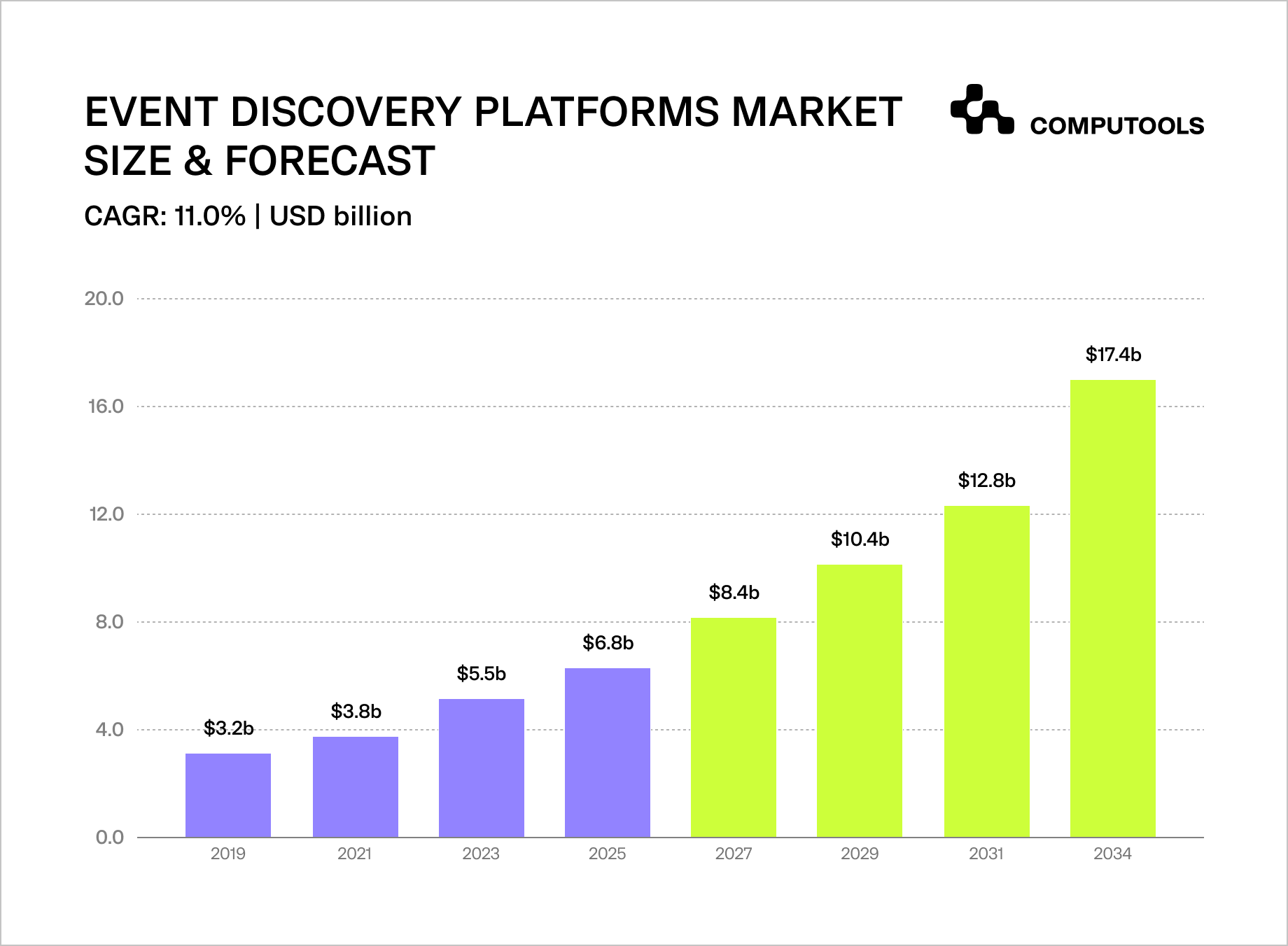
The event discovery platforms market was valued at $6.8B in 2025 and is expected to reach $17.4B by 2034 (11% CAGR). This growth is driven by a much larger market that spans the global $1.5 trillion event economy. Digital platforms are rapidly expanding their role in discovery, ticketing, and event analytics. Event software is used by 68% of event organizers, up from 44% in 2020.
The market is moving to platforms that consolidate discovery, booking, and audience engagement. The trend indicates a sharp increase in demand to build an event discovery platform that consolidates search, engagement, and booking.
There are significant changes in the ways people look for entertainment offerings and purchase tickets. Currently, discovery is more social and less search-based. It is also algorithm-enabled. Generation Z primarily finds events through TikTok and Instagram. Word of mouth is significant, yet sites that include event listings and traditional search have less influence. Due to this, a product is more useful when it’s revised to include social signals and a customized content stream, rather than a search and filter function.
The timing of purchases is just as important as external factors.
Here is the behavior breakdown for purchases:
~42% purchase 1–3 months in advance.
~36% buy 2–3 weeks before the event.
~24% wait until the last moment.
There are two implications to consider. Clients will need long-term engagement in the form of reminders and retargeting. Late buyers will favor real-time inventory and fast checkout.
Payment flexibility is the greatest factor when it comes to conversion. Over half (51%) of users say they are more likely to attend the event when payments can be made in installments. 54% would use a Buy Now Pay Later for tickets over $100. These findings have a direct impact on platform design. Flexible payment options should be offered for mid- to high- priced events.
At the same time, AI-driven personalization is becoming the main conversion driver. Recommendation engines can increase ticket sales by 23–35%, and tailored feeds convert 3–5x better than generic search. Finally, revenue doesn’t come from tickets alone.
Organizers increasingly rely on:
- Food & beverage (47%)
- Sponsorships (37%)
- Merchandise (27%)
- VIP experiences (26%)
- Add-ons (29%).
An event search and ticket booking platform should offer upsells, bundles, and premium experiences in addition to ticket sales, as the latter does not indicate a point of maximum monetization.
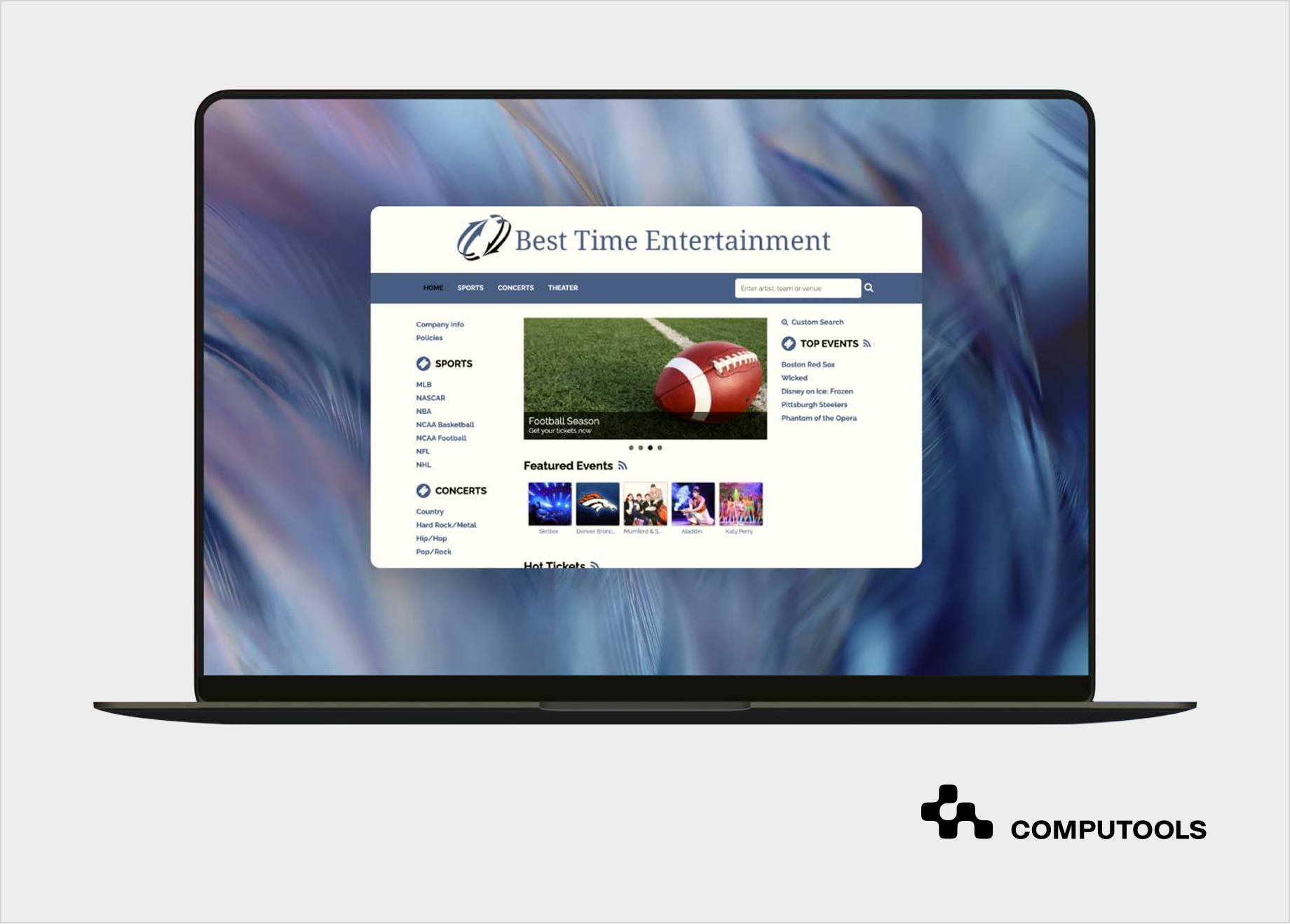
Multitrading case: how to build an event discovery platform in practice
Multitrading clearly demonstrates the performance capabilities of an event ticketing platform in resource-intensive situations. Computools designed a multi-threaded web application that handles demand surges in ticket sales for sports, concerts, and other large events.
One of the key challenges was massive concurrency and disruption of booking flows. During major releases, thousands of guests were accessing the same events, selecting seats, and completing payments simultaneously. To handle the described scenario, we engineered the system with a multi-threaded backend to process requests simultaneously, optimized database queries to keep response times low during peak load, structured a data layer to store listing, availability, and transactional details, and ensured ticket statuses stayed up to date for all users.
Due to this rebuild, the platform was able to:
- Remain consistently fast, even with many requests.
- Eliminate the wait time for checkout and ticket selection.
- Avoid confusion and have reliable booking processes.
Data collection and processing were another important aspect. We added functionality for the system to store and analyze event and user data. This provided organizers with better insight into demand and allowed for more tailored offerings.
Most event recommendation platform software faces the same challenges, especially when discovery, recommendation, and ticketing are integrated. Let’s now have a closer look at the development process.
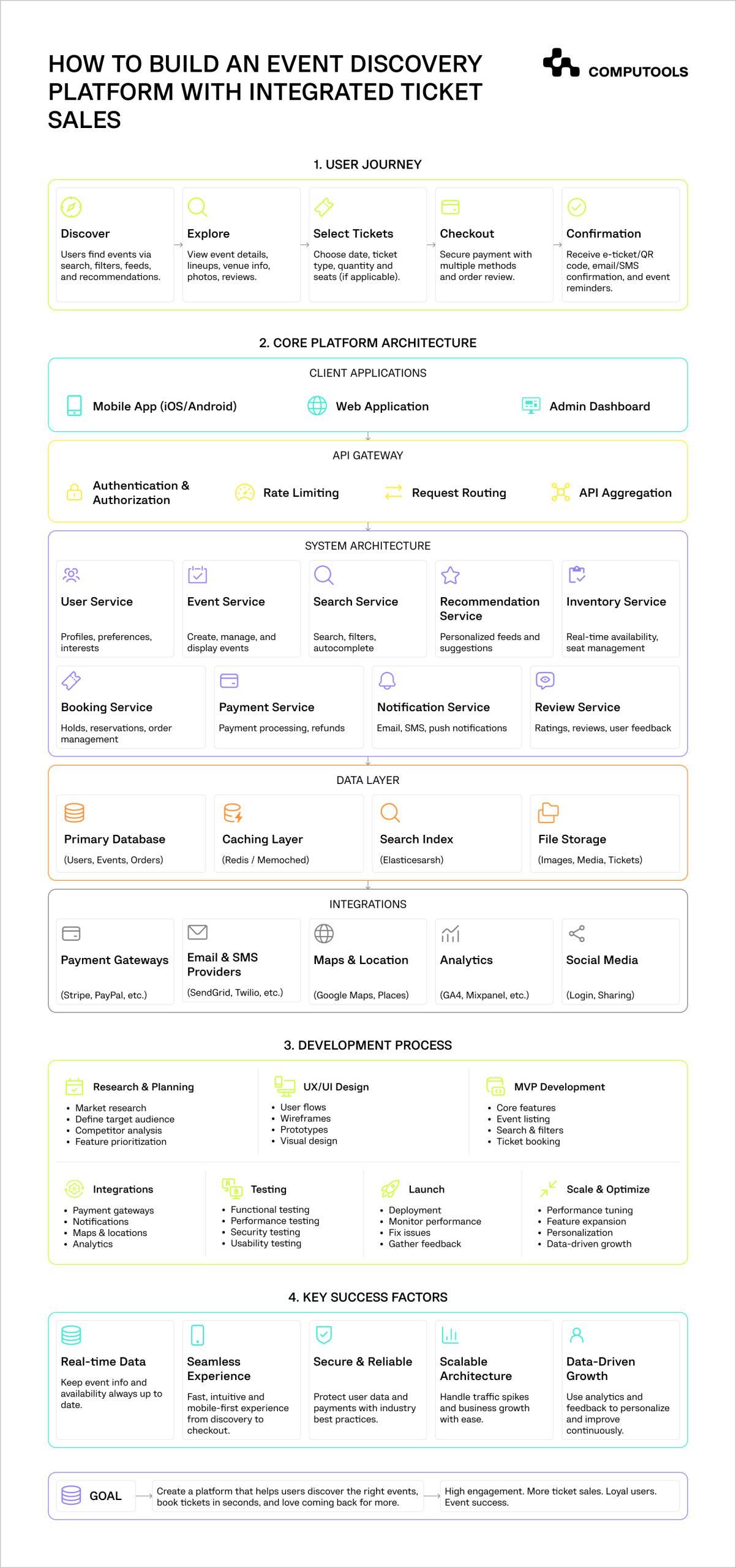
A 12-step guide to build an event discovery platform with integrated ticket sales
Step 1. Identify Scope and Key Actions
Instead of attempting to support every event format, begin with a specific use case. Say, for instance, general admission events, seat-based concerts, and tiered-price events. This will determine how you approach inventory, pricing, and booking logic.
Map a strict user journey: feed → event page → ticket selection → checkout → confirmation.
Set the constraints of operations as soon as possible. Estimate the maximum possible concurrency per event, the time window for ticket hold (usually 5-10 minutes), and whether the solution will support static or dynamic pricing.
Set expectations for how system data will behave. From discovery to checkout, event data, pricing, and inventory status should be the same. Inconsistencies at different points of the user flow will result in user dropouts.
This was the most important stage of the MultiTrading re-engineering. Significant adjustments were required due to the all-time high level of expected concurrency. Our team had to reconsider how booking flows and data consistency were handled across the system.
Step 2. Design UX with System Behavior in Mind
A feed-style layout should be prioritized for the discovery experience. Make sure that the nearby or trending events appear first. Also, restrict the initial number of items for efficiency. Search and filters should be available to users who know what they want, but a feed should be the first entry point.
The checkout process should be highly efficient and as short as possible. Avoid unnecessary steps, such as forced sign-ups. Design the UX around how the system behaves in the real world. Event pages, for instance, should not perform multiple backend calls for essential data. The date, price, and number of tickets available should be included in one response.
Step 3. Build Event Catalogue for Fast Reads and Easy Updates
An event catalogue must provide a user with fast access. At the same time, event organizers should be able to update it frequently. Store event data (event descriptions, types of tickets, schedules, etc.) in a relational database (like PostgreSQL) to allow for swift and easy updates.
To reduce the number of requests made to the database, a caching layer (for example, Redis) should be introduced. Instead of making a database query each time, serve requests from the Event Catalog in the cache. For example, if a guest wants to browse events in a specific city, the system should return the cached feed. updates that refresh either. Cached event listings should update based on a time interval or event changes to provide up-to-date results.
During the Multitrading re-engineering, event data handling was optimized to reduce the strain on the database. Frequently requested event listings were cached, which allowed the web application to serve large volumes of users browsing events at the same time without slowing down.
Images and videos should be sent to end users via a content delivery network (CDN). This will reduce the load on the backend and offer faster load times regardless of region.
Decoupling data storage, cache, and CDN content delivery allows the platform to grow and scale efficiently.
Step 4. Implement Inventory and Booking Logic with Strict Control
This is a critical stage in the event discovery platform development. Availability must remain accurate when a large number of users are purchasing tickets simultaneously.
In Multitrading, for instance, re-engineering was focused on tighter booking logic. Our team implemented state transitions (available → locked → sold) to resolve transaction conflicts. In addition, we set Standard Ticket Lock for all sessions. These improvements reduced booking errors and made the system more reliable under heavy usage.
To achieve similar results, apply a single source of truth for the inventory. The moment a guest selects a ticket, the system locks it and starts a 10-minute timer. For this duration, the ticket is unavailable for purchase by other users. If the payment is cleared, the algorithm marks the ticket as sold. If the payment is not completed and the timer expires, the ticket is returned to the available inventory.
All operations must be handled as atomic transactions. For example, updating a ticket’s status should only succeed if it is still available. This prevents two users from booking the same item.
It’s also important to separate reservation logic from general browsing. While event discovery can rely on cached data, booking must always use real-time data to maintain consistency.
If you want to see how similar logic works in other applications, especially for real-time reservations and availability sync, check this guide on How to Build a Restaurant Table Reservation System.
Step 5. Enable Real-Time Updates Across the Platform
Users demand the most accurate information for ticketing events. To keep up, information such as availability, pricing, and status changes should be updated instantly on all devices.
A solution here could be to implement an update system either with WebSockets or a pub/sub model. Access to the same event should be refreshed for all users as soon as a ticket is either sold or pulled.
Step 6. Develop Fast and Reliable Payment Processing
Fast payment processing is critical for the user experience. Payment methods should include credit cards, digital wallets, and payment plans for more expensive offerings.
The system should create an order linked to the reserved tickets, then process the payment. The booking must be confirmed after payment has been successful. If it doesn’t go through, the system should allow users to attempt payment again. During this period, until the reservation timer has reached the end of its countdown, their reservation should be maintained.
Payment processing should work through an independent provider or service. With its separation from inventory logic, retries, failures, and other integrations become easier to manage.
Step 7. Add Integrations
Integration should always start with core architecture. Apart from payments, the event discovery platform requires multiple external systems such as Maps, Notifications, Analytics, CRM. More advanced solutions will also need add-ons for Travel or Hospitality APIs.
Payment integrations should be the first priority since they will determine booking.
Next, integrate Maps. These will help users with event discovery and estimating distance, as well as event filtering by city, venue, or region. The location data, suggestions, and recommendations should integrate with the event discovery pages.
Notification systems should be the next priority. Email, SMS, and push notifications are needed to confirm, remind, and update users on ticket, price, and event changes. Most of these notifications should be sent automatically based on event status and user input.
Analytics and CRM tools should be included from the start. Analytics shows visitor data, while CRM provides campaign and targeting tools, and both can show improved user engagement and purchases from tailored campaigns.
More sophisticated applications may also integrate other services within the travel and hospitality field. Examples can be event and hotel packages, partnerships with venues or loyalty programs, etc. These will likely need to interact with booking engines, PMS and travel APIs.
A simple approach that will usually work is considering the user flow. If it impacts the checkout, causes data duplicates, or makes availability difficult, this integration should be reconsidered prior to the system launch.
Step 8. Introduce Personalization as a Separate Layer
After establishing the core system, the next step in building an efficient event listing platform software is to simplify discovery through a personalization layer. Begin by introducing nearby and trending events. Then expand to behavior-based recommendations using data like clicks, views, and past purchases.
For best performance, this functionality should be separate from the booking and inventory services as it will process a large volume of users and data to generate real-time offers.
The personalization layer will drive user engagement through faster event discovery and repeat visits to the application.
Step 9. Prepare the System for High Load
Ticket sales integration for event platforms means the applications should be designed to accommodate peak (not average) demands.
A queue system can be used to regulate the number of users booking. This avoids overwhelming the backend. Meanwhile, event data can be cached so that browsing remains without noticeable delay.
Balancing booking (write operations) and browsing (read operations) improves efficiency and results in a better, more accurate system during peak load.
The same principles apply to larger, distributed systems. For example, multi-location booking platforms require consistent availability across numerous properties.
Find more details in this guide on How to Develop a Multi-Property Reservation System for Hotel Chains.
Step 10. Optimize for Mobile Performance
Since the majority of people use a mobile app for event discovery, performance and speed on smaller screens should also be addressed.
Use techniques like lazy loading and preloading to keep interactions smooth. Initially, fetch only the most important content in addition to the essential framework. Then, load the remaining content (images, suggestions, etc.) in the background as the visitor keeps interacting with the system.
Retaining states for users, such as saved items in their cart, allows them to continue with the purchase without losing their progress. This improves the overall mobile experience and can help convert guests into customers.
Step 11. Test Under Real Conditions
Real-world conditions should always be considered in software quality assurance. During the Multitrading re-engineering, stress testing played a key role. It helped identify weak points in booking logic and performance bottlenecks, which were then addressed before release.
There are plenty of open-source stress-testing tools that can generate thousands of concurrent users accessing a single event.
Make sure the following scenarios are covered:
- Competing users attempting to purchase a single event ticket.
- Payment failures and retries.
- Page refreshes during a session.
Verify that availability remains accurate, transactions are processed correctly, and the system remains stable under stress.
Step 12. Launch and Improve Based on Data
The first version of the custom event discovery software should focus on the core flow – discovery, booking, and payment. After the launch, user interaction will indicate areas for improvement.
After the release, verify how users move through the platform, where they drop off, and what drives conversions. Use this data to refine recommendations, simplify checkout, and optimize performance.
The more you align improvements with real user behavior, the stronger and more competitive the product becomes.

Want to launch an event platform that handles 50,000+ users without crashing and actually converts traffic into ticket sales? Contact our team and get a real build plan with timelines and costs.
Why businesses choose Computools to build an event discovery platforms
Standard development doesn’t address all the complexities of building an event discovery platform with ticket purchase support. Designing for high load, real-time data, and reliable transactions requires specialized engineering expertise and deep domain experience, which is exactly what Computools offers.
1. High-load Experience
We empower platforms, like Multitrading, to process thousands of concurrent requests with multi-threaded backends and optimized queries. Our clients enjoy the advantage of stable performance during ticket drops, fast response times, and minimal failed transactions.
In another project, Tap App, we helped the client to achieve smoother ordering flows and measurable gains in operational efficiency.
SMARTCITY demonstrates our experience with platforms that combine discovery, real-time data, and user interaction at scale. Features like geo-based search, messaging, and dynamic content required a system able to process and deliver data quickly as usage grew.
2. Real-Time Booking Architecture
Our teams approach the architecture of a live event management platform with strict logic for booking and availability management. We employ a single source of truth for inventory, atomic seat locking with and real-time updates via WebSockets or event streaming. Visitors get accurate search and feed results and smoother checkout under peak demand.
3. Deep Integrations
We connect solutions with payment systems (Stripe, Adyen, BNPL), CRM tools, and external APIs from the start, avoiding rework as the product matures.
4. Broad Domain Expertise
With years of experience in travel and hospitality software development services, and subniches such as heritage tourism software development, our teams design platforms that extend past ticket transactions and engage users with the end-to-end experience. We integrate event discovery solutions with hotels, venues, and travel services through PMS and GDS API connections. This allows clients to provide bundled offerings, increase revenue per user, and keep all services in-house.
5. Mobile and Web Applications
Combining mobile development services and web development services, Computoold designs platforms that customers do purchase from. Mobile interfaces include easy checkout, saved carts, and alerts to bring users back. Web applications are quick to load and optimized for search and stability. Both share a backend to keep the prices and availability even.
6. AI-Powered Precision
With AI development services, we build features that boost sales. Identify user preferences according to their behavior, location, and history. Rank top-tier events in the guest’s feed. Level up the revenue potential with AI-powered suggestions on ticket pricing, pricing strategy, external audience segmentation, and upsell prioritization.
When you are assessing different strategies for event aggregation platform development,this overview of Best Travel Booking Platform Development Companies provides insight into the market and project options you can expect from your development partners.
Final thoughts
Established and emerging industry trends give event platform development a clear direction. Feeds, social signals and personalization make up the foundation of event platform discovery. Users want instant access, quick checkout, and payment flexibility. Swift and flexible setups are the name of the game.
Demand patterns remain unpredictable. People may buy weeks in advance, or shortly before an event. Designing solutions for this environment has particular focus areas. The system has to maintain real-time data accuracy, process multiple concurrent requests, and keep the discovery-checkout path as concise and clear as possible. It is also expected to be mobile-first, include content-heavy feeds, and have payment and third party service integrations.
The development process reflects these factors. It starts with a clear user flow, followed by fast and reliable discovery, strict booking logic, and an interruption-free checkout experience. Real-time updates are essential, along with personalization and load optimization.
If you’re planning to build an event discovery platform, the difference between a working product and a scalable one comes down to how well these elements are implemented from the start.
Before you invest months in development, check how your platform performs under pressure with Computools. Contact our team at info@computools.com.
Computools
Software Solutions
Computools is an IT consulting and software development company that delivers innovative solutions to help businesses unlock tomorrow.