
THE AUTHOR:

The need to build a seat selection system with real-time booking has become a commercial priority for venues, event marketplaces, sports organizations, hospitality businesses, concert operators, and entertainment companies that sell high-demand tickets online. Customers expect a better, more reliable, and mobile-centric way to purchase tickets. They want a clear view of available seats, an easier way to check out, affordably-priced tickets, a secure way to pay, and instant confirmations. Businesses need stronger control over inventory, payment status, customer data, fraud signals, partner access, and peak-demand performance.
The online event ticketing market shows strong year-over-year growth. Estimates set its value at USD 61.09 billion in 2026, with predictions reaching USD 88.3 billion by 2035.
A seat map layer is a transaction control layer. It connects availability, pricing, checkout, ticket issuing, access control, CRM, analytics, and support workflows. When the system works well, users choose seats faster, operators protect inventory, finance teams track confirmed revenue, and marketing teams work with cleaner customer data.
A 2026 market research focuses on the two main barriers to adopting the ticketing solutions. Approximately 42% of users will abandon online ticket purchases if service or convenience fees are excessive. Almost 35% are concerned with fraud, ticket scalping, or the security of the purchase. These statistics indicate that transparent pricing, fraud protection, bot control, and a secure checkout are essential to event ticketing platform development.
The expectations surrounding technology are continually evolving. For example, an up-to-date ticket booking system with seat selection should include features such as real-time seat availability, temporary holds, mobile-friendly seat maps, secure payment capabilities, dynamic pricing, personalized alerts, and inventory control. Additionally, for seat reservations at high-demand events, the system should support ticket holds, releases, and purchases occurring simultaneously.
This level of support will require a combination of API gateways, WebSocket or Server-Sent Events, caching, database transactions, message queues, rate limiting, and webhook testing, along with other load testing methodologies.
The market is moving toward unified commerce and richer audience data. In 2026, Edinburgh festivals were reported to be working toward a joint box office system across 11 major events to simplify ticket purchases and improve shared customer insight. The same report mentioned AI-based show recommendations and personalized planning features in festival apps, showing how ticketing products are becoming broader engagement platforms rather than isolated checkout tools.
AI and automation now belong in the early product strategy. Seat recommendation engines can guide users toward the best available options based on budget, group size, visibility, accessibility needs, and previous behavior. Demand forecasting can support pricing decisions and inventory release planning. Fraud scoring can flag suspicious purchase patterns, repeated failed payments, bot-like behavior, and reseller abuse. These features depend on clean, structured data processing, so the system should capture seat status history, booking events, customer actions, payment outcomes, and channel performance from the start.
This article explains how to build a seat selection system for event ticket platforms, what architecture it requires, how real-time reservation logic should work, where AI and automation add value, and how Computools approaches ticketing systems as part of a wider business operation.
Real-time seat selection often becomes part of a wider event commerce model. If the platform includes resale, partner inventory, or secondary-market logic, the seat map should connect with marketplace rules, seller controls, payment flows, and ticket validation.
Computools covers this broader model in its guide on how to build a ticket marketplace platform for event resellers.
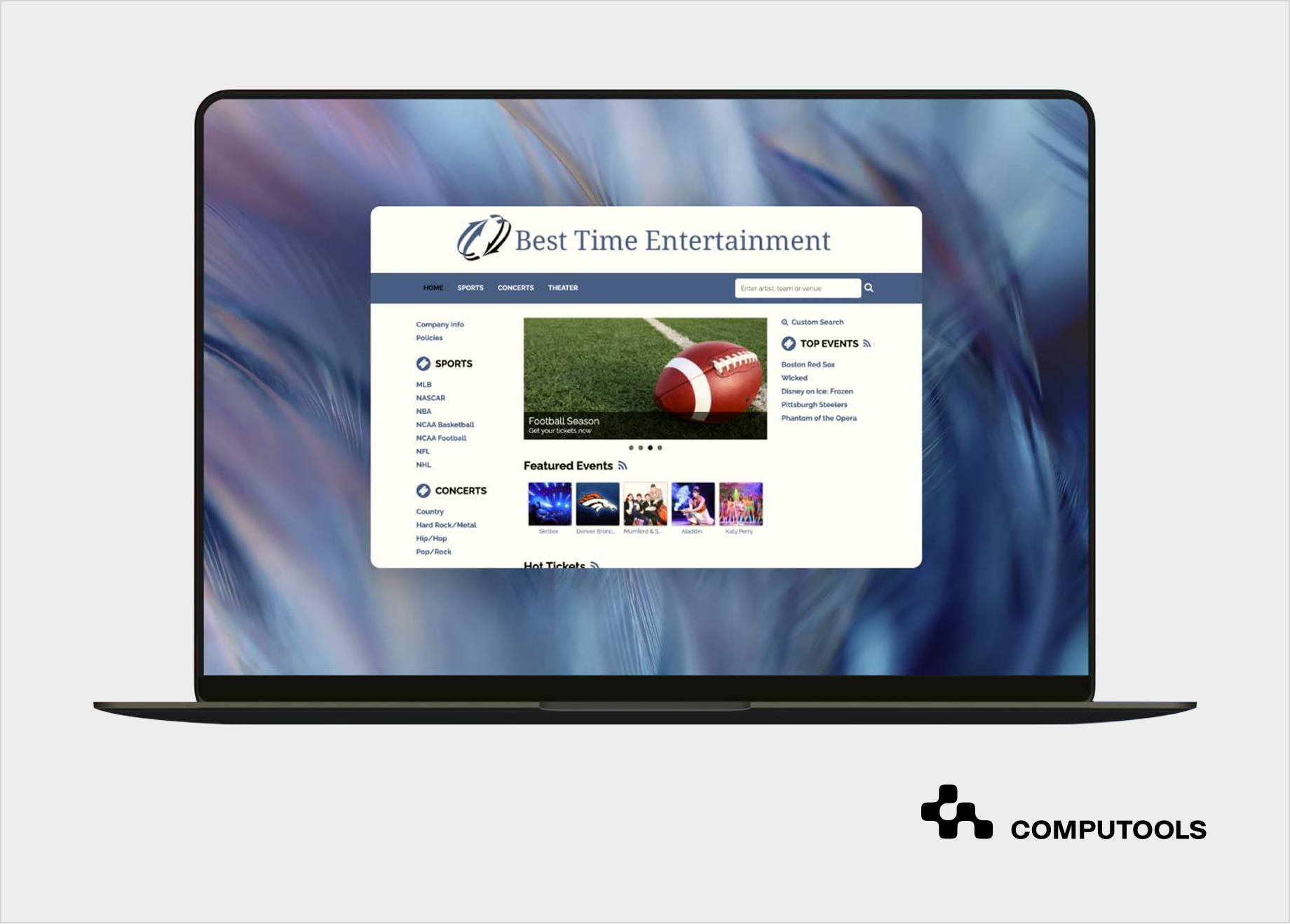
Computools case study: Multitrading and the engineering behind high-load ticket booking
Multitrading, an entertainment ticketing platform for sports events, concerts, theatre, opera, and ballet, needed a booking system that could support large traffic volumes and keep the purchase journey fast during peak demand. For this type of business, every delay affects revenue. Users compare options quickly, abandon slow checkout flows, and expect ticket availability to update as soon as they interact with the platform.
Computools modernized the platform with a multi-threaded web application designed to process millions of simultaneous requests. Our team added API integrations, data collection, storage functionality, web scraping, and heavy-load testing. These capabilities are directly relevant to real-time seat selection because the same technical pressure appears when many users view the same event, select nearby seats, start checkout, and wait for payment confirmation at the same time.
In a seat allocation system for ticket platforms, performance and inventory logic must work in conjunction. The solution should be able to handle availability checks, temporary blocks, booking status changes, payments, and released reservations. Multitrading shows that ticketing products need a backend system that can support sudden demand spikes, and allow the data to work across disparate services and keep the customer journey on the fly while the system handles transactions simultaneously.
The end result was a web application with improved reliability and responsiveness, which also translated into higher satisfaction levels and more sales.
For event businesses that want to implement a real-time seat selection system, the lesson is easy to understand. The interactive seat map is the visible side, but the real value lies in the logic that keeps bookings, payments, and reservation data protected during high demand.
How to build a seat selection system for event ticket platforms step by step
Below is a business and technical guide to building a seat selection system that supports real-time availability, secure checkout, scalable backend logic, and smarter ticket operations.
1. Define the Booking Model Before Designing the Seat Map
In the Multitrading project, Computools identified inefficiencies in the existing ticket booking flow and proposed customized algorithms to streamline the process. The same thinking applies to seat selection. The booking model is the first major decision. Companies must determine how access, pricing, and sales will function for customers before the product team creates any designs for the sales interface.
A platform may support assigned seating, general admission, mixed seating, VIP zones, season passes, hospitality packages, accessible seating, sponsor allocations, reseller inventory, or dynamic seat releases. A theatre may need exact row and seat control. A stadium may need section-level performance for tens of thousands of seats. A festival may combine general admission with premium areas and timed entry.
This decision impacts the data model, the design of the checkout process, the design of administrative functions, and real-time pricing and availability. The clearer the model, the easier and cheaper it is for the system to support new event formats, new partners, and pricing schemes with minimal structural changes.
An effective ticketing platform seat management should incorporate the following entities:
- venue;
- event;
- seating layout;
- section;
- row;
- seat;
- price zone;
- ticket type;
- sales channel;
- availability status;
- hold status;
- booking status;
- payment status;
- access rule.
Each seat should move through controlled states such as available, selected, held, payment pending, booked, blocked, released, refunded, or unavailable. This status model gives operators, support teams, and finance teams a shared view of every seat and transaction.
For event businesses that want to combine discovery and ticket sales, the booking model should also define how users move from event search to seat selection and checkout.
This is especially relevant for platforms that combine recommendations, venue pages, ticket inventory, and purchase flows, as explained in Computools’ guide on how to build an event discovery platform with ticket sales.
2. Build a Seat Map Data Model Operators Can Manage
Seat map system development should start with structured data. Visuals, like SVG maps or dynamic layouts, must be built on top of a validated data model.
The permanent structure of a venue must be separated from the temporary inventory of an event. A venue may have one standard layout, but different events will have different modifications. A concert may leave seats behind the stage blocked. A sports event may open the full capacity of the stadium. A business event may leave the first rows blocked for sponsors. A cultural event may incorporate seated presentations with timed entry.
A flexible seating management may include the following:
- base venue layout;
- event-specific seat availability;
- seat coordinates for rendering;
- price zone mapping;
- visibility rules;
- operator locks;
- partner allocation rules;
- audit history.
This is important as the event teams are constantly changing inventory, releasing additional rows, holding sponsor seats, blocking damaged seats, updating stage (and seated) layouts, and/or giving away sections to their partners. A good admin panel allows the authorized person to make the seating inventory changes.
Operators need tools for:
- seat map upload and editing;
- bulk blocking and releasing;
- price zone assignment;
- event-specific layout changes;
- accessible seat management;
- partner inventory allocation;
- seat status history;
- audit logs.
Modify access controls so that only designated role holders can make specific changes. For example, a venue manager can adjust which seats are blocked, while the finance team only has access to revenue and refund reports. This gives the organization control of its operations while allowing sensitive and proprietary processes to remain confidential.
3. Design Real-Time Seat Availability With Temporary Holds
Reserving seats in real-time relies on a backend access control engine for seat availability. Once a seat is chosen, the system places a temporary hold for a predetermined period, typically between 5 to 10 minutes. Users are notified of a seat hold. The seat is then considered booked after a payment is processed. It is returned to the pool of available seats once the hold times out.
The technical design of a seat booking system for events should include:
- atomic database transactions;
- optimistic or pessimistic locking;
- hold expiration logic;
- distributed cache for fast availability reads;
- message queues for reservation events;
- WebSocket or server-sent events for live seat updates;
- background workers that release expired holds;
- clear conflict handling when many users select nearby seats at once.
The final state of the seat is owned by the back end. The front end shows available options, the back end takes care of user actions, while the reservation service uses transaction logic to confirm seat ownership.
As an illustration, let’s say two users choose the same premium seat at the same time. In that case, the service will give the seat request to the transaction that went through first, and the other user will be notified and will have other options to choose from.
The hold logic also protects group bookings. If a guest wants to buy four premium seats, the algorithm should ensure that those four seats are held together. So, the system will hold and release the group as one unit when the holding period is over.
The Multitrading platform was built as a multi-threaded application capable of handling millions of simultaneous requests. Computools used C# and the Task Parallel Library to support concurrency and improve performance. This is highly relevant to seat selection, where many users may select, hold, release, and purchase seats at the same time.
4. Connect Seat Selection With Payments, Webhooks, and Booking Status
A ticket booking system with seat selection should treat payment as part of inventory control. Specifically, seat status should change from held to booked once payment is confirmed. The booking service should define and track all payment states, including initiated, pending, confirmed, failed, canceled, refunded, and chargeback review.
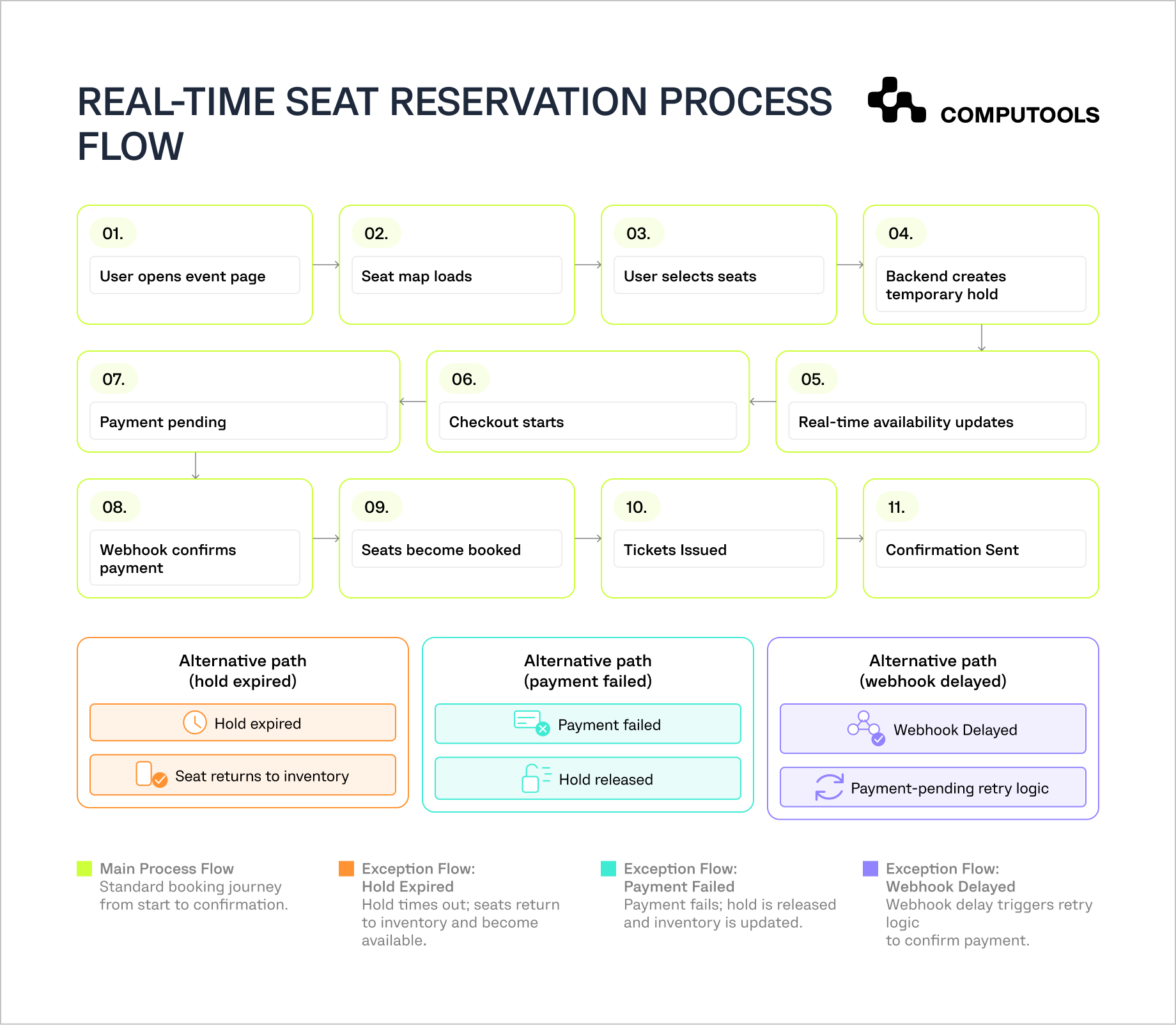
A practical transaction flow looks like this:
1. The user selects seats.
2. The system creates a temporary hold.
3. The user starts checkout.
4. Payment is initiated.
5. Payment gateway returns status.
6. Webhook confirms success, failure, cancellation, or delay.
7. Booking status updates.
8. Seats become booked or return to inventory.
9. The ticket is issued.
10. Confirmation is sent.
Webhook management is especially important. Payment gateways may respond with delays, retries, duplicate events, or intermediate statuses. The backend should use idempotency keys so the same webhook does not create duplicate bookings or release a paid seat.
A real-time seat reservation software platform must handle partial failures. For example, if payment is successful, but the generation of a ticket has failed, the platform must not lose the booking. It must attempt to issue the ticket again, notify the operations team, and keep a record of the transaction.
Payment security is critical as well. The PCI DSS outlines the technical and operational requirements. Ensure that card payment data is not directly processed by the ticketing platform. Rather, use reliable payment processors and payment tokenization.
5. Plan Integrations Before They Cause Bottlenecks
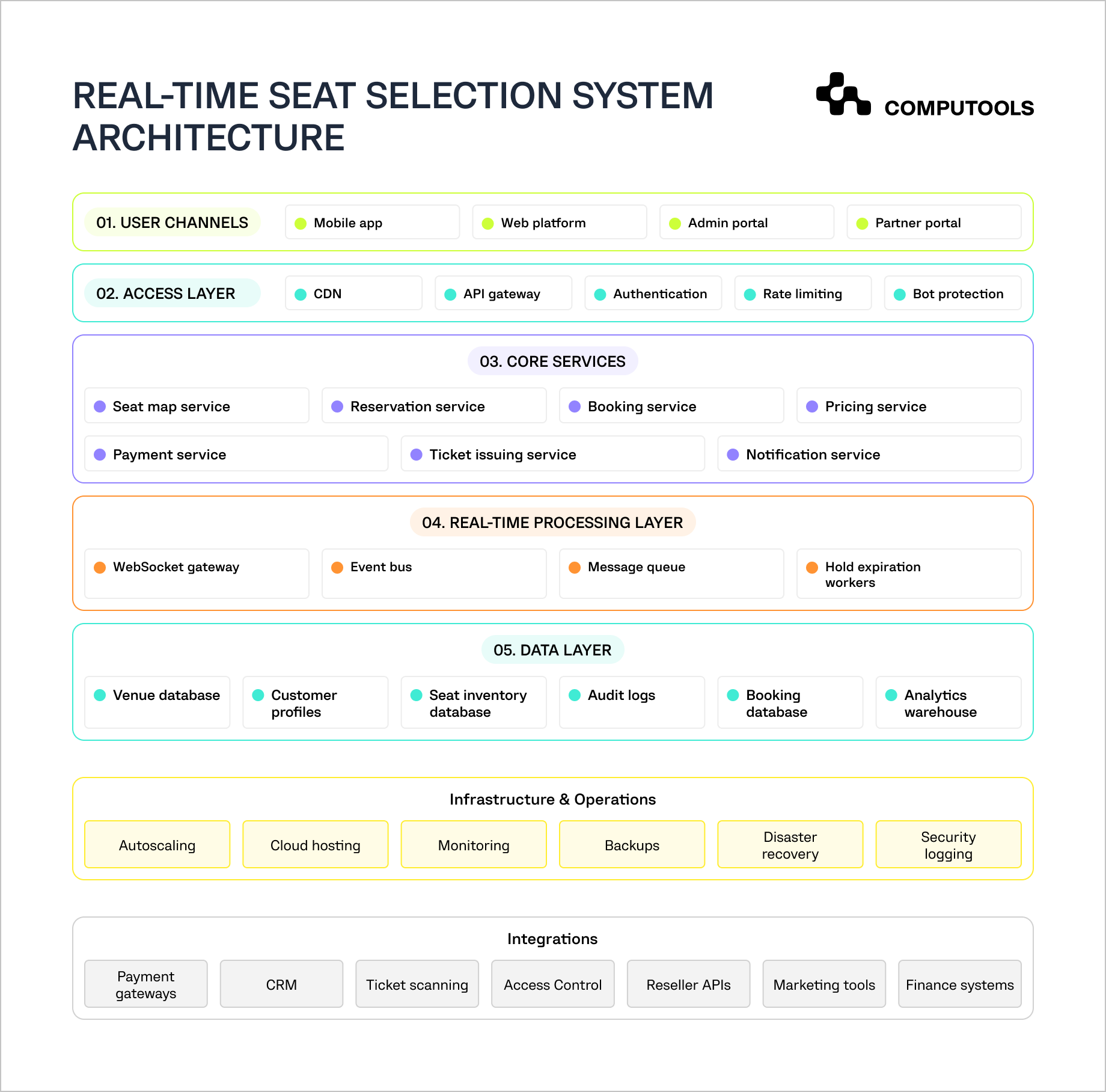
Custom event ticket booking software typically integrates with a variety of systems including payment gateways, customer relationship management systems, marketing tools, access control systems, ticket scanning, venue infrastructure, reseller platforms, finance software, analytics, customer support, and travel/hospitality systems.
At this point, developing an event ticketing platform is more about designing business architecture. It needs to transfer business data across all necessary systems without negatively impacting the speed of the checkout process.
The solution needs an API gateway with an integration layer and a webhook listener, retry logic, event logging, and data mapping rules. For platforms that handle high volumes of transactions, message queuing is important to ensure that time-consuming tasks do not disrupt the fast booking process. For instance, the system can book an event first, and later update the CRM, process loyalty point transactions, segment the marketing list, and log reporting events.
Computools integrated API connections in the Multitrading project and added web scraping functionality to support broader event data processing. A seat selection platform needs the same integration discipline when connecting payments, CRM, ticket scanning, access control, partner inventory, analytics, and customer communication tools.
This is because operators have to understand what users are searching for, where they abandon the booking process, which seats are sold the fastest, and which business partners are monetizing.
For destination platforms, cultural venues, and city-level event products, seat or slot reservation can also connect with maps, routes, nearby attractions, transport data, and visitor guidance. Computools explains this location-based logic in its guide on how to build a city navigation app with real-time location data.
6. Build for Peak Load, Not Average Traffic
Ticketing platforms do not have normal days. They have days when tickets go live, artists announce shows, sports finals open, and when early-bird pricing ends. Therefore, design for traffic spikes. Focus on the system’s controlled writes with queue processing and predictable performance degradation.
The architecture may include:
- CDN for static assets and seat map rendering files;
- caching for event metadata and non-sensitive availability;
- indexing for seat and booking queries;
- read replicas for reporting;
- queue-based checkout;
- elastic, auto-scaling, cloud infrastructure;
- rate limiting;
- bot protection;
- load balancing;
- performance monitoring;
- fallback pages or waiting room for extreme scenarios.
The most important tasks should remain transactional. These include putting holds on seats, confirming bookings, releasing seats, and issuing tickets. Other tasks, like creating marketing events and updating dashboards, can be processed at different times.
Continuous, unrestricted consumption of resources is listed as an API security risk by OWASP. It occurs when limits are not placed on the consumption of bandwidth, CPU cycles, memory, storage, and third-party services. The ticketing industry is particularly impacted by this risk because aggressive refresh behavior, bots, and repeated seat map calls can quickly drain the resources of your IT infrastructure and payment provider.
7. Add AI and Automation Where Revenue Control Systems Can Benefit
Adding AI should have structured and clear data and defined outcomes. If we look at building an interactive seat selection system, AI and business process automation can be implemented for:
AI-based suggestions
The system can recommend seats based on budget levels, viewing positions and angles, group size, accessibility, as well as prior purchases and the type of the event. Automation streamlines selection and leads to higher conversion.
Intelligent search
Users can search for “best four seats under $150,” “aisle seats near the exits,” or “accessible seats with companion seating.” This feature elevates the user experience for large venues that typically require manual browsing.
Demand forecasting
For events with variable attendance, the system with AI integration can predict demand and identify which seats and sections will sell out first.
Price control automation
AI can recommend optimal pricing levels, identify seats that are under-priced, and notify teams of changing demand levels.
Fraud detection
AI scores fraudulent behavior such as payments constantly failing, the selection of seats in a pattern indicative of the use of a bot, unusual speed of purchases, and inconsistent identity profile signals.
Segmentation of customers
Users are segmented based on their engagement levels, purchasing histories, preferred event categories, sensitivities to varied pricing, and geographical locations. This supports personalized campaigns and stronger repeat sales.
AI-assisted support
Summaries for booking problems, payment processing, refunded payments, and seat changes are provided for support staff. This eliminates the need for time-consuming investigations.
8. Design Security, Reliability, and Operational Control Into the Core
Cybersecurity in ticketing is directly tied to revenue. Weak protection can lead to fraud, bot abuse, account takeover, payment disputes, fake tickets, overselling, and downtime during high-demand events.
A secure online seat reservation system should include:
- role-based access control for admins, partners, support agents, and finance teams;
- encryption for sensitive data at rest and in transit;
- secure payment handling through trusted providers;
- audit logs for seat changes, refunds, admin actions, and partner updates;
- bot protection and CAPTCHA where appropriate;
- rate limiting for seat map, checkout, login, and payment endpoints;
- fraud scoring and purchase velocity checks;
- secure APIs with authentication, authorization, and request validation;
- backup and disaster recovery plans;
- monitoring for uptime, latency, failed transactions, and error spikes;
- access controls for venue-level and event-level operators.
According to OWASP, broken object-level authorization is among the most serious API security issues. Ticketing platforms should apply authorization checks to bookings, seats, customers, payments, tickets, refunds, and admin actions.
Reliability should also include the tools used to operate the system. Teams require dashboards with the statistics of users, seat holds that have expired, payment errors, failed payments, refund statistics, API errors, and event revenue. If operators do not have this information, they will be forced to react too late.
9. Test the System Under Realistic Booking Conditions
Testing a seat map only with normal user flows is not enough. In Multitrading, heavy-load testing validated the application’s ability to operate reliably under large request volumes. For seat selection, the system must be tested under concurrency, payment delays, expired holds, integration failures, bot behavior, and high traffic.
A strong testing plan should include:
- load testing before major ticket releases;
- concurrency testing for popular seats;
- payment webhook simulations;
- expired hold recovery tests;
- refund and cancellation testing;
- seat map rendering tests on mobile devices;
- API rate limit tests;
- accessibility testing;
- admin workflow testing;
- disaster recovery testing.
A case in point, imagine the team is to simulate 50,000 people opening the same event page, 10,000 people picking their seats, and thousands of people entering the checkout page simultaneously. Performance will begin to drop at a certain level, and the team needs to decide how to handle that. Next, they will need to make the call on what the system should do. This could be anything from putting users in line to scaling the infrastructure.
This is where the business and technical teams need to come to terms on the service level. A high-end venue will agree to the analytics update being slower, but they will never agree to double bookings or missing payment confirmations.

Launch your seat selection system within 1–3 months instead of years. Stay informed, not overwhelmed. We handle execution.
Why choose Computools for real-time seat selection system development
Computools approaches seat selection system development as a revenue, operations, and scalability challenge. The platform has to keep seat inventory accurate, checkout stable, payments synchronized, and operators in control during high-demand sales.
Computools has the subject matter expertise in and capacity to deliver solutions grounded on over 400 accomplished projects and 250+ engineers, in combination with the certifications of ISO 9001/27001, GDPR and HIPAA, and Microsoft and AWS Partner status.
Computools brings value where ticketing platforms usually face the most pressure:
1. Real-time booking logic
We make sure that seat holds, booking statuses, payment states, webhook handling, and inventory updates stay synchronized during peak demand. In the course of the Multitrading project, our team modernized a high-load entertainment ticket booking platform with multi-threaded software architecture, API integrations, data collection, storage functionality, and heavy-load testing.
2. Scalable backend architecture
API gateways, caching, queues, database transactions, autoscaling, monitoring, and load testing support stable performance during major ticket releases. The Dior Data Hub project shows Computools’ experience with scalable commerce systems, checkout optimization, order management, Redis caching, sales analytics, and high-performance backend logic.
3. Revenue and operations control
The system should connect seat selection with pricing, promo codes, VIP inventory, reseller allocations, refunds, finance reports, and event analytics. In the AD Studio project, Computools built a live-event advertising platform with audience analytics, data collection, targeted marketing features, and engagement tracking.
4. UX/UI built for faster decisions
Computools’ mobile app development services and web development services can support seat maps, checkout flows, admin panels, and partner portals across devices.
In the WorldTicket project, Computools improved the booking interface, dynamic search, and real-time synchronization for a Passenger Service System used by 185+ airlines.
5. Connected business systems
Through travel and hospitality software development services, Computools can connect ticketing with CRM, payment gateways, access control, booking engines, loyalty tools, guest apps, and operational platforms.
TAP App shows this logic through payments, order tracking, restaurant-side monitoring, and ingredient management in a hospitality environment.
6. AI and automation with clear business value
Computools’ AI development services can add seat recommendations, demand forecasting, fraud scoring, customer segmentation, pricing intelligence, and AI-assisted support.
CardFalcon shows Computools’ ability to automate complex workflows, statuses, approvals, access logic, and operational data in one controlled platform.
7. Specialized event and tourism contexts
For cultural venues, museums, guided experiences, and destination platforms, Computools’ heritage tourism software development experience can also support seat or slot reservations tied to visitor engagement and real-time operations.
With Computools, a real-time seat selection system becomes a scalable revenue channel that connects demand, inventory, payments, operations, and data.
Final thoughts
A real-time seat selection system needs to be developed as an operational platform. It manages inventory and payments, shapes customer experience and revenue, provides partner access, signals fraud, and monitors performance during peak demand.
To build a seat selection system that works under demand pressure, businesses require a clear booking model, organized seat data, temporary hold logic, payment sync, secure APIs, planned admin workflows, AI-ready data, and performance oversight.
Peak demand should drive revenue, not operational pressure. Before traffic, payment, and integration issues become roadblocks to growth, consult with Computools about the real-time seat selection frameworks you need. Get in touch with our team at info@computools.com.
Computools
Software Solutions
Computools is an IT consulting and software development company that delivers innovative solutions to help businesses unlock tomorrow.