
THE AUTHOR:

When it comes to enterprise retail eCommerce platforms, the challenge for a brand begins not at the stage of creating a website, but when it is necessary to scale the business across dozens of markets and channels, while maintaining stability, personalization and integration of all systems into a single ecosystem. That is why more and more companies are moving to cloud eCommerce platforms for enterprises, which allow them to centralize data, automate analytics and effectively manage global processes.
According to Gartner, the market for digital commerce platforms grew by 22% in 2021 alone, demonstrating steady growth among companies implementing scalable solutions for global sales.
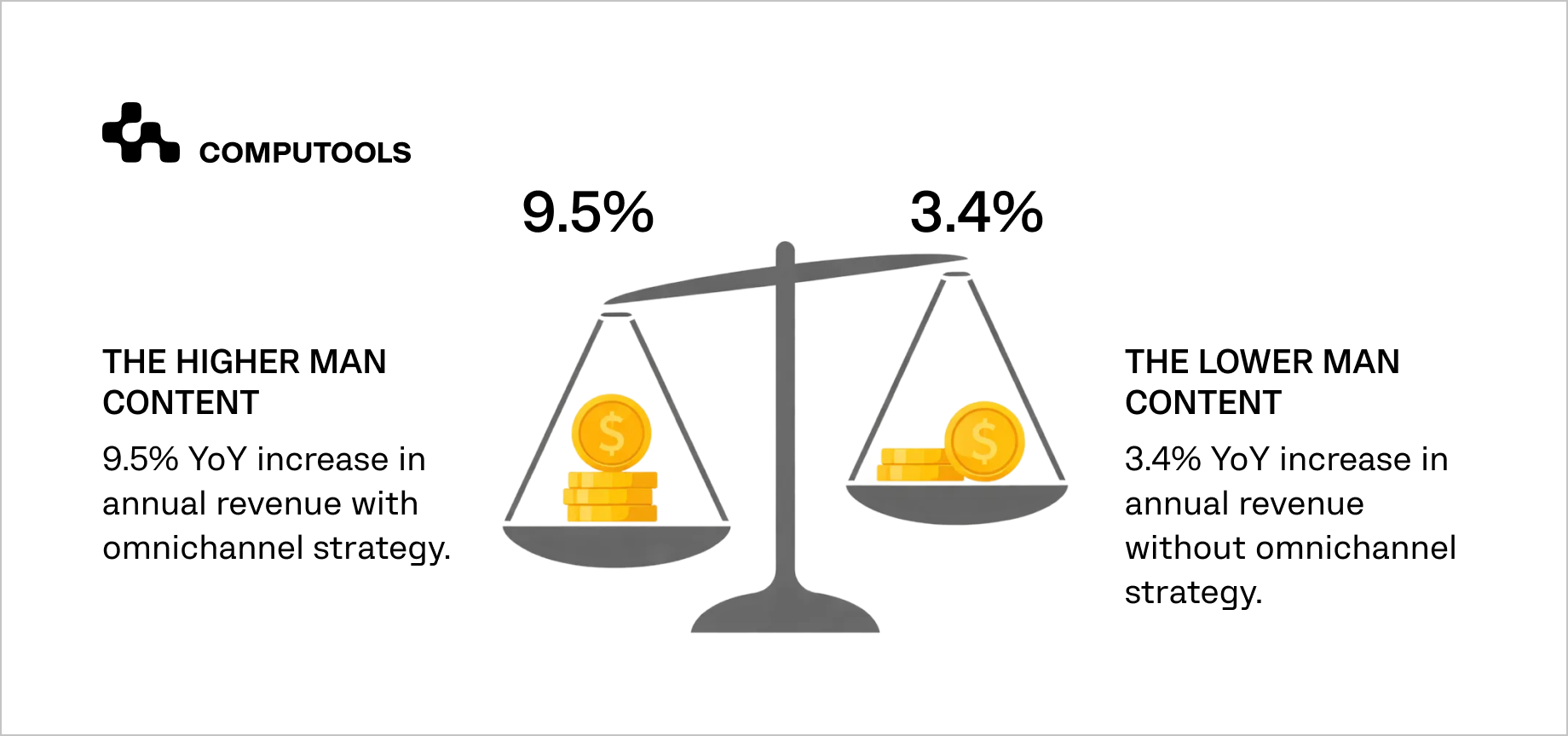
According to McKinsey analytics, brands with a developed omnichannel model show 9.5% annual revenue growth, while those operating without channel integration only 3.4%. This confirms that enterprise omnichannel eCommerce solutions are no longer a trend, but the key to survival in a competitive market.
Moreover, AWS predicts that by 2026, global online shoppers will spend over $7.39 trillion, and eCommerce will account for about 25% of all global retail sales.
These numbers clearly demonstrate that choosing the right platform – Shopify Plus vs SFCC vs Magento – is becoming a strategic decision for brands looking to scale. That’s why companies like Computools, with their hands-on expertise in retail digital commerce platforms, help global businesses build solutions that are ready for global growth.
One such example is the Dior Data Hub, where the Computools team brought together eCommerce, logistics, CRM, and content marketing into a single analytics space, delivering enterprise-level efficiency and consistency.
How Computools built a platform for Dior: modernizing eCommerce for a global luxury brand
While working on the best enterprise eCommerce platform, the Computools team was tasked with transforming the digital presence of Dior, a global leader in fashion and luxury. The client approached us with a request to modernize, optimize, and automate its eCommerce sales for dozens of markets around the world.
However, due to the scale and complexity of its business processes, even such a brand faces typical problems of enterprise retail eCommerce platforms:
- inefficient order processing,
- long checkout,
- limited scalability,
- significant support workload.
These factors were holding back Dior’s potential and preventing it from maintaining the impeccable customer experience expected of a luxury brand.
Dior approached Computools with a clear expectation: to receive a customized solution that would provide long-term efficiency, flexibility and stability.
The team conducted an analytical Shopify Plus vs Salesforce Commerce Cloud vs Adobe Commerce (Magento) comparison to understand which software architectural approaches best meet the client’s business goals.
As a result, we developed a specialized CMS system that allowed Dior to:
- manage a large catalog of products and orders,
- collect and analyze sales statistics,
- plan production based on real data,
- centralize management through the admin panel.
This solution combined the key principles of eCommerce software development and headless architecture, typical of enterprise omnichannel eCommerce solutions.
Computools’ work covered the full cycle – from creating MVPs and interactive prototypes to implementing the CMS core. The company’s designers created an intuitive Dior CMS interface with optimized WebGL rendering for fast content display and smooth user interaction.
The technical team focused on speeding up the order process, increasing system throughput, and reducing support workloads – all critical for companies with a global customer base.
As a result of implementing the Dior Data Hub solution, the client received a powerful system that allows them to:
- select stores on a map,
- order products from a large catalog,
- leave reviews and create wishlists,
- place pre-orders,
- track the movement of goods from store to buyer.
The solution has automated trade with hundreds of thousands of customers around the world, significantly increasing operational efficiency and user satisfaction.
Must-have features for enterprise retail platforms
When choosing between Shopify Plus vs SFCC vs Magento, it’s important to look beyond functionality checklists and evaluate what truly drives efficiency and customer satisfaction at scale.
Based on Computools’ experience in developing large enterprise retail eCommerce platforms, here are the essential capabilities that modern retailers need to stay competitive:
- API-first and modular architecture – ensures seamless integration between ERP, CRM, and logistics systems.
- Unified analytics dashboard – consolidates KPIs from all regions and channels in real time.
- Multi-region, multi-language, and multi-currency support – critical for global scaling.
- AI-powered personalization – enables predictive product recommendations and targeted campaigns.
- Headless and cloud flexibility – allows faster front-end updates and regional customization.
- PIM/DAM integrations – streamline content, pricing, and media asset management.
- Enhanced cybersecurity and GDPR compliance – crucial for high-volume enterprise operations.
- Optimized checkout experience – reduces friction and increases conversions.

Discover how to select an enterprise commerce foundation that balances agility today with scalability tomorrow.
How to choose a developer for enterprise eCommerce projects: experience with Shopify Plus vs SFCC vs Magento
To help enterprise retailers understand where value comes from, Computools visualizes the comparison between business challenges and platform-driven benefits.
This framework shows how digital transformation through retail software development services directly improves both operational efficiency and customer experience.
| Business Challenge | How the Platform Solves It | Business Impact |
| Fragmented data across sales and CRM systems | Salesforce Commerce Cloud’s unified data model integrates all touchpoints | Single source of truth for decision-making |
| Slow product or campaign updates | Adobe Commerce’s PIM/DAM integrations streamline content management | 3× faster time-to-market |
| High operational costs due to manual workflows | Shopify Plus automation tools reduce repetitive tasks | Up to 25% annual cost savings |
| Limited personalization capabilities | AI modules like Einstein AI or Adobe Sensei create real-time recommendations | 15–20% increase in conversion rate |
| Poor scalability under high traffic | Cloud-native architecture in SFCC and Magento Enterprise ensures load balancing | Reliable performance across regions |
| Inconsistent customer experience | Headless design and UX optimization create unified journeys | Higher retention and customer loyalty |
How to choose a developer for enterprise eCommerce projects
Choosing the right technology partner for enterprise retail eCommerce platforms is as important as selecting the platform itself. The ideal developer should combine deep industry expertise, architectural thinking, and the ability to scale complex systems across multiple regions.
Look for a team experienced in retail software development services and web development services, with proven success in integrating ERP, CRM, PIM, and AI-driven analytics. Such experience ensures that your Adobe Commerce vs Shopify Plus or Magento vs Salesforce Commerce Cloud ecosystem functions as a single, efficient infrastructure.
A trusted partner like Computools approaches each project strategically, aligning technical solutions with business objectives, applying best practices from fashion and apparel software development, and ensuring transparent, agile collaboration. This combination of software engineering precision and strategic vision turns digital commerce platforms into sustainable engines for enterprise growth.
Why global brands trust Computools
Computools combines strategic thinking, engineering precision, and deep expertise in retail software development services to deliver enterprise-grade solutions for global brands. From luxury retail to eCommerce and digital platforms, our portfolio demonstrates the company’s ability to transform complex business challenges into scalable, high-performance systems.
For Dior, Computools developed the Dior Data Hub, a centralized CMS that modernized and automated eCommerce processes across multiple regions, enhancing scalability and improving customer experience.
In the GoneTrippin project, the team built an innovative blockchain-based travel app that connected travelers with local businesses, reducing transaction fees and boosting engagement.
Meanwhile, LineSale, a US-based digital company, relied on Computools to optimize its eCommerce framework, improve processing efficiency, and deliver superior UX across multiple platforms.
These cases illustrate Computools’ versatility and its ability to apply the same engineering standards, whether designing for global luxury retailers, travel startups, or large-scale digital ecosystems. By combining innovation, analytical design, and best practices in web development services and fashion and apparel software development, Computools empowers businesses to accelerate digital transformation and stay ahead in competitive markets.
Conclusion
In today’s digital retail landscape, the success of a brand depends on how effectively technology reflects and enhances its business vision. The right platform becomes more than a technological choice; it serves as the foundation for growth, transparency, and a connected customer experience across all channels. It allows companies to respond faster to changing markets, maintain consistent brand identity, and ensure that every interaction adds value for both the business and the customer.
At Computools, we view digital transformation as a collaborative process built on innovation, strategic thinking, and mutual trust. Our experience working with organizations of different scales from established luxury brands to ambitious eCommerce startups and spanning 20+ successfully delivered retail and eCommerce projects for global clients shows that the most sustainable solutions are those centered on people, data, and measurable outcomes.
Through a combination of technical expertise, thoughtful design, and a deep understanding of industry dynamics, we help businesses unlock their full potential in the digital era. Computools empowers global enterprises to evolve beyond traditional commerce and move confidently into a future defined by flexibility, intelligence, and continuous growth.
Computools
Software Solutions
Computools is a global IT consulting and software engineering company that helps businesses grow revenue, reduce costs, and launch new products through an AI-native delivery model.